
Hear from Our Customers

When water gets into a Holtsville home, the damage you can see is rarely the whole story. Moisture moves fast — into original drywall, under hardwood floors, behind the baseboards of a 1970s-built split-level or cape cod. If it isn’t pulled out completely the first time, you’re not looking at a cleanup. You’re looking at a mold problem three months from now, inside walls you can’t see.
What you actually get out of proper water damage restoration isn’t just a dry floor. It’s the confidence that the moisture is gone — not just from the surface, but from the structure. It’s a documented restoration record that holds up when your insurance adjuster reviews the claim. It’s knowing that the company handling your Holtsville home understands what a 50-year-old Long Island house looks like from the inside, not just from the curb.
Holtsville homeowners are also dealing with something many Nassau County communities aren’t: a significant portion of properties here are on private septic systems. When heavy rain saturates the ground — and after August 2024, nobody in the Town of Brookhaven needs a reminder of what that looks like — a rising water table can push sewage back into the home. That changes the category of water damage entirely, and it changes what proper remediation requires. Getting that assessment right from the start is what keeps a manageable situation from becoming a months-long ordeal.
We’ve been handling water damage on Long Island for close to three decades. That’s not a marketing number — it’s the actual length of time we’ve been showing up for homeowners across Nassau and Suffolk counties, including Holtsville and the communities along the Nicolls Road corridor in central Suffolk.
We’re IICRC-certified, licensed, bonded, and insured. Those credentials matter practically, not just on paper. IICRC certification is the standard that insurance companies expect when they review a restoration claim. If the company doing your restoration isn’t certified, that gap can create real problems when it’s time to settle.
We work directly with insurance companies. We handle the documentation, coordinate with your adjuster, and bill the insurer directly — so you’re not stuck trying to figure out the claims process while also managing a family in a disrupted home. For Holtsville homeowners already managing some of the highest property taxes in the country, that kind of support isn’t a nice-to-have. It’s the difference between a claim that gets paid and one that doesn’t.
The first call triggers an emergency response — day or night. We operate 24/7, and in a water damage situation, that availability isn’t just a convenience. The EPA is clear that water-damaged areas need to be dried within 24 to 48 hours to prevent mold growth. Every hour between the event and the response is an hour the moisture is moving deeper into your home’s structure.
When our crew arrives, the first priority is assessment — not just what’s visible, but what the moisture meters show inside walls, under floors, and in the structural cavities that a visual inspection misses. In Holtsville homes built in the 1970s, original construction materials absorb and hold moisture differently than newer builds. That matters for how the drying plan is set up and how long the process takes.
From there, extraction and industrial drying equipment get placed strategically — air movers, dehumidifiers, and where needed, specialized tools for reaching moisture behind baseboards and inside wall cavities. The drying phase typically runs several days, with moisture readings tracked throughout. Once the structure meets drying standards, any structural repairs or reconstruction are handled by our team. Because we operate under the Town of Brookhaven’s jurisdiction for most of Holtsville, we understand the permitting requirements that apply to structural restoration work here — so the rebuild phase doesn’t stall waiting on paperwork.

Ready to get started?
Water damage restoration in Holtsville covers more ground than most homeowners expect when they first make the call. We handle the full scope: water extraction, structural drying, moisture mapping, mold prevention treatment, contents assessment, and full reconstruction when the damage reaches the structure. You’re not getting a crew that dries the floor and hands you off to a general contractor. The same company that starts the job finishes it.
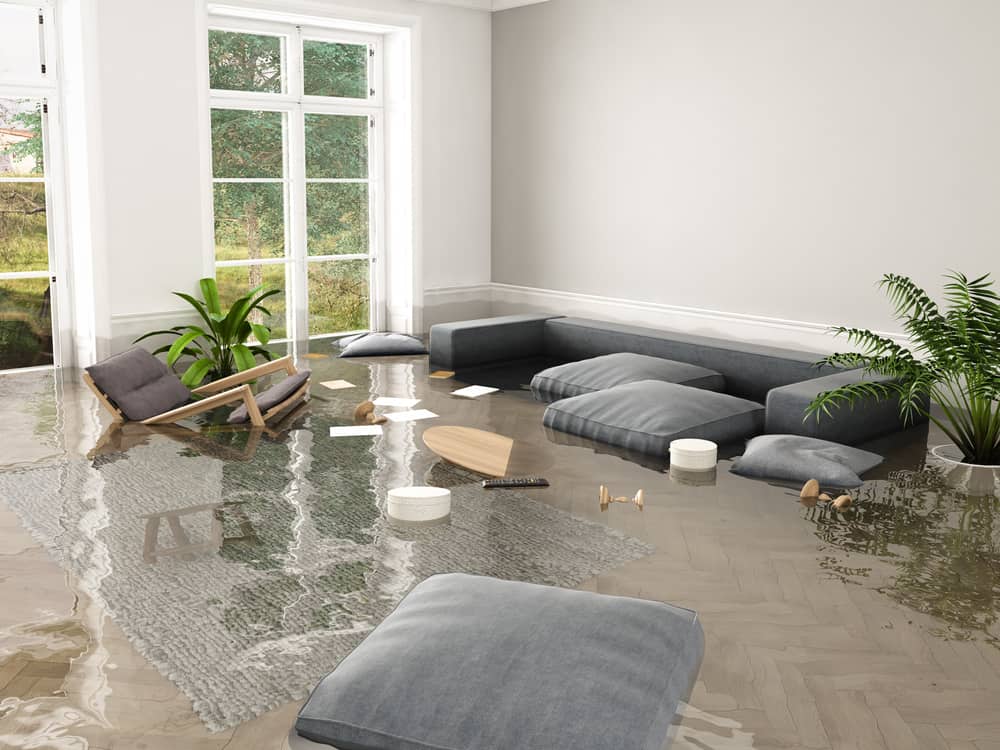
For Holtsville specifically, a few service considerations come up regularly. Flooded basement cleanup is one of the most common calls — whether from a burst pipe in an aging supply line, a failed sump pump during a nor’easter, or groundwater intrusion during a heavy rain event. The August 2024 flash flood emergency that triggered swiftwater rescues across the Town of Brookhaven showed exactly how fast central Suffolk can go from dry to overwhelmed. Basement water extraction in those situations requires industrial-grade equipment, not a shop vac and a fan.
Sewage backup cleanup is another service that comes up more frequently in this part of Suffolk County than in communities with full municipal sewer connections. When a septic system backs up into the home, it’s a Category 3 contamination event — the most hazardous classification. That requires a different set of protocols, different protective equipment, and antimicrobial treatment that goes well beyond standard water damage cleanup. Storm damage restoration, burst pipe water damage response, and mold remediation following any water event are all part of what we bring to Holtsville homeowners under one roof.

In most cases, yes — standard homeowners insurance covers sudden and accidental water damage, and a burst pipe is the clearest example of that. If a supply line fails without warning and water damages your floors, walls, or ceilings, that’s typically a covered event. The key word is sudden. If an adjuster determines that a pipe had been leaking slowly for months and the damage accumulated gradually, that’s where coverage gets complicated and claims get denied.
For Holtsville homeowners, this distinction is especially relevant. Many homes here were built in the 1970s with original plumbing that’s now approaching or past 50 years old. Galvanized pipes, older fittings, and aging water heater connections don’t always fail dramatically — sometimes they develop slow leaks first. Getting a professional assessment documented immediately after a water event is one of the most important things you can do to protect your claim. We work directly with insurance adjusters and handle the documentation process, which helps ensure the claim reflects what actually happened — not what’s easiest for the insurer to dispute.
The EPA’s guidance is that mold can begin developing within 24 to 48 hours of a water event. That’s not a worst-case scenario — that’s the standard timeline under normal indoor conditions. Mold spores are already present in the air of virtually every home. All they need is moisture and a surface to colonize. In a flooded basement, they have both.
For a Holtsville home built in the 1970s, the risk is compounded by the construction materials of that era. Original drywall, wood subflooring, and older insulation hold moisture longer than modern materials, and they’re harder to dry completely with consumer-grade equipment. A wet-vac and a box fan won’t pull moisture out of the structural cavities where mold actually takes hold. Professional drying equipment — industrial dehumidifiers, air movers, and moisture meters that read inside walls — is what actually stops the clock on mold growth. Waiting even a day or two to make the call can turn a straightforward water extraction job into a full mold remediation project, which is a significantly longer and more involved process.
The first thing to do is make sure it’s safe to enter the space. If there’s any chance the water reached an electrical panel, outlet, or appliance, don’t go in until the power to that area is shut off. If you smell sewage or the water looks discolored, treat it as contaminated and don’t make direct contact — in Holtsville and central Suffolk County, where a large percentage of homes are on private septic systems, basement flooding can involve sewage backup, which is a health hazard that requires professional handling.
Once it’s safe, call for professional help before you start moving things around or trying to dry it yourself. The reason that order matters: a restoration company can document the damage in its original state, which strengthens your insurance claim. If you’ve already cleaned up and dried things out before an adjuster or restoration crew sees the space, you may have inadvertently made it harder to prove the full scope of the damage. Take photos and video of everything before anything is moved. Then let the professionals handle the extraction, drying, and assessment — we have the equipment to find moisture in places you won’t think to look.
The honest answer is that it depends on the severity and where the moisture has traveled. For a contained event — a washing machine overflow or a single-room pipe burst — the drying phase alone typically runs three to five days using professional equipment. The full process, including any structural repairs, can take two to three weeks for moderate damage.
For Holtsville homes built in the 1970s, the timeline can run longer than it would for newer construction. Older materials absorb moisture more deeply and release it more slowly, which means the drying phase requires more time and more monitoring. If moisture has gotten into the wall cavities or under original hardwood flooring, we’ll be tracking readings with moisture meters throughout the process and won’t sign off on completion until the numbers meet the required drying standard — not just until it looks dry on the surface. If reconstruction is needed after the drying phase, that work falls under Town of Brookhaven permitting requirements for structural repairs, which we’re familiar with for properties in this area.
In many cases, yes — especially if the damage is contained to one area like a basement or a single room. The restoration equipment will be running continuously, which means noise and airflow throughout the affected space, but most families can remain in the home during the drying phase if the rest of the living area is functional and unaffected.
The situation changes if the damage involves sewage backup, significant mold growth, or structural compromise that affects load-bearing elements or makes part of the home unsafe to occupy. Sewage backup — which comes up in Suffolk County more often than people expect, particularly after heavy rain events that overwhelm older septic systems — introduces airborne contaminants that make the affected area genuinely unsafe until it’s been properly remediated and treated. In those cases, temporary relocation may be necessary, and your homeowners insurance policy may include coverage for additional living expenses if the damage makes the home uninhabitable. It’s worth checking that coverage before you assume you’re on your own for hotel costs.
This is a fair question, and Holtsville residents searching online are right to be skeptical. A significant number of the companies that appear in local search results for Holtsville water damage restoration are lead-generation aggregator sites — they have a page with your town’s name on it, a national 800 or 833 number, and no actual crew based anywhere near central Suffolk County. When you call, your job gets routed to whoever picks it up, and response times reflect that.
The signals that tell you a company is genuinely local: a 631 area code phone number, a physical base in Suffolk County, and a service history that predates the last few years. We operate out of West Babylon in western Suffolk County — roughly 20 to 25 miles from Holtsville via the Long Island Expressway — and have been serving Suffolk County homeowners for close to 30 years. Our dedicated Suffolk County line is 631-587-5300. That’s a real local team, not a dispatched crew coming in from out of state because a lead-gen site sold your zip code to whoever was available.
Useful Links
Other Services we provide in Holtsville