
Hear from Our Customers

When water damage is handled correctly — fully extracted, dried through the entire structure, and documented for insurance — you get your home back without the follow-up nightmare. No mold appearing behind the drywall six weeks later. No insurance dispute because the damage wasn’t properly recorded. No second round of repairs because the first crew left moisture in the floor joists.
For Lake Grove homeowners, this outcome matters more than it might in newer communities. The median construction year for homes here is 1970, which means the basement waterproofing, sump systems, and plumbing running through these walls have decades of wear. A burst pipe or flooded basement in a 1968 split-level behaves differently than it does in a new build — water travels further, hides in more places, and takes longer to fully dry. We approach these jobs differently than restoration companies that don’t understand Long Island’s post-war housing stock.
The Route 347 commercial corridor — Smith Haven Mall, Smith Haven Plaza, and the dense retail strip running through the village — generates significant stormwater runoff during heavy rain. That runoff has to go somewhere, and residential streets adjacent to that commercial zone are often the answer. During the August 2024 storm that dropped nearly 10 inches of rain across the Brookhaven and Smithtown area, neighborhoods like Lake Grove experienced drainage overwhelm that sent water into basements that had never flooded before. Getting ahead of the damage fast — within that first 24 to 48 hours before mold takes hold — is the difference between a manageable restoration and a months-long remediation project.
We’ve been serving Long Island homeowners for nearly 30 years. That means our team has worked on the exact type of post-war Cape Cods, split-levels, and ranch homes that make up most of Lake Grove’s residential streets. We know where water hides in these houses, how original basement drainage systems fail, and what proper structural drying looks like in a home that wasn’t built with modern moisture barriers.
We’re based in West Babylon and cover all of Suffolk County, including the Brookhaven area. Our local number is 631-587-5300 — not a national call center routing to an out-of-state crew. Every technician is IICRC-certified, and we’re licensed, bonded, and insured. That matters when you’re protecting a home worth close to $600,000 in today’s Lake Grove market.
We also handle insurance coordination directly. Most homeowners don’t know what their policy covers until they’re already in the middle of a claim — we work with your insurance company so you’re not left navigating that alone.

The process starts the moment you call. We operate 24 hours a day, seven days a week — because a sump pump failure at 11pm on a Tuesday doesn’t wait for business hours, and in a commuter community like Lake Grove where many households are empty during the day, water can sit for hours before anyone notices it.
When we arrive, the first step is moisture mapping — using professional meters and thermal imaging to find water that isn’t visible on the surface. In Lake Grove’s older housing stock, this matters significantly. Water that enters a 1960s basement doesn’t just sit on the floor; it wicks into block foundation walls, travels under original tile, and saturates floor joists in ways that consumer-grade fans will never reach. We deploy industrial extractors, air movers, and dehumidifiers to work on the full structure, not just the surface.
From there, we document everything for your insurance claim — photos, moisture readings, scope of damage — and begin direct coordination with your insurer. If the damage requires structural repairs or reconstruction, we handle that under the same roof. You don’t need to find a separate contractor. Any structural restoration work requiring permits goes through the Town of Brookhaven Building Department, and we’re familiar with that process. New York State also requires that any mold remediation work in a residential home exceeding 10 square feet be performed by a licensed contractor — we meet that requirement.

Ready to get started?
The water damage calls we receive from Lake Grove tend to follow a few familiar patterns. Burst pipes in homes with aging galvanized plumbing — especially during a cold snap when pipes in uninsulated spaces freeze and fail. Basement flooding from sump pump failure during a heavy spring rain, when the water table rises and the soil saturates faster than a 40-year-old pump can keep up. Storm drainage overwhelm from the Route 347 commercial corridor pushing runoff into adjacent residential streets. And post-storm seepage through aging foundation walls that were never designed for the rainfall volumes Suffolk County now regularly sees.
We handle all of it — water extraction, structural drying, dehumidification, mold prevention, and full reconstruction when needed. For Lake Grove homeowners dealing with sewage backup or floodwater intrusion (what the industry classifies as Category 3 water damage), the process is more involved. The contamination has to be properly contained and treated before drying begins, and the documentation for insurance is more detailed. We handle that distinction correctly, which matters when the claim is reviewed.
We also offer mold remediation when water damage has gone undetected long enough for growth to begin — which happens more often than homeowners expect in finished basements. If you’ve had a wet spring or a slow leak behind a wall and you’re noticing a smell, that’s worth a call. The assessment is free, and knowing what you’re actually dealing with is better than finding out later.

It depends on what caused the flooding, and that distinction matters more than most homeowners realize. Standard homeowners insurance typically covers sudden, accidental water damage — a burst pipe, a washing machine overflow, a water heater that fails. What it does not cover is flooding from external groundwater, storm surge, or rising water from outside the home. For that, you’d need a separate flood insurance policy through the National Flood Insurance Program or a private carrier.
In Lake Grove, this creates a real gray area. The village sits in central Suffolk County without direct coastal exposure, so many residents assume they don’t need flood insurance. But the August 2024 storm showed that inland communities can experience severe drainage overwhelm during extreme rainfall events — and if water enters your basement because the municipal storm system was overwhelmed, that’s typically not covered under a standard homeowners policy. We work directly with insurance companies and can help you understand what’s documentable under your existing coverage before you file, which reduces the risk of a denial.
The EPA’s guidance is clear: water-damaged areas need to be dried within 24 to 48 hours to prevent mold growth. That’s not a conservative estimate — mold spores can begin germinating within 24 hours under the right conditions, and visible growth typically appears within 48 to 72 hours. In a finished basement that’s been holding moisture for a few days, you may already have a mold problem before you’ve called anyone.
This is especially relevant in Lake Grove’s older housing stock. Homes built in the 1960s and 1970s often have finished basements with drywall, carpet, and wood framing — all materials that absorb moisture quickly and hold it long enough for mold to establish. A surface-level cleanup with consumer fans doesn’t reach the moisture inside the wall cavity or under the flooring. Professional equipment — industrial dehumidifiers, air movers, moisture meters — is what actually gets the structure dry. The longer water sits, the more expensive the remediation becomes. Calling early isn’t an overreaction; it’s the decision that keeps a manageable job from turning into a major one.
The first thing is safety — if there’s any chance the water has reached electrical outlets, panels, or appliances, don’t enter the space until the power is off. Once it’s safe to be in the area, stop the water source if you can identify it. If it’s a burst pipe, shut off the main water supply. If it’s groundwater seepage or storm drainage, you can’t stop it at the source, but you can start removing standing water with whatever you have available while you wait for help.
Call us as soon as possible — not after you’ve tried to clean it up yourself, and not after you’ve called your insurance company first. Getting a professional on-site quickly means the damage is properly documented before anything is disturbed, which actually strengthens your insurance claim. We’re available 24/7 at 631-587-5300 for Suffolk County. In a commuter community like Lake Grove where many homeowners are away during the day, a neighbor noticing water in your driveway or a family member getting a call can trigger that first call — don’t wait until you’re home to start the process.
The honest answer is that it depends on the scope of the damage and how quickly the job starts. For a single-room event — a burst pipe that’s caught within a few hours — the extraction and drying phase typically runs three to five days. A more significant basement flood affecting multiple rooms, with water that’s been sitting for a day or more, generally takes closer to two to three weeks from initial extraction through final repairs.
For Lake Grove’s older homes, the timeline can run a bit longer than it would in newer construction. Original block foundation walls, older subfloor systems, and uninsulated basement cavities hold moisture differently than modern materials do. The drying phase needs to be confirmed with moisture readings — not just eyeballed — before any reconstruction begins. Rushing that step is the most common cause of mold problems appearing weeks after a restoration job appears finished. If structural repairs or reconstruction are needed, those may require permits through the Town of Brookhaven Building Department, which can add time to the overall project. We manage that process and keep you informed of where things stand throughout.
Yes, and this is more common than people expect. The August 18–19, 2024 storm that dropped record rainfall across western Suffolk County — triggering a state disaster emergency declaration and causing dam failures in Smithtown and Stony Brook, immediately adjacent to Lake Grove — affected a lot of homes that appeared to recover on their own. Water receded, surfaces dried, and homeowners moved on. But moisture that was never fully extracted from wall cavities, floor systems, and foundation materials continues to create conditions for mold growth for months afterward.
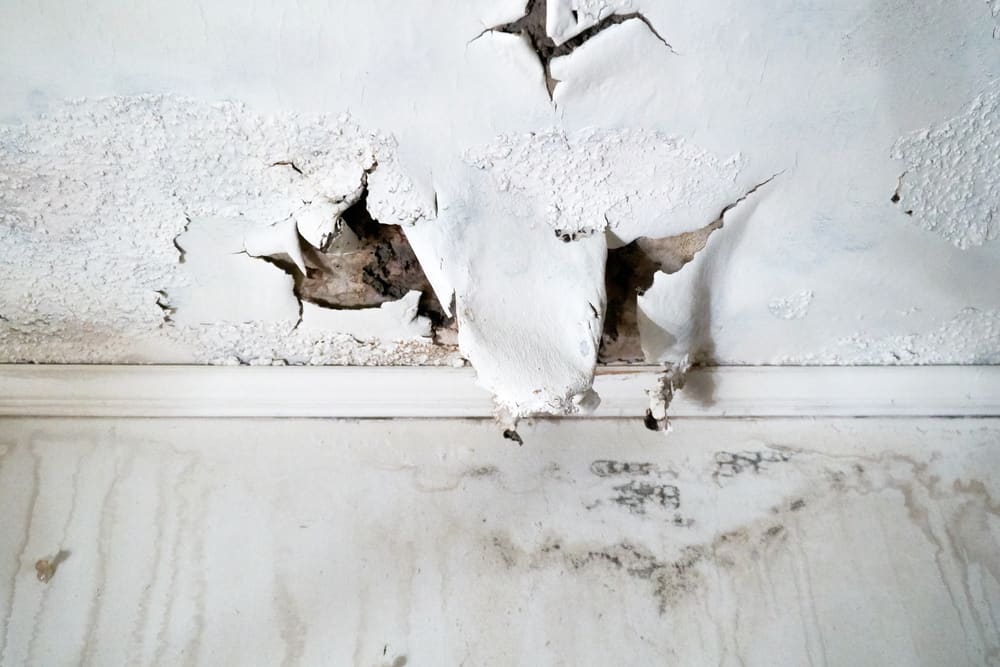
If your home took on water during that storm and you’re now noticing a musty smell, visible discoloration on walls or ceilings, or unexplained allergy symptoms, those are signs that hidden moisture or mold may be present. A professional moisture assessment uses thermal imaging and calibrated meters to find what you can’t see. The Town of Brookhaven has also made storm damage grants available — up to $50,000 for health and safety-related repairs for qualifying homeowners — and proper documentation from a licensed restoration company supports that kind of application. It’s worth getting an assessment before assuming the problem resolved itself.
The most significant difference is local knowledge and accountability. When you search for water damage restoration in Lake Grove, you’ll find a mix of genuine local operators, national franchise chains, and lead-generation sites that use out-of-state phone numbers and route your call to whoever’s available. Some of those franchise operations do good work — but the crew showing up may have no familiarity with the specific housing stock, soil conditions, or drainage patterns in this part of Suffolk County.
We’ve been working on Long Island homes for nearly 30 years. Our team knows the post-war construction methods common in Lake Grove, the groundwater behavior in central Suffolk County, and how the Route 347 commercial corridor affects stormwater drainage in adjacent residential neighborhoods during heavy rain. We carry a local 631 number, we’re based in West Babylon, and we coordinate directly with your insurance company rather than leaving you to manage that relationship alone. IICRC-certified technicians, licensed, bonded, and insured — and when the job is done, you’re not left wondering whether the moisture readings were actually checked or whether a national call center just moved on to the next job.
Useful Links
Other Services we provide in Lake Grove