
Hear from Our Customers

When the water is gone and the fans are off, what you really want to know is that it’s actually over. Not just surface-dry — actually dry. No moisture sitting inside a plaster wall from 1962. No mold forming behind the paneling in your finished basement three months from now. That’s the outcome that matters, and it’s the one that takes real equipment and real experience to deliver.
North Patchogue’s housing stock makes this more complicated than it sounds. Homes built in the early 1960s often have original or near-original plumbing runs, uninsulated crawl spaces, and building materials that absorb water differently than modern construction. When a pipe bursts in January or a summer storm overwhelms the drainage system and groundwater pushes up through your basement floor, the moisture doesn’t stay where you can see it. It wicks into the structure, and consumer-grade fans don’t reach it.
The other outcome that matters is your insurance claim. The average water damage claim runs into the thousands, and the difference between a smooth payout and a denied claim often comes down to how the damage was documented and who filed the paperwork. We handle that process directly — so you’re not left navigating adjuster calls while also trying to protect your home.
First Response Restoration and Cleaning Inc. has been serving Long Island homeowners for nearly three decades. That’s not a franchise timeline — that’s a company that was here before, during, and after Hurricane Sandy, when 20,798 structures across Suffolk County were damaged or destroyed, and the Patchogue area was among those affected. We’ve worked in the same mid-century Cape Cods, ranches, and split-levels that make up North Patchogue’s neighborhoods, and we know how water moves through homes of that era.
Our technicians are fully certified by the IICRC — the certification that insurance companies recognize and that defines the standard for how water damage restoration is actually supposed to be done. We’re also licensed, bonded, and insured, which matters when restoration work falls under the Town of Brookhaven’s building oversight and your claim needs documentation that holds up.
We cover all of Suffolk County from our West Babylon base, and North Patchogue is right down Sunrise Highway. When you call our Suffolk line at 631-587-5300, you’re reaching a local team — not a national dispatch center.
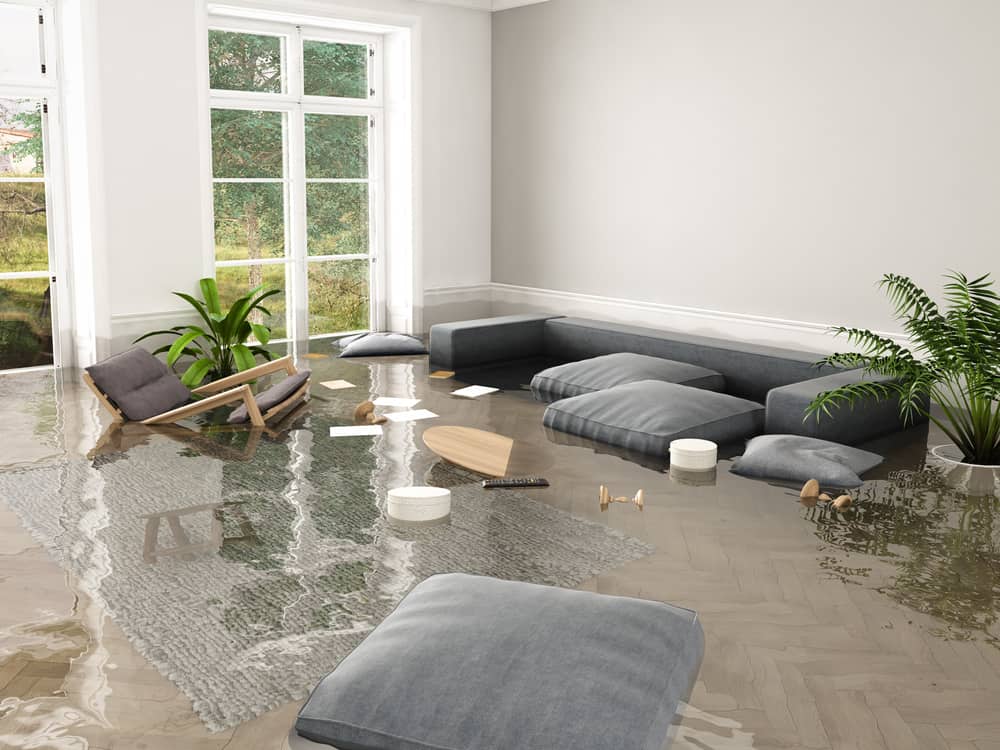
The first step is getting there fast. When you call, we dispatch a team to your North Patchogue home as quickly as possible — because the EPA is clear that water-damaged areas need to be dried within 24 to 48 hours to prevent mold growth. Every hour that passes after a burst pipe or a flooded basement raises the stakes, so we don’t treat the initial call like a scheduling exercise.
When we arrive, we assess the full scope of the damage before we touch anything. That means using professional moisture meters to map what’s wet — including inside walls, under floors, and in structural cavities that look dry to the eye. In older North Patchogue homes, this step is especially important. A house built in 1962 holds water in places that a visual inspection will miss, and we’ve learned exactly where to look. We also identify the water source and category, because the type of water involved — whether it’s a clean pipe burst, gray water from an appliance, or groundwater pushing up through your foundation — affects both the remediation approach and what your insurance policy covers.
From there, we extract standing water, set industrial drying equipment, apply antimicrobial treatment where needed, and monitor moisture levels daily until the structure reads dry. If repairs or reconstruction are needed after drying, we handle that too. Any work requiring a Town of Brookhaven building permit gets handled properly — no shortcuts that create problems down the road with your insurer or a future home sale.

Ready to get started?
North Patchogue sits at the intersection of two water damage realities. The first is the interior threat: aging plumbing, failing water heaters, and sump pumps that give out during the worst possible storms. With a median home age of over 60 years and 97% of the community made up of detached single-family houses, there’s no building manager checking the crawl space. When something fails, it’s on you — and it usually fails at night or on a weekend.
The second threat is what comes from outside. Canaan Lake and a second waterway in North Patchogue feed directly into the Patchogue Lake and River system, which connects to the Great South Bay. During major storms, that connection runs in reverse — bay water pushes back through the drainage network, saturating the ground beneath homes and causing basement flooding through floor drains and foundation walls. This hydrostatic flooding pattern catches a lot of homeowners off guard, because the water isn’t coming from a pipe and it isn’t coming through the ceiling. It’s coming up from below.
We handle both scenarios — and everything in between. Water extraction, structural drying, flooded basement cleanup, mold remediation, fire and smoke damage, and full reconstruction. We work directly with your insurance company on the documentation and billing, so the claims process doesn’t fall entirely on your plate during an already stressful situation.

It depends on what caused the flooding, and that distinction matters more than most homeowners realize. Standard homeowners insurance covers sudden, accidental water damage from internal sources — a burst pipe, a failed water heater, a washing machine overflow. If your basement flooded because a pipe gave out during a January cold snap, that’s typically a covered event. However, standard homeowners insurance never covers flooding from external water sources. If your basement filled because groundwater pushed up through the floor drain during a storm — which is a real and recurring pattern in North Patchogue given its connection to the Patchogue River drainage system — that falls under flood insurance, which is a separate policy issued through the National Flood Insurance Program.
The other coverage gap to know about is gradual damage. If a slow leak has been dripping behind a wall for months and finally caused visible damage, most insurers will deny that claim on the grounds of neglect or lack of maintenance. Sudden and accidental is the operative phrase. When we respond to your home, we document the damage and the source from the start — because how the event is characterized in the initial report directly affects how the claim gets processed.
Faster than most people expect. The EPA states that water-damaged areas need to be dried within 24 to 48 hours to prevent mold growth, and that window is not a comfortable cushion — it’s the outer limit. Mold spores are already present in the air of virtually every home. What they need to activate is moisture, and once a surface stays wet long enough, germination can begin within 24 hours. Visible growth typically appears within 48 to 72 hours, but the microscopic process starts well before you can see anything.
In North Patchogue’s older homes, this timeline is compressed by the building materials themselves. Plaster walls, original hardwood floors, and the kind of wood-framed construction common in 1960s-era houses absorb and hold moisture in ways that modern materials don’t. Basement spaces with limited ventilation — which describes most finished basements in this neighborhood — create exactly the warm, humid conditions mold needs. If you’ve had a water event and you’re waiting to see how things dry out on their own, you’re likely already in the mold growth window. Getting a professional assessment quickly isn’t an overreaction — it’s the difference between a drying job and a remediation project.
The first thing is safety. Before you go into a flooded basement, make sure the electricity to that area is off — water and live circuits are a serious hazard, especially in older homes where electrical panels and outlets may not be up to current code. If you can’t confirm the power is off, stay out and call a professional first.
Once it’s safe to enter, your priority is stopping the water source if it’s still active — shut off the main water supply if it’s a pipe or appliance failure. Then call a restoration company immediately. Do not wait to see how much it dries on its own. Consumer-grade fans and wet-vacs can remove surface water, but they cannot pull moisture out of the structure, and in a 60-year-old North Patchogue home, the structure is where the real damage happens. Take photos and video of everything before anything is moved or cleaned up — your insurance claim will depend on that documentation. When we arrive, we’ll assess the source, map the moisture, and begin extraction. The faster that process starts, the better your outcome — both in terms of the damage itself and the insurance claim that follows.
For most homes, the drying phase takes three to five days once extraction is complete. A complete restoration project — from the initial water removal through final repairs — typically runs about two to three weeks for moderate damage affecting one or two rooms. Major events involving structural damage or widespread mold can take longer, sometimes several months if reconstruction is significant.
The timeline for a North Patchogue home specifically can be affected by a few factors. Older construction dries more slowly than modern materials because the building components are denser and more absorbent. Basement spaces with limited airflow — common in the post-war ranches and Cape Cods that make up most of this neighborhood — require more drying time and more equipment to reach adequate airflow. If the damage involves groundwater intrusion through the foundation rather than a pipe burst, there may also be additional steps to address the entry point before drying can be fully effective. We monitor moisture levels throughout the process with professional meters, and we don’t call a job complete until the readings confirm it — not just until it looks dry.
In most cases, yes — but it depends on the scope of the damage and where the affected areas are. If the water damage is contained to a basement or a single room and the rest of the home is structurally sound, most homeowners can stay in place during the drying process. The industrial equipment we use — air movers, dehumidifiers — is loud and generates heat, so it’s not comfortable, but it’s livable.
Where it becomes a real consideration is when the damage involves Category 3 water — sewage backup, floodwater, or groundwater that has been contaminated. In those situations, the affected areas present genuine health risks and the home may not be safe to occupy until remediation is complete. Mold is the other factor: if mold has already begun to develop and remediation is underway, occupancy during that phase depends on the extent of the affected area and how the containment is set up. We’ll give you a straight answer about this when we assess your home — not a blanket policy either way. If your insurer covers additional living expenses under your policy, we can help document what’s needed to support that claim.
This is one of the most common questions we get from homeowners in this area, and it’s a genuinely confusing situation when you’re experiencing it. Water coming up through a basement floor or floor drain during a heavy storm is almost always hydrostatic pressure — groundwater that has saturated the soil around and beneath your foundation is pushing upward because it has nowhere else to go.
North Patchogue’s connection to the Patchogue Lake and River drainage system — through Canaan Lake and a second waterway that flows through the hamlet — means that during major storm events, the local drainage network can become overwhelmed. When bay water pushes back through the Patchogue River corridor, it raises the water table across the surrounding area, including streets in North Patchogue that aren’t anywhere near the waterfront. Homes built in the 1960s, which make up the vast majority of this community, were often constructed without modern waterproofing membranes on foundation walls, and their drainage systems weren’t designed for the kind of rainfall intensity Long Island’s South Shore now experiences regularly. The result is water appearing in basements through floor drains, cracks in the slab, or the joint where the wall meets the floor — none of which are pipe failures, and none of which are covered by standard homeowners insurance. If this has happened in your home, the source matters enormously for both the remediation approach and the insurance conversation, and getting that assessment right from the start is exactly what we do.
Useful Links
Other Services we provide in North Patchogue