
Hear from Our Customers

When water gets into a Sagaponack property — whether it’s a burst pipe discovered after a winter vacancy, storm surge pushing off the Atlantic, or a failing cesspool backing up into a finished space — the damage doesn’t pause while you figure out next steps. What you need is someone who can get there fast, assess the full scope, and start reversing the damage before mold enters the picture. The EPA is clear that mold can establish within 24 to 48 hours of water exposure. In a property that’s been sitting vacant through a nor’easter, that clock may have already started before anyone even knew there was a problem.
The outcome you’re after isn’t just dry floors — it’s a property that’s been properly assessed, dried to industry standards, and documented in a way that holds up with your insurance carrier. For Sagaponack homeowners dealing with high-value policies, seasonal vacancy clauses, and the layered permitting requirements that come with the village’s coastal erosion hazard area, that documentation matters enormously. We handle the full scope — water extraction, structural drying, dehumidification, mold prevention, and reconstruction — and work directly with your insurance company so you’re not managing the paperwork from a distance.
Sagaponack’s estate properties often include multiple structures, custom finishes, and complex mechanical systems. A pool house that wasn’t fully dried, moisture left behind custom millwork, or a guest cottage that was overlooked during a rushed cleanup — these are the situations that turn a manageable restoration into a much larger problem months later. The goal is to get it right the first time.
First Response Restoration & Cleaning has been operating on Long Island for nearly three decades. That includes Hurricane Sandy, which flooded homes along Sagaponack Pond, caused serious dune erosion west of Peter’s Pond, and knocked out power to roughly 200 homes in the village. We’ve worked through the aftermath of storms like that across Nassau and Suffolk County — and we understand what coastal water damage looks like at the East End, not just in the abstract.
Our technicians are IICRC-certified, and our company is licensed, bonded, and insured. Those aren’t just checkboxes — they’re the credentials that insurance adjusters look for when reviewing high-value claims, and they’re what protect you if something goes wrong. We cover all of Suffolk County with a dedicated local team and a direct Suffolk County line, so when you call, you’re reaching people who can actually get to Sagaponack.
We work directly with your insurance company, handle the documentation, and keep you informed throughout — whether you’re on-site or managing this remotely from the city.
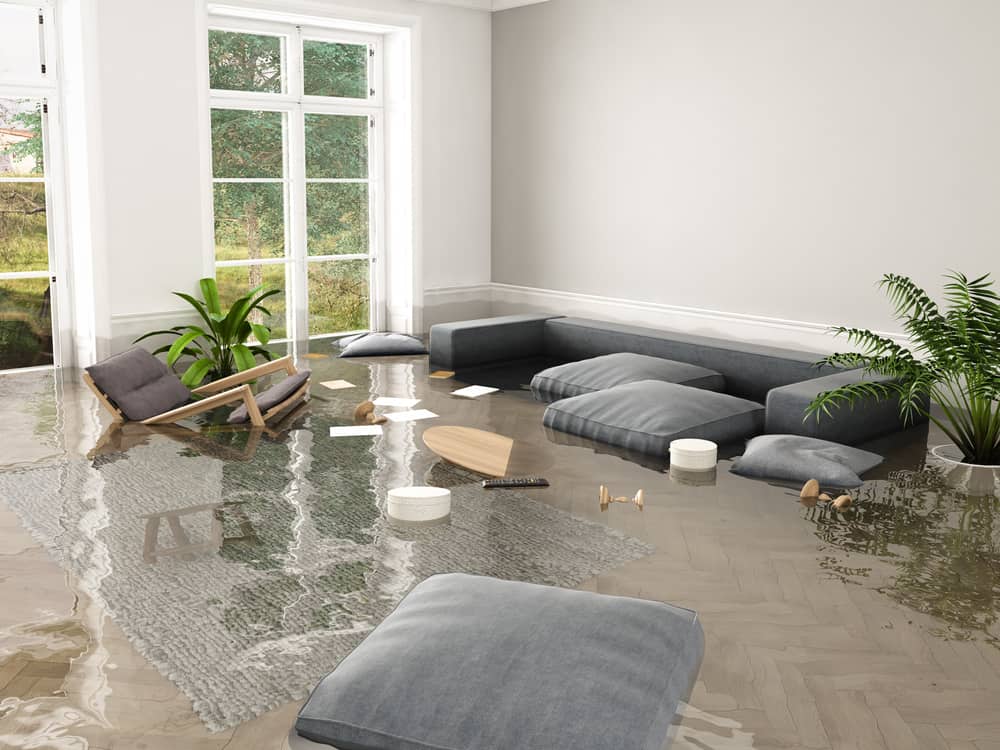
From the moment you call, the process is straightforward. We respond around the clock, so whether the call comes from a caretaker who just found standing water in a basement off Sagaponack Road or an owner who got a water alarm alert at midnight, we move immediately. The first thing we do on-site is a full assessment — moisture meters, thermal imaging, and a walk-through of every structure on the property. In a multi-building estate, that means the main house, guest cottage, pool house, and any other outbuildings. We’re not looking just at what’s visible; we’re looking for what’s hidden inside walls, under floors, and in structural cavities.
Once we have a clear picture of the scope, we begin water extraction and deploy industrial-grade drying equipment — air movers, dehumidifiers, and targeted drying systems that consumer fans simply can’t replicate. This phase typically runs three to five days depending on the severity and the size of the affected area. Throughout that window, we’re monitoring moisture levels and adjusting equipment placement to ensure everything is drying evenly and completely.
For Sagaponack properties that require structural repairs or involve work in the village’s coastal erosion hazard area, there are permit requirements specific to the village — including the Sagaponack Coastal Erosion Management Permit, which is separate from a standard building permit. We’re experienced working within that regulatory environment, so the permitting side of a restoration project doesn’t become a bottleneck. Once drying is complete and the structure is cleared, we move into any needed repairs and reconstruction, with direct communication to your insurance carrier at every stage.

Ready to get started?
The range of water damage scenarios in Sagaponack is genuinely different from most of Long Island. You have direct Atlantic Ocean exposure — Southampton Town is currently executing a 1.2-million-cubic-yard beach nourishment project along the Bridgehampton-Sagaponack coastline specifically to protect oceanfront properties from storm damage, which tells you everything about how real and recurring that risk is. You have properties that sit vacant for months during fall and winter, where a burst pipe or slow leak can go undetected until the damage is extensive. And you have high-value construction — custom finishes, imported materials, historic farmhouse structures — where incomplete restoration causes losses that far exceed the cost of doing the job right.
We handle the full range: water removal and basement water extraction, structural drying and dehumidification, mold remediation, fire and smoke damage, flooded basement cleanup, and complete reconstruction. We also handle severe odor deodorizing and contents cleaning where needed. For properties on or near the oceanfront along Daniels Lane or the Sagaponack Pond corridor, storm damage restoration often involves documentation for both a standard homeowners policy and a separate flood insurance policy — two different processes with different requirements. We understand that distinction and work through both.
Sagaponack properties also rely entirely on cesspools and septic systems — there’s no municipal sewer infrastructure in the village. A cesspool failure or septic backup creates Category 2 or Category 3 water damage that requires a different remediation approach than a clean-water pipe burst. Our team is equipped to handle contaminated water events properly, with the appropriate protective protocols and disposal procedures.

This is one of the most important questions for Sagaponack property owners, and the answer depends heavily on your specific policy language. Standard homeowners insurance typically covers sudden, accidental water damage — a pipe that bursts, an appliance that fails — but many policies contain vacancy clauses that limit or exclude coverage if the property has been unoccupied beyond a certain period, often 30 to 60 days. In Sagaponack, where the majority of high-value estates are seasonal second homes, that clause is a real exposure.
The distinction between a homeowners policy and flood insurance also matters significantly here. Standard homeowners insurance never covers flooding — meaning storm surge from the Atlantic Ocean, groundwater intrusion, or rising water from Sagaponack Pond during a major storm event is only covered if you have a separate flood insurance policy through the National Flood Insurance Program or a private carrier. If you’re not sure what your policy covers, the best move is to call us first. We document the damage thoroughly from the start, which gives you the strongest possible foundation for whatever claim you’re filing — and we work directly with your carrier throughout the process.
Mold can begin establishing within 24 to 48 hours of water exposure under the right conditions — and in a Sagaponack property that’s been vacant through a winter storm, those conditions are often already present before anyone discovers the damage. Closed-up spaces with residual heat, moisture trapped behind walls or under flooring, and limited air circulation create exactly the environment where mold takes hold quickly.
The challenge with vacant estate properties in Sagaponack is that by the time a caretaker or owner discovers the problem, the damage may have been active for days or longer. That doesn’t mean the situation is unrecoverable — but it does mean that professional response needs to happen immediately rather than after a few days of waiting to see how things develop. Our IICRC-certified technicians use moisture meters and thermal imaging to locate hidden moisture inside walls and structural cavities that aren’t visible to the eye, which is how you prevent a cleanup from turning into a mold remediation project six months later.
For insurance purposes, these are two entirely separate categories — and the distinction matters a great deal for properties in Sagaponack. Water damage, in insurance terms, refers to damage caused by water that originates inside the home: a burst pipe, a leaking water heater, an overflowing appliance, or a roof leak. That type of damage is typically covered under a standard homeowners policy, provided it was sudden and accidental rather than the result of long-term neglect.
Flood damage refers to water that enters the home from the outside as part of a general flooding event — storm surge from the Atlantic, rising water from Sagaponack Pond during a hurricane or nor’easter, or groundwater intrusion following heavy rainfall. Standard homeowners insurance does not cover this. Flood coverage requires a separate policy, typically through FEMA’s National Flood Insurance Program. Given Sagaponack’s direct ocean frontage and the documented flooding that occurred along the Sagaponack Pond corridor during Hurricane Sandy, understanding which policy applies to your specific situation is critical before you file a claim. We can help you identify what type of damage you’re dealing with and document it appropriately for the correct policy.
Timeline depends on the scope of the damage, the size of the affected area, and whether the restoration involves structural repairs. For a straightforward water intrusion event — a burst pipe that’s caught relatively quickly in a single area of the home — the drying phase typically runs three to five days, with any needed repairs following after the structure is cleared. For a more extensive event involving multiple rooms, multiple structures on the property, or damage that went undetected for an extended period, the full process from initial extraction through completed reconstruction can take two to three weeks or longer.
In Sagaponack, where estate properties often include a main house plus guest cottage, pool house, and additional outbuildings, the assessment and drying phases are more involved than in a standard single-structure home. Each building needs to be evaluated independently, and drying equipment needs to be staged and monitored across multiple spaces. If the project requires structural repairs and involves work in the village’s coastal erosion hazard area, the permitting process adds time — the Sagaponack Coastal Erosion Management Permit is a separate application from a standard building permit, and that review takes time to complete. We factor all of this into the project timeline from the start so there are no surprises.
For very minor, contained incidents — a small appliance overflow on a tile floor that you catch within an hour — basic cleanup with towels and a wet-vac can be a reasonable first step. But for anything beyond that, professional cleanup protects both your property and your claim.
The core problem is that consumer-grade equipment doesn’t reach moisture inside walls, under flooring, or in structural cavities. A surface that looks and feels dry to the touch can still have significant moisture content inside the wall assembly — and that’s where mold establishes itself over the following weeks. In a Sagaponack estate with custom millwork, imported stone, or historic framing, the cost of mold remediation after a failed DIY cleanup can far exceed what a professional restoration would have cost in the first place. There’s also an insurance documentation issue: if you file a claim after attempting your own cleanup, the adjuster may question whether the damage was properly mitigated, which can complicate the settlement. A professional assessment documents everything from the start, which protects both the property and the claim.
Yes — Sagaponack is within our Suffolk County service area, and we respond to water damage calls throughout the East End, including Bridgehampton, Wainscott, Water Mill, Southampton, and the surrounding Hamptons communities. Our Suffolk County team operates out of Long Island and covers the full county, so we’re not dispatching crews from out of state or routing calls through a national call center. When you call our 631 number, you’re reaching a local team that can actually get to Sagaponack.
We’re also familiar with the specific regulatory environment on the East End — including the village-level permitting that applies in Sagaponack, the Southampton Town building application process, and the Sagaponack Coastal Erosion Management Permit that’s required for certain restoration work near the oceanfront. For property owners managing estates in Sagaponack, that local knowledge matters. It means the restoration process moves forward without getting stalled by permit complications, and the work is done in compliance with the village’s building construction and flood damage prevention codes from the start.
Useful Links
Other Services we provide in Sagaponack