
Hear from Our Customers

When water gets into your Shirley home on the Mastic-Shirley Peninsula, the problem rarely stops at the surface. The water table here sits close to grade, which means that even after a storm passes, moisture continues pushing up through slab floors, crawl spaces, and foundation walls long after the rain stops. A shop vac and a box fan won’t fix that — and if you leave hidden moisture behind, mold will find it within 24 to 48 hours.
What you actually need is someone who can map the moisture, extract it from the places you can’t see, and dry the structure correctly before mold has a chance to establish itself. That means industrial-grade equipment, trained technicians, and a documented process that holds up when your insurance adjuster reviews the claim.
For Shirley residents, getting this right the first time matters more than it does in most places. The post-war Cape Cods and ranch homes that make up most of this community — many of them built in the late 1940s and 1950s by developer Walter T. Shirley — are now 60 to 75 years old. Aging galvanized pipes, original plumbing, and decades-old water heaters mean that water damage here often comes with secondary surprises once the walls are opened. You want a company that knows how to handle what’s behind the drywall, not just what’s on the floor.
We’re based in West Babylon — a few miles west of Shirley along the same South Shore corridor, on the same Great South Bay coastline, with the same storm history. This isn’t a national franchise that dispatches crews from out of state when a nor’easter rolls through. We’ve been working Long Island for close to three decades, through every hurricane season, every major flooding event, and the long recovery that followed Sandy.
Our team is IICRC-certified, which matters more than it might sound. IICRC certification is the standard that insurance companies and adjusters expect — it means the work follows documented protocols, the drying is measured and verified, and your claim has the paperwork to back it up. We’re also licensed, bonded, and insured, which protects you legally and financially throughout the process.
When you call our 631 number, you’re reaching a Suffolk County operation that knows the Tangier section, knows the canal homes near Narrows Bay, and knows what flooding looks like on this peninsula. That local familiarity isn’t a marketing line — it changes how the job gets done.
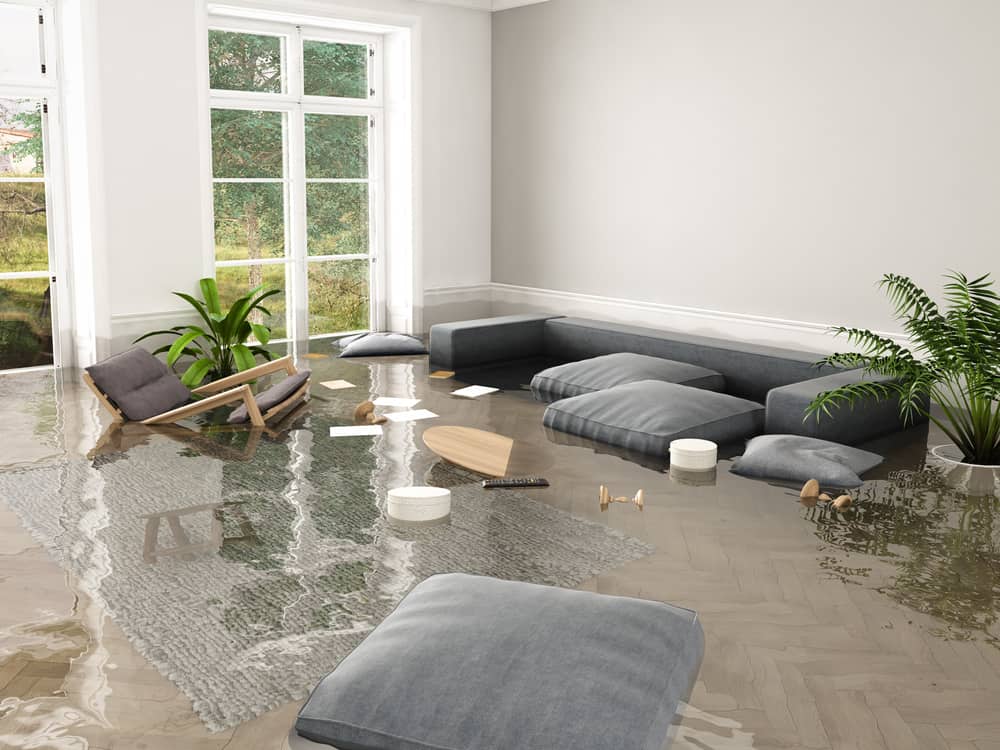
The process starts the moment you call. We operate around the clock, so whether it’s a burst pipe at 2 a.m. or storm surge flooding your crawl space during a nor’easter, you’re not waiting until business hours. A crew gets dispatched, and the clock starts immediately — because every hour of standing water increases the damage and raises the cost of what comes next.
When our team arrives, the first priority is assessment and extraction. Using professional moisture meters and thermal imaging, we locate water not just where you can see it but inside wall cavities, under flooring, and in the structural spaces that consumer-grade equipment can’t reach. In Shirley’s older ranch and Cape Cod homes, this step is especially important — water wicks quickly into plaster, original hardwood, and the insulation beneath crawl space floors, and it won’t show up on the surface until it’s already caused significant damage.
Once extraction is complete, industrial air movers and dehumidifiers are set up to begin structural drying. This phase typically runs three to five days for most homes, though the timeline depends on the extent of the damage and the type of water involved. Throughout the process, everything is documented — moisture readings, equipment logs, photos — in a format that supports your insurance claim. For Shirley homeowners who carry both a standard homeowners policy and an NFIP flood policy, that documentation needs to be organized correctly for two separate claims processes. We handle both. If structural repairs or reconstruction are needed after drying is complete, that work is handled through our company — no coordinating separate contractors, no gaps in accountability.

Ready to get started?
Water damage restoration in Shirley covers a wider scope than most homeowners expect when they first call. It starts with water extraction and structural drying, but for homes on the Mastic-Shirley Peninsula, it frequently goes further. Canal-adjacent properties and homes in the Smith Point area flood from the bottom up — water rises through foundations, floor drains, and crawl space vents rather than coming in through a window or a failed roof. That requires a different extraction approach and specific attention to hydrostatic pressure in the foundation itself, not just the visible standing water.
Beyond the drying phase, our service includes mold prevention treatment applied to affected surfaces before walls are closed, antimicrobial application where contamination is present, and full documentation for insurance purposes. When water carries sewage or storm surge contamination — which is common in Category 3 flooding events along the Great South Bay — the remediation protocol is more involved, and the health and safety standards are more stringent. Our IICRC-certified technicians are trained to identify which category of water damage they’re dealing with and adjust the response accordingly.
For Shirley homeowners, it’s also worth knowing that any structural repairs or reconstruction following water damage require permits issued through the Town of Brookhaven’s Building Division. We manage the full scope from initial extraction through final rebuild, which means the permitting and coordination don’t fall on you to figure out mid-project. If your home is in a designated FEMA flood zone — particularly in the canal areas or near Smith Point — rebuilt structures may need to meet updated elevation requirements. That’s something we account for from the start, not something you discover at the end.

This is one of the most important distinctions to understand before you file a claim, and it trips up a lot of Shirley homeowners. Standard homeowners insurance covers sudden, accidental water damage from internal sources — a burst pipe, a failed water heater, an appliance overflow. It does not cover flooding. Flooding, in insurance terms, means water that enters your home from an external source: storm surge from Great South Bay, rising canal water, or rainwater that accumulates on the ground and pushes in through your foundation.
For that kind of damage, you need a separate National Flood Insurance Program policy. Shirley has a documented concentration of NFIP policyholders and repetitive loss properties, so many residents in this community carry both types of coverage. If you have both, you’re dealing with two separate claims processes with two different adjusters and two different documentation requirements. We have experience navigating both simultaneously, which means the paperwork gets organized correctly from the start and you’re not scrambling to figure out which policy covers what while your basement is still wet.
Faster than most people expect. The EPA’s guidance is clear: water-damaged areas need to be dried within 24 to 48 hours to prevent mold growth. That’s not a worst-case estimate — that’s the standard window under normal indoor conditions. In a coastal community like Shirley, where humidity levels are already elevated and the water table sits close to the surface, conditions can accelerate that timeline further.
What makes this especially relevant for Shirley’s older housing stock is that mold doesn’t need visible standing water to start. It needs moisture — and moisture hides inside wall cavities, under original hardwood floors, and in the insulation beneath crawl spaces long after the surface appears dry. A homeowner who dries the visible water with fans and assumes the job is done may not notice a problem for weeks, until a musty smell appears or a soft spot develops in the floor. By that point, the remediation is significantly more involved than it would have been if professional drying equipment had been deployed immediately. Calling sooner is almost always less expensive than calling later.
These categories come from the IICRC S500 standard, which governs how professional water damage restoration is performed, and they matter because they determine the cleanup protocol, the health risks involved, and often what your insurance will cover and how.
Category 1 is clean water — a burst supply pipe, a refrigerator line failure, an overflowing sink. It’s the least hazardous and the least expensive to remediate. Category 2 is gray water, which carries some contamination — a washing machine overflow, a dishwasher backup, or toilet overflow without solid waste. Category 3 is black water, and it’s the most serious: sewage backups, storm surge, groundwater intrusion, and floodwater from external sources. For Shirley homeowners dealing with Great South Bay storm surge or canal flooding, Category 3 is a realistic scenario. That water carries bacteria, pathogens, and contaminants that require a more rigorous remediation protocol — affected materials often can’t be dried and saved, they need to be removed. Knowing which category you’re dealing with changes the entire scope of the job, and it’s something a certified technician determines on arrival, not something you should try to assess yourself.
The honest answer is that it depends on the extent of the damage and what the moisture mapping reveals once our team is on site. For a straightforward burst pipe affecting one or two rooms, the extraction and drying process typically takes three to five days, with repairs following shortly after. For more significant flooding — the kind that affects a basement, a crawl space, and multiple rooms simultaneously — the full process from initial extraction through final reconstruction can take two to three weeks or longer.
For homes in Shirley, particularly those in the Smith Point area or along the canal system, there’s an additional variable: storm surge flooding often saturates the ground around and beneath the foundation, which means moisture continues pushing into the structure even after the surface water is gone. That can extend the drying timeline compared to a standard inland water damage job. We monitor moisture readings throughout the drying phase and don’t close walls or sign off on the job until the readings confirm the structure is genuinely dry — not just surface-dry. Rushing that step is how you end up with a mold problem six weeks later.
Call the restoration company first. This surprises a lot of homeowners, but there’s a practical reason for it: the faster water extraction begins, the less total damage there is to document and repair. Waiting on hold with your insurance company while water continues spreading through your floors and walls costs you more in the long run, not less.
More importantly, a professional restoration company will document the damage thoroughly before any cleanup begins — photos, moisture readings, written assessments — which is exactly what your insurance adjuster will want to see. If you start cleaning up yourself before documentation is complete, you may inadvertently weaken your claim. We work directly with insurance companies, so once you’ve made the initial call to your insurer to report the claim, our team handles the communication, documentation, and direct billing from there. You don’t have to serve as the go-between for your adjuster and your contractor while also trying to manage the disruption to your household.
Shirley’s housing stock is predominantly post-war construction — Cape Cods and ranch homes built between the late 1940s and 1970s, which means most of the plumbing in these houses is 50 to 70 years old. Galvanized steel pipes, which were standard in that era, corrode from the inside out over decades. They don’t fail all at once — they develop pinhole leaks that can run inside walls for weeks before a homeowner notices a water stain on the ceiling or a soft spot in the floor. By the time it’s visible, the damage is already significant.
When a pipe does fail catastrophically — which happens more often during cold snaps when older, poorly insulated pipes freeze and burst — the water spreads quickly through wall cavities and under flooring. In Shirley’s ranch-style homes with slab foundations or shallow crawl spaces, there’s often nowhere for that water to go except sideways into the structure. The restoration process for these homes frequently involves opening walls to inspect for hidden moisture and, in some cases, uncovering secondary issues like deteriorated pipe insulation or mold that was already present before the burst occurred. That’s not unusual for homes of this age, and it’s something our team is experienced in handling — not a surprise that derails the project.
Useful Links
Other Services we provide in Shirley