
Hear from Our Customers

The goal isn’t just getting the water out. It’s making sure nothing is left behind inside your walls, under your floors, or beneath your baseboards that turns into a mold problem three months from now. That’s the difference between a real restoration job and a surface-level cleanup.
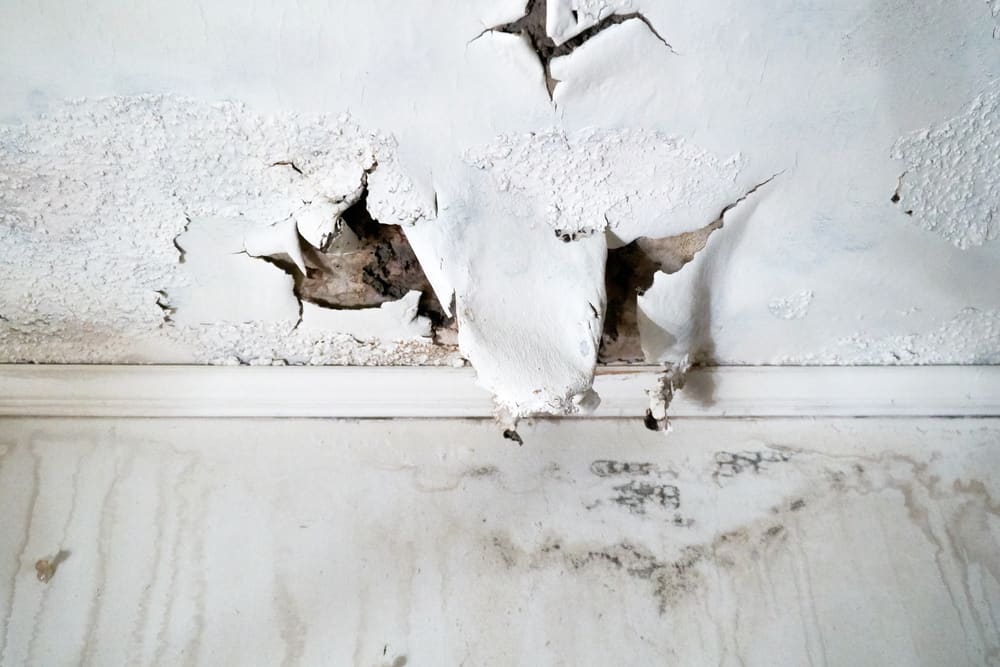
South Hempstead’s housing stock makes this especially important. Most homes here were built in the 1930s through the 1950s — Cape Cods and ranches with original framing, older insulation, and in many cases, plumbing that’s been in the ground for seven or eight decades. When water gets into those wall cavities, it doesn’t behave the same way it does in a newer build. It travels further, absorbs deeper, and hides longer. Industrial moisture meters and thermal imaging find it. Consumer-grade fans don’t.
The other critical factor: the water table in South Hempstead sits roughly 4 to 8 feet below grade in many neighborhoods. Your basement floor isn’t sitting on dry earth — it’s sitting close to groundwater. When your sump pump fails during a storm, that’s not a leak. That’s the ground pushing back. Getting the water out fast and drying the structure completely is the only way to stay ahead of it.
We’ve been working in Nassau and Suffolk County homes for nearly three decades. That experience means we understand what aging post-war homes in South Hempstead actually look like on the inside, how they respond to water intrusion, and what it takes to dry them properly.
We’re headquartered in West Babylon and maintain dedicated Nassau County coverage, which means when you call 516-698-1776, you’re reaching a local team — not a national call center routing you to whoever’s available. South Hempstead sits squarely within our service area, and the crew that shows up will have worked in homes just like yours along Long Beach Road and throughout the surrounding neighborhoods.
Every technician is IICRC-certified, and we’re licensed, bonded, and insured. For homeowners in the Town of Hempstead’s jurisdiction — where building permits are required for structural repairs in flood zones — that matters. You want a restoration company that knows the process, not one that learns it on your job.
When you call, the first thing that happens is a rapid assessment — either over the phone or on-site, depending on the situation. We need to understand what you’re dealing with before anything else. Is this a burst pipe, a sump pump failure, storm-driven groundwater, or something coming from an appliance? The source matters because it affects how the job is scoped, what your insurance is likely to cover, and how quickly the drying process needs to start.
Once on-site, we map the moisture. This means checking inside walls, under flooring, and in structural cavities — not just the visible wet areas. In a South Hempstead home built in the 1940s or 1950s, water can travel a surprising distance from the original point of entry. Industrial extractors pull standing water first. Then air movers and commercial dehumidifiers take over, running continuously until moisture readings hit the target range. This phase typically takes three to five days depending on the extent of saturation.
From there, any structural repairs — drywall, framing, flooring — are handled as part of the same job. If your property falls within the Town of Hempstead’s flood zone boundaries, we’re familiar with the permit requirements and the two-path remediation process the Town uses. That’s not something you want to navigate alone mid-restoration. Throughout the entire process, we document the damage to insurance standards and work directly with your insurance company so you’re not left managing that conversation on top of everything else.
Ready to get started?
We handle everything from water extraction all the way through rebuild. That includes emergency water removal, structural drying, dehumidification, mold prevention treatment, and full reconstruction of any damaged materials — drywall, flooring, framing, whatever the water reached. There are no handoffs to a separate contractor halfway through the job.
For South Hempstead homeowners specifically, a few things come up regularly. Galvanized steel supply pipes in homes from this era have a standard service life of 40 to 70 years. The oldest homes in the hamlet are now well past that threshold, which means pipe failures — slow pinhole leaks inside walls, joint failures under slabs — are a recurring source of damage that often goes undetected until the signs show up on a ceiling or in a musty smell from the basement. We use moisture meters and thermal imaging to find what’s already traveled beyond the visible damage.
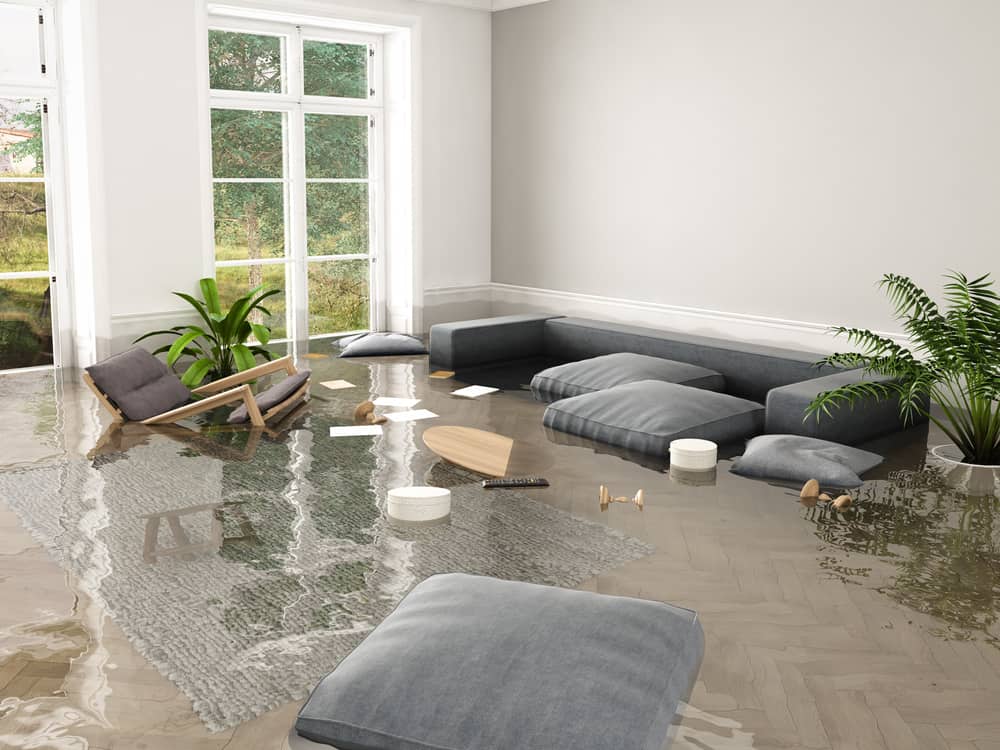
Sump pump failures during power outages are the other common scenario in South Hempstead. The hamlet’s proximity to the Southern State Parkway corridor and the stormwater runoff dynamics that come with it, combined with the shallow water table, means that a power outage during a nor’easter or a heavy summer storm is a direct path to a flooded basement. Our 24/7 emergency response exists specifically for that scenario — because waiting until morning isn’t an option when the water table is already close to your floor. We handle flood damage restoration, storm damage restoration, and burst pipe water damage, and we coordinate directly with insurance from start to finish.

It depends on what caused the flooding, and that distinction matters a lot in South Hempstead. Standard homeowners insurance typically covers sudden, accidental water damage from internal sources — a burst pipe, a failed water heater, an appliance overflow. What it does not cover is flooding from external sources like groundwater, storm surge, or rising water from outside the home. For that, you’d need a separate flood insurance policy through the National Flood Insurance Program.
This is a real issue in South Hempstead. If your basement flooded because your sump pump failed during a power outage and groundwater pushed up through the floor, your standard homeowners policy may not cover it — even though the damage looks identical to a burst pipe situation. The cause of loss is what the adjuster looks at. We document the damage thoroughly and work directly with your insurance company, which helps ensure the claim reflects what actually happened and gives you the best possible outcome. If there’s any ambiguity about coverage, that documentation is what protects you.
The EPA’s guidance is clear: mold can begin growing within 24 to 48 hours of water exposure under the right conditions. In a South Hempstead home with a shallow water table and older construction, those conditions are almost always present — the humidity levels, the organic materials in older framing and drywall, and the limited airflow in basement spaces create an environment where mold moves fast.
What makes this especially relevant for South Hempstead homeowners is the commute factor. The average commute time from here is about 30 minutes each way, which means a pipe that bursts or a sump pump that fails at 8 a.m. can go undetected for eight or more hours. By the time you get home, you’re already well into that 24-to-48-hour window. That’s why speed of response matters — not as a sales pitch, but as a practical reality. Getting extraction and drying started quickly is the difference between a straightforward restoration job and a mold remediation on top of it.
For most jobs involving a flooded basement or a significant pipe failure, the drying phase alone takes three to five days using commercial-grade dehumidifiers and air movers. The full restoration — from initial extraction through structural repairs and reconstruction — typically runs about two to three weeks for moderate damage. More extensive damage involving structural materials or mold can extend that timeline.
In South Hempstead’s older homes, the process sometimes takes a bit longer because of how water behaves in mid-century construction. Original plaster walls, older wood framing, and subfloor materials from the 1940s and 1950s absorb moisture differently than modern drywall and engineered lumber. We monitor moisture readings throughout the drying phase and don’t move to repairs until the structure hits the right numbers — because rushing that step is what leads to mold showing up six months later and a second round of remediation.
If your property is in or near a Special Flood Hazard Area within the Town of Hempstead’s jurisdiction, yes — building permits are required for structural repairs. South Hempstead is an unincorporated hamlet, which means it falls directly under the Town of Hempstead Building Department rather than a village government. The Town participates in the National Flood Insurance Program and has Certified Floodplain Managers on staff who oversee flood zone compliance.
The practical implication is that restoration work involving structural repairs — replacing damaged framing, drywall, flooring — in a flood zone property needs to go through the permit process before work begins. The Town uses a two-path remediation requirement depending on the extent of the damage. We’re familiar with this process and can help you understand what applies to your specific property. Getting the permitting right from the start protects your insurance claim and keeps the work legally compliant, which matters if you ever sell the home or file a future claim.
This is one of the most common points of confusion homeowners run into, and it has real financial consequences. For insurance purposes, “flood damage” has a specific legal definition: it refers to water that originates from an external source and affects two or more properties or two or more acres of land. Think storm surge, overflowing rivers, or rising groundwater affecting a neighborhood. Standard homeowners insurance does not cover this — flood insurance through NFIP does.
“Water damage,” by contrast, refers to damage caused by water that originates from within the home — a burst pipe, a failed appliance, a roof leak that lets rain in. That’s typically covered under standard homeowners insurance, subject to your deductible and policy terms. The catch is that gradual damage — a slow leak that’s been dripping for months — is often excluded because insurers consider it a maintenance issue rather than a sudden event. In South Hempstead, where aging galvanized pipes are common in homes built 70 to 80 years ago, this distinction matters. Proper documentation of the cause and timeline of the damage is critical to getting the right coverage applied.
You can’t know by looking at it — and that’s the core problem with DIY cleanup or hiring a company that doesn’t use the right equipment. A basement that looks dry after running a shop vac and a box fan for a day can still have significant moisture trapped inside wall cavities, under the subfloor, and within the structural framing. That hidden moisture is what becomes mold weeks or months later.
Professional restoration uses calibrated moisture meters and thermal imaging cameras to read moisture levels inside building materials — not just on the surface. The drying process isn’t considered complete until those readings hit the appropriate baseline for the material type, which varies between concrete, wood framing, drywall, and insulation. In South Hempstead’s older homes, where original plaster, wood lath, and mid-century framing materials are still common, this matters more than it would in a newer build. Those materials hold moisture longer and release it more slowly. We monitor readings throughout the drying phase and provide documentation of the final moisture levels — so you have a record that the job was done completely, not just visually.
Useful Links
Other Services we provide in South Hempstead