
Hear from Our Customers

When water gets into a West Hills home, the clock starts immediately. The EPA is clear that mold can begin developing within 24 to 48 hours of water contact — and in a hamlet where mid-century hi-ranch and split-level homes have wall cavities, finished basements, and aging subfloors, that timeline matters more than most people realize.
Getting the water out is only part of it. What you actually need is confirmation that the moisture inside your walls and under your floors is gone too. West Hills sits directly on the Harbor Hill moraine — a ridge of glacially deposited till heavy in clay. Unlike the sandy soils on Long Island’s South Shore that let water drain away quickly, the ground surrounding your foundation holds water against it. That sustained hydrostatic pressure is what drives water through the cracks and joints of a 50- or 60-year-old concrete block foundation during a heavy rain or rapid spring snowmelt.
It’s not a fluke. It’s geology. And it’s exactly the kind of problem that requires more than a shop vac and a few fans. After a proper restoration, you get a home that’s been dried to industry standard — not just surface-level — with documentation your insurance company can actually use. No hidden moisture left behind. No mold surprise six months from now. No scrambling to coordinate three different contractors when one call handles everything from extraction through rebuild.
We’ve been working on Long Island homes for close to three decades. That’s not a number thrown out to sound impressive — it means we’ve seen the inside of hundreds of homes in western Suffolk County, including the same mid-century construction that defines West Hills. The hi-ranch layouts, the finished basements, the aging plumbing running through exterior walls — none of it is unfamiliar to us.
We’re based in West Babylon and serve West Hills through a dedicated Suffolk County line, which means you’re reaching a local operation, not a national dispatch center routing a crew from wherever’s available. When a nor’easter rolls through and the Jericho Turnpike is backed up, we’re not driving in from three counties away.
We carry full IICRC certification, and every technician on our team is licensed, bonded, and insured. For a home in West Hills — where median property values sit close to $742,000 — that’s not a nice-to-have. It’s the baseline you should expect from anyone working inside your walls.
The first step is a free on-site assessment. One of our technicians comes to your home, uses moisture detection equipment to map where the water has traveled — not just where it’s visible — and gives you a clear picture of what you’re dealing with before anything else happens.
In a West Hills home where water may have entered through a foundation crack driven by moraine soil pressure, or through a burst pipe in an exterior wall during a January freeze, the source and the spread aren’t always obvious from the surface. Once the scope is confirmed, extraction begins. Industrial-grade equipment pulls standing water out of the space, and air movers and dehumidifiers are positioned to begin drying the structure — including inside wall cavities and under finished flooring where consumer equipment simply doesn’t reach.
Moisture readings are taken throughout the drying phase, typically over three to five days, until the structure meets the dryness standards required by the IICRC S500. Any restoration work in West Hills that involves opening walls, replacing structural members, or altering the building envelope will be coordinated with Town of Huntington permit requirements — that’s handled as part of our process, not left for you to figure out.
From there, we remove damaged materials and replace them, treat affected areas to prevent mold growth, and handle reconstruction to bring the space back to where it was. We work directly with your insurance company throughout — handling documentation, adjuster communication, and billing so that piece of it isn’t sitting on your plate.

Ready to get started?
The housing stock in West Hills is predominantly mid-century — homes built in the 1950s through 1970s with original or near-original plumbing, block foundations, and finished basements that have been improved over decades. These homes respond to water intrusion differently than newer construction, and our restoration approach accounts for that. Pipe runs in exterior walls, older sump pump systems, and basement finishes that weren’t built with waterproofing in mind all factor into how we do the work.
Our water damage restoration covers the full range: emergency water removal, structural drying and dehumidification, mold inspection and remediation, damaged drywall and flooring removal, odor treatment, and complete reconstruction when needed. Flood damage from nor’easters, burst pipe water damage from freeze-thaw events, storm damage restoration after a heavy system moves through — all of it falls within scope. There are no named service packages here, and no situation where you’re handed off to a subcontractor for part of the job.
For West Hills homeowners with high-value insurance policies and finished basement spaces that represent years of investment, the documentation piece matters as much as the physical work. Every step of the restoration is documented to insurance standards, which protects your claim and gives your adjuster exactly what they need to process it without complications. Call our Suffolk County line — 631-587-5300 — for direct service to West Hills residents.

The most common driver in West Hills isn’t a plumbing failure or a roof problem — it’s the soil. West Hills sits on the Harbor Hill moraine, which is composed of glacially deposited till that contains significant clay content. Clay doesn’t drain the way sandy soil does. When a nor’easter delivers several inches of rain over 24 to 48 hours, or when spring snowmelt comes off the Northern State Parkway corridor faster than the ground can absorb it, that water pools against your foundation walls instead of draining away.
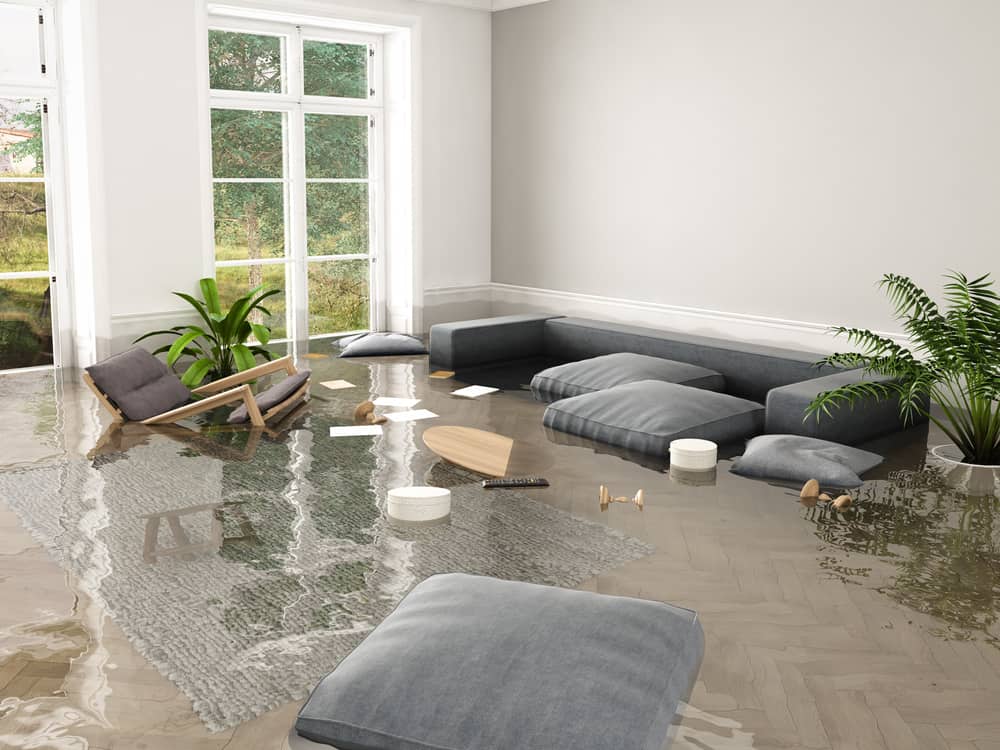
That sustained pressure — called hydrostatic pressure — pushes against every crack, joint, and gap in a foundation. In a home built in the 1950s or 1960s with a concrete block foundation, those gaps exist. The result is water in your basement that has nothing to do with a burst pipe or a leaking appliance. It’s a geology problem specific to West Hills that shows up as a water damage problem, and it requires proper extraction and structural drying — not just mopping up the visible water and running a fan.
Generally, yes — sudden and accidental water damage from internal sources like a burst pipe is covered under standard homeowners insurance. If a pipe in your exterior wall freezes and bursts during a hard January night in West Hills, the resulting damage to your floors, walls, and belongings is typically a covered claim. What matters is that the damage is sudden and accidental, not the result of a slow leak that went unaddressed over time.
What standard homeowners insurance does not cover is flooding — meaning water that enters your home from outside, such as groundwater pushing through your foundation during a nor’easter. That type of damage requires a separate flood insurance policy through the National Flood Insurance Program. It’s a distinction that catches a lot of West Hills homeowners off guard, especially when the basement floods during a storm and the source isn’t immediately obvious. Getting a professional assessment early helps document the cause of loss clearly, which is one of the most important things you can do before your adjuster arrives.
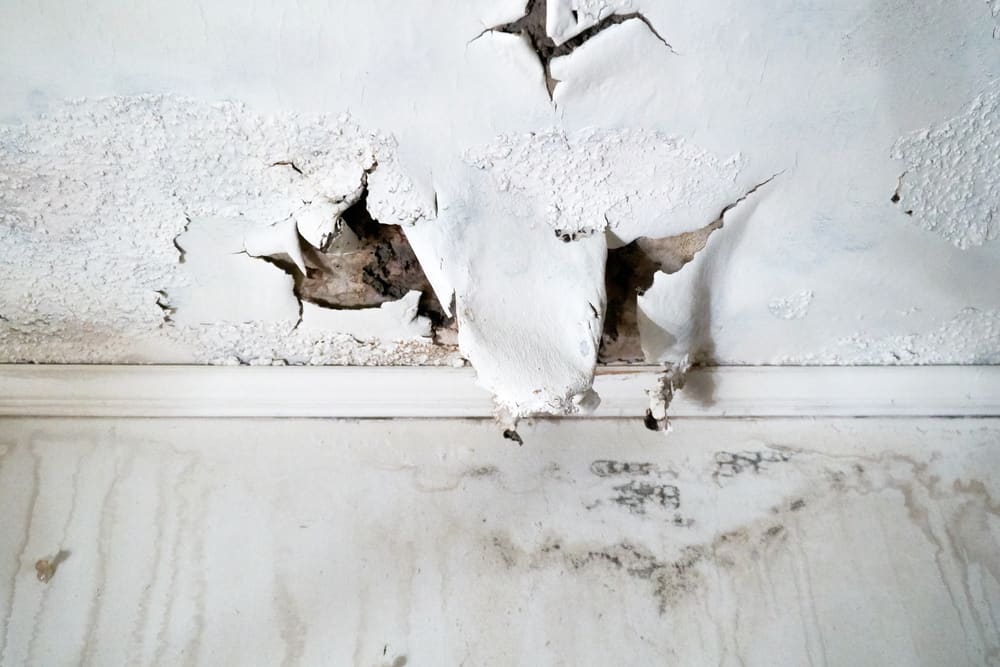
The EPA states that mold can begin developing within 24 to 48 hours of water contact under the right conditions. In a finished West Hills basement — with drywall, carpet, wood framing, and insulation all holding moisture — those conditions exist the moment water gets in. The visible surface might look dry within a day or two, but the moisture inside the wall cavity or under the subfloor is still there, and that’s where mold colonizes.
This is why calling immediately matters more than it might seem. Every hour that passes before extraction begins is an hour that moisture is working its way deeper into the structure. A surface cleanup with consumer-grade equipment doesn’t reach the moisture inside walls or under finished flooring — which means a basement that looks fine after a DIY attempt can have active mold growth behind the wainscoting six weeks later. Professional equipment and moisture mapping are the only way to confirm the structure is actually dry, not just dry on the surface.
For most residential water damage situations — a burst pipe affecting one or two rooms, or basement flooding from a nor’easter — the drying phase alone takes three to five days using industrial dehumidifiers and air movers. That’s the phase where the structure is being dried to the moisture levels required by the IICRC S500 standard. Rushing that phase is one of the most common mistakes made by less experienced contractors, and it’s what leads to mold problems down the road.
After drying, the repair and reconstruction phase depends on how much material was damaged. Replacing drywall, flooring, and trim in a finished West Hills basement can add another week or two to the timeline. If there are structural repairs involved, or if the work requires a permit from the Town of Huntington Building Department, that adds coordination time as well. For most homes, a realistic total timeline from first call to final walkthrough is two to three weeks. Major flooding with structural damage can run longer. The on-site assessment at the beginning of the job gives you a realistic timeline specific to your home’s situation.
In most cases, yes — especially if the water damage is contained to a basement or a single area of the home. The restoration equipment runs continuously during the drying phase, which means dehumidifiers and air movers will be operating in the affected space around the clock for several days. That’s manageable in most West Hills homes where the finished basement or a lower level is the primary affected area and the rest of the home remains livable.
The situations where temporary relocation becomes necessary are typically more severe: Category 3 water damage involving sewage backup or heavily contaminated floodwater, significant mold growth affecting living areas, or structural damage that compromises the safety of the home. If any of those conditions are present, we’ll tell you clearly and help you document it for your insurance company, since temporary living expenses may be covered under your policy’s additional living expense provision. During the initial assessment, you’ll get a straight answer about whether staying put is realistic for your specific situation.
IICRC certification means the technicians performing the work are trained to a recognized industry standard — the S500 for water damage restoration — and that the process follows a documented protocol rather than whatever approach a given crew decides to take that day. For a West Hills homeowner filing a claim on a home valued close to or above $741,000, that documentation matters significantly. Insurance adjusters are more likely to scrutinize large claims, and work performed by non-certified contractors can create complications during the claims process.
Beyond the insurance angle, certification reflects a genuine difference in how the job gets done. IICRC-certified technicians use moisture meters and thermal imaging to confirm drying progress inside the structure — not just on the surface. We follow established drying timelines rather than pulling equipment early to move on to the next job. For a home in West Hills where a finished basement represents years of investment and the clay-heavy moraine soil means water intrusion can recur if the underlying conditions aren’t properly addressed, the quality of the restoration work has long-term consequences. Certification is how you know the work meets a standard that holds up — with your insurer and in your home.
Useful Links
Other Services we provide in West Hills