Summary:
If you’ve discovered mold in your Nassau County home, you’re probably searching for someone who can test it and remove it—fast. But here’s what most Long Island homeowners don’t realize: New York State law makes it illegal for the same company to do both. That’s not a suggestion. It’s the law, and it exists for one reason—to protect you from getting taken advantage of. Article 32 of the NYS Labor Law requires complete separation between the company that assesses your mold and the company that removes it. Understanding why this law exists, what it requires, and how to spot violations could save you thousands of dollars and a lot of frustration.
Why New York Created Strict Mold Regulations
New York didn’t always have mold laws. Before 2016, the mold industry was essentially unregulated. A contractor could walk into your home, tell you that you had a “toxic emergency,” charge you for testing, then turn around and charge tens of thousands more to clean it up. There was no oversight. No licensing. No requirement for independent verification.
After Superstorm Sandy hit Long Island in 2012, thousands of Nassau and Suffolk County homeowners were exploited by unlicensed contractors who inflated mold problems to maximize profits. The New York State Department of Labor responded by enacting Article 32, which became effective January 1, 2016. This law established the first statewide licensing requirements and minimum work standards for mold professionals in the country. It also created what’s known as the “independence clause”—the rule that prevents the same company from doing both your assessment and your remediation.
What Are the Mold Licensing Requirements in New York
New York requires three distinct types of mold licenses, and each one serves a specific purpose. Understanding the difference matters because it tells you who’s legally allowed to do what in your home.
First, there’s the Mold Assessor license. This is the person who inspects your property, identifies where mold is growing, takes air or surface samples if needed, and writes a detailed Mold Remediation Plan. They’re trained to diagnose the problem and create a roadmap for fixing it. But here’s the key: they cannot perform the actual cleanup. By law, their role ends once they hand you that written plan.
Then there’s the Mold Remediation Contractor license. This is the company that executes the work outlined in the assessor’s plan. They’re the ones who set up containment barriers, remove contaminated materials, clean surfaces, and restore your home. They must follow the assessor’s plan exactly. They can’t deviate from it, and they can’t perform their own clearance testing when they’re done.
Finally, there are Mold Abatement Workers and Supervisors—the individuals on the remediation crew. Workers need 32 hours of state-approved training. Supervisors need 40 hours. Both require hands-on instruction, exams, and proof of liability insurance. Every person involved in touching mold in New York must carry a physical license card issued by the NYS Department of Labor.
The state doesn’t issue these licenses lightly. Applicants must complete Department of Labor-approved coursework, pass exams, submit insurance certificates, and pay licensing fees. And those licenses must be renewed annually. If a contractor can’t show you a current, valid license with their photo and expiration date, they’re not legally allowed to work on your property.
You can verify any contractor’s license yourself using the NYS Department of Labor’s Licensed Mold Contractors Search Tool. It’s public, it’s free, and it’s the fastest way to confirm you’re dealing with someone legitimate. If a company hesitates when you ask to see their license or tells you licensing “doesn’t really matter,” that’s your signal to walk away.
New York Mold Standards: The Two-Company Rule Explained
The heart of New York’s mold law is simple: the company that tests your mold cannot be the company that removes it. This is called the separation of duties, and it’s the most important consumer protection the law provides.
Here’s why it matters. Imagine you hire a company that offers to do both your inspection and your cleanup. They come to your house, look around, and tell you that you’ve got a serious problem—maybe 500 square feet of contaminated drywall that needs to be torn out. They quote you $15,000 for the job. How do you know they’re telling the truth? How do you know they’re not exaggerating the scope to inflate their bill? You don’t. And once they finish the work, they perform their own clearance test and tell you everything’s fine. Again, how do you verify that? You can’t.
That’s the conflict of interest New York eliminated. When the same company performs both roles, they have a direct financial incentive to exaggerate the problem during assessment and then pass their own work during clearance—even if mold remains or air quality is still compromised. Regulators used to call this “the fox guarding the henhouse.”
Under Article 32, the process works differently. You hire a licensed Mold Assessor first. They inspect your property, identify the source of moisture, determine the extent of contamination, and provide you with a written Mold Remediation Plan. This document is your legal protection. It specifies exactly which rooms are affected, how many square feet of material need to be removed, what containment methods are required, and what cleaning protocols must be used. Without this written plan, a remediation contractor cannot legally begin work in New York State.
Once you have the plan, you hire a separate licensed Mold Remediation Contractor. Because every contractor is bidding on the exact same scope of work, you can compare prices on an apples-to-apples basis. No more guessing whether one company is padding the estimate. The remediator you choose must follow the assessor’s plan to the letter. They can’t cut corners, and they can’t skip steps.
When the work is done, the original assessor comes back to perform a post-remediation clearance assessment. They run air tests, inspect the work, and verify that the remediation was successful. If the project passes, you get a written Passed Clearance Report—a document that proves the job was done right. If you ever sell your Nassau County home, lenders, buyers, and insurance companies may require this report as proof that mold was handled professionally and legally.
And here’s the accountability piece: if the project fails clearance, the remediation contractor is legally responsible for re-cleaning the area to meet the plan’s standards at no additional cost to you. That’s the check-and-balance that prevents contractors from cutting corners. They know an independent third party will be verifying their work, so their incentive is aligned with yours—complete, thorough remediation that passes inspection the first time.
How Mold Regulations Protect Nassau County Homeowners
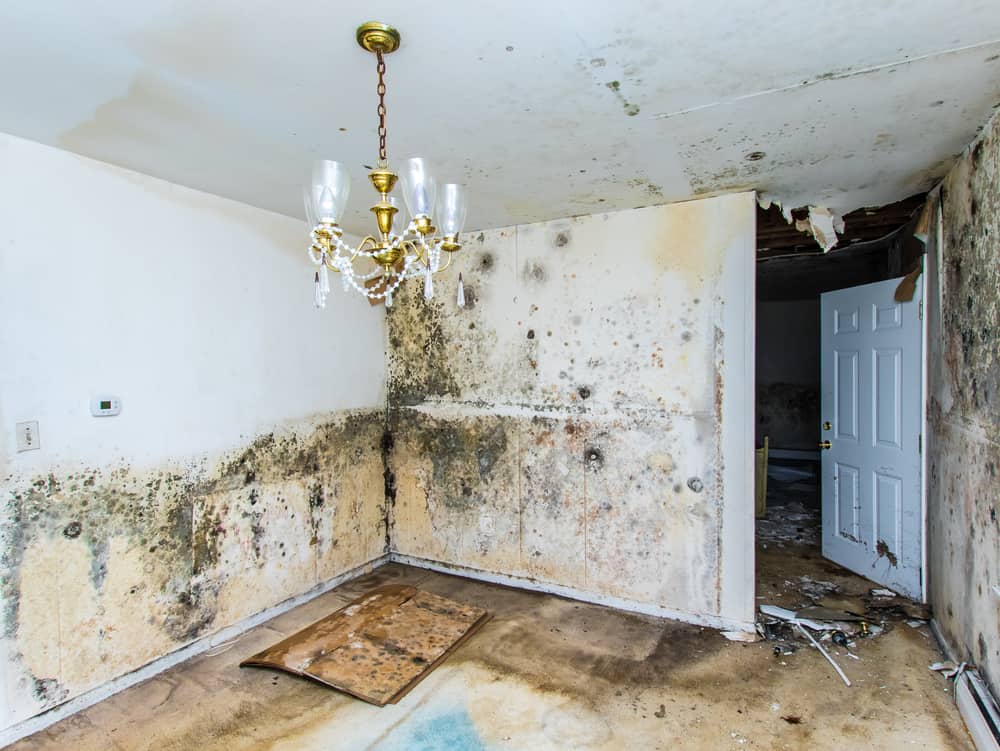
Nassau County presents unique challenges when it comes to mold. The coastal climate, aging housing stock, and proximity to the Atlantic Ocean create conditions where mold thrives. Many homes in Nassau County were built before 1980, and the combination of older construction, high humidity, and seasonal weather swings makes mold a recurring issue for Long Island homeowners.
New York’s mold regulations were designed specifically to address these challenges. They establish minimum work standards, require proper containment and removal protocols, and ensure that every step of the process is documented. For Nassau County residents, this means you’re protected not just by the separation requirement, but by a comprehensive framework that governs how mold must be handled from start to finish.
Red Flags That a Company Is Violating Mold Laws
Not every company operating on Long Island follows the law. Some still offer “one-stop-shop” services, promising to handle both your testing and your cleanup. Others downplay the licensing requirements or tell you that the separation rule is “optional” or “only for big jobs.” None of that is true.
Here are the red flags that should make you stop and reconsider. If a contractor offers you a “free” mold inspection with the condition that you also hire them for remediation, that’s a violation. The law doesn’t allow for bundled services. If they can’t produce a valid New York State mold license with their photo, name, and current expiration date, they’re not legally allowed to work on your property. If they tell you that you don’t need a separate assessor or that clearance testing isn’t necessary, they’re either uninformed or deliberately misleading you.
Another red flag: contractors who refuse to provide a written Mold Remediation Plan before starting work. Article 32 requires this document. It’s not optional. If a company tells you they’ll “just handle it” without a formal plan, they’re violating state law. And if they offer to perform both the remediation and the final clearance test themselves, they’re operating illegally.
You should also be cautious of contractors who pressure you to move quickly without giving you time to verify their credentials or get multiple bids. Mold is a problem that needs to be addressed, but it’s rarely such an emergency that you can’t take 24 hours to confirm that the people you’re hiring are licensed and compliant. Any company that discourages you from doing your due diligence is a company you should avoid.
Finally, watch out for contractors who can’t explain the three-step process: independent assessment, separate remediation, and independent clearance. If they don’t understand how the law works, they’re not qualified to work in your home. New York’s mold regulations exist to protect you. A legitimate contractor will welcome the oversight because it demonstrates professionalism and accountability.
What Happens If You Hire an Unlicensed Contractor
Hiring an unlicensed mold contractor doesn’t just put you at risk—it can cost you in ways that go far beyond the initial cleanup. If the New York State Department of Labor discovers that unlicensed work was performed on your property, the contractor can face fines up to $10,000 per violation. Since Article 32 took effect in 2016, the state has issued thousands of violations to contractors who ignored licensing requirements.
But the bigger risk is yours. If you hire a company that violates the separation requirement, you have no legal protection if the work is done incorrectly. There’s no independent verification. No clearance report. No documentation that the mold was actually removed. And if the mold returns—which it often does when the underlying moisture problem isn’t addressed—you’re left paying for the same work twice.
Insurance companies are also cracking down. Many homeowner policies now require proof that mold remediation was performed by licensed professionals in compliance with state law. If you file a claim and your insurer discovers that you used an unlicensed contractor or a company that violated the two-company rule, they may deny your claim entirely. That means you’re on the hook for the full cost of remediation, plus any damage the mold caused to your property.
Property value is another concern. When you sell your home, buyers and their lenders will want to see documentation that any mold issues were resolved properly. A Passed Clearance Report from a licensed assessor proves that the work was done right. Without it, you may be required to re-remediate the entire area at your own expense before the sale can close. In some cases, buyers walk away entirely rather than take on the risk of undocumented mold work.
There’s also the issue of liability. If someone in your household—or a future occupant—develops health problems that can be traced back to mold exposure, and it’s discovered that the remediation was performed illegally, you could face legal action. New York’s mold law exists to protect public health. Violating it doesn’t just expose you to fines; it exposes you to lawsuits.
The bottom line: using a licensed, compliant contractor isn’t just about following the rules. It’s about protecting your investment, your insurance coverage, and your family’s health. The few hundred dollars you might save by cutting corners isn’t worth the risk of paying for the same job twice—or worse, dealing with legal and financial consequences that could have been avoided.
Staying Compliant with NY Mold Standards
New York’s mold laws aren’t complicated, but they are strict—and for good reason. Article 32 protects Nassau County homeowners from fraud, ensures that mold is removed safely and completely, and provides a clear process for verifying that the work was done right. Understanding the separation requirement, knowing how to verify licenses, and recognizing red flags are the best tools you have for navigating a mold problem.
If you’re dealing with mold in your Nassau County home, start by hiring a licensed Mold Assessor. Get a written Mold Remediation Plan. Then hire a separate licensed Mold Remediation Contractor to execute the work. And make sure you receive a Passed Clearance Report when the job is complete. That’s the process the law requires, and it’s the process that protects you.
For professional mold services that comply with all New York State regulations, we’ve been serving Nassau and Suffolk County for over 35 years at First Response Restoration and Cleaning Inc. Our team understands the legal requirements, the local challenges, and what it takes to get the job done right the first time.