
Mold Removal in East Hampton, NY
When You Open the House and Find the Problem Has Been Growing All Winter
Hear from Our Customers
Professional Mold Removal East Hampton
You stop worrying about what’s behind the walls. That’s the real outcome. Not just a surface wipe-down, but a property that’s been properly assessed, contained, and cleared so you can use it again without second-guessing every musty smell or dark corner.
For East Hampton homeowners, the risk isn’t just seasonal. The oceanic climate here keeps relative humidity elevated year-round. Salt air off the Atlantic holds moisture in building materials longer than it would anywhere inland. And more than 40% of the housing stock in this town was built before 1949 older framing, original plaster, stone foundations, unventilated crawl spaces. These aren’t just old homes. They’re homes that were never designed to handle what the East End’s coastal environment throws at them.
When mold is fully removed and the source of moisture is addressed, you get your property back. You stop dreading the spring walkthrough. Your family can be in the house without the headaches, the respiratory irritation, or the quiet anxiety of not knowing what’s growing inside a wall you can’t see. That peace of mind is the real deliverable and it starts with doing the job completely, not partially.
Mold Removal Companies East Hampton NY
We’ve been operating out of West Babylon and serving all of Suffolk County for over 31 years. That includes the full East End from East Hampton Village and Amagansett to Springs, Wainscott, and Montauk. This isn’t a franchise routing your call to a subcontractor. We’re a licensed, IICRC-certified team with three decades of hands-on experience in East Hampton’s coastal environment and the specific moisture challenges that come with it.
New York State Article 32 requires every mold remediation contractor to hold a valid state license and not every company operating in the Hamptons corridor does. We’re fully licensed, bonded, and insured, and hold IICRC certification under the ANSI/IICRC S520 standard for professional mold remediation. Those aren’t marketing claims. They’re verifiable credentials you should ask any contractor to prove before work begins.
Our customers have specifically noted the transparent pricing an estimate given upfront, and that’s exactly what gets charged. No upsells. No scope inflation mid-job. In a market where luxury pricing is the norm and trust is earned slowly, that kind of consistency matters.
Residential Mold Removal East Hampton NY
It starts with a call any time, day or night. Once you reach out, one of our certified technicians is dispatched to assess the property. That assessment uses moisture sensors, particle counters, and visual inspection to identify not just where mold is visible, but where it’s likely hiding. In East Hampton’s older homes many with original plaster walls and unventilated crawl spaces what you can see is rarely the whole picture.
Under New York State Article 32, the mold assessor and the remediation contractor must be separate entities. That’s a state law designed to protect you from conflicts of interest, and we operate in full compliance with it. Before any remediation work begins, a written remediation plan is prepared. You know exactly what’s being done and why.
Once the plan is in place, our remediation team establishes containment negative air pressure, physical barriers, HEPA filtration to make sure spores don’t spread to unaffected areas during the removal process. Affected materials are removed, treated, and disposed of properly. After the work is complete, post-remediation verification confirms the space meets clearance standards. If your property is within East Hampton Village’s historic district, we account for preservation constraints before any material removal begins. You get a clean property and a documented record of the work which matters for insurance claims and future property transactions.
Ready to get started?
Safe Mold Removal Services East Hampton NY
Mold doesn’t pick one spot and stay there. In East Hampton properties especially those that have been closed for a season it spreads. Attic mold is common in homes where heating systems push warm, moist air into cold attic spaces during winter. Basement and crawl space mold is nearly endemic in older structures near Accabonack Harbor, Three Mile Harbor, and the low-lying areas around Napeague. Bathroom mold, HVAC mold, mold inside wall cavities after a burst pipe these are the scenarios we handle every day across the East End.
Attic mold removal typically runs $1,000–$4,000 depending on scope. Basement and crawl space mold removal ranges from $1,500–$6,000. Larger or more advanced cases especially in properties that have been closed and unmonitored for an extended period can go higher. Every project starts with a written estimate so you know what you’re looking at before anything begins.
We handle residential mold removal and commercial mold removal across East Hampton and surrounding hamlets. We also coordinate directly with insurance carriers, document damage for claims, and manage the full restoration continuum from mold removal through complete property repair. If the mold came from a burst pipe or post-storm water intrusion, you don’t need a second contractor to handle the water damage side we cover that too. One call handles it all.
How do I know if my East Hampton vacation home has a mold problem?
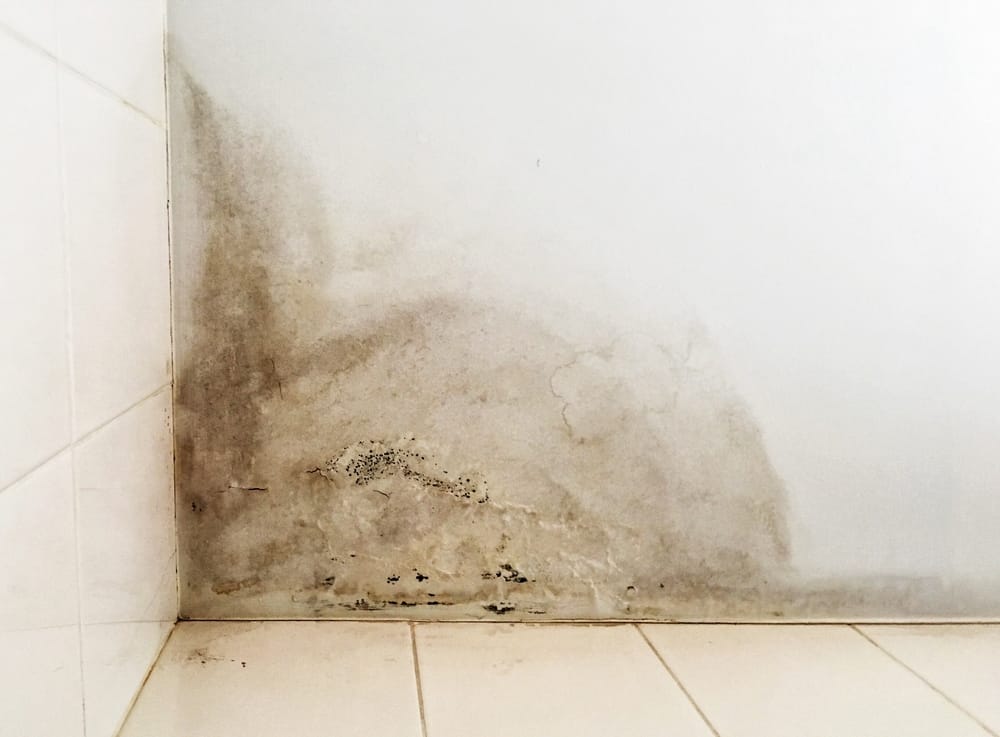
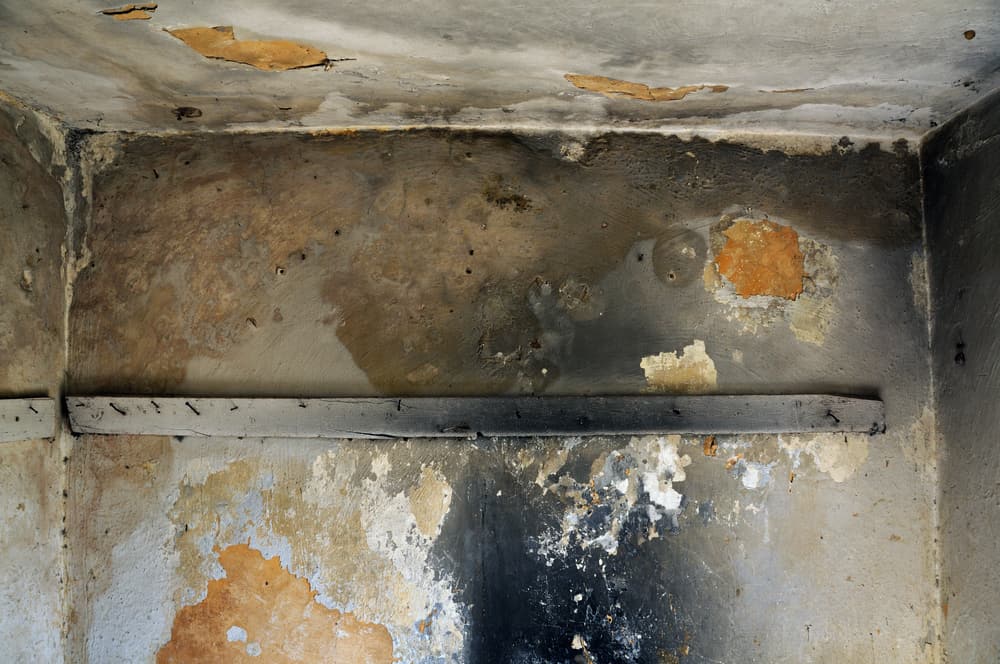
The most common scenario in East Hampton is this: you open the house in spring or early summer after months away, and something doesn’t smell right. Sometimes the mold is visible dark patches on walls, discoloration on ceilings, growth along baseboards in a basement or crawl space. Other times, there’s nothing obvious to see, but the musty odor is a strong indicator that mold has established somewhere you can’t easily access.
Closed homes with limited airflow are exactly the environment mold needs. Add East Hampton’s coastal humidity, salt air, and the moisture that accumulates in unventilated crawl spaces over a Long Island winter, and the conditions are nearly ideal for growth. If the home was also subject to a burst pipe, a slow leak, or any kind of water intrusion while unoccupied, mold can be well-established by the time you arrive.
A professional mold assessment conducted by a licensed assessor, separate from the remediation contractor as required under New York State Article 32 is the only way to know for certain what you’re dealing with and where. Particle counters and moisture sensors find what a visual inspection alone can miss, especially in older East Hampton homes with plaster walls and original framing.
What causes mold to grow so quickly in East Hampton homes?
East Hampton sits at the intersection of several conditions that make mold growth nearly inevitable without active prevention. The oceanic climate here keeps relative humidity elevated throughout the year not just in summer. Salt air off the Atlantic holds moisture in building materials longer than it would in an inland community. And because a significant portion of East Hampton’s housing stock was built before 1949, many homes lack the vapor barriers, modern insulation, and ventilation standards that help newer construction manage moisture.
Seasonal occupancy compounds the problem significantly. When a home is closed for the fall and winter with minimal airflow, moisture accumulates without anywhere to go. HVAC systems that aren’t properly winterized can create condensation at air handlers inside closed walls. Crawl spaces with dirt floors and no ventilation act as moisture traps. Any one of these factors alone creates mold risk in East Hampton, most properties have several of them working together at the same time.
Storm events add another layer. Nor’easters and post-hurricane flooding push water into properties along the Atlantic coastline, around Napeague, and near Gardiners Bay. That water intrusion, if not addressed within 72 hours, creates the conditions for mold to take hold and in a property that’s unoccupied, no one is there to catch it in time.
Does homeowners insurance cover mold removal in East Hampton, NY?
It depends on what caused the mold, and the specifics of your policy. Most standard homeowners insurance policies will cover mold remediation if the mold resulted directly from a covered peril a burst pipe, storm damage, or sudden water intrusion, for example. What’s typically not covered is mold that resulted from long-term neglect, deferred maintenance, or gradual moisture buildup that the homeowner had the opportunity to address.
For East Hampton seasonal homeowners, this distinction matters. If a pipe burst while the house was closed for the winter and mold developed as a result, that’s generally a covered scenario. If the mold grew slowly over several seasons due to an unventilated crawl space or a roof leak that was never repaired, coverage is less certain. The documentation you provide and how the damage is characterized can significantly affect the outcome of a claim.
We work directly with insurance carriers, document damage in the format adjusters require, and help East Hampton homeowners navigate the claims process. That coordination is part of our service, not an add-on. Given the property values in this area, getting the documentation right from the start is worth far more than the time it takes to do it correctly.
How long does professional mold removal take in East Hampton?
The timeline depends on the scope of the problem where the mold is, how far it’s spread, and what materials are affected. A contained bathroom mold situation in a smaller property might be resolved in a day. A larger remediation involving attic mold, basement mold, or mold inside wall cavities of an older East Hampton home can take several days, particularly when affected materials need to be removed and the space needs to dry fully before any restoration work begins.
Post-remediation verification adds time to the process, but it’s not optional it’s the only way to confirm the remediation actually worked. Air sampling and clearance testing are conducted after the work is complete, and the results need to meet defined standards before the space is cleared for reoccupancy. Skipping this step is a shortcut that can cost significantly more later if the mold returns.
For seasonal homeowners trying to get the property ready before Memorial Day or a summer rental, timing matters. The earlier you call after discovering a problem, the more flexibility there is in the schedule. We’re available 24 hours a day, seven days a week including weekends specifically because mold discoveries in East Hampton don’t follow a business schedule.
Is black mold removal in East Hampton different from regular mold removal?
The term “black mold” usually refers to Stachybotrys chartarum, which does require specific handling but the color of mold alone doesn’t determine how dangerous it is or how it should be removed. Many mold species can appear dark or black, and some lighter-colored molds can be just as problematic. What actually matters is the species, the concentration of spores in the air, and how far the growth has spread all of which require professional assessment to determine accurately.
That said, any mold growth in a property should be taken seriously, and the remediation process for toxic mold cleanup follows the same core protocol: containment, HEPA filtration, physical removal of affected materials, treatment, and post-remediation verification. The difference with higher-risk species is that containment standards are stricter and personal protective equipment requirements are more rigorous.
In East Hampton’s older homes where mold can grow inside original plaster walls, beneath historic flooring, or in the framing of a pre-1940 structure the concern isn’t just health. It’s structural. Mold that’s been growing unchecked through a winter in an unoccupied home can compromise the integrity of materials that are difficult or impossible to replace in a historic structure. Getting a licensed professional involved early limits both the health risk and the scope of the damage.
Do I need a permit for mold removal work in East Hampton, NY?
The mold remediation itself doesn’t typically require a building permit in East Hampton. However, if the remediation involves significant structural work removing drywall, replacing framing, opening up wall cavities that work may trigger permit requirements under the Town of East Hampton’s building code, depending on the scope. The Village of East Hampton has its own code enforcement administration, and properties within the historic district may face additional review requirements before any material removal begins.
New York State Article 32 governs the licensing side of the equation. Any contractor performing paid mold remediation in New York including East Hampton must hold a current state mold remediation license. The mold assessor writing the remediation plan must be a separate, independently licensed entity. These aren’t optional formalities. Hiring an unlicensed contractor puts you at legal risk, may invalidate your insurance claim, and leaves you with no recourse if the work is done incorrectly.
If your property is within the East Hampton Village Historic District or involves a structure that’s individually listed or contributing to a historic designation, it’s worth confirming with the Village’s Historic Preservation Commission whether any additional approvals are needed before remediation work removes original materials. We’re familiar with working within these constraints and can help you navigate the process without unnecessary delays.
Useful Links
Other Services we provide in East Hampton