
Mold Removal in Quogue, NY
When a Closed-Up Cottage Becomes a Mold Problem by May
Hear from Our Customers
Residential Mold Removal Quogue, NY
The air smells different. The crawl space doesn’t look like something you’re afraid to go near. You stop wondering whether whatever’s behind that wall is the reason your family keeps getting congested every time you open up the house in June. That’s what professional mold removal actually delivers not just a treated surface, but a verified result.
Quogue’s barrier-beach geography puts your property in a uniquely vulnerable position. Ocean air from the south and bay moisture from Shinnecock and Quantuck Bays to the north keep humidity elevated throughout the warm months. In older shingle-style and Victorian-era homes the kind that define the Quogue Historic District that moisture finds its way into original wood framing, unencapsulated crawl spaces, and attic spaces with minimal vapor barriers. The result isn’t just cosmetic. Left alone, mold compromises the structural integrity of materials that can’t simply be swapped out at a lumber yard.
When the remediation is done correctly, you’re not just removing what’s visible. You’re eliminating the source, drying the environment, and confirming through clearance testing that the problem is resolved not relocated. For a property worth what yours is in Quogue, that distinction matters.
Mold Removal Companies Quogue, NY
First Response Restoration and Cleaning Inc. has been serving Suffolk County homeowners for over three decades. That’s 31 years of working in the specific conditions of South Shore Long Island the coastal humidity, the shallow water table, the aging housing stock, and the flooding patterns that come with living near the water. When you call, you’re reaching a real Long Island company, not a national franchise routing your call through a 1-800 number.
Quogue is a community we know well. The Victorian cottages along the Historic District, the bay-adjacent estates near Shinnecock Bay, the Dune Road properties that take the first hit every time a nor’easter moves through these aren’t abstract descriptions to us. They’re the kinds of homes we’ve been called into after storms, after long winters, and after seasonal homeowners open the door in May to find something unexpected waiting for them.
Our technicians are IICRC-certified, fully licensed under New York State Article 32, and carry all required bonding and insurance. The credentials are real, and we’ll show them to you before we start.
Professional Mold Removal Services Quogue, NY
It starts with a thorough assessment. Before anything gets removed or treated, we identify the full scope of the problem not just what’s visible, but what’s behind walls, beneath flooring, and inside crawl spaces. In Quogue’s older homes, visible mold is almost always the smallest part of the issue. We use moisture sensors, particle counters, and air quality testing to find what a visual inspection misses.
Once we know what we’re dealing with, we build a written remediation plan which New York State Article 32 requires before any licensed contractor can begin work. Containment goes up using negative air pressure to prevent spores from spreading to unaffected areas of your home. Then the actual removal begins: affected materials are physically removed, not just sprayed over. HEPA filtration runs throughout. Structural drying and dehumidification follow to eliminate the moisture conditions that allowed mold to grow in the first place.
For Quogue properties that have been closed through the winter, this drying phase is especially important. A home that’s been unheated and unventilated for five or six months holds moisture differently than a year-round occupied residence. We account for that. When the work is complete, post-remediation clearance testing performed by a separate party, as required by law confirms the result before we consider the job done.
Ready to get started?
Crawl Space and Attic Mold Removal Quogue, NY
Mold in Quogue doesn’t limit itself to one area of a home, and neither does our work. Basement mold removal, crawl space mold removal, attic mold removal, bathroom mold removal we handle all of it under one roof, which matters when you’re dealing with a property that may have been affected in multiple areas after a storm or a long seasonal closure.
The crawl spaces beneath Quogue’s older homes are among the most common problem areas we encounter. Many are unencapsulated exposed earth floors, no moisture barrier, minimal ventilation which means ground moisture evaporates directly into the space and condenses on wood framing. Black mold removal in these environments requires proper containment, physical removal of affected materials, and encapsulation to prevent recurrence. In attic spaces, particularly in the Victorian-era and shingle-style homes throughout the Historic District, condensation-driven mold develops when warm air from below meets cold, uninsulated roof sheathing during winter months.
We also coordinate directly with your insurance carrier when the damage is tied to a covered event storm surge, flooding, or water intrusion after a nor’easter. Proper documentation from the start of the job makes a real difference in how a claim is handled, and we know what adjusters need to see. From the first call to the final clearance test, you have one point of contact and a straightforward process from start to finish.
How do I know if my Quogue home has mold after being closed all winter?
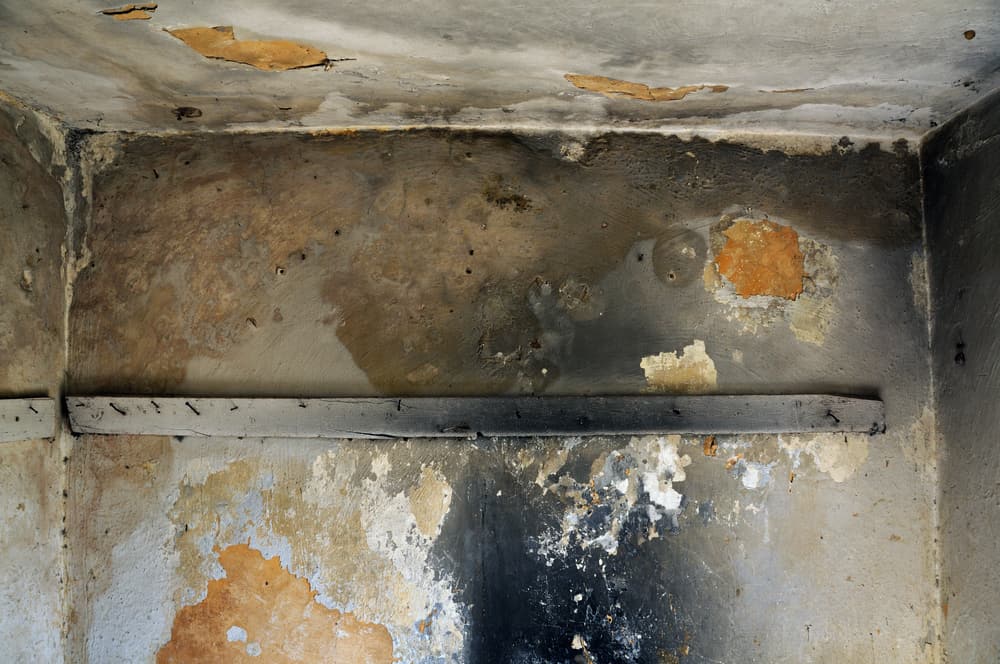
The most common signs are a musty smell when you first open the house, visible discoloration on walls or ceilings, and allergy or respiratory symptoms that seem to improve when you leave the property. But in many Quogue homes particularly the older shingle-style and Victorian cottages that have been closed from October through May the mold is hidden. It’s in the crawl space, behind original plaster walls, or in the attic, and it doesn’t always announce itself visually.
If your home has been unheated and unventilated through the winter, and especially if you’ve had any water intrusion from a storm, a slow roof leak, or a sump pump failure during a power outage, a professional mold inspection is worth doing before you assume everything is fine. Mold that’s been growing for five or six months in an unmonitored space can be far more extensive than what you’d find from a quick visual walkthrough. A proper assessment using moisture sensors and air quality testing will tell you what’s actually there.
How much does mold removal cost in Quogue, NY?
The honest answer is that it depends on the scope. For a contained bathroom or small area of visible surface mold, costs can be relatively modest. For a full crawl space remediation, attic mold removal in a Victorian-era home, or a whole-property response after a flooding event, you’re typically looking at a broader project and the cost reflects that. Most residential mold remediation projects fall somewhere in the range of $1,500 to $6,000, with larger or more complex jobs running higher.
In Quogue specifically, a few factors affect cost more than they would in other communities. The age and construction of the home matters original old-growth framing, horsehair plaster, and unencapsulated crawl spaces require more careful, labor-intensive work than modern construction. The extent of seasonal moisture accumulation matters too. And because New York State requires licensed contractors for all paid mold remediation work, you should factor licensing and insurance into what you’re evaluating not just the bottom-line number. We provide written estimates before any work begins, and the price we quote is the price you pay.
Does mold grow faster in homes near Shinnecock Bay or along Dune Road?
Yes and it’s not a minor difference. Properties along Dune Road and near Shinnecock Bay are exposed to persistently elevated humidity from two directions simultaneously. Ocean air from the Atlantic to the south and bay moisture from Shinnecock and Quantuck Bays to the north create a microclimate where indoor relative humidity regularly exceeds 60% in unventilated spaces during warm months. At that level, mold can begin establishing itself within 24 to 48 hours of water intrusion.
For Dune Road properties specifically, every nor’easter and tropical storm carries the risk of storm surge, wind-driven rain intrusion, or bay flooding from the north. The 1938 New England Hurricane pushed Shinnecock Bay water all the way to the intersection of Quogue Street and Jessup Avenue a historical benchmark for how serious flooding can get in this area. After any significant water event, mold remediation should begin within 72 hours to prevent establishment. If you’re a seasonal homeowner who wasn’t present during a storm, that window may have already passed by the time you discover the damage which is exactly why a professional assessment should be your first call.
Is mold remediation in a historic home different from a newer property?
It is, and the difference is significant. In a newer home, mold-affected drywall or modern framing can often be removed and replaced without much concern for the surrounding structure. In a Victorian-era or shingle-style home in the Quogue Historic District, the materials are different original old-growth timber framing, horsehair plaster walls, cedar shingles, and period architectural details that are irreplaceable. Tearing out the wrong material doesn’t just fix the mold problem; it can permanently damage the character and value of the property.
The approach in a historic home has to be more deliberate. That means assessing what can be remediated in place versus what needs to be removed, using containment protocols that protect unaffected areas and original finishes, and working carefully around materials that aren’t available at a modern lumber yard. Our technicians are trained to make those distinctions. The goal is always to remove what needs to go and preserve what doesn’t not to default to the most aggressive approach because it’s faster.
Does homeowners insurance cover mold removal after a storm or flooding event in Quogue?
It depends on the policy and the cause of the mold. Generally speaking, mold that results directly from a covered water damage event such as storm surge, wind-driven rain intrusion, or a burst pipe may be covered under your homeowners insurance policy, particularly if you acted promptly to address the water damage. Mold that developed over time due to ongoing humidity or neglected maintenance is typically not covered.
In Quogue, where nor’easters and coastal flooding events are a documented and recurring reality, the documentation you create in the first hours and days after a water event matters enormously for your claim. That means photographs, written records of when the water entered, and a professional assessment that establishes the connection between the water event and the mold growth. We work directly with insurance carriers and know how to document damage in the way adjusters need to see it. If you’re dealing with post-storm mold and you’re not sure whether your policy covers it, the best first step is getting a professional assessment on record before you start any cleanup on your own.
Do I need a licensed contractor for mold removal in New York, or can I handle it myself?
Under New York State Article 32 of the Labor Law which has been in effect since January 1, 2016 any paid mold remediation work must be performed by a licensed, bonded, and insured contractor. DIY mold removal on your own property isn’t prohibited by law, but for a home in Quogue with the property values involved, attempting to remediate a significant mold problem yourself carries real risk. Without proper containment, you can spread spores to unaffected areas of the home. Without moisture control, the mold comes back. And without post-remediation clearance testing, you have no way to confirm the problem is actually resolved.
There’s also an insurance consideration. If you’re filing a claim related to water or storm damage, insurers will want documentation from a licensed professional not a DIY cleanup with photos from your phone. New York State law also prohibits the same party from performing both the mold assessment and the remediation on the same project, which is a consumer protection measure designed to prevent conflicts of interest. When you work with a licensed contractor, the assessment and the remediation are handled by separate parties, which keeps the scope of work honest and the result verifiable.
Useful Links
Other Services we provide in Quogue