
Mold Remediation in Greenvale, NY
Gold Coast Homes Deserve More Than a Surface Fix
Hear from Our Customers
Certified Mold Remediation Greenvale NY
Mold in a Greenvale home is not just a cosmetic issue. When your property sits on the Harbor Hill Moraine a glacially deposited ridge with unpredictable subsurface drainage moisture finds its way into foundations, crawl spaces, and wall cavities in ways that most homeowners never see coming. The air quality changes. The structure is quietly compromised. And if you’re thinking about selling in one of Nassau County’s most competitive real estate markets, a mold problem discovered during inspection can stop a deal cold.
When remediation is done right, you get your home back not just the visible version of it. That means air that doesn’t trigger symptoms, materials that are actually dry and clean, and documentation that holds up if your insurance carrier or a future buyer asks questions. For families in the Roslyn Union Free School District or the North Shore Central School District who chose Greenvale specifically for the schools and the quality of life, that peace of mind is not a luxury. It’s the whole point.
The difference between a real remediation and a surface treatment is what happens six months later. A proper job addresses the moisture source the foundation seep, the unventilated crawl space, the condensation around aging ductwork so the mold doesn’t come back. That’s what you should expect, and that’s the standard every job is held to.
Mold Remediation Companies Greenvale NY
First Response Restoration and Cleaning Inc. has been serving Greenvale and Nassau County homeowners since the late 1990s. That’s nearly three decades of working through nor’easter seasons, aging housing stock, and the specific moisture challenges that come with the North Shore’s geology including the communities along the Glen Cove Road and Northern Boulevard corridor that Greenvale residents know well.
Every technician who walks into your home is individually IICRC certified not just the company, each person on the crew. That distinction matters in a community where the homes are worth what they’re worth and the people who own them expect professionals, not just workers with equipment.
We also hold full New York State licensing for mold remediation and comply with the 2016 state law that prohibits the same contractor from both assessing and remediating your property. That law exists to protect you, and it’s followed on every job no exceptions.
Professional Mold Remediation Process Greenvale NY
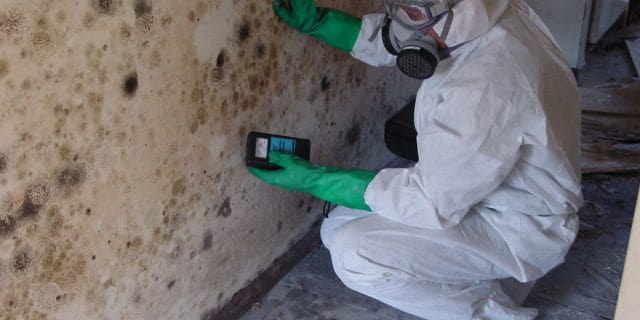
It starts with a thorough inspection not a quick walkthrough with a flashlight. The process includes air testing, surface swab sampling, infrared imaging to locate moisture behind walls, and direct moisture readings throughout the affected areas. Because Greenvale properties often have basements and crawl spaces built decades before modern waterproofing standards existed, the inspection goes deeper than what’s visible. Lab results come back within 2 to 3 business days, and everything is documented in writing.
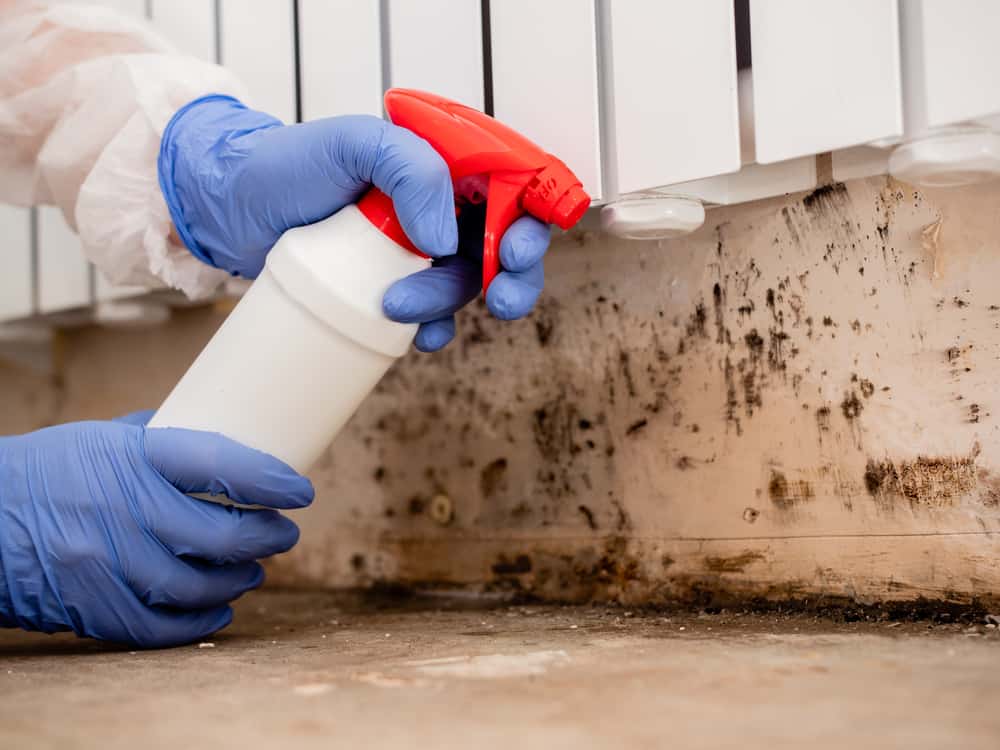
Once the scope is confirmed, containment goes up before any remediation work begins. That means negative air pressure, HEPA filtration, and physical barriers to prevent spores from spreading to unaffected areas of your home. Affected materials are removed, treated, and disposed of properly. The work doesn’t stop at what you can see it follows the moisture, which is the only way to make sure the problem is actually resolved.
After remediation is complete, clearance testing is conducted to confirm the space is clean. If reconstruction is needed drywall, framing, flooring we handle that with the same crew, so you’re not left managing a separate contractor after the fact. One team, one accountable process, from inspection through final rebuild.
Ready to get started?
Black Mold Remediation Services Greenvale NY
Mold doesn’t pick one spot. In Greenvale’s older homes Dutch Colonials, Colonial Revivals, ranch-style properties built anywhere from the 1930s through the 1960s it shows up in basements where block foundation walls have absorbed decades of groundwater, in crawl spaces that haven’t been properly ventilated in years, and in attics where inadequate ridge venting lets summer heat and humidity build until the conditions are perfect for growth. Each of those locations requires a different approach, and each one is handled with the same documented, IICRC-standard process.
Basement mold remediation in Greenvale typically involves addressing the moisture source first whether that’s a foundation crack, a drainage issue tied to the moraine’s variable soil composition, or a sump system that isn’t keeping up. Attic mold remediation focuses on ventilation correction alongside the physical remediation work, because treating the mold without fixing the airflow just sets the stage for a repeat. Crawl space mold remediation often includes encapsulation after the remediation is complete, sealing the space against future moisture intrusion.
We offer emergency mold remediation 24 hours a day, 7 days a week. If a nor’easter pushes water through your foundation on a Friday night, you don’t have to wait until Monday. Our trucks are stocked and ready to respond air movers, dehumidifiers, moisture monitors, and full remediation equipment on board every time.
How does Greenvale's soil and geology affect mold risk in my home?
Greenvale sits directly on the Harbor Hill Moraine a ridge of glacially deposited till, clay, gravel, and sand that creates highly inconsistent drainage beneath residential properties. What that means practically is that groundwater doesn’t behave predictably in this area. After a heavy rain or during spring snowmelt, water can push through foundation walls in spots that have been dry for years, and the clay layers in the moraine slow drainage enough that saturation lingers longer than it would in sandier soils.
For homes built in the 1930s through 1960s which describes a significant portion of Greenvale’s housing stock foundation walls are often poured concrete or cinder block without modern waterproofing membranes. Those materials absorb moisture over time, and once the interior face of a basement wall stays damp long enough, mold follows. The Hempstead Harbor Watershed designation that applies to this area also means seasonal groundwater fluctuations are a documented, recurring pattern not a one-time event. Understanding that geology is part of diagnosing a mold problem correctly, not just treating what’s visible on the surface.
What does mold remediation actually cost for a home in Greenvale, NY?
The honest answer is that it depends on the scope where the mold is, how much area is affected, and whether reconstruction is needed after materials are removed. For a contained basement or crawl space situation in a Greenvale home, remediation often falls in the range of $1,500 to $4,000. Larger infestations involving multiple areas, structural materials, or significant reconstruction can run higher sometimes $6,000 to $10,000 or more for extensive jobs.
What matters more than the number is what’s included. A written inspection report with lab results, proper containment, HEPA filtration, post-remediation clearance testing, and documentation that holds up with your insurance carrier those aren’t add-ons, they’re what a legitimate remediation looks like. In a community where median home values are approaching $700,000, cutting corners on a $2,000 job to save a few hundred dollars and then watching the mold return is not a savings. It’s a more expensive problem deferred. Ask any company you’re considering whether they provide written lab results and post-remediation clearance testing. The answer tells you a lot.
Is mold remediation in Greenvale covered by homeowners insurance?
It depends on the cause. Most homeowners insurance policies cover mold remediation when the mold is a direct result of a covered peril a burst pipe, storm-related water intrusion, or sudden flooding from a specific event. If the mold developed because of a slow leak that went unaddressed over time, or because of chronic basement seepage from groundwater, most policies will not cover it. That distinction matters, and the documentation you have from your remediation company matters too.
For Greenvale homeowners dealing with post-storm mold after a nor’easter or tropical storm remnant pushes water through an older foundation the claim window is real, but only if the damage is documented properly from the start. We can help you build that documentation: written inspection reports, lab results, moisture readings, and a clear scope of work that your insurance adjuster can review. If you’re filing a claim, having a company that understands how to communicate with carriers and what documentation they need is genuinely useful not just a nice-to-have.
What is the difference between mold remediation and mold removal?
“Mold removal” implies that mold can be completely eliminated from an environment which isn’t accurate. Mold spores are present in virtually every indoor and outdoor environment. The goal of professional mold remediation is to bring indoor spore levels back to a normal, safe range and eliminate the active mold colony that’s growing on your building materials. Remediation means treating the affected surfaces, removing materials that can’t be salvaged, correcting the moisture conditions that caused the growth, and verifying through post-remediation testing that the space is clean.
The distinction matters because any company promising to “remove all mold” from your home is either misinformed or being deliberately vague. What you actually want is a documented remediation that follows the IICRC S520 standard the industry benchmark for mold remediation work and concludes with clearance testing that confirms the job is done. In Greenvale’s older housing stock, where moisture intrusion is a recurring reality rather than a one-time event, the remediation process also has to address the source. Treating the mold without fixing what caused it is not remediation. It’s a temporary fix.
Can I stay in my house during mold remediation in Greenvale?
In most cases, yes but it depends on the location and severity of the mold growth. If the affected area is contained to a basement or crawl space, and proper containment barriers and negative air pressure systems are in place, the rest of the home is generally safe to occupy during the work. The containment setup is specifically designed to prevent spores from migrating into living areas while remediation is underway.
Where temporary relocation becomes a real consideration is when mold is present in HVAC systems, throughout multiple floors, or in a central area of the home that can’t be effectively isolated. In those situations, the risk of cross-contamination during the remediation process is higher, and the recommendation may be to stay elsewhere for the duration of the work. This is assessed on a job-by-job basis and discussed openly before work begins not decided for you without explanation. For Greenvale families with children, particularly those dealing with respiratory sensitivities, that conversation happens upfront so you can make an informed decision about your household during the process.
How do I know if the mold in my Greenvale home is actually black mold?
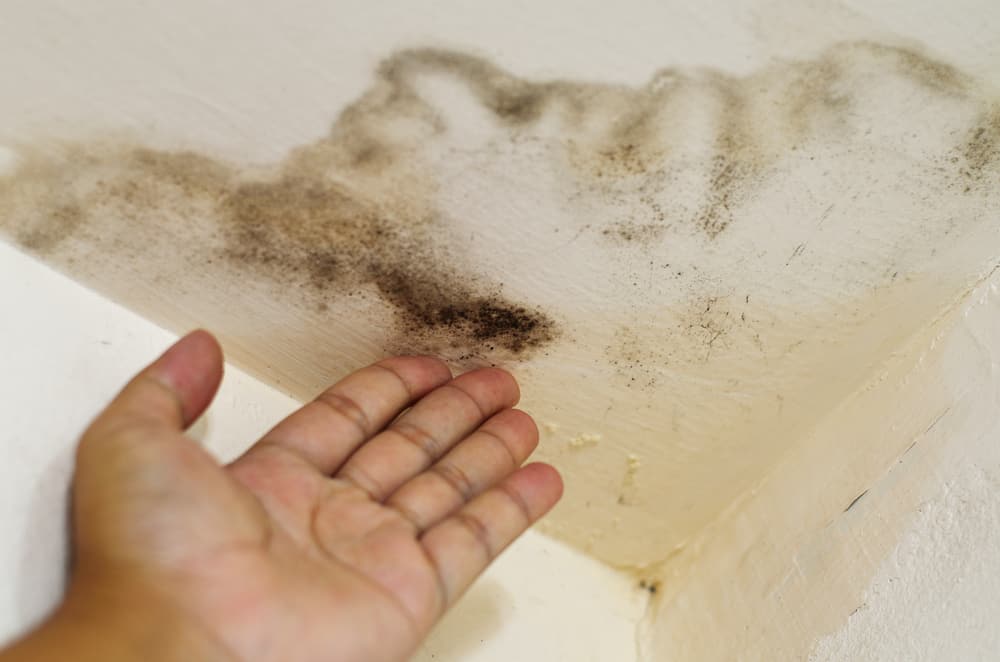
You can’t tell by looking at it and that’s not a hedge, it’s just the reality. Color is not a reliable indicator of mold species or toxicity. What people commonly call “black mold” refers to Stachybotrys chartarum, but plenty of mold species appear dark green, gray, or black without being Stachybotrys, and some genuinely problematic molds don’t look black at all. The only way to identify what you’re dealing with is through laboratory analysis of air samples and surface swabs collected during a professional inspection.
In Greenvale, the most common mold types found in older homes tend to be Cladosporium, Penicillium, and Aspergillus all of which can cause health issues and all of which require professional remediation regardless of whether they’re the species that gets the most media attention. The inspection process includes lab analysis that identifies exactly what’s present, so you’re not making remediation decisions based on a visual guess. If you’re seeing dark growth in a basement, crawl space, or attic especially in a home that’s had any history of water intrusion along the Glen Cove Road corridor or near the Hempstead Harbor Watershed area get it tested before drawing any conclusions about severity.
Useful Links
Other Services we provide in Greenvale