
Hear from Our Customers
Mold in a Levittown home isn’t just a health issue — it’s a direct threat to a property worth over half a million dollars. When it’s handled correctly, you’re not just breathing easier. You’re protecting an asset that took decades to build, and in a community where over 92% of residents own their homes, that matters in a way it simply doesn’t everywhere else.
Levittown’s housing stock is genuinely unique. The original Levitt-built Cape Cods and Ranchers — now pushing 75 to 78 years old — were constructed fast, on concrete slabs, with expansion attics that generations of homeowners later finished without always getting the ventilation right. That renovation history creates hidden moisture pathways that most companies aren’t looking for. When we handle mold remediation thoroughly, those pathways get identified and closed — not just cleaned around.
Nassau County’s coastal humidity regularly climbs above 60% through the summer months, which is the point at which mold growth accelerates. Getting ahead of it means the problem doesn’t compound behind your walls while you’re waiting. After a proper remediation, you have documentation — lab results, inspection reports, photographic evidence — that protects you in an insurance claim, a real estate transaction, or simply your own peace of mind.
We’ve been serving Nassau and Suffolk County homeowners for close to three decades. That’s not a number pulled from a marketing deck — it’s the span of time it takes to actually understand what Levittown homes do when they age, flood, and get renovated by a dozen different contractors over the years.
Every technician who walks into your Levittown home carries individual IICRC certification — not just our company as a whole. That distinction is significant when the job involves a finished expansion attic, a non-original crawl space, or mold growing between renovation layers in a home that’s been modified more times than anyone remembers.
We’re locally rooted in Nassau County, not a national franchise with a local phone number. When Levittown had the highest LIPA outage count on Long Island during Hurricane Sandy — and Levittown Memorial High School became a shelter — we were already here, already working. That kind of presence isn’t built overnight.
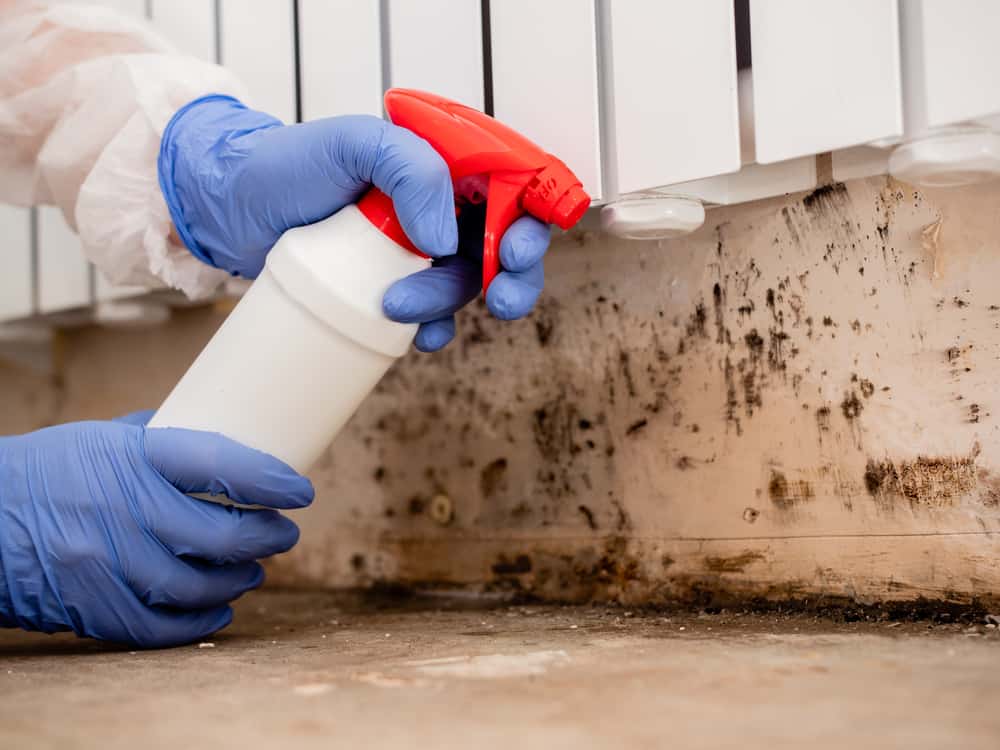
It starts with a 13-point inspection — not a quick walkthrough. Air testing, swab sampling, infrared imaging, moisture level measurement, and a full internal and external mold particle comparison. The goal is to find what’s actually there, not just what’s visible. In Levittown’s older homes, that distinction is everything. Mold behind renovation layers, inside finished expansion attics, or beneath flooring installed over older flooring doesn’t show itself on a surface scan.
Lab results come back within two to three business days, along with a written report that tells you what was found, where it is, how serious it is, and what remediation steps are needed. Under New York State’s 2016 mold law, the company that assesses your home cannot be the same company that remediates it — so your inspection results are independent, and that independence protects you from inflated scopes.
Once remediation begins, we contain the affected area, remove materials to IICRC S520 standards, run HEPA filtration throughout, and address the moisture source driving the growth. Skipping that last step is why mold comes back. After clearance testing confirms the space is clean, we handle full reconstruction — drywall, insulation, finishes — so you’re not left coordinating a separate contractor to put your home back together.
Ready to get started?
Mold remediation in Levittown covers more ground than it does in most communities — and that’s a direct result of the housing stock. The original Levitt-built homes were constructed on concrete slabs, which means any below-grade space you have today was likely added later, often without the waterproofing that a purpose-built basement would have. Crawl space mold remediation in these homes requires understanding that the moisture pathway may be coming from an aging slab joint, a non-original drainage system, or plumbing running under the foundation. That context changes how the work gets done.
Attic mold remediation is one of the most common calls we receive in Levittown specifically because of the expansion attic design. When those spaces were finished into bedrooms or storage areas — frequently without proper vapor barriers or ridge ventilation — they became warm, enclosed environments where condensation builds on the roof sheathing. Our 13-point inspection identifies whether airflow is the root issue, and remediation addresses both the mold and the conditions creating it.
Every job we complete includes air testing, swab sampling, infrared imaging, moisture mapping, full containment during remediation, HEPA filtration, proper disposal of affected materials, a post-remediation clearance test, and a written report with lab documentation. We offer emergency mold remediation 24 hours a day, seven days a week — because in a community with Levittown’s storm history, water intrusion doesn’t schedule itself during business hours. And when the remediation is complete, our full reconstruction services mean you’re dealing with one company from discovery through a finished, restored space.
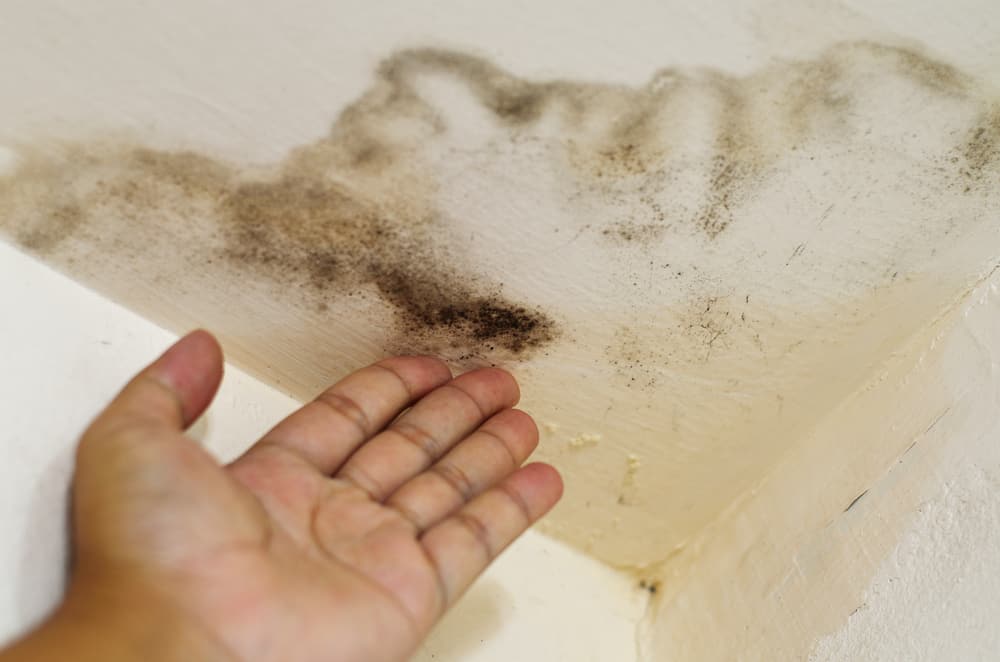
Yes — and it’s one of the most important things to understand before you hire anyone. The original Levitt-built Cape Cods and Ranchers in Levittown were constructed between 1947 and 1951 on concrete slab foundations, without traditional basements, and with expansion attics that were designed as unfinished space. Over the decades, most of those homes have been heavily renovated — attics finished, additions built, kitchens and bathrooms updated multiple times — often by different contractors with varying levels of care around moisture barriers and ventilation.
That renovation history means mold in a Levittown home can be hiding between layers of drywall, under flooring installed over older flooring, or inside a finished expansion attic that was never properly vented. Standard surface inspections miss this. A thorough remediation in these homes requires infrared imaging, air testing, and a clear understanding of how the structure was originally built and how it’s been modified — not just a visual scan and a quote.
The honest answer is that it depends on where the mold is, how far it’s spread, and what materials are affected. Nationally, the average mold remediation job runs around $2,300, with most residential projects falling somewhere between $1,200 and $3,800. Larger infestations — particularly in attic spaces or cases where mold has spread through multiple rooms — can run $10,000 to $15,000 or more.
In Levittown specifically, attic mold remediation tends to be one of the more involved jobs because of the expansion attic design. When a finished attic has had inadequate ventilation for years, the mold growth on the roof sheathing can be extensive by the time it’s discovered. The more important number to keep in mind is what untreated mold costs: studies consistently show it can reduce a home’s resale value by 20% to 37%, and in a community where the median home value is over $577,000, that’s a significant financial exposure. A proper remediation is an investment in protecting what you already own.
Mold removal implies you’re taking mold out — which sounds straightforward but is actually incomplete as a description of what a real fix looks like. Mold remediation means bringing mold levels back to a normal, naturally occurring baseline and addressing the conditions that allowed it to grow. The distinction matters because mold spores are always present in indoor air at some level. The goal isn’t to create a sterile environment — it’s to eliminate the active growth, remove contaminated materials properly, and correct the moisture source so the problem doesn’t return.
A company that offers “mold removal” without addressing the underlying moisture source is doing surface work. In three to six weeks, you’ll be back to the same problem. Proper mold remediation follows IICRC S520 standards — containment, HEPA filtration, removal of affected materials, treatment of remaining surfaces, moisture source correction, and post-remediation clearance testing to confirm the work actually worked. That last step — the clearance test — is what separates a real remediation from a cleanup job.
It depends on the cause. Most standard homeowners insurance policies in New York cover mold remediation when it results directly from a covered event — a burst pipe, storm damage, or sudden water intrusion. What they typically don’t cover is mold that developed from long-term neglect, deferred maintenance, or a slow leak that went unaddressed for months. The line between those two categories is often where insurance disputes happen.
This is especially relevant in Levittown, where many homeowners dealt with insurance claims after Hurricane Sandy and know firsthand how complicated the process can get. The documentation that comes out of a professional inspection — lab results, infrared imaging, photographic evidence, written reports — is exactly what insurance adjusters need to process a mold claim. Going into that process without documentation puts you at a significant disadvantage. A thorough inspection report from a certified company gives you a paper trail that supports your claim and reduces the back-and-forth with your insurer.
The timeline depends on the size and location of the affected area. A contained mold problem in a single room or a crawl space can typically be remediated in one to three days. A larger attic infestation or a case where mold has spread through multiple areas of the home can take a week or more, particularly when reconstruction is factored in.
Whether you can stay in the home during remediation depends on the scope of the work and where the mold is located. For contained jobs in isolated spaces — a crawl space, a utility room, a single bathroom — most homeowners can remain in the home with proper containment barriers in place. For larger jobs, particularly those involving attic spaces or HVAC systems where spores could circulate through the house, temporary relocation is often the safer choice. This is something that gets assessed during the inspection phase, not after work has already started — so you’ll have a clear picture of what to expect before anything begins.
The short answer: you often can’t tell without testing. Mold growth starts within 48 hours of water intrusion, and in Levittown’s older housing stock, the water frequently ends up somewhere it shouldn’t be — behind a wall, under flooring, inside a finished expansion attic — where it sits long enough to become a serious problem before anyone notices a smell or visible growth.
After a significant rain event, a nor’easter, or any storm that brought water into your home, the smart move is an air quality test and moisture assessment even if you don’t see obvious damage. Levittown has been named in Nassau County flash flood warnings multiple times, and the community’s storm drainage infrastructure — designed in the late 1940s for a much smaller footprint — doesn’t always handle heavy rainfall the way newer systems do. If your home took on water during Sandy, Ida, or any storm since, and you never had a professional inspection afterward, there’s a real possibility of hidden mold growth that’s been sitting undisturbed. Infrared imaging and air testing can find it without tearing open walls — which is always the better starting point.
Useful Links
Other Services we provide in Levittown