
Hear from Our Customers
The air feels different. You stop second-guessing what that smell is in the basement. You stop wondering whether the work crew found everything — because you have a written report and lab results that confirm it. That’s what a complete remediation looks like, and it’s a very different experience from a company that sprays, wipes, and hands you an invoice.
For homes along Oyster Bay Harbor and Mill Neck Bay, persistent coastal humidity is a real and recurring factor. The ambient moisture that comes with living this close to the water doesn’t just affect your outdoor spaces — it works its way into basements, crawl spaces, and the attic cavities of older estate construction. When mold takes hold in those areas, surface-level treatment doesn’t cut it. The moisture source has to be identified and addressed, or you’re solving the same problem again in six months.
The age of the housing stock in Mill Neck matters too. Many properties here were built in the early to mid-1900s, with original stone foundations, plaster walls, and framing that wasn’t designed with modern moisture barriers in mind. A certified mold remediation process built for that kind of construction — not a generic suburban ranch — is what actually protects the property long-term.
We’ve been serving Nassau County homeowners for almost three decades, with deep roots in communities like Mill Neck, Oyster Bay, and Locust Valley. That’s not a marketing number — it’s the actual length of time we’ve been showing up to properties on the North Shore, doing the work, and earning repeat calls and referrals from neighbors who know us.
Every technician who comes to your Mill Neck property is individually IICRC certified. Not just our company — every person on the crew. In a village where properties routinely exceed $2 million in value and where the homes themselves are often historically significant, that distinction matters. You’re not getting a certified brand name with an uncertified crew. You’re getting trained professionals who know what they’re doing before they walk through your door.
We also handle full reconstruction after remediation — so if walls, insulation, or structural framing need to come out, you’re not left coordinating a second contractor to put things back together.

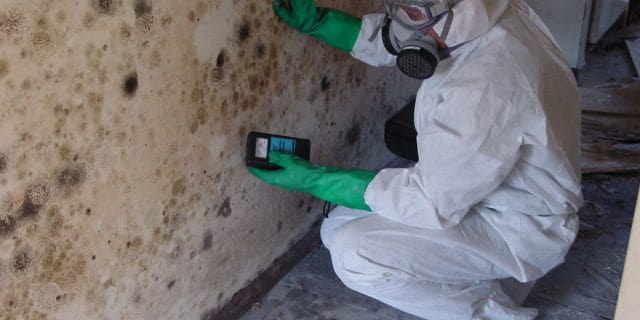
It starts with a 13-point inspection — not a walkthrough with a flashlight. Air testing, swab sampling, infrared imaging to detect moisture hiding behind walls and ceilings, and moisture level measurement across the structure. Internal and external mold particle counts are compared, and written lab results come back within 2 to 3 business days. You know exactly what you’re dealing with before any remediation work begins.
From there, the scope of work is defined and explained clearly. For older Mill Neck estates — especially those with stone foundations, original wood framing, or expansive crawl spaces — we build the remediation plan around your specific construction type, not a one-size-fits-all approach. If the moisture source is groundwater infiltration through a porous foundation, a plumbing leak behind a plaster wall, or condensation building up in an under-ventilated attic, we address that as part of the job. Because if we don’t, the mold comes back.
Nassau County requires mold remediation contractors to hold an Environmental Hazard Remediation Provider license from the Nassau County Department of Health — separate from the state-level Article 32 licensing that New York requires of all remediators. We hold both. Once remediation is complete, we conduct post-remediation clearance testing and document everything. You get a paper trail that holds up in real estate transactions, insurance claims, or simply for your own records.
Ready to get started?
Basements and crawl spaces are the most common mold locations in Mill Neck’s older estate homes — and the most commonly underestimated. Stone foundations without modern waterproofing allow groundwater to seep in steadily, especially during spring thaw or after a heavy nor’easter. Crawl spaces in waterfront-adjacent properties trap soil vapor and humidity with nowhere to go. We address both the mold growth and the underlying moisture conditions that made it possible.
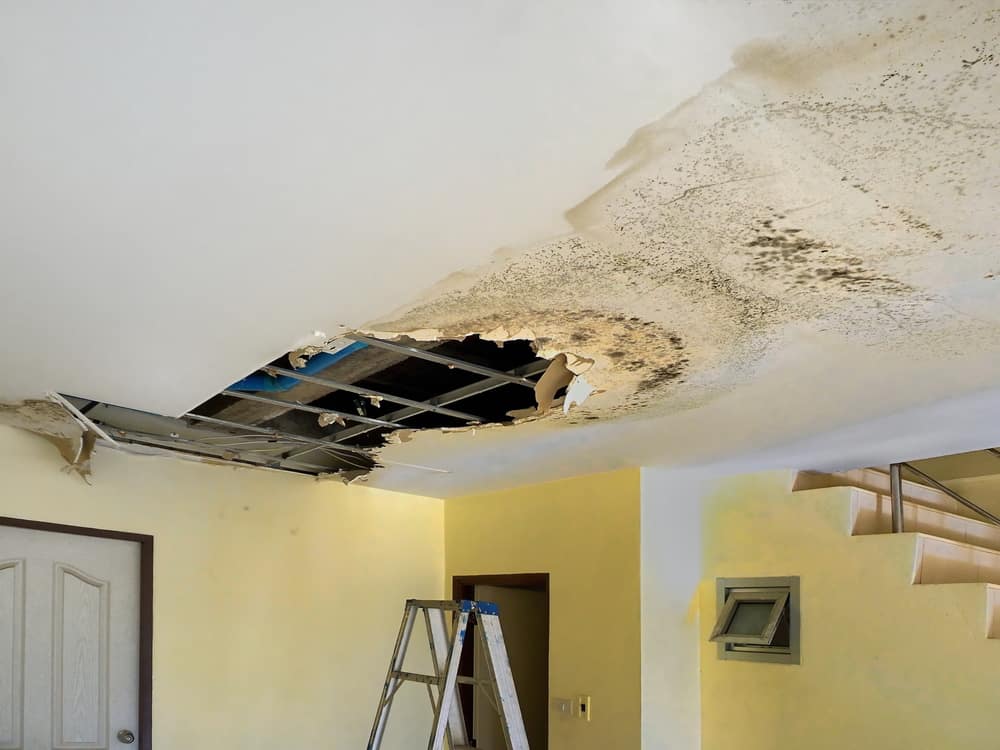
Attic mold remediation is another area where Mill Neck’s housing stock creates specific risk. The steeply pitched rooflines common in Tudor Revival and Colonial Revival estate architecture are architecturally distinctive — and structurally vulnerable to ice dam formation in winter. When meltwater backs up under roofing materials and into attic cavities, mold can develop inside the framing before anyone notices from below. Infrared imaging during the inspection phase catches what a visual check misses.
We’re available 24 hours a day, 7 days a week for emergency mold remediation. Water intrusion from a burst pipe, a failed sump pump, or storm damage can trigger mold growth within 48 hours — and in a home with large square footage and complex construction, every hour of delay increases the scope. We arrive fully equipped on the first call, ready to begin containment and remediation immediately. From mold cleanup through full structural reconstruction, the entire process is handled under one roof.
Yes, and there are actually two layers of licensing that apply here. New York State’s Article 32 law, which went into effect in 2016, requires that mold assessors and mold remediators be separately licensed — meaning the same company cannot legally inspect your home and then sell you remediation based on that inspection. This separation exists specifically to protect homeowners from inflated or fabricated mold findings.
On top of that, Nassau County requires mold remediation contractors to hold an Environmental Hazard Remediation Provider license issued by the Nassau County Department of Health. This is a county-specific requirement that goes beyond the state standard. Any company working in Mill Neck should be able to confirm both credentials before you hire them. If they can’t, that’s a significant red flag. For any remediation work that involves removing and replacing structural materials — drywall, insulation, framing — you may also need to confirm permit requirements with the Village of Mill Neck directly, as structural modifications can trigger local building permit obligations.
The national average for mold remediation sits around $2,300, but that figure reflects average-sized homes with contained mold problems. For a Mill Neck estate — where you might be dealing with a 6,000 to 14,000 square foot property, a large basement, expansive crawl space, multiple attic sections, and construction materials from the early 1900s — the scope is often significantly larger.
Realistically, a moderate remediation project in a large Mill Neck estate can run anywhere from $5,000 to $15,000 depending on the affected areas and materials involved. Whole-house remediation with structural involvement can exceed that. The more useful number to keep in mind is this: a documented mold problem can reduce a home’s resale value by 20% to 37%, and half of interested buyers walk away from a home with a known mold history. On a $4 million property, a 20% value reduction is $800,000. The cost of professional remediation is a fraction of that exposure, and the documentation you receive afterward protects your investment going forward.
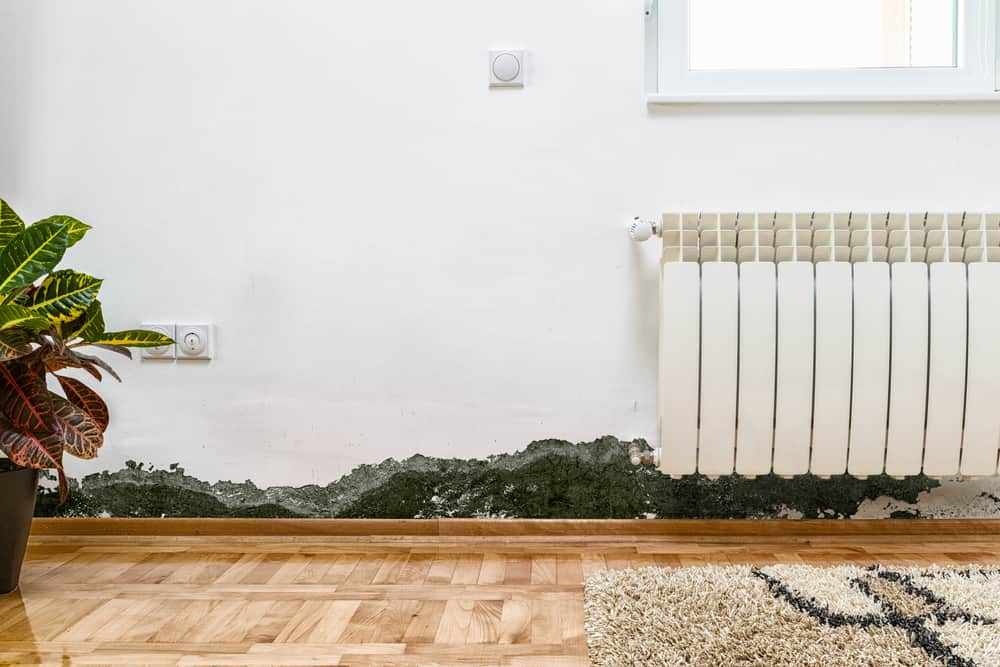
A few things work against older estate construction in Mill Neck that you don’t see as often in newer suburban homes. Stone and brick foundations — common in homes built between the 1920s and 1950s — are porous. Without modern waterproofing membranes, groundwater and soil moisture can infiltrate steadily, especially in a village like Mill Neck that sits between Oyster Bay Harbor, Mill Neck Bay, and Mill Neck Creek. That persistent ambient humidity doesn’t just affect the exterior — it works into basements and crawl spaces over time.
Original plaster walls over wood lath trap moisture in ways that modern drywall doesn’t. Under-ventilated attic spaces in steeply pitched rooflines build up condensation during temperature swings. Galvanized or copper plumbing that’s 50 to 80 years old can develop slow, hidden leaks inside wall cavities. Any one of these conditions can sustain mold growth for months or years before it becomes visible or detectable by smell. That’s exactly why an infrared imaging inspection — not just a visual walkthrough — is the right starting point for a property with this kind of construction history.
It depends on the scope of the project and which areas of your home are affected. For contained remediation — a single room, a crawl space, or a section of the basement — most homeowners can remain in the home with proper containment barriers in place. The affected area is sealed off with negative air pressure and HEPA filtration to prevent mold spores from spreading to other parts of the house during the work.
For larger projects — particularly in a home with significant square footage where multiple areas are affected, or where remediation involves attic or HVAC system work — temporary relocation during the active remediation phase is sometimes the more practical choice. This is a conversation worth having upfront during the inspection phase, before work begins. We give you an honest assessment of what’s realistic based on your specific home and the scope of the job, not a blanket answer in either direction.
This is exactly the right question to ask before you hire anyone. The answer is post-remediation clearance testing — and it should be a non-negotiable part of any professional mold remediation job. After remediation is complete, a separate inspection is conducted to verify that airborne mold spore counts have returned to normal levels and that no visible mold growth remains in the treated areas. The results are documented in writing.
Under New York State’s Article 32 law, the post-remediation assessment must be performed by a licensed mold assessor — separate from the remediator who did the work. This separation is built into the law intentionally, so the company that cleaned the mold isn’t the same one certifying that the job is done. What you should walk away with is a written clearance report with lab results that you can keep on file. That documentation matters whether you’re staying in your Mill Neck home long-term, planning a renovation, or eventually selling the property. A verbal “looks good” from the same crew that did the work is not clearance testing.
Sometimes — and the specifics matter a lot. Most standard homeowners insurance policies will cover mold remediation if the mold resulted directly from a covered peril, like a sudden pipe burst or an appliance leak that was addressed promptly. What they typically won’t cover is mold that developed gradually over time due to ongoing moisture issues, poor ventilation, or deferred maintenance. The distinction between sudden and gradual damage is where most insurance disputes around mold originate.
For older estate homes in Mill Neck — where slow groundwater infiltration through a stone foundation or a long-standing plumbing issue in a wall cavity might go undetected for years — the gradual damage exclusion can come into play. That’s why thorough documentation from the initial inspection matters so much. A written inspection report with lab results, infrared imaging findings, and a clear timeline of discovery gives you the strongest possible basis for an insurance claim. We work with homeowners throughout the documentation and claims process, so you’re not navigating that on your own.
Useful Links
Other Services we provide in Mill Neck