
Hear from Our Customers
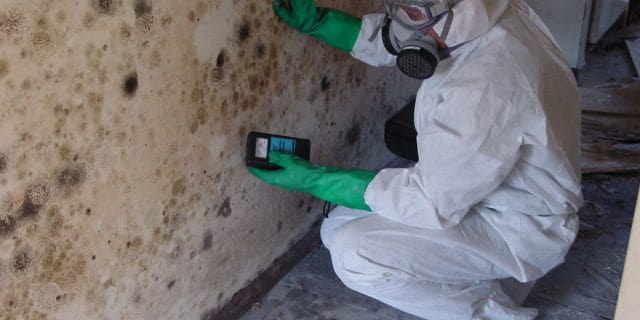
Mold doesn’t just look bad. It affects the air your family breathes, the structural integrity of your home, and what your property is worth when it’s time to sell. In Mineola, where median home values sit between $600,000 and $900,000, a mold problem that goes unresolved isn’t just a health issue — it’s a financial one. Studies consistently show mold can reduce a home’s resale value by 20% to 37%. On a home worth $750,000, that’s a six-figure hit.
What most Mineola homeowners don’t realize is that the moisture driving that mold is rarely a one-time event. Nassau County’s high water table creates persistent groundwater pressure against the aging foundation walls that are common throughout the village. That slow, chronic seepage — the kind that doesn’t announce itself with a flood — is exactly what feeds mold growth in basements and crawl spaces for months before anyone notices. Treating the mold without finding that source just means it comes back.
When remediation is done right, you get your home back. You get air that isn’t compromised. You get documentation that protects your sale price if you ever list. And you stop worrying every time it rains hard or the humidity climbs — which, in a coastal Nassau County summer, happens a lot.
We’ve been serving Nassau and Suffolk County homeowners since the mid-1990s. That’s not a corporate timeline — that’s nearly three decades of showing up for real people dealing with real problems in Mineola, Garden City, New Hyde Park, and Carle Place. We know these communities because we’ve worked in them for generations.
What separates us from the national franchise names you’ll see in local search results isn’t just longevity. It’s that every technician on every crew holds individual IICRC certification — not just our company name on the truck. When someone walks into your Mineola home to assess or remediate mold, they’re personally credentialed to do it. That matters, especially in a community where NYU Langone Hospital sits just blocks from residential streets and health literacy runs high.
We also handle reconstruction. If remediation uncovers rotted subfloor, compromised drywall, or damaged insulation — which is common in Mineola’s older housing stock — you don’t need to coordinate a second contractor. One call covers the whole process, from the first inspection through final clearance.
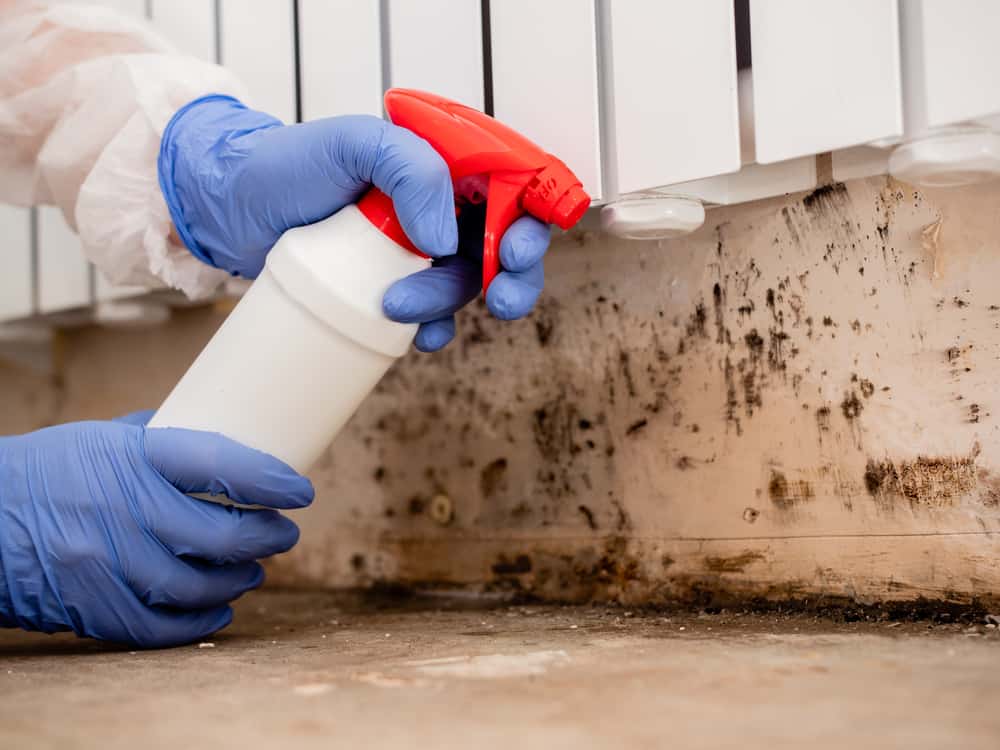
It starts with a thorough mold inspection — not a flashlight and a verbal opinion. The inspection covers air testing, swab sampling, moisture level measurement, infrared imaging for hidden mold, and a comparison of internal versus external mold particle counts. Written lab results come back within two to three business days. If you’re in the middle of a real estate transaction — which is a common reason mold gets discovered in Mineola’s older homes — that documentation timeline matters.
Once the assessment is complete, we prepare a written remediation plan before any work begins. This isn’t just good practice — it’s required under New York State’s Article 32 mold law, which also prohibits the same company from both assessing and remediating your mold. We operate in full compliance with that law. You’ll know exactly what’s being done, where, and why, before anyone touches a wall.
Remediation itself involves containment of the affected area, removal of mold-contaminated materials, treatment of surfaces, and HEPA air filtration throughout the process. In Mineola homes — particularly the cape cods and ranches built in the 1940s and 1960s — this frequently means working in crawl spaces, attics with poor ventilation, or basements with chronic moisture intrusion. After the work is complete, an independent assessor conducts post-remediation clearance testing to confirm the space is clean. If reconstruction is needed, that happens next — handled by our team.
Ready to get started?
The post-war homes that define Mineola’s residential blocks have predictable problem areas. Cape cod homes develop attic mold when roof ventilation is inadequate and coastal humidity — which regularly exceeds 60% in Nassau County summers — condenses on the underside of roof sheathing. Ranch homes develop crawl space mold when original vapor barriers have degraded and groundwater vapor migrates upward into the structure. Both home types see recurring basement mold when aging drainage systems get overwhelmed during heavy rainfall or when Nassau County’s high water table pushes moisture through foundation walls that were never designed to handle it.
Black mold remediation, crawl space mold remediation, attic mold remediation, basement mold remediation — these aren’t generic service categories here. In Mineola, each one connects to a specific structural pattern that our technicians have been navigating in Long Island homes for nearly three decades. The inspection process is designed to identify which of these conditions is driving your specific problem, not just treat what’s visible.
Emergency mold remediation is also available around the clock. Frozen pipe bursts in Mineola’s older plumbing systems, post-storm basement flooding, and slow leaks discovered during renovation work are all situations where the 48-hour window before mold growth begins matters. Our trucks arrive equipped — air movers, dehumidifiers, moisture monitors — so mitigation starts immediately, not after a second delivery.
Yes — and this is one of the most important things to verify before hiring anyone. New York State’s Article 32, which took effect in 2016, requires that mold assessors and mold remediators hold separate licenses issued by the NYS Department of Labor. More importantly, the law prohibits the same company from both assessing your mold and performing the remediation on the same property. That rule exists specifically to protect homeowners from inflated or fabricated assessments designed to generate remediation business.
In Mineola, as throughout Nassau County, you’ll encounter companies offering “free mold inspections” — which is often a setup for exactly this kind of conflict of interest. Before any work begins, ask to see the contractor’s NYS DOL mold remediator license number. A company that can’t produce it isn’t legally permitted to do the work, regardless of what certifications they advertise. We operate in full compliance with Article 32 and will provide a written remediation plan before any remediation begins.
The national average for mold remediation sits around $2,300, with most projects falling between $1,200 and $3,800 for a contained area. But in Mineola, the honest answer is that cost depends heavily on where the mold is and how long the moisture source has been active. The village’s older housing stock — predominantly capes and ranches built in the 1940s through 1960s — means hidden mold behind walls, in crawl spaces, and in attics is common. When those areas are involved, projects can run $5,000 to $15,000 or more depending on scope.
The moisture source matters too. Nassau County’s high water table creates chronic, ongoing groundwater pressure against aging foundations. If that’s what’s feeding the mold, remediation without addressing the underlying moisture issue is a temporary fix. A thorough inspection that identifies the actual source — not just the visible mold — is what determines the real scope of the project and prevents you from paying for the same problem twice. We provide written, itemized estimates before work begins so you know exactly what you’re looking at.
It depends on what caused the mold. Homeowners insurance typically covers mold remediation when it results from a sudden, covered water event — a burst pipe, a storm-related roof leak, or an appliance failure. What it generally does not cover is mold that developed from long-term moisture intrusion, a slow leak that went undetected, or groundwater seepage through a foundation wall. That last category is particularly relevant in Nassau County, where the high water table makes slow basement seepage a common and ongoing condition rather than a one-time event.
If your mold is connected to a covered event, the documentation you bring to your carrier matters enormously. Lab results, moisture readings, written inspection reports, and photographic evidence all support your claim and reduce the likelihood of a denial or underpayment. We assist Mineola homeowners with insurance claim coordination — not just the remediation work itself — and provide the written documentation that carriers require. If you’re unsure whether your situation is covered, a properly documented inspection report is the first step toward finding out.
The obvious signs — visible growth, a persistent musty smell, discoloration on walls or flooring — are what most people notice first. But in Mineola’s older homes, mold frequently develops in areas that aren’t regularly inspected: behind finished basement walls, underneath deteriorated vapor barriers in crawl spaces, and in the lower sections of rim joists where foundation walls meet floor framing. By the time it’s visible or smells obvious, it’s often been growing for months.
A few patterns worth paying attention to: if your basement has experienced any water intrusion after heavy rain or during Nassau County’s spring thaw, mold growth is likely within 48 to 72 hours if the moisture wasn’t fully dried. If you’ve noticed increased allergy symptoms, unexplained respiratory irritation, or persistent headaches in your home, those can be early indicators of elevated mold spore counts in the air — even before anything is visible. An air quality test, which is part of our inspection process, can detect elevated mold particle levels that a visual inspection alone would miss. If you’re not sure, the inspection is the right first step.
For a contained area — a single basement wall, a section of crawl space, or a localized attic problem — remediation itself typically takes one to three days once the plan is in place. The full timeline from initial inspection to post-remediation clearance is usually one to two weeks, factoring in lab result turnaround (two to three business days), remediation work, and the independent clearance test that follows.
For Mineola homeowners navigating a real estate transaction, that timeline is worth understanding early. If mold is discovered during a home inspection, buyers and sellers are often working against a closing deadline. Getting the inspection scheduled quickly — and working with a company that can turn around lab results and begin remediation without delay — is what keeps a transaction on track. Our 24/7 availability means you’re not waiting until Monday morning to get the process started, which matters when the clock is running.
Attic mold is one of the most commonly underestimated mold problems in Mineola’s cape cod homes — and one of the most consequential to ignore. The reason it develops in the first place is almost always inadequate roof ventilation combined with moisture-laden air rising from living spaces below. In Nassau County, where coastal humidity regularly exceeds 60% during summer months, that combination creates ideal conditions for mold to colonize the underside of roof sheathing. Left untreated, it spreads across the sheathing, into rafters, and eventually compromises the structural integrity of the roof assembly itself.
Beyond the structural risk, attic mold affects indoor air quality throughout the home. Air naturally moves upward through a structure, and an actively moldy attic is continuously releasing spores into the living spaces below — even if no one ever goes up there. The EPA recommends professional remediation for any mold area exceeding 10 square feet, and most attic infestations in older Mineola homes exceed that threshold by the time they’re discovered. Addressing it now is significantly less expensive — and less disruptive — than addressing it after it’s compromised the roof structure or triggered a failed home inspection.
Useful Links
Other Services we provide in Mineola