
Hear from Our Customers
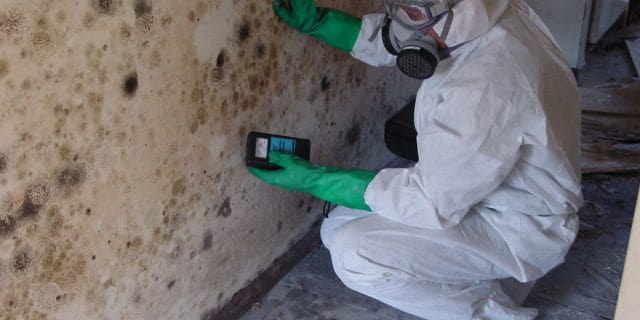
There’s a difference between treating what you can see and fixing what’s actually causing the problem. In Point Lookout, where Atlantic Ocean humidity, Reynolds Channel tidal influence, and Jones Inlet exposure combine into one of the most moisture-dense environments in Nassau County, surface-level cleanup rarely holds. Mold comes back because the source — a failed crawl space vapor barrier, inadequate attic ventilation, compromised framing from prior storm surge — never got addressed.
When the job is done right, you’re not just clearing up a visual problem. You’re removing a health risk, protecting the structural integrity of a home that’s likely worth well over a million dollars, and stopping a problem that gets worse — and more expensive — the longer it sits. For seasonal homeowners who close up their properties from October through April, that matters even more. Mold that develops in an unventilated, unheated home over a long winter doesn’t announce itself. It spreads quietly through wall cavities, attic decking, and crawl space framing before anyone walks back through the door in spring.
Homes in Point Lookout are predominantly pre-war construction — original wood framing, minimal vapor barriers, crawl spaces that weren’t built with today’s coastal moisture conditions in mind. That housing stock is beautiful, but it’s also vulnerable in ways that newer construction isn’t. Getting ahead of mold in a home like that isn’t overcautious. It’s just smart ownership.
First Response Restoration and Cleaning Inc. has been operating on Long Island since the late 1990s. That means we were here for Superstorm Sandy in October 2012 — when the Reynolds Channel at Point Lookout recorded a storm surge of more than 10 feet above the FEMA 100-year base flood elevation. We were here for every nor’easter before and after. That kind of institutional knowledge of Nassau County’s coastal conditions isn’t something you can replicate with a franchise agreement or a national dispatch center.
Every technician on every job is individually IICRC certified — not just the company at the organizational level. Whoever shows up at your door has passed rigorous industry training under the ANSI/IICRC S520 standard for professional mold remediation. The truck arrives fully equipped. The job starts immediately. And because we handle everything from initial inspection through remediation through full reconstruction, you’re not left coordinating between multiple contractors once the mold is gone.
You can reach us directly at 516-698-1776. A real person answers.
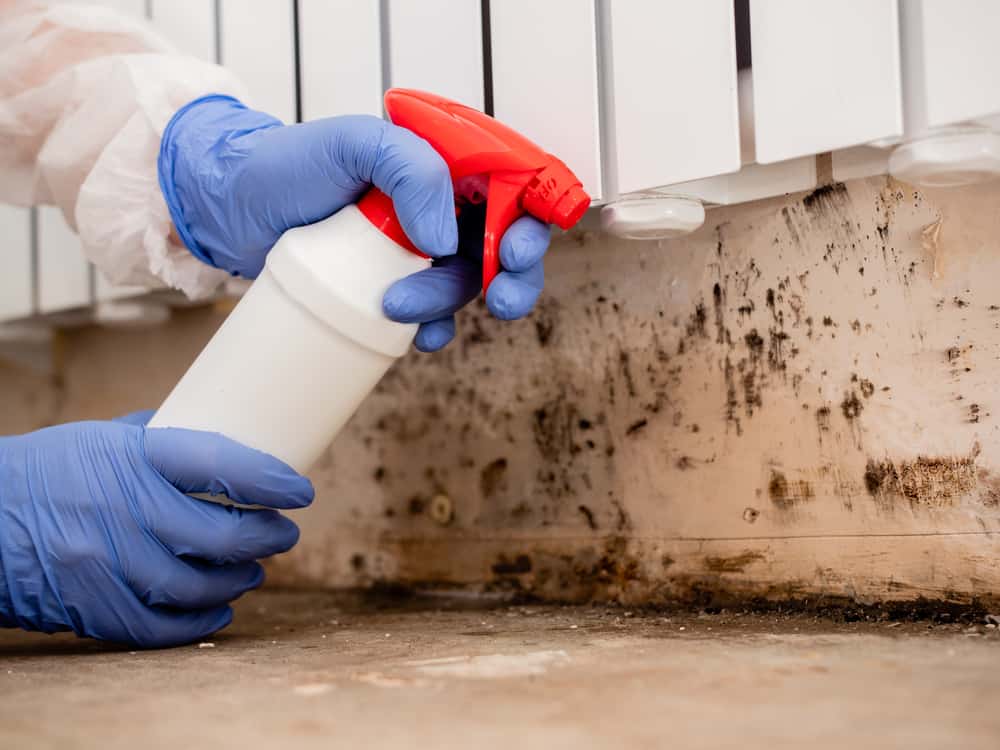
It starts with a 13-point mold inspection. That includes air testing, swab sampling, infrared imaging to detect moisture hiding behind walls and under floors, moisture level measurement across the structure, and a comparison of internal and external mold particle counts. Written lab results come back within 2 to 3 business days. You get documentation — not a verbal opinion from someone who glanced around the attic.
One thing worth knowing: New York State law, passed in 2016, prohibits the same company from both assessing and remediating mold on the same property. This law exists because the industry has a documented history of companies inflating inspection findings to generate their own remediation revenue. We operate in full compliance with this separation, and will walk you through what it means for your specific situation. In a market like Point Lookout — where home values run from $1.3 million to over $1.7 million and mold anxiety after a storm event is real — that legal protection matters.
Once the assessment is complete and remediation is authorized, the work begins with containment, air filtration, and the removal of contaminated porous materials — drywall, insulation, compromised wood framing. In Point Lookout’s pre-war housing stock, this often means working carefully around original structural elements. After remediation, affected areas are treated and cleared. Then, if reconstruction is needed, we handle that too — rebuilt walls, replaced framing, restored living space — so the job finishes as a complete restoration, not a half-done cleanup.
Ready to get started?
Mold remediation in Point Lookout isn’t the same job it is in Levittown or East Meadow. The conditions here — three-sided water exposure, ambient coastal humidity that routinely exceeds 70 to 80 percent in summer, pre-war construction with minimal vapor barriers, crawl spaces that have seen decades of tidal influence — create a remediation environment that requires real experience with coastal Long Island housing stock. That’s what we bring.
Our inspection scope covers every area where moisture hides in homes like yours: attics with inadequate ventilation, crawl spaces with failing or absent vapor barriers, basement perimeters where storm surge has historically entered, wall cavities in older wood-framed structures, and HVAC systems that can distribute mold spores throughout the home once a colony is established. Infrared imaging is used specifically because moisture in pre-war framing often doesn’t show itself visually until the damage is already significant.
For Point Lookout homeowners navigating insurance after a storm event, we help clarify what documentation your adjuster will need and how to present the claim. There’s an important gap most homeowners don’t know about until it’s too late: NFIP flood insurance typically does not cover mold remediation directly, while standard homeowners insurance only covers mold from sudden, accidental events — not gradual moisture intrusion or storm surge. Knowing that distinction before you file saves time and prevents claim denials. We’re available 24 hours a day, 7 days a week for emergency mold remediation, because in this community, storms don’t schedule themselves around business hours.
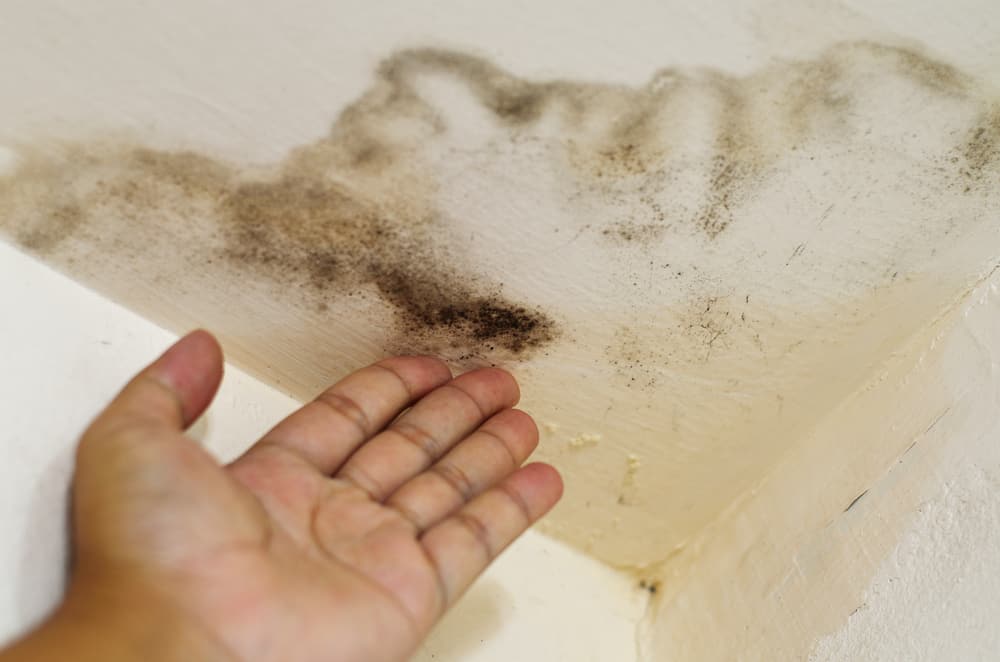
Point Lookout’s geography makes it one of the highest-risk communities for mold on Long Island’s south shore — and not just because of major storms. The community sits at the convergence of the Atlantic Ocean, Reynolds Channel, and Jones Inlet, which means ambient humidity here consistently exceeds the 60 percent threshold the EPA identifies as the minimum required for mold growth. During summer months, coastal humidity in Point Lookout routinely pushes into the 70 to 80 percent range. That’s a constant moisture load that homes in inland Nassau County communities simply don’t carry.
Add to that Point Lookout’s predominantly pre-war housing stock — original wood framing, minimal vapor barriers, crawl spaces not engineered for modern coastal conditions — and you have a situation where moisture pathways exist in almost every older home. Seasonal closure compounds the problem further. Properties that sit unventilated and unheated from October through April accumulate moisture silently in attics, wall cavities, and crawl spaces. By the time a homeowner or renter returns in spring, mold colonies can already be well established. This isn’t a rare scenario in Point Lookout. It’s a recurring seasonal pattern specific to barrier island communities like this one.
Cost depends on the scope of the problem — where the mold is, how far it’s spread, what materials are affected, and whether reconstruction is needed after remediation. For a contained crawl space or attic issue in a Point Lookout home, professional mold remediation typically runs between $1,500 and $6,000. For more extensive situations — mold that has reached structural framing, spread across multiple areas of the home, or developed following a significant water intrusion event like storm surge — costs can reach $10,000 to $15,000 or more.
In Point Lookout, where median home values run from $1.3 million to over $1.7 million, the more relevant number is what unresolved mold costs you. Industry data consistently shows mold can reduce a home’s resale value by 20 to 37 percent. At Point Lookout’s median home value, that’s a potential loss of $260,000 to $640,000 — far beyond what professional remediation costs. Buyers walk away from mold disclosures. Real estate attorneys get involved. Sales fall through. Getting the problem handled properly, with written lab results and a documented remediation record, protects your investment in a way that waiting or cutting corners simply doesn’t.
Mold removal implies that mold can be completely eliminated from an environment — which isn’t accurate. Mold spores are present in virtually every indoor and outdoor environment. The goal of professional mold remediation is to bring indoor mold levels back to normal, naturally occurring levels, remove contaminated materials that can’t be cleaned, treat affected surfaces, and — critically — identify and address the moisture source that allowed the mold to grow in the first place.
In Point Lookout homes, that moisture source is rarely a single obvious cause. It’s often a combination of factors: ambient coastal humidity, a crawl space with a failed vapor barrier, an attic with insufficient ventilation, and a history of water intrusion from storm events. Remediation that doesn’t identify and address those underlying conditions will fail. The mold will return — often within a single season — because the environment that supports it was never corrected. That’s the core reason why DIY bleach application doesn’t work on porous materials like wood framing and drywall. It treats the surface. It does not reach the root structures embedded in the material.
This is one of the most common points of confusion for Point Lookout homeowners, and it’s worth understanding clearly before you file a claim. Standard homeowners insurance typically covers mold remediation only when the mold results from a sudden, accidental event — a burst pipe, an appliance leak, that kind of thing. It generally does not cover mold that develops from gradual moisture intrusion, poor ventilation, or storm surge flooding.
NFIP flood insurance, which many Point Lookout homeowners carry given the community’s FEMA flood zone designation, covers flood damage to the structure and contents — but it typically does not cover mold remediation as a separate line item. The gap between these two policies is where a lot of homeowners get caught after a storm event. We help you understand what documentation your adjuster will need, what language to use when describing the damage, and how to present your claim in a way that gives you the best chance of coverage. Having a written inspection report with lab results — rather than just a verbal assessment — is often the difference between a covered claim and a denied one.
The EPA’s guidance is clear: mold growth can begin within 24 to 48 hours of water intrusion. In Point Lookout’s coastal environment — where ambient humidity is already elevated well above normal levels — that window can be even shorter, because the surrounding air provides additional moisture that accelerates growth once a wet surface is present. This is why response time after a flooding event, a storm surge, or even a significant roof or plumbing leak matters so much.
Waiting a week to assess the damage, or spending time trying DIY cleanup before calling a professional, can allow mold to establish itself in wall cavities, under flooring, and in structural framing — areas that a visual inspection won’t catch. Once mold is embedded in porous materials like wood framing or drywall, surface treatment won’t resolve it. Those materials typically need to be removed and replaced. The faster a professional assessment happens after water intrusion, the more options you have — and the lower the overall remediation cost tends to be. We’re available 24 hours a day, 7 days a week for exactly this reason.
The most common signs are a persistent musty odor that doesn’t go away when you ventilate the space, visible dark staining on wood framing or insulation, unexplained allergy symptoms that worsen when you’re inside the home, and moisture or condensation on interior surfaces. In Point Lookout specifically, crawl space mold is particularly common — there are documented cases of crawl spaces in this community where constant water entry created chronic mold conditions that went undetected for years because the space wasn’t regularly inspected.
Attic mold is also widespread in Point Lookout’s older housing stock, where original roof structures often lack adequate ridge and soffit ventilation. Warm, moist air rises into the attic, condenses on the cold roof decking in winter, and creates ideal conditions for mold growth on the decking and rafters. This type of mold is almost never visible from inside the living space — it requires a physical inspection of the attic itself. If your home is pre-war construction, if it has been through a flooding event, or if it sits closed for extended periods during the off-season, a professional inspection is worth doing proactively — not just after you’ve already spotted something alarming.
Useful Links
Other Services we provide in Point Lookout