
Mold Remediation in Salisbury, NY
Salisbury's Levitt Homes Have a Mold Problem Most Owners Never See Coming
Hear from Our Customers
Certified Mold Remediation, Nassau County
Most homeowners in Salisbury don’t find mold until something forces the issue a home inspection before listing, a musty smell that won’t go away, or a basement that flooded after a bad storm. By then, it’s usually been growing longer than anyone wants to admit. The good news is that professional mold remediation doesn’t just clean a surface. It eliminates the colony, identifies the moisture source that fed it, and leaves you with documentation that holds up whether you’re talking to an insurance adjuster or a buyer’s agent.
For a Salisbury homeowner, that documentation matters more than most people realize. With median home values in this community approaching $660,000, a mold problem that goes unresolved or gets treated by someone who doesn’t do it right can cost you far more than the remediation itself. Studies consistently show mold issues can reduce a home’s resale value by 20% to 37%. In a market where your home is likely your largest asset, that’s not a small number.
The other piece that’s easy to overlook is what mold does to the people living inside the home. Mold exposure is directly linked to respiratory issues, worsened asthma, and chronic allergic reactions. If you have kids and you’ve been noticing more coughing or congestion at home than usual, indoor air quality is worth taking seriously. Getting the mold out isn’t just about the house it’s about the air your family breathes every single day.
Mold Remediation Companies in Salisbury, NY
We’ve been serving Nassau County homeowners for nearly three decades. That’s not a marketing line it means we’ve worked in hundreds of Levitt-era ranch homes, dormered Cape Cods, and crawl space-heavy properties throughout Salisbury and the surrounding central Nassau communities. We know how these homes were built, where they tend to fail, and what it takes to actually fix the problem instead of just treating the surface.
Every technician on our team holds individual IICRC certification not just the company at the corporate level. That distinction matters because it means the person who shows up at your door has been trained and tested to professional remediation standards, not just supervised by someone who was. We also arrive fully equipped on every call. No waiting on a second truck, no rescheduling because a piece of equipment wasn’t loaded. The job starts when we pull into your driveway.
We’re locally owned, locally operated, and have been answering a Nassau County phone number 516-698-1776 for the better part of 30 years. That’s the kind of accountability that matters when you’re trusting someone with your home.

Professional Mold Remediation Process, Salisbury NY
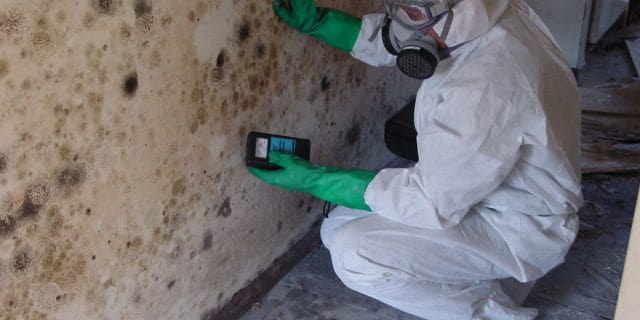
It starts with a thorough inspection and we mean thorough. Our 13-point mold inspection includes air testing, swab sampling, moisture level measurements, infrared imaging to detect hidden moisture behind walls, and a full damage assessment of the affected areas. You get a written report and lab results back within 2 to 3 business days. In Salisbury, where aging Levitt-era construction often hides moisture problems inside wall cavities, attic spaces, and crawl spaces, that infrared step isn’t optional it’s how we find what a visual inspection alone would miss.
Once the scope is confirmed, we set up proper containment to keep mold spores from spreading to unaffected areas of your home during the removal process. Then we remove the mold using IICRC-standard procedures not surface sprays, not masking agents. The affected materials are treated or removed, the area is dried using industrial-grade air movers and dehumidifiers, and the space is cleaned to clearance standards. We also address the moisture source directly, because remediation without fixing what caused the mold in the first place is just a temporary fix.
One thing worth knowing: New York State’s 2016 mold law prohibits the same contractor from performing both the mold assessment and the remediation on the same property. This law exists to protect you from companies that have a financial incentive to exaggerate what they find. We operate in full compliance with this, which means our findings are honest not shaped by what generates the biggest job. And if your home needs reconstruction after remediation drywall replacement, subfloor repair, structural work we handle that too, so you’re not left coordinating between two separate contractors.
Ready to get started?
Black Mold and Crawl Space Remediation, Salisbury NY
Mold remediation in Salisbury isn’t one-size-fits-all, and it shouldn’t be treated that way. The most common calls we get from this area break down into a few recurring patterns and they’re almost all tied to the age and construction type of the housing stock here.
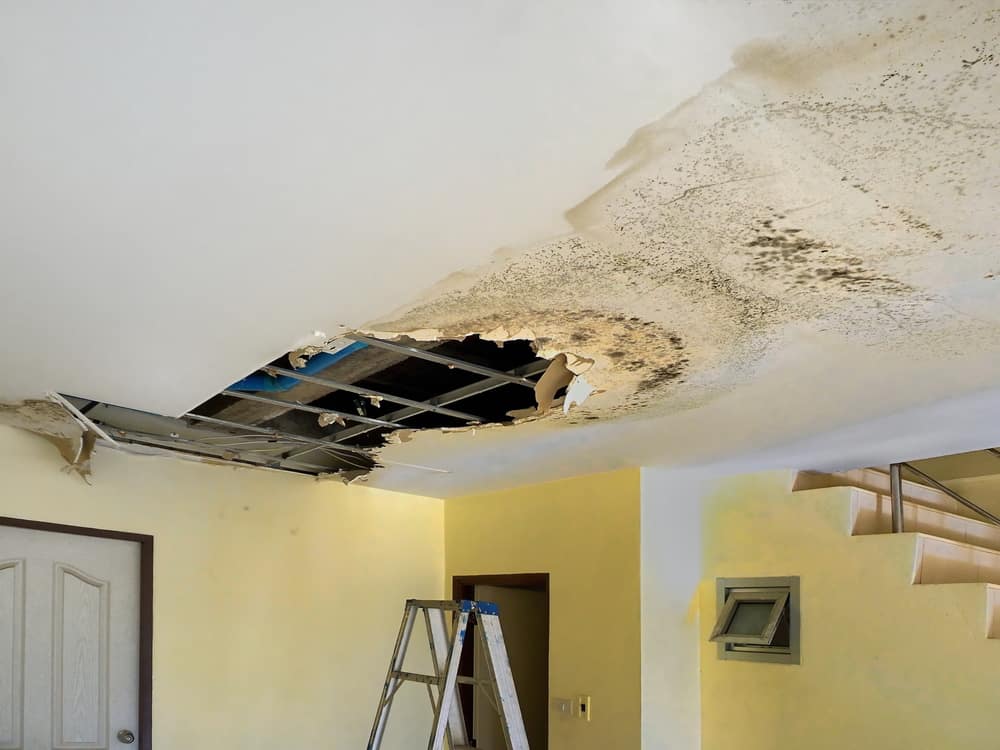
Crawl space mold remediation is among the most frequent. Levitt-era homes throughout Salisbury were built on crawl spaces that sit directly above Nassau County’s relatively high groundwater table. Decades of accumulated soil moisture, degraded vapor barriers, and minimal ventilation make these spaces ideal for mold growth and most homeowners never go in there until something forces the issue. Attic mold is the other major one. Many Salisbury homes have been dormered or expanded over the years, and when those additions weren’t properly ventilated, moisture gets trapped. Attic mold colonies can grow for years before they’re discovered often during a pre-sale inspection when the timing couldn’t be worse. We also handle basement mold remediation, black mold remediation, and emergency mold remediation for situations where water intrusion from a storm or a burst pipe needs to be addressed immediately before the 48-hour mold growth window closes.
Every job includes full documentation inspection reports, lab results, and clearance testing that you can use for insurance claims, real estate disclosures, or your own records. For Salisbury homeowners with homes in the $700,000-plus range, that paper trail is part of protecting what you’ve built here.
Why are Salisbury homes especially vulnerable to mold growth and moisture damage?
The short answer is age and construction type. Most homes in Salisbury were built in the late 1940s and 1950s as part of the Levitt-era development that defined central Nassau County. These homes are now 70 to 80 years old, and they were built quickly and economically not with the moisture resistance standards that modern construction requires. Original plumbing is aging and prone to slow leaks behind walls. Original insulation has often lost its vapor barrier integrity. Crawl spaces that were never well-ventilated to begin with are now sitting above a groundwater table that has nowhere to go in Nassau County’s flat terrain.
Add to that the Long Island coastal humidity that regularly exceeds 60% during summer months the threshold above which mold growth accelerates significantly and you have a housing stock that’s under consistent moisture pressure from multiple directions. Ice damming on low-pitch Levitt rooflines during winter is another factor, pushing meltwater into attic spaces and wall cavities that then sit damp until spring. If you’ve lived in your Salisbury home for more than a few years, there’s a reasonable chance moisture has found its way into a space you haven’t looked at closely.
How much does mold remediation cost in Nassau County, and what affects the price?
The national average for mold remediation runs around $2,300, but that number covers a wide range of situations and the actual cost for your Salisbury home depends on where the mold is, how far it’s spread, and what materials are affected. A contained crawl space issue in a Salisbury home is a very different job than mold that’s worked its way through a finished basement or an expanded attic after years of undetected moisture. Larger infestations or mold in hard-to-access spaces will cost more, and if structural materials need to be removed and replaced, reconstruction adds to the total.
What matters more than finding the lowest quote is making sure the job is done completely. In a Salisbury home worth $650,000 to $900,000, a remediation that doesn’t fully resolve the problem or that skips the moisture source is money spent twice. We give you a clear scope of work before anything starts, so you know exactly what you’re paying for and why. No vague estimates, no surprises after the job is underway.
Can mold come back after professional remediation, and how do you prevent that?
Yes, mold can come back but only if the moisture source that caused it in the first place wasn’t properly addressed. This is the most important thing to understand about mold remediation. Removing the visible mold without fixing the underlying moisture condition is like mopping up a leak without turning off the water. The mold will return, sometimes within weeks, because the environment that allowed it to grow is still there.
Our process specifically includes identifying and addressing the moisture source whether that’s a slow plumbing leak behind a wall, a failed vapor barrier in a crawl space, inadequate attic ventilation from a dormered addition, or recurring water intrusion from storm events. In Salisbury, where basement flooding after heavy rain is a documented, recurring issue, that moisture source evaluation isn’t an afterthought it’s central to the job. After remediation is complete, we conduct clearance testing to confirm the mold levels in the treated space have returned to normal before we consider the job done.
Does homeowners insurance cover mold remediation in New York?
It depends on the cause. Most standard homeowners insurance policies in New York will cover mold remediation if the mold resulted directly from a covered event like a burst pipe, a roof leak from a storm, or a malfunctioning appliance. What they typically won’t cover is mold that developed gradually over time due to ongoing moisture issues, poor ventilation, or deferred maintenance. The distinction between “sudden and accidental” versus “long-term neglect” is where most coverage disputes happen.
For Salisbury homeowners, this is especially relevant because a lot of the mold we find in this area developed slowly inside crawl spaces, behind dormered walls, or in attics that weren’t properly ventilated after an expansion. That doesn’t necessarily mean your claim will be denied, but it does mean the documentation matters. Our written inspection report and lab results give you a clear, professional record of what was found, where, and how it was remediated which is exactly what your insurance adjuster will want to see. We can walk you through the claim process so you’re not navigating it alone.
What's the difference between mold remediation and mold removal and does it matter?
It matters quite a bit, and the difference is worth understanding before you hire anyone. “Mold removal” implies that all the mold is physically taken out but mold spores are naturally present in virtually every indoor environment. You can’t remove every spore, and any company that tells you they can is overselling. What professional mold remediation actually does is bring mold levels back down to normal, naturally occurring concentrations removing active colonies, treating affected materials, and controlling the conditions that allowed the mold to grow.
Remediation also includes containment during the process to prevent spores from spreading to unaffected areas, clearance testing after the work is done to confirm the levels are back to normal, and documentation of the entire process. If a company is offering to “remove all mold” for a suspiciously low price without mentioning air testing, containment, or clearance, that’s a red flag. In New York, the 2016 mold law adds another layer of consumer protection by requiring that the company assessing your mold and the company remediating it be separate so neither one has a financial incentive to exaggerate the problem.
How do I know if I have mold in my Salisbury home if I can't see anything obvious?
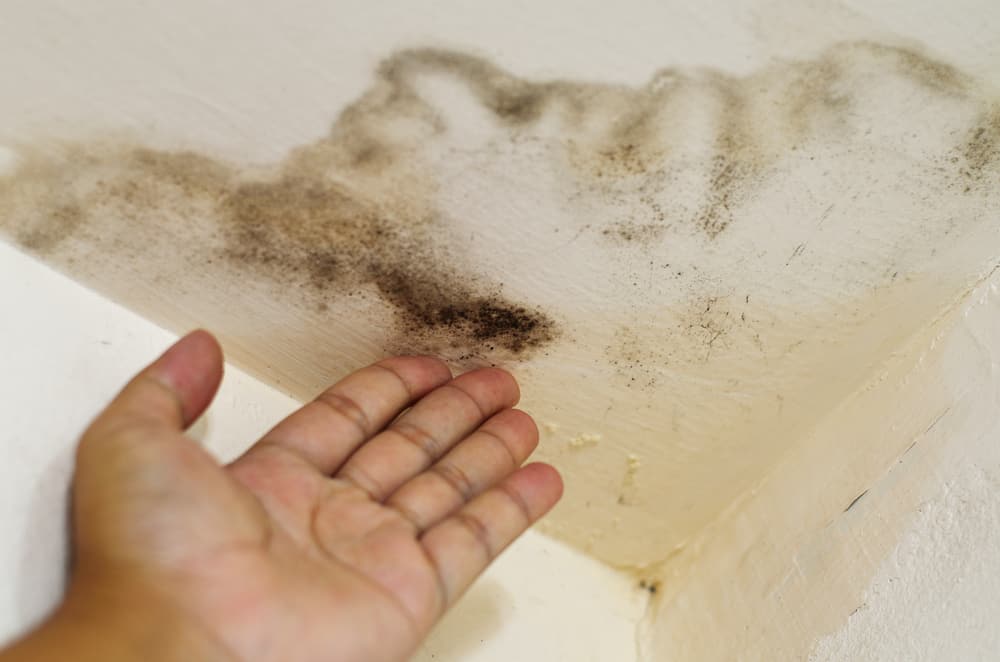
The most common signs are smell and symptoms a persistent musty odor that gets stronger in certain rooms or after it rains, unexplained respiratory irritation, worsening allergy symptoms, or recurring congestion that clears up when you’re away from home. These are the signals that tend to show up before the mold itself becomes visible, especially in the spaces where it most commonly hides in Salisbury’s housing stock crawl spaces, attic areas in dormered additions, and wall cavities near aging plumbing.
The other common discovery point is a home inspection. If you’re preparing to list your Salisbury home or you’re under contract and the buyer’s inspector is coming through attic and crawl space access is standard. Mold found at that stage can stall or kill a transaction on a home worth $700,000 or more, which is why a proactive inspection before listing makes financial sense. Our 13-point inspection uses infrared imaging to detect moisture behind walls and in spaces that a visual inspection alone can’t reach. If there’s hidden mold in your Salisbury home, that’s how we find it before someone else does at the worst possible time.
Useful Links
Other Services we provide in Salisbury