
Hear from Our Customers
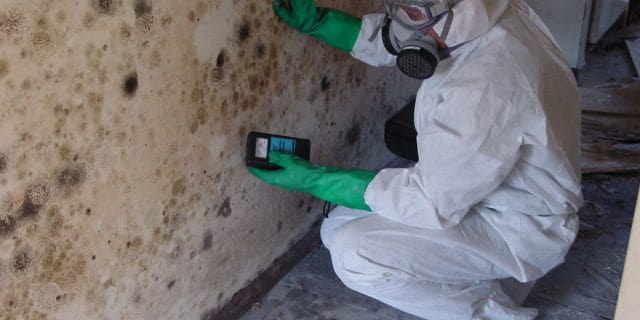
When mold is handled correctly, you stop managing a problem and start living in a home that’s genuinely clean again. No more musty smell when you open the crawl space door. No more wondering if that discoloration on the basement wall is something serious. You get a home that’s been cleared — not just cleaned on the surface.
For North Patchogue homeowners, that matters more than it might somewhere else. Canaan Lake and the Swan River waterway keep groundwater levels elevated around this part of Brookhaven year-round. Older homes in North Patchogue — especially those with crawl spaces built decades ago — sit in conditions that quietly support mold growth without anyone noticing until the smell shows up or a home inspector flags it. That’s not a worst-case scenario here. It’s a common one.
What you get when the job is done right: air quality that’s been tested and confirmed safe, documentation you can hand to your insurance company or your real estate attorney, and the actual source of the moisture identified and corrected so the mold doesn’t come back six months later. That last part is where most remediation falls short — and where the difference really shows.
First Response Restoration and Cleaning Inc. has been working on Long Island for approximately 31 years. That’s not a marketing number — it means we’ve worked through multiple storm cycles, the post-Sandy remediation surge across Brookhaven, and every variation of moisture problem that Long Island’s climate and older housing stock in North Patchogue can produce.
Our owner, Richard Peterson, holds personal New York State licenses in both mold assessment and mold remediation — individually issued credentials under Article 32 of the Labor Law that you can look up and verify before you commit to anything. Every technician on our team is IICRC-certified, meaning the people physically doing the work in your North Patchogue home have been formally trained and tested to the industry’s own standard, not just handed a company shirt.
North Patchogue’s mix of postwar construction, crawl space foundations, and proximity to the Canaan Lake watershed is something we know well. You’re not explaining your situation to someone who’s never worked in this environment. We’ve been here.
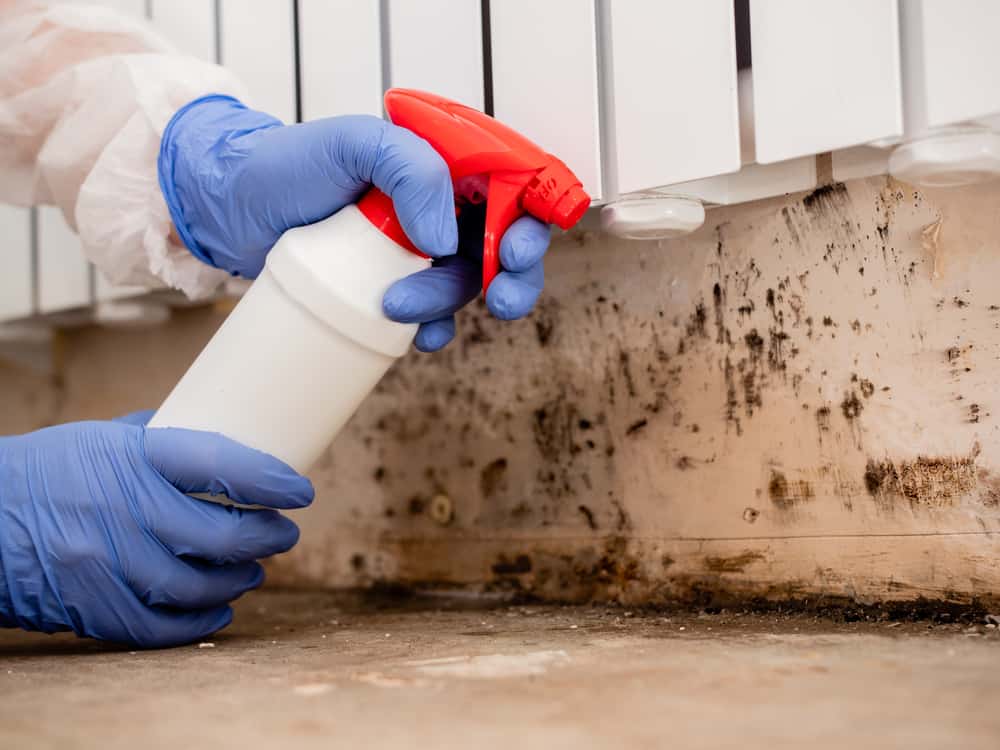
It starts with a thorough assessment — not a quick visual scan, but an actual moisture mapping of your home to find where water is getting in and where mold has taken hold. In North Patchogue, that often means paying close attention to crawl spaces, lower-level walls, and HVAC components, because those are the areas most affected by the elevated groundwater conditions near the Canaan Lake drainage system. Finding the source before anything else is what separates a permanent fix from a temporary one.
Once the scope is clear, we put containment in place to prevent spores from spreading to unaffected areas of your home. Then the remediation itself — removal of contaminated materials, antimicrobial treatment of affected surfaces, and structural drying to bring moisture levels down to where they need to be. If structural repairs are needed as part of the process, we handle coordination with the Town of Brookhaven’s building requirements so that piece doesn’t fall on you.
When the work is done, post-remediation air quality testing confirms that mold spore counts are back to safe levels. You receive a clearance report — real documentation, not just a verbal “looks good.” That report is what your insurance company needs, what a real estate attorney will ask for, and what gives you actual confidence that your home is safe.
Ready to get started?
Mold doesn’t stay in one place, and the remediation shouldn’t stop at one room. We handle the full scope — crawl spaces, basements, attics, bathrooms, HVAC systems, and any structural areas where moisture has been sitting long enough to cause a problem. In North Patchogue, crawl space mold remediation is one of our most common calls, because so many homes in the 11772 ZIP code were built in the postwar decades with crawl space foundations that weren’t designed with today’s moisture management standards in mind.
Attic mold remediation is another frequent issue in this area, particularly during the summer months when Long Island’s humidity combines with inadequate attic ventilation to create the exact conditions mold needs to establish itself. Basement mold remediation, black mold remediation, and emergency mold remediation after storm-related flooding are all part of what we handle — available 24 hours a day, seven days a week, because a nor’easter moving through Brookhaven doesn’t wait for business hours.
Our service also includes insurance documentation assistance from start to finish. If your mold situation resulted from a sudden event — a burst pipe, a storm-related water intrusion, a roof breach — we help you document the damage in the format your insurer requires and support the claims process so you’re not navigating that alone on top of everything else.
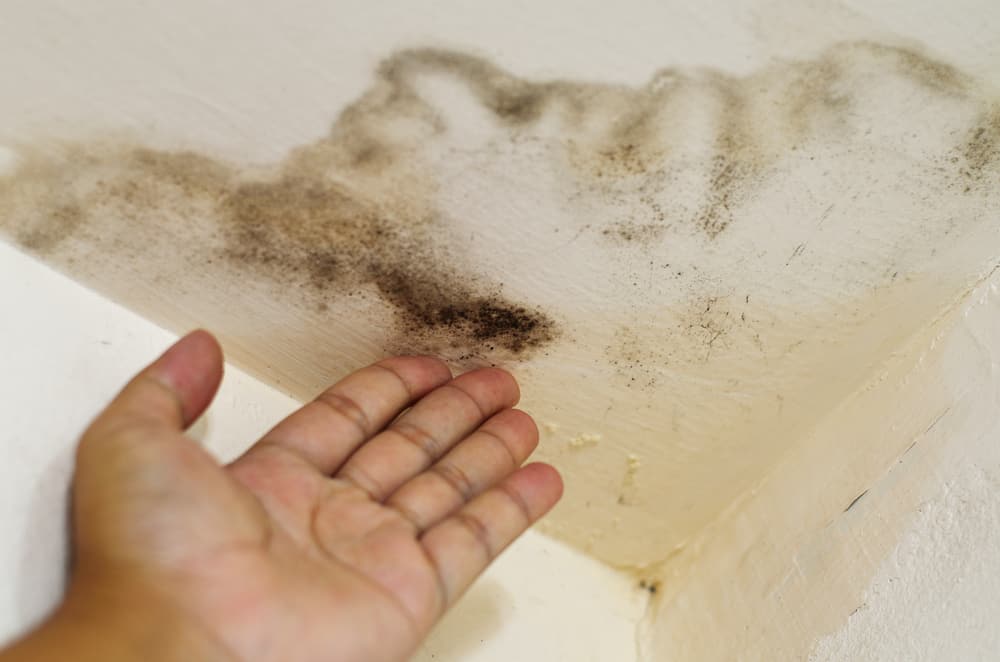
It’s more common than most North Patchogue homeowners expect, and the geography here is a big part of why. Canaan Lake and the Swan River waterway keep groundwater levels elevated throughout the year in this part of North Patchogue, especially after heavy spring rainfall or a significant storm event. That sustained ground moisture creates the kind of environment where crawl space vapor barriers degrade faster, wood framing stays damp longer, and mold finds exactly what it needs to grow — often without any visible sign until the smell becomes noticeable or a contractor opens the access panel.
Homes built in the postwar decades around the Canaan Lake area are particularly susceptible. Older crawl space construction typically lacks the encapsulation and ventilation standards that newer builds follow, which means moisture vapor moves up from the soil with very little resistance. If your North Patchogue home was built before the 1980s and you haven’t had a crawl space inspection recently, it’s worth having someone take a look — not because something is definitely wrong, but because in this specific environment, the risk is real enough that knowing either way is worth more than guessing.
Cost varies depending on where the mold is, how far it’s spread, and whether the moisture source needs to be corrected as part of the job. For a straightforward crawl space or basement situation in North Patchogue, you’re typically looking at somewhere between $500 and $4,000. Attic mold remediation tends to run higher — often between $1,500 and $9,000 — because of the access challenges and the surface area involved. The national average for a full professional mold remediation is around $2,347, but North Patchogue homes with moisture conditions tied to the Canaan Lake watershed can sometimes push toward the higher end of that range if encapsulation or structural drying is also required.
The most important thing to understand is that the cheapest quote is rarely the right one. A remediation that doesn’t address the moisture source will have mold returning within a season, which means paying for it twice. Getting an honest assessment from a licensed contractor — one who can tell you exactly what’s causing the problem, not just what’s visible — is the step that actually determines what the job will cost and whether it holds.
“Mold removal” suggests that mold can simply be taken out of a home entirely, which isn’t accurate. Mold spores exist naturally in the air everywhere — indoors and outdoors. The goal of remediation isn’t to eliminate every spore; it’s to bring indoor mold levels back down to the normal range and remove the conditions that allowed mold to grow in the first place. That’s a meaningful difference, and it’s why the term “remediation” is the correct one under New York State’s own regulatory framework.
Under Article 32 of New York’s Labor Law, any contractor performing mold remediation in North Patchogue must hold a valid state-issued license. The law specifically uses the language of “mold remediation” — not removal — because it recognizes that the process involves containment, treatment, moisture correction, and post-remediation verification, not just physically taking mold out of a space. When you’re evaluating companies, the distinction matters: a contractor who talks about “removing” mold without mentioning moisture source correction or post-remediation testing is describing an incomplete process that is likely to fail.
Whether insurance covers mold remediation depends almost entirely on what caused the mold in the first place. If the mold resulted from a sudden and accidental event — a burst pipe, a storm-related roof breach, or water intrusion from a nor’easter that overwhelmed the Canaan Lake drainage system — there’s a reasonable chance your policy covers it. If the mold developed gradually over time due to a maintenance issue, chronic moisture, or a slow leak that wasn’t addressed, most standard homeowner policies will not cover it.
The documentation you provide to your insurer matters enormously. Insurance companies want to see a clear record of what happened, when it was discovered, what the scope of damage is, and what the remediation plan looks like. We help North Patchogue customers build that documentation from the start — not as an afterthought, but as a standard part of how we handle the job. If you’re unsure whether your situation qualifies, the best first step is getting a licensed assessment so you have something concrete to bring to your insurer rather than trying to explain a problem you can’t fully describe yet.
New York State makes this straightforward. Under Article 32 of the Labor Law, every mold remediation contractor operating in North Patchogue — or anywhere in New York — must hold a valid license issued by the NYS Department of Labor. You can search the Department of Labor’s online license lookup by company name or license number to confirm that the contractor you’re considering is currently licensed and in good standing. This takes about two minutes and is worth doing before you sign anything.
The reason this matters isn’t just legal — it’s practical. Licensed contractors are held to the standards and protocols defined under Article 32, which include proper containment, documented procedures, and post-remediation verification. Unlicensed contractors aren’t bound by those standards, and if something goes wrong or the mold returns, you have very limited recourse. There’s also an insurance implication: if you file a claim for mold remediation and it comes out that the work was performed by an unlicensed contractor, your insurer may deny the claim. Richard Peterson at First Response Restoration holds personal NYS licenses in both mold assessment and mold remediation — both are verifiable through the state’s public records.
A mold finding during a home inspection doesn’t automatically kill a deal, but it does create a hard deadline. Whether you’re the buyer or the seller, you’re now working against a closing timeline, and the documentation you produce matters as much as the remediation itself. The first step is getting a licensed mold assessment from a contractor who can tell you the actual scope of the problem — not a guess, but a documented evaluation that gives both parties something real to work with.
From there, remediation needs to be completed and verified before closing. Post-remediation air quality testing produces a clearance report that confirms mold spore counts are back to safe levels — that report is what the buyer’s attorney, the lender, and the title company will want to see. North Patchogue’s real estate market has been competitive, with median home prices around $525,000 and homes frequently selling above list price. In that environment, a mold finding that isn’t handled quickly and correctly can unravel a transaction that took months to put together. Moving fast with a licensed, documented process is what keeps the deal alive.
Useful Links
Other Services we provide in North Patchogue