
Mold Remediation in Northampton, NY
When Pine Barrens Groundwater Keeps Pushing Moisture In, Surface Fixes Won't Cut It
Hear from Our Customers
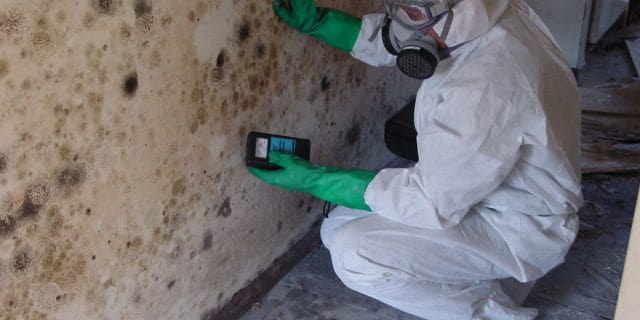
Certified Mold Remediation in Northampton, NY
Most Northampton homeowners dealing with recurring mold aren’t dealing with bad luck they’re dealing with a moisture environment that never got properly addressed the first time. The Pine Barrens aquifer system keeps groundwater high and responsive to every heavy rain. Wildwood Lake and the Cranberry Bog Nature Preserve push ambient humidity into the air year-round. Older homes in the former Pine Valley area were built before modern vapor barriers and crawl space standards existed. All of that adds up to conditions where mold doesn’t just appear it keeps coming back, until someone actually traces the water to its source.
When that source gets identified and corrected, things change in ways you’ll notice. The musty smell that’s become background noise in your basement disappears. The air in your home feels different not just cleaner in theory, but noticeably easier to breathe, which matters especially if anyone in your household has asthma or respiratory sensitivities. You stop dreading the next wet spring. And if you’re thinking about selling, you have the clearance documentation to show buyers that the problem was handled properly, not painted over.
That last part carries real weight in a market where mold history can drop a home’s value by 20% or more. Professional mold remediation in Northampton, NY isn’t just a health decision it’s a financial one.
Professional Mold Remediation Companies in Northampton, NY
First Response Restoration and Cleaning Inc. has been operating across Long Island for roughly 31 years. Our owner, Richard Peterson, holds individual New York State licenses in both mold assessment and mold remediation contracting two separate credentials required under NYS Article 32 of the Labor Law. That’s not a company filing. That’s his name on the license, which means he’s personally accountable for every job our team performs, including work in Northampton and the broader Flanders-Riverside-Northampton community.
Every technician on our crew holds individual IICRC certification not a company-wide claim, but a credential each person earned. That matters because the work we do follows the IICRC S520 standard, which covers everything from proper containment to post-remediation air quality verification. Three decades of working across Suffolk County means our team understands the specific conditions in Northampton the crawl space challenges, the older construction, the groundwater pressure that doesn’t let up after a wet March. You’re not explaining your situation to someone who’s never heard of it.
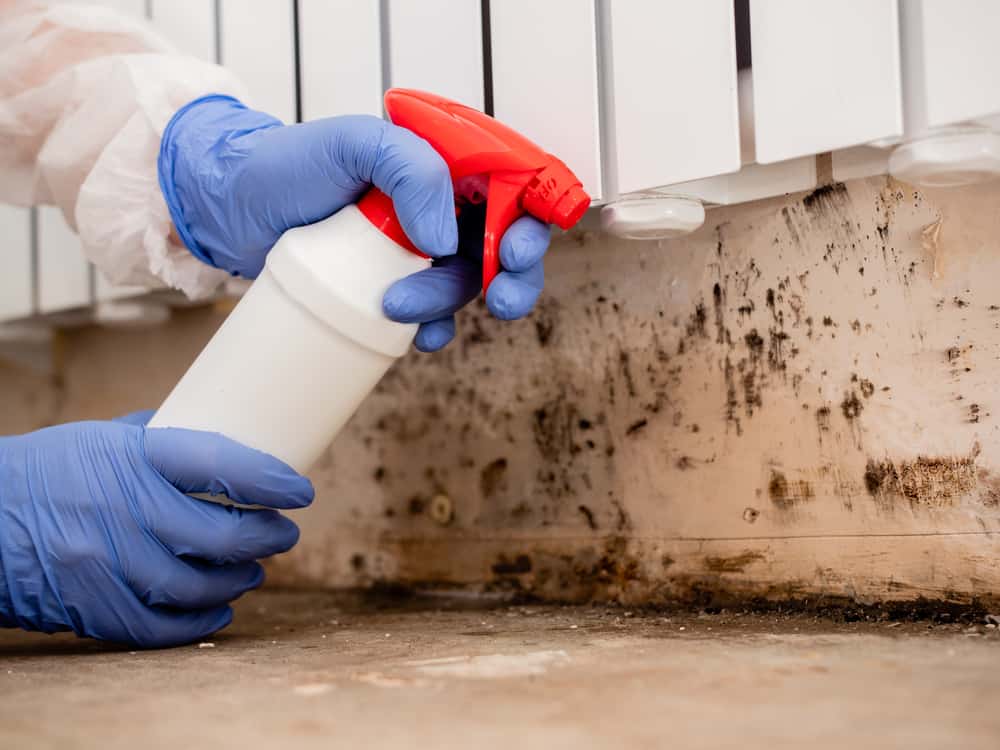
Mold Damage Repair Process in Northampton, NY
It starts with a thorough assessment not a quick visual scan, but a real moisture mapping of your home to identify where water is entering and where mold has already taken hold. In Northampton, that often means paying close attention to crawl spaces and basement slabs, where groundwater from the Pine Barrens aquifer can push moisture upward without any visible flooding event. The assessment tells us what we’re actually dealing with before any remediation work begins.
Once the scope is confirmed, containment goes up. Polyethylene barriers and negative air pressure keep spores from spreading to unaffected areas of the home while the work is underway. From there, affected materials are removed, all surfaces are HEPA-vacuumed, and EPA-registered antimicrobial treatments are applied to eliminate what’s left. Structural drying brings moisture levels within acceptable ranges before anything gets closed back up. If the work involves replacing drywall, framing, or insulation which it often does in older homes our team is familiar with Southampton Town’s building department requirements and can walk you through what permits may apply.
The final step is post-remediation verification: independent air quality testing that confirms mold spore counts are back to normal. You get documentation you can use for your insurance claim, your real estate transaction, or simply your own peace of mind. That’s the standard on every job not something you have to ask for.
Ready to get started?
Basement and Crawl Space Mold Remediation in Northampton, NY
Mold remediation in Northampton, NY covers the full scope not just the visible growth, but the conditions behind it. That means moisture source identification first, always. In a community where the water table sits high and wetland-adjacent properties deal with ambient humidity that doesn’t fully dry out between seasons, skipping that step is how you end up calling another company six months later.
Crawl space mold remediation is one of the most common requests in this area, and for good reason. The pine-dominated, shaded landscape around Northampton means crawl spaces stay damp longer than they would in a more open, sun-exposed community. The process includes full containment, HEPA vacuuming of all wood framing and floor joists, antimicrobial treatment, and structural drying. Where encapsulation makes sense as a long-term moisture control measure, we assess and discuss that option honestly not as an automatic upsell.
Basement mold remediation follows the same source-first approach, with particular attention to slab moisture intrusion and foundation cracks that are common in the older housing stock throughout the former Pine Valley area. Attic mold remediation addresses inadequate ventilation a frequent culprit in mid-century homes throughout the Flanders-Riverside-Northampton community. Emergency mold remediation is available around the clock, every day of the year, because mold starts growing within 24 to 48 hours of water intrusion and waiting until Monday morning isn’t a real option.
Why does mold keep coming back in my Northampton basement every spring?
This is one of the most common frustrations homeowners in Northampton deal with, and the answer almost always comes back to groundwater. Northampton sits within the Long Island Central Pine Barrens recharge zone, which means the aquifer beneath the community is shallow and highly responsive to precipitation. Every significant rain event in late winter or early spring raises the water table, and that moisture pushes upward through basement slabs and foundation walls even in homes that have never experienced visible flooding.
If a previous remediation treated the mold on the wall without addressing the moisture coming through the foundation, the mold was always going to come back. The fix isn’t a stronger antimicrobial it’s finding where the water is entering and correcting it. That might mean improving drainage around the foundation, sealing cracks, improving sump pump capacity, or addressing interior humidity through ventilation. The remediation itself is only as permanent as the moisture control behind it.
How much does mold remediation cost in Northampton, NY?
For most residential projects, professional mold remediation runs between $1,223 and $3,754 nationally, and that range holds reasonably well for homes in Northampton. What drives cost up or down is the size of the affected area, where the mold is located, and how much structural material needs to be removed and replaced. Crawl space projects with encapsulation can run higher sometimes $4,000 to $6,000 or more depending on the size of the space and the extent of the damage.
The honest answer is that the cost varies enough that a real assessment is the only way to give you an accurate number. What’s worth knowing is that delaying remediation almost always increases the cost mold spreads, structural materials deteriorate further, and what starts as a contained crawl space problem can migrate into floor joists and subfloor sheathing. We help customers understand their homeowner’s insurance coverage and provide documentation in the format insurers require, which can meaningfully offset out-of-pocket costs depending on your policy and the cause of the moisture event.
Is mold remediation in Northampton, NY required to be done by a licensed contractor?
Yes. Under New York State Article 32 of the Labor Law, anyone performing mold assessment or mold remediation in New York including in Northampton must hold a valid state license issued by the Commissioner of Labor. This law went into effect January 1, 2016, and it applies regardless of the size of the job. Hiring an unlicensed contractor isn’t just a risk to the quality of the work it can result in your insurance claim being denied and can expose you to legal liability if the work is done improperly.
This is worth verifying before you hire anyone. Ask for the license number and confirm it through the NYS Department of Labor’s online lookup. Richard Peterson, the owner of First Response Restoration and Cleaning Inc., holds individual state licenses in both mold assessment and mold remediation contracting two separate credentials. That’s verifiable, and it means the person accountable for your job is licensed at the highest level the state requires.
Can I stay in my home during mold remediation in Northampton?
It depends on the location and extent of the mold, and an honest answer requires knowing the specifics of your situation. For small, well-contained projects say, a limited area of mold in a detached crawl space with a separate entry staying in the home is often fine. The containment barriers and negative air pressure systems we use during remediation are specifically designed to prevent spore dispersal into living areas.
For larger projects, particularly those involving significant mold in a basement or multiple areas of the home, temporary relocation during the active remediation phase is sometimes the safer call especially if anyone in the household has respiratory sensitivities, asthma, or a compromised immune system. Given that Northampton has a notable retiree population, that’s a real consideration for many households here. The assessment phase will give you a clear picture of what the scope looks like and what the realistic options are for your specific home and family situation.
What's the difference between mold remediation and mold removal?
Mold removal implies that all the mold gets physically taken out which sounds straightforward but isn’t really how mold works. Mold spores are naturally present in the air and on surfaces everywhere, including in every home in Northampton. The goal of professional remediation isn’t to eliminate every spore that’s not achievable. The goal is to bring mold levels back to what’s considered normal for an indoor environment and to remove the conditions that allowed mold to grow beyond that baseline.
Remediation includes containment to prevent cross-contamination, removal of materials that can’t be effectively cleaned, HEPA vacuuming, antimicrobial treatment, structural drying, and post-remediation verification through air quality testing. That verification step is what separates a completed remediation from a guess it gives you documented confirmation that spore counts are within normal ranges. Companies that advertise “mold removal” without post-remediation testing are leaving you without any real evidence that the job was done correctly.
How does mold in my attic typically start in homes around Northampton?
Attic mold in Northampton is almost always a ventilation problem, and it’s extremely common in the mid-century construction that makes up a significant portion of the housing stock throughout the Flanders-Riverside-Northampton area. Older homes were built with minimal attic ventilation by today’s standards, and when warm, humid air from the living space rises into an under-ventilated attic, it condenses on the cold roof sheathing particularly during late fall and winter. That repeated cycle of condensation creates exactly the sustained moisture that mold needs to colonize wood surfaces.
The forested, shaded landscape around Northampton makes this worse. Homes under heavy tree canopy don’t benefit from the solar drying that helps keep roof assemblies dry in more open settings. Attic mold remediation addresses the existing growth through containment, HEPA vacuuming, and antimicrobial treatment but the ventilation issue that caused it also needs to be corrected, or the mold will return within a season or two. That’s part of what the initial assessment is for: identifying not just where the mold is, but why it’s there.
Useful Links
Other Services we provide in Northampton