
Hear from Our Customers
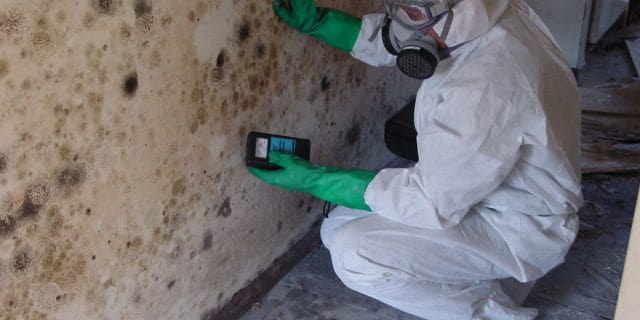
Mold remediation done right means the problem doesn’t come back in six months. That matters everywhere, but it matters more in Riverhead — where the Peconic River rises after every major storm, groundwater pressure builds under older downtown foundations, and the humidity rolling in off Long Island Sound doesn’t let up from May through September. If the moisture source isn’t identified and addressed before anything is removed, you’re just cleaning a surface that’s going to grow right back.
For homeowners in the older neighborhoods near Polish Town, along Peconic Avenue, or in the ranch-style construction throughout Calverton and Aquebogue, the crawl spaces and basements in those homes weren’t built with today’s moisture standards. Unencapsulated crawl spaces, aging foundations, and limited ventilation create the exact conditions mold needs. We fix those conditions — not just wipe down what’s visible — which is what makes remediation stick.
Beyond the health side, there’s a real financial argument here. Mold discovered during a home inspection on the North Fork can kill a deal or drop your asking price significantly. A completed, documented remediation with a clearance report keeps your transaction moving and gives buyers something concrete to look at.
We’ve been working on Long Island for about 31 years, including the years after Superstorm Sandy when properties across the East End flooded and a wave of less-experienced operators entered the market. The homes that weren’t fully dried and treated in 2012 — some of them right here in Riverhead — are still showing up with mold problems today.
Richard Peterson, our owner, holds personal New York State licenses in both mold assessment and mold remediation. That’s not a company credential filed away somewhere — it’s his name on the license, his accountability on every job in Riverhead and across Suffolk County. Every technician on our team is IICRC-certified, which means the people entering your home have been formally trained and tested, not just supervised.
From the Peconic Riverfront neighborhoods to the farm properties out in Jamesport and Aquebogue, we’ve seen what moisture does to Riverhead homes across every season and every storm cycle.
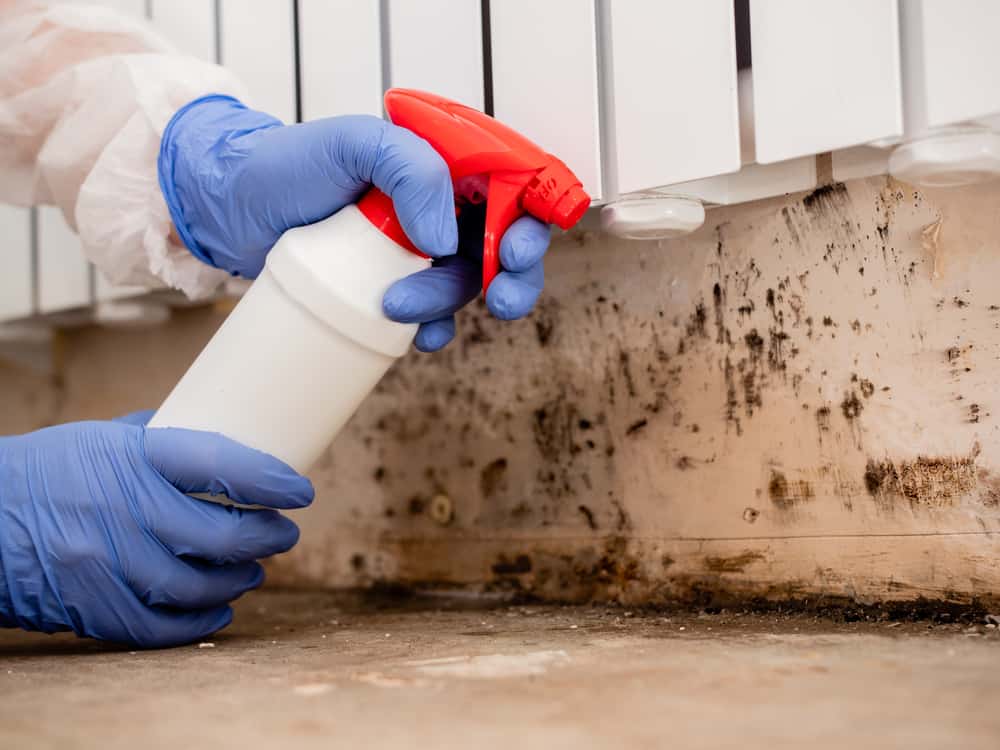
The first thing that happens isn’t mold removal — it’s moisture mapping. Before anything is touched, we identify the source of the moisture problem. In Riverhead, that might be a foundation crack letting Peconic River groundwater seep into a basement, an unencapsulated crawl space in a Calverton home pulling ground moisture into the framing, or inadequate attic ventilation trapping the humidity that rolls in off Long Island Sound all summer. Skipping this step is why mold comes back.
Once we understand the source, we set up containment. That means the affected area is isolated so spores don’t spread to the rest of the house during the removal process. We remove mold-contaminated materials, treat surfaces with antimicrobial application, and dry the area to the conditions where mold cannot grow. Under New York State’s Article 32 law, the assessment and remediation must be handled by separately licensed parties — we’re fully compliant with that requirement, which matters when you’re filing an insurance claim or closing a real estate transaction.
After the work is complete, post-remediation verification confirms the result. Air quality testing is done independently, and you get a clearance report — actual documentation that the job was done, not just a handshake and an invoice.
Ready to get started?
Our basement mold remediation in Riverhead, NY covers the full scope — water extraction if needed, drying, containment, removal, antimicrobial treatment, and structural repair coordination where materials need to be replaced. The same applies to crawl space mold remediation, which is especially common in the older ranch-style homes throughout Calverton and Aquebogue where soil floors and missing vapor barriers have been doing damage quietly for years.
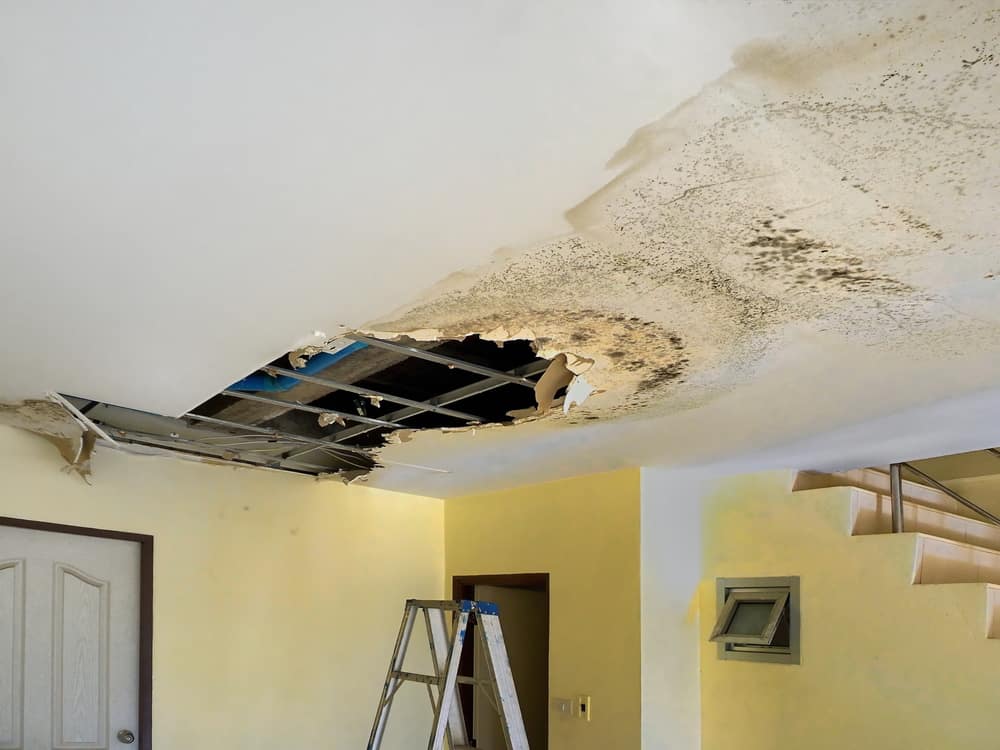
Attic mold remediation is more common here than most homeowners expect. The humidity coming off Long Island Sound creates the temperature differential that drives condensation in attic spaces, especially in homes where ventilation hasn’t been updated. Black mold remediation follows enhanced containment and removal protocols given the health implications — and in Riverhead’s older downtown housing stock, it’s not unusual to find it behind drywall or under flooring that looks fine on the surface.
We offer emergency mold remediation 24 hours a day, every day. When the Peconic Riverfront floods after a nor’easter and water gets into your basement, the 24–48 hour window before mold begins growing is real. We answer the phone at 2 a.m. because that’s when these calls happen. Our integrated cleaning division also means you’re not coordinating two separate crews — remediation and final cleanup happen under one roof, one point of contact, one process.
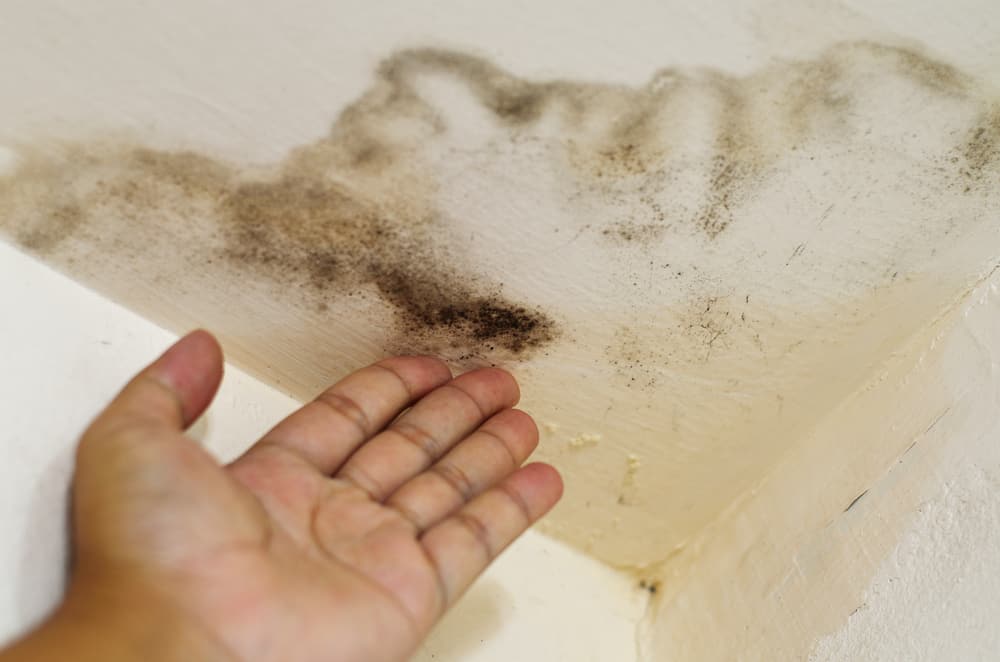
Yes, and it happens faster than most people expect. Mold can begin growing within 24 to 48 hours of water intrusion — and in the low-lying areas near the Peconic Riverfront, along Peconic Avenue, and in the older downtown neighborhoods of Riverhead, basement flooding after a significant storm is not a rare event. The USGS has monitored the Peconic River at Riverhead since 1942, and the data reflects a river that responds quickly and significantly to heavy rainfall and storm surge.
The bigger issue is what happens after the water recedes. If the space isn’t properly dried — not just mopped out, but dried to documented moisture levels — mold growth is almost certain. Older foundations in the Riverhead downtown area weren’t designed to handle the kind of moisture pressure that a major storm creates, and many of them have existing cracks or gaps that allow water in even without a major flood event. If your basement has had water in it at any point, it’s worth having it assessed — even if you don’t see visible mold yet.
The honest answer is that it depends on where the mold is, how far it’s spread, and what’s causing it. A contained crawl space issue in a Calverton ranch home is a very different job than a basement that flooded after a Peconic River storm event and wasn’t fully dried for several days. For a localized remediation — one area, limited spread — you’re generally looking at a range starting around $500 to $1,500. For more extensive work involving multiple areas, structural material removal, or significant moisture damage, costs can run from $3,000 into the $10,000+ range depending on scope.
What drives cost up isn’t the remediation itself — it’s deferred treatment. The longer mold grows, the more material it penetrates, and the more that needs to come out. Getting an honest assessment early is almost always cheaper than waiting. We provide written estimates after a thorough inspection, so you know what you’re looking at before any work begins.
Mold removal implies that every mold spore is eliminated — which isn’t actually possible, or necessary. Mold spores exist naturally in the environment, including inside every home. The goal of mold remediation is to bring indoor mold levels back to normal, naturally occurring levels and eliminate the conditions that allowed abnormal growth in the first place. That’s a meaningful distinction, especially in Riverhead where the underlying moisture conditions — river proximity, coastal humidity, aging housing stock — don’t go away on their own.
A contractor that promises to “remove all mold” is either overstating what’s possible or not explaining the process accurately. Remediation means containing the affected area, removing mold-contaminated materials that can’t be cleaned, treating surfaces with antimicrobial application, addressing the moisture source, and verifying the result with post-remediation air quality testing. That’s the process that produces a lasting outcome — not a surface wipe-down that leaves the cause untouched.
It depends on the cause. Most standard homeowner’s insurance policies in New York will cover mold remediation if the mold resulted from a covered water damage event — a burst pipe, an appliance failure, or storm-related water intrusion that’s explicitly covered under your policy. What they typically won’t cover is mold that resulted from long-term neglect, a slow leak that went unaddressed, or gradual moisture buildup in a crawl space that was never maintained.
For Riverhead homeowners dealing with storm-related flooding from a nor’easter or a Peconic River overflow event, the coverage question gets complicated quickly — flood damage is generally covered under a separate flood insurance policy, not a standard homeowner’s policy. Documentation matters enormously here. Having a licensed contractor assess and document the damage in the format insurers require can be the difference between a paid claim and a denial. We help with that documentation process, which is something not every mold remediation company in Suffolk County takes seriously.
New York State’s Article 32 law, which took effect January 1, 2016, requires that anyone performing mold assessment or mold remediation hold a valid state-issued license. This applies to every job in Riverhead, regardless of size. The license is issued by the New York State Department of Labor, and you can verify any contractor’s license status directly on the Department of Labor’s website by searching their name or license number.
One thing worth knowing: New York law also prohibits the same company from performing both the assessment and the remediation on the same project. That’s a consumer protection measure — it prevents a contractor from assessing your home, finding mold everywhere, and then selling you a remediation job with no independent check on the scope. If a company offers to inspect your home and then immediately quote you for remediation under the same contract, that’s a compliance issue. Richard Peterson holds personal state licenses in both mold assessment and mold remediation — but we operate within the legal separation requirements on every job.
This comes up regularly on the North Fork, where the real estate market stays active through fall and home inspections frequently surface mold findings in older properties. When a home inspector flags mold, the transaction typically pauses until the issue is assessed by a licensed mold assessor, remediated by a licensed contractor, and cleared through post-remediation verification — a separate air quality test that confirms mold levels have returned to normal.
The timeline matters here. Most real estate contracts have inspection contingency windows, and buyers and sellers are both working against a closing date. A remediation company that understands how to move efficiently, document the work correctly, and produce a clearance report that satisfies real estate attorneys and title companies is worth a lot more than one that just does the physical work and hands you an invoice. If you’re a seller in Riverhead who just had mold flagged, or a buyer trying to figure out whether to proceed, getting a licensed assessment done quickly — before the contract window closes — is the most important next step.
Useful Links
Other Services we provide in Riverhead