
Hear from Our Customers
There’s a version of your Southold home where the air doesn’t feel heavy, the crawl space doesn’t make you hesitate, and you’re not wondering what’s hiding behind the walls. That’s what real mold remediation delivers — not just a surface treatment, but a home that’s been cleared, verified, and documented.
For Southold homeowners, the stakes are higher than most. A lot of the housing stock out here — especially in Orient, New Suffolk, and along the historic district on Main Road — was built long before modern moisture barriers existed. These older wood-frame homes absorb and hold humidity in ways that newer construction simply doesn’t. When you’re surrounded by Long Island Sound to the north and Peconic Bay to the south, ambient moisture isn’t a seasonal issue. It’s a year-round condition that never fully lets up.
Getting mold remediation done correctly means your property is safe for your family, your insurance documentation is in order, and if you’re ever in a real estate transaction on the North Fork — where prices and expectations are both high — you have a clearance report that holds up. That’s the difference between mold that’s gone and mold that’s just been painted over.
We’ve been working on Long Island for approximately 31 years, including properties all across the North Fork — historic Colonials in Orient, waterfront homes on Peconic Bay, seasonal estates that sit empty from November through April and quietly develop moisture problems no one notices until spring. Our work in Southold and the surrounding hamlets has given us a deep understanding of what coastal humidity and seasonal vacancy do to older homes.
Owner Richard Peterson holds personal New York State licenses in both mold assessment and mold remediation. That’s not a company credential held by someone who never shows up to a job site. It’s his license, his name, and his accountability on every project we take on. Every technician on our team carries IICRC certification, which means the people doing the actual work in your home have been formally trained and tested — not just supervised by someone who was.
New York State’s Article 32 mold licensing law makes it illegal to perform mold remediation without a valid state-issued license. We’re fully compliant, and that’s verifiable directly through the NYS Department of Labor. In a market like Southold, where properties carry real historical and financial weight, that matters.
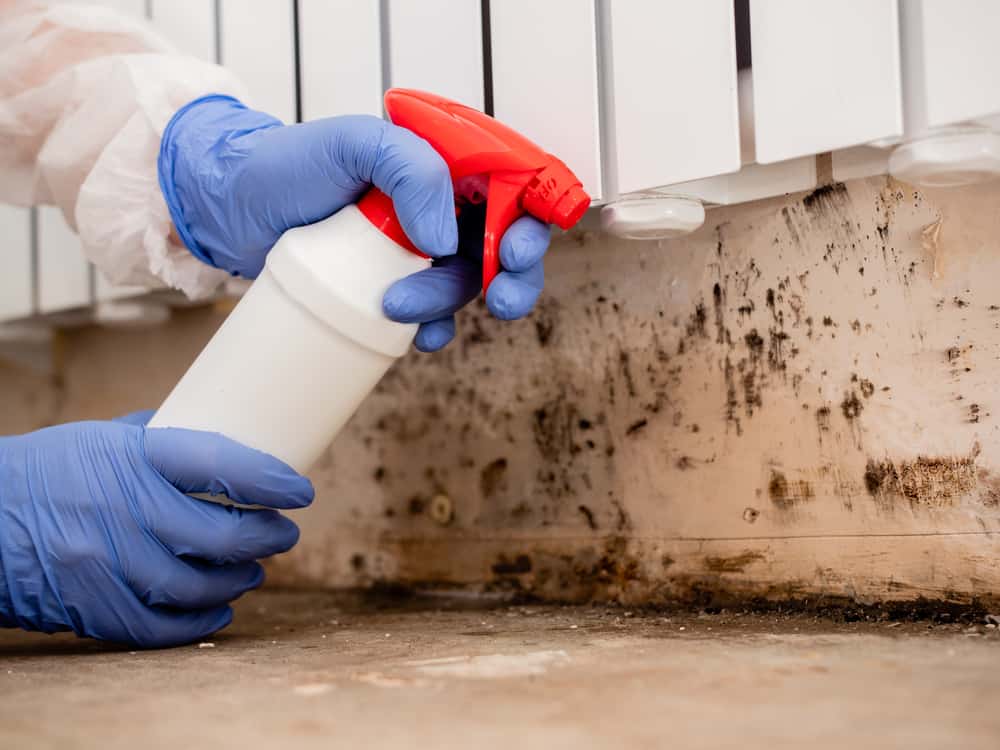
The process starts with a thorough assessment — not a quick walkthrough, but a real inspection of the areas most likely to harbor mold in Southold homes: crawl spaces, attics, basements, and anywhere water has had a chance to sit. Moisture mapping comes first, because removing mold without finding what’s feeding it is how you end up with the same problem next winter.
Once the source is identified and the scope is clear, we set up containment to protect the rest of your home while work is underway. Affected materials are removed, HEPA vacuuming clears airborne spores, and EPA-registered antimicrobials are applied to treated surfaces. For historic properties in the Southold Historic District or in Orient — where original plaster walls and hand-hewn framing are part of what makes the home worth protecting — our approach is deliberate and careful. The goal is to remediate without destroying what can’t be replaced.
If your project involves structural material removal, the Southold Town Building Department may require a permit depending on the scope of work. We walk you through what applies to your situation before anything starts. After the work is complete, post-remediation air quality testing confirms that spore counts are back to normal — and you get the documentation to prove it, whether that’s for your own peace of mind, an insurance claim, or a real estate closing.
Ready to get started?
Crawl space mold remediation is one of our most common calls in Southold. Older homes throughout Cutchogue, Peconic, and Mattituck were built without modern vapor barriers, and the combination of high water tables near the bay and persistent coastal humidity creates conditions where crawl space mold isn’t an if — it’s a when. Professional crawl space mold remediation in Southold typically runs between $500 and $4,000, with costs rising above $6,000 when full encapsulation is also needed. Every estimate we provide is written, scoped clearly, and explained before any work begins.
Attic mold remediation is another frequent issue, especially in homes where older insulation and inadequate ventilation allow condensation to build up through the winter. Basement mold remediation follows coastal storm events more than most homeowners expect — when a nor’easter pushes water in from the Sound or Peconic Bay floods low-lying properties near the shoreline, the mold clock starts within 24 to 48 hours.
We also handle the full cleanup cycle after remediation is complete — surfaces, contents, and affected areas — so you’re not coordinating a second contractor to finish what we started. Emergency mold remediation is available around the clock, every day of the year, because water intrusion on the North Fork doesn’t follow business hours.
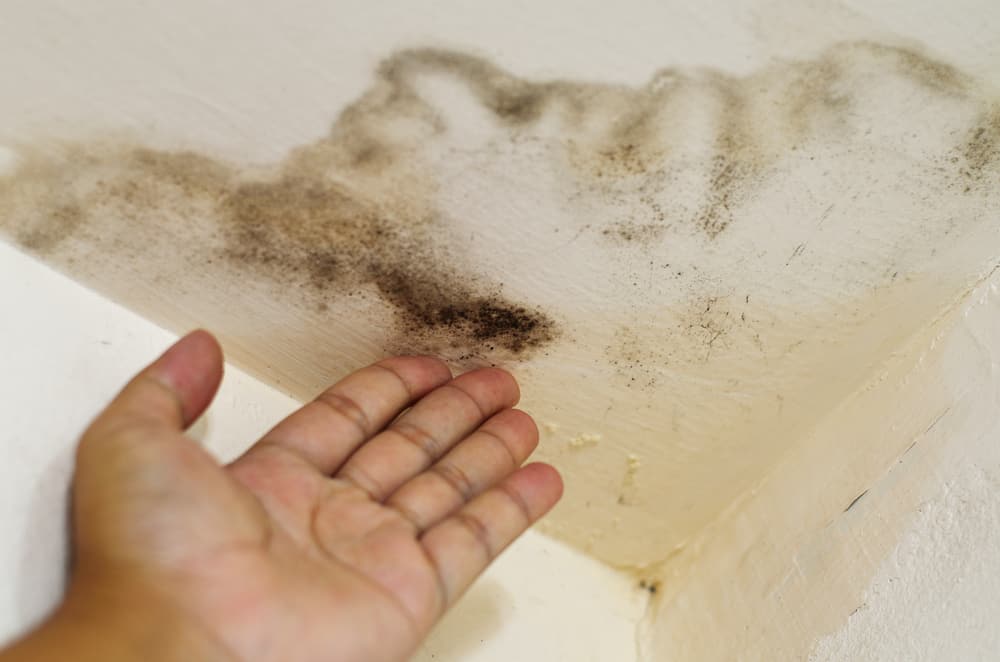
Don’t try to clean it yourself, and don’t run the HVAC system before you know what you’re dealing with. Running forced air through a home with active mold spreads spores into areas that weren’t affected, which turns a contained problem into a much larger one. The first step is to call a licensed mold remediation contractor who can assess the full scope — not just what’s visible, but what’s behind walls, inside the crawl space, and in the attic.
This scenario is common enough on the North Fork that it has its own rhythm. Seasonal homeowners close their Southold properties in October or November, and by the time they return in April, a slow plumbing leak, a failed sump pump, or months of uncontrolled humidity have created real mold growth. The good news is that when it’s caught at opening rather than mid-summer, remediation is usually more contained. We can assess the property, identify the moisture source, and move directly into remediation — so you’re not losing your summer season waiting for multiple contractors to coordinate.
Cost depends on where the mold is, how far it’s spread, and what materials are involved. In Southold, crawl space remediation typically runs $500 to $4,000 on its own, and can exceed $6,000 if encapsulation is also needed. Attic mold remediation, which is common in older North Fork homes with inadequate insulation and ventilation, tends to fall in a similar range depending on the size of the attic and how long the moisture has been present.
What drives cost up most is delay. Mold that’s been growing unchecked through a Southold winter in a vacant seasonal home covers more surface area and affects more materials than mold caught early. The other factor is whether structural materials need to be removed and replaced — drywall, insulation, or wood framing that’s been compromised adds to both labor and material costs. We provide written estimates with a clear breakdown of what’s included and why, before any work starts.
It depends on the cause. Mold that results from a sudden, covered event — a burst pipe during a cold snap, storm-driven water intrusion from a nor’easter, or a roof failure — is often covered under standard homeowner’s insurance policies. Mold that developed gradually from deferred maintenance, chronic humidity, or a slow leak that went unnoticed is typically excluded. The line between the two isn’t always obvious, and insurance companies don’t always make it easy.
For Southold homeowners, coastal storm events are the most common trigger for covered mold claims. When a storm pushes water into a basement or crawl space and mold follows, documenting the sequence of events — the storm date, the water intrusion, and the mold discovery — is critical to a successful claim. We help customers understand what their policy likely covers, document the damage in the format insurers require, and support the claims process from start to finish. Getting the documentation right from the beginning makes a real difference in how the claim resolves.
Yes, and it should be. Homes in the Southold Historic District, in Orient, and throughout New Suffolk were built with materials and construction methods that don’t respond to remediation the same way modern drywall and engineered lumber do. Original plaster walls, hand-hewn timber framing, and wide-plank wood floors require a more deliberate approach — removing only what’s necessary, treating what can be preserved, and avoiding aggressive techniques that would damage irreplaceable materials.
There’s also a regulatory layer that doesn’t apply to standard residential work. Properties within designated historic districts may require review by the Southold Town Historic Preservation Commission before structural alterations are made. This isn’t a barrier to getting the work done — it’s a step that needs to be accounted for in the planning process. We’ve worked on the full range of North Fork property types over more than three decades, including older coastal and historic structures, and approach these jobs with the care they require.
The honest answer is that visible mold being gone doesn’t mean the job is done. Mold remediation is considered complete when post-remediation air quality testing — conducted after containment is removed and the space has been cleaned — confirms that indoor spore counts are back to normal levels. That clearance test is the objective standard, and the results should be documented in writing.
This matters especially in Southold’s real estate market, where North Fork property values are significant and buyers, attorneys, and title companies increasingly require clearance documentation before closing on a property where mold was found. A company that won’t provide post-remediation verification, or that considers the job finished when the visible mold is removed, isn’t giving you a complete service. We include post-remediation air quality testing as a standard part of our process — not as an upsell — and provide written clearance documentation you can use for insurance, real estate, or your own records.
The core issue is moisture with nowhere to go. Crawl spaces in older Southold homes — and there are a lot of them, particularly in Cutchogue, Peconic, and the hamlets closer to the bay — were built without vapor barriers, with minimal ventilation, and in some cases directly over soil that stays damp for much of the year. Add the elevated ambient humidity that comes from being surrounded by Long Island Sound, Peconic Bay, and Gardiners Bay, and you have conditions where crawl space mold is almost inevitable without active moisture management.
Prevention comes down to addressing the source: a properly installed vapor barrier, adequate cross-ventilation or a mechanical dehumidification system, and a foundation perimeter that drains away from the structure rather than toward it. In some cases, full crawl space encapsulation is the right long-term answer, particularly for homes that sit close to the water table or in low-lying areas near the shoreline. We identify the specific moisture driver in your crawl space before recommending a solution — because the fix for a drainage problem is different from the fix for a ventilation problem, and getting that distinction right is what determines whether the mold stays gone.
Useful Links
Other Services we provide in Southold