
Water Damage Restoration in Port Washington North, NY
When Water Hits a Peninsula Home, You Need More Than a Fan and a Mop
Hear from Our Customers

Flood Restoration Services in Nassau County
When water gets into a home on the Cow Neck Peninsula, it rarely announces itself politely. One morning you leave for your commute from the Port Washington Branch, and by the time you’re back eleven hours later, a failed water heater or a slow leak behind the wall has turned into something significantly worse. The outcome you need is not just dry floors it’s a home where the moisture inside the walls, under the subfloor, and within the structural cavities has been found, extracted, and verified gone.
That matters more in Port Washington North than in a lot of other Nassau County communities. The homes along Shore Road and through Soundview Village were built primarily in the late 1950s through the 1970s, and the plumbing infrastructure in many of those houses is aging right alongside the people who’ve lived in them for decades. Galvanized supply lines, older water heaters, and washing machine connections that have never been swapped out are the most common sources of Category 1 and Category 2 water damage and they tend to fail quietly, not dramatically.
What you get when the job is done right: a home that passes a moisture inspection, a complete documentation file your insurance company will accept, and the confidence that you’re not going to find mold behind your drywall six months from now. That’s the actual outcome. Everything else is just steps to get there.
IICRC-Certified Water Damage Repair in Port Washington North
First Response Restoration & Cleaning has been working through Nassau and Suffolk County for close to three decades. That’s not a marketing number it’s the difference between a team that recognizes what a post-storm basement on Manhasset Bay looks like and one that’s reading about it for the first time. The adjacent village of Manorhaven was under mandatory evacuation during Hurricane Sandy. The Cow Neck Peninsula communities know what serious coastal flooding means, and so do we.
Every technician on our team is IICRC-certified, and the company is licensed, bonded, and insured. That matters specifically in Port Washington North because, as an incorporated village, restoration work involving structural repairs requires permits issued by the village itself not just Nassau County. Our process is built to meet those standards and hold up to the scrutiny of both the village building department and your insurance adjuster.
We cover all of Nassau County through a dedicated 516 number. When you call, you’re reaching a local team not a national dispatch center routing whoever’s available.
Emergency Water Removal Process in Port Washington North
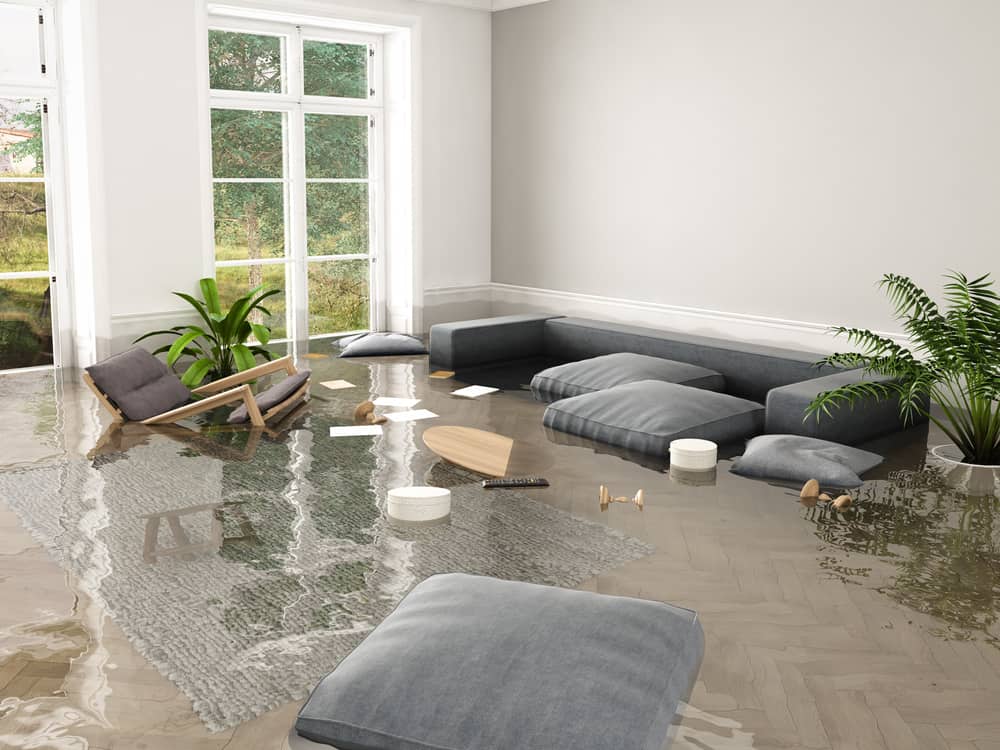
The first thing that happens when you call is an immediate assessment of the situation what type of water, how long it’s been sitting, and what’s at risk. For homes in Port Washington North, that context matters. The Harbor Hill Moraine drops from over 100 feet at the Sands Point border down to sea level at Manhasset Bay within half a mile. When heavy rain saturates that terrain, water moves quickly and it finds the lowest point it can, which is often your basement or crawlspace. Knowing that geography shapes how we approach the job from the start.
Once on-site, we perform a full moisture assessment using professional-grade meters and thermal imaging to locate water that’s migrated inside wall cavities, under flooring, and into structural framing the places a shop vac and a box fan will never reach. Industrial extractors remove standing water first. Then air movers and commercial dehumidifiers are positioned based on the moisture map, not just placed wherever seems reasonable.
Throughout the drying phase typically three to five days for most residential jobs we monitor moisture levels and adjust equipment as needed. Everything is documented with readings, photographs, and a written scope of work. That documentation is what gets submitted directly to your insurance company. You don’t have to translate what happened to an adjuster. We handle that communication directly, so the claim moves while you move on.
Ready to get started?
Residential Water Damage Repair in Port Washington North, NY
Water damage restoration is not a single service it’s a sequence, and skipping steps is where the real problems start. For Port Washington North homeowners, the full scope typically includes emergency water extraction, structural drying, moisture mapping, antimicrobial treatment to prevent mold growth, and then reconstruction of whatever was damaged drywall, flooring, insulation, cabinetry. We handle all of it. You don’t need to coordinate a separate contractor for each phase.
The EPA’s guidance is that water-damaged materials must be dried within 24 to 48 hours to prevent mold from taking hold. That window is non-negotiable, and it’s why the response timeline matters as much as the technical process. For residents of Mill Pond Acres or the Soundview Village neighborhood who may have discovered water damage after returning from a full day away, that clock may already be running when you call. Our 24/7 availability exists specifically for that scenario.
For commercial properties along the Shore Road corridor including the businesses near Soundview Marketplace we also handle commercial water damage restoration with the same IICRC-certified process and direct insurance coordination. Whether it’s a residential pipe burst in a 1960s-era home or storm-driven water intrusion in a waterfront commercial space, the process is thorough, documented, and built to hold up to insurance review.

Does homeowners insurance cover water damage in Port Washington North, NY?
Standard homeowners insurance typically covers sudden, accidental water damage a burst pipe, a failed water heater, an appliance that overflows unexpectedly. What it does not cover is flooding. If water enters your home from outside storm surge off Manhasset Bay, groundwater intrusion, or overland flooding that falls under flood insurance, which is a separate policy entirely. For Port Washington North homeowners in or near the Manhasset Bay Watershed, this distinction is critical. Many residents assume their homeowners policy handles everything, and they find out otherwise at the worst possible moment.
The other common coverage gap is gradual damage a slow leak that went undetected for months. Insurance companies often deny those claims on the basis that the homeowner should have caught it earlier. That’s why professional documentation matters so much. When we respond to a water damage event in Port Washington North, we document the cause, the category of water, and the full scope of damage in a format that insurance adjusters recognize and accept. We also work directly with your carrier, which takes the back-and-forth off your plate entirely.
How quickly does mold start growing after water damage in my home?
Mold spores can begin germinating within 24 hours of water exposure under the right conditions and visible growth typically appears within 48 to 72 hours. The EPA is direct on this: water-damaged areas need to be dried within that 24 to 48 hour window to prevent mold from establishing. That’s not a conservative estimate. It’s the actual timeline, and it applies whether you have an inch of water or a saturated wall cavity you can’t see.
For Port Washington North homes many of which were built in the late 1950s through 1970s the risk is compounded by older construction materials that absorb and retain moisture differently than modern assemblies. Fiberglass batt insulation, older drywall formulations, and wood framing that has been in place for 50-plus years can hold moisture longer and provide more organic material for mold to feed on. Consumer-grade fans moving air across a surface do nothing for moisture that has already wicked into the wall cavity. Professional drying equipment, positioned based on a moisture map, is the only way to address that hidden saturation before the mold clock runs out.
What should I do immediately after my basement floods in Port Washington North?
The first thing to do is make sure it’s safe to enter if there’s any chance the water has reached electrical outlets, panels, or appliances, stay out until the power is confirmed off. Once you know it’s safe, stop the source if you can. If it’s a burst pipe, shut off the main water supply. If it’s coming in from outside during a coastal storm or heavy rain, you may not be able to stop the source, but you can start moving valuables and furniture off the floor to limit additional damage.
Call us immediately do not wait to see how it develops. Every hour matters because of the mold growth timeline. While you wait for our team to arrive, take photos and video of everything: the water level, the affected areas, any visible damage to walls, flooring, and belongings. That documentation is the foundation of your insurance claim. Do not throw anything away before the adjuster or our restoration team has seen it. For homeowners in lower-lying areas of Port Washington North particularly near Shore Road or the Bay Walk area where the terrain drops toward Manhasset Bay water intrusion during a nor’easter or coastal storm can move quickly, so acting fast is not an overstatement.
How long does water damage restoration typically take in Port Washington North?
The timeline depends on how much water, how long it sat, and what materials were affected. For a typical residential water damage event a burst pipe, an appliance failure, or moderate flooding in one area of the home the drying phase alone takes three to five days using commercial-grade equipment. After drying is complete and moisture readings confirm the structure is back to acceptable levels, reconstruction of damaged materials begins. A moderate job from initial water extraction through final repairs typically runs about two to three weeks total.
More extensive events particularly those involving Category 3 water like sewage backup or storm-driven floodwater take longer because contaminated materials have to be removed and disposed of before drying and reconstruction can begin. For Port Washington North homes that experienced significant water intrusion during a major coastal storm, the timeline can extend further if structural elements like subfloor framing or wall sheathing were saturated. The important thing is that the timeline is driven by actual moisture readings, not a calendar. We don’t call a job complete until the numbers confirm it’s done because a home that tests dry is the only outcome that protects you from a mold problem down the road.
How does burst pipe water damage get handled differently than storm flooding?
The source of the water determines the category of damage, and the category determines the remediation protocol. A burst supply pipe delivers clean water what the industry calls Category 1. That’s the most straightforward type of water damage to address: extract, dry, treat, and rebuild. The materials that got wet can often be dried in place if the response is fast enough, and the health risk is minimal compared to other water sources.
Storm flooding is a different situation. Depending on how the water entered whether it came through the foundation during a coastal event, backed up through a floor drain, or carried in debris and contaminants from outside it may be classified as Category 2 or Category 3 water. Category 3, which includes sewage-contaminated water or floodwater from outside, requires full removal of affected porous materials like drywall and insulation rather than drying them in place. For Port Washington North homeowners near the Manhasset Bay waterfront, storm-driven water intrusion often carries enough outside contamination to push the classification into Category 2 or higher which affects both the scope of work and the insurance documentation required.
Does First Response Restoration & Cleaning Inc. handle the insurance claim process for Port Washington North residents?
Yes and for most Port Washington North homeowners, this is one of the most valuable parts of what we do. The average commute out of this community is over 43 minutes each way. Most residents are working professionals in finance, technology, or other demanding fields who simply do not have the bandwidth to manage an insurance claim on top of a water damage event. We work directly with your insurance company: we document the damage, communicate the scope of work, and bill the carrier directly wherever the policy allows.
What that means in practice is that you are not the go-between. You are not translating what happened to an adjuster who wasn’t there. Our IICRC-certified technicians produce documentation moisture readings, photographs, a written scope that meets the standard insurance companies expect when reviewing a claim. That documentation also protects you if the adjuster disputes the scope. For homeowners in Port Washington North with properties valued well above the Nassau County average, having a clean, complete claim file is not a minor convenience. It is the difference between a claim that closes correctly and one that drags on or gets partially denied.
Useful Links
Other Services we provide in Port Washington North