
Water Damage Restoration in Uniondale, NY
When Heavy Rain Hits Uniondale's Flat Terrain, Your Basement Pays the Price
Hear from Our Customers

Flood Restoration Services in Uniondale
When water gets into a Uniondale home, the first 24 to 48 hours are critical. The EPA is clear that mold can begin developing within that window and in a post-war Cape Cod or ranch home with block foundations and older plaster walls, moisture doesn’t stay visible. It travels. It hides in subfloor cavities, behind baseboards, inside wall assemblies.
What looks like a manageable cleanup on the surface can turn into a mold remediation project months later if the moisture isn’t fully extracted and the structure isn’t properly dried. We don’t just dry your floor. We document every moisture reading, address every affected cavity, and deliver the kind of work that holds up when your insurance adjuster asks for the file.
For Uniondale homeowners dealing with sump pump failures or basement seepage from the high water table beneath the Hempstead Plains, that thoroughness isn’t optional. It’s the difference between resolving the problem and delaying it.
The homes in this community were built in the 1940s through the 1960s, which means the infrastructure is aging. Pipes that were new when this neighborhood was farmland are now under real stress. When one fails at 2 a.m., in the middle of a nor’easter you need a team that understands what these homes look like from the inside, not one that’s figuring it out as they go.
Residential Water Damage Repair in Uniondale, NY
We’ve been doing this work on Long Island for nearly three decades. That means we’ve been inside hundreds of homes built on the same post-war lots that define Uniondale’s residential streets. The block foundations. The older copper pipes. The sump systems that were retrofitted years ago and are now running at full capacity during every major storm. We know what we’re walking into before we arrive.
We’re IICRC-certified, licensed, bonded, and insured and we carry dedicated Nassau County coverage with a local 516 area code line. When you call, you reach a team that serves central Nassau County regularly, not a national dispatch center routing a crew from out of state. We work directly with your insurance company, handle the documentation, and bill the insurer directly. For homeowners near Hofstra University, Nassau Community College, or anywhere along the Hempstead Turnpike corridor, that means one less thing to manage during an already stressful situation.
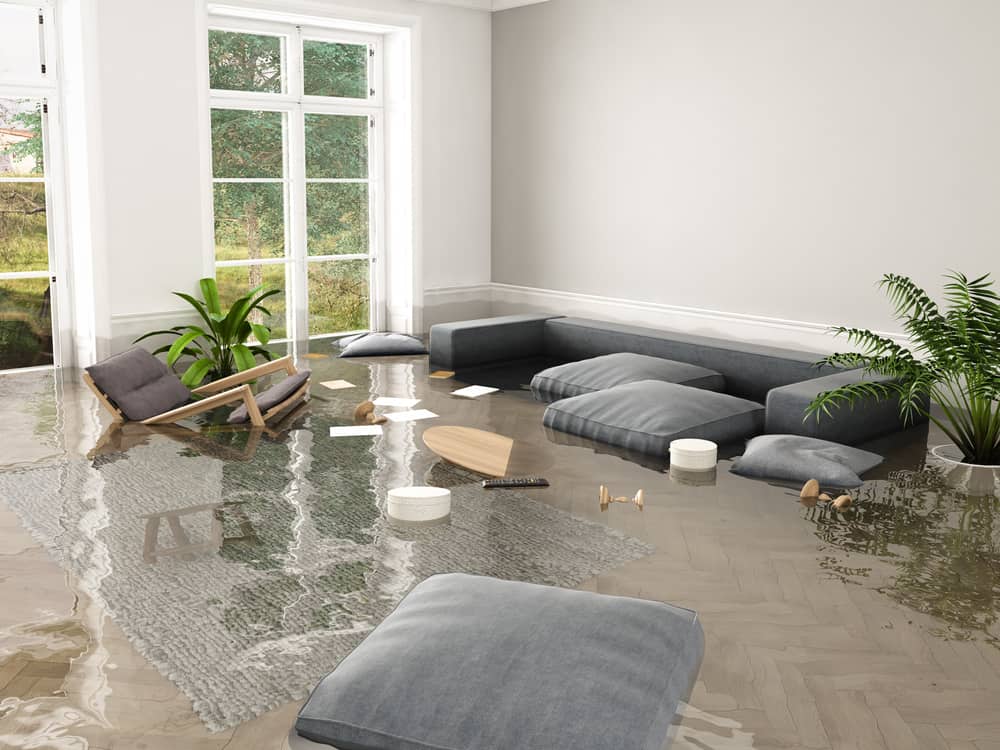
24/7 Water Damage Restoration Process Uniondale
The first call triggers an immediate response. We operate around the clock, so whether a pipe bursts at midnight or a sump pump fails during a Friday afternoon storm the kind of flash flooding that hit Nassau County on September 29, 2023 and sent Uniondale residents scrambling someone picks up and a team gets moving.
When we arrive, the first priority is stopping the source and assessing the full scope of the damage. This is where the difference between professional restoration and a surface cleanup becomes clear. We use industrial moisture meters and thermal imaging to identify where water has traveled inside the structure not just what’s wet on the surface. In Uniondale’s older homes, that often means checking behind plaster walls, under hardwood or tile flooring, and along the foundation line where block construction is more susceptible to seepage through aging mortar joints.
From there, commercial-grade water extraction equipment removes standing water, and high-capacity air movers and dehumidifiers begin the structural drying process. This phase typically runs three to five days depending on the extent of the damage. Everything is documented throughout moisture readings, affected areas, drying progress because that file is what your insurance claim is built on. Any structural repairs, drywall replacement, or reconstruction work that follows is handled under the same roof, so you’re not coordinating with a second contractor to finish what we started. In Nassau County, restoration work involving structural repairs requires permits through the Town of Hempstead, and we navigate that process as part of the job.
Ready to get started?
Burst Pipe and Basement Water Extraction Uniondale
Water damage in Uniondale doesn’t always look the same. Sometimes it’s a burst pipe in a 1958 ranch home where the galvanized steel finally gave out. Sometimes it’s a sump pump that lost power during a storm and couldn’t keep up with the water table pushing against a block foundation. Sometimes it’s storm-driven flooding that came in fast through a basement window well during a nor’easter. We handle all of it water removal, structural drying, mold prevention, and full reconstruction under one company.
Our service covers residential water damage repair for the kinds of homes that define Uniondale: post-war single-family houses on flat Hempstead Plains lots where surface drainage is slow and soil saturation happens quickly. We come prepared for what we’re likely to find aging infrastructure, block foundation seepage, and moisture that has traveled further into the structure than it looks. New York State requires mold remediation contractors to be licensed under Labor Law Article 32, and we meet that requirement, which matters when water damage has been sitting long enough for microbial growth to become a real concern.
For homeowners dealing with flood restoration after a storm event, or basement water extraction after a sump pump failure, the scope of work is the same: full extraction, complete drying, documented moisture readings, and any necessary repairs handled through to completion. We manage the insurance paperwork directly with your carrier, so the billing process doesn’t fall on you.

Does homeowners insurance cover sump pump failure flooding in Uniondale, NY?
This is one of the most common questions from Uniondale homeowners, and the answer depends on your specific policy. Standard homeowners insurance covers sudden and accidental water damage from internal sources burst pipes, appliance overflow, and similar events. Sump pump failure is a different category. Most standard policies do not automatically cover sump pump overflow or backup unless you have a specific water backup endorsement added to your policy. It’s worth reviewing your declarations page carefully, or calling your agent before an event happens rather than after.
What complicates this further in Nassau County is the distinction between sump pump failure and flooding. If your sump pump failed because of a power outage during a storm, and the water that entered your basement came from groundwater pushing up through the soil which is exactly what happens in the high water table conditions beneath the Hempstead Plains in Uniondale your standard policy almost certainly won’t cover it without that endorsement. We work directly with insurance carriers and can help document the damage in a way that gives your claim the strongest possible foundation, whatever the coverage situation turns out to be.
How quickly does mold start growing after a basement floods?
The EPA’s guidance is that mold can begin developing within 24 to 48 hours of a water intrusion event under the right conditions and in a Uniondale home, those conditions are often already present. Older homes with less air circulation, block foundations that hold moisture, and organic materials like wood framing and drywall paper give mold exactly what it needs to establish itself quickly. The 48-hour window isn’t a worst-case scenario it’s a realistic timeline for homes built in this era.
The issue that catches most homeowners off guard is that mold doesn’t always start where the water is most visible. It starts where moisture has traveled and settled inside wall cavities, under flooring, along the base of framing members. By the time you see it, it’s been growing for a while. This is why professional drying equipment and moisture mapping matter so much. Consumer-grade fans can dry a surface. They can’t pull moisture out of a wall assembly or confirm that a subfloor is actually dry. Getting our certified team in quickly within that first 24-hour window if possible is the most effective way to prevent a water damage event from becoming a mold remediation project.
What should I do immediately after my basement floods in Uniondale?
The first thing is to make sure it’s safe to enter the space. If there’s any chance the electrical panel, outlets, or appliances near the floor have been reached by water, don’t go in until the power to that area has been shut off. Once it’s safe, start removing standing water with whatever you have available a wet-vac, buckets, a submersible pump but understand that this is only the first step, not the solution.
Getting the visible water out quickly helps, but it doesn’t address the moisture that has already absorbed into walls, flooring, and structural materials. Call us as soon as possible. In Uniondale, where the flat Hempstead Plains terrain means water can accumulate fast and the housing stock is older, the damage can escalate quickly once water is inside the structure. Document everything with photos before you move anything this is important for your insurance claim. Don’t throw away damaged materials until an adjuster or restoration professional has had a chance to document them. And if your sump pump failed, check whether it’s a power issue or a mechanical failure before the next rain event, because the same scenario will repeat if the pump isn’t addressed.
How long does water damage restoration take in a Uniondale home?
The drying phase alone typically takes three to five days for most residential water damage situations, assuming the damage is contained to one area and caught relatively quickly. The full restoration timeline from initial extraction through any necessary repairs and reconstruction averages around two weeks for moderate damage, though more extensive situations involving structural damage or mold growth can extend that significantly.
In Uniondale’s older homes, the timeline can be affected by a few factors that don’t apply to newer construction. Block foundations hold moisture differently than poured concrete, and older plaster walls take longer to dry than modern drywall. If the water intrusion involved any contact with the foundation wall, the drying process needs to account for the masonry itself, not just the interior finishes. Structural repairs in Nassau County also require permits through the Town of Hempstead Building Department, which adds a step to the process. We manage the permitting and documentation as part of the job, so you’re not chasing paperwork while also trying to get your home back to normal.
What's the difference between water damage and flood damage for insurance purposes?
This distinction matters a lot, and it’s one that catches many homeowners off guard when they file a claim. For insurance purposes, “flood damage” has a specific definition it refers to water that originates from an external source, like a storm surge, overflowing body of water, or surface water runoff from a weather event. Standard homeowners insurance does not cover flood damage. That requires a separate flood insurance policy, typically through the National Flood Insurance Program.
Water damage, in insurance terms, refers to damage from internal sources a burst pipe, a leaking appliance, an overflowing toilet, or a roof leak that allows rain to enter the structure. These events are generally covered under standard homeowners policies, subject to the specific terms of your coverage. The practical implication for Uniondale homeowners is significant: if your basement flooded because a pipe burst, you’re likely covered. If it flooded because a heavy rain event overwhelmed the drainage and water came in from outside which is a real risk given the flat terrain and high water table in this area you may not be covered without a separate flood policy. We can help you document the source and cause of the damage clearly, which is one of the most important factors in how a claim gets evaluated.
Why does water damage restoration cost vary so much from one job to the next?
The range in restoration costs comes down to three main variables: how much water entered the structure, how long it sat before remediation began, and what materials were affected. A burst pipe caught within a few hours in a finished basement is a very different job than a sump pump failure discovered after a weekend away, where water has been sitting for two or three days and has absorbed into framing, insulation, flooring, and drywall. National averages for water damage restoration range from roughly $450 on the low end to $16,000 or more for extensive damage, with the average claim sitting in the $11,000 to $14,000 range when insurance is involved.
For Uniondale homeowners specifically, the age of the housing stock adds a layer of complexity that can affect scope and cost. Homes built in the 1950s and 1960s may have materials asbestos floor tile, older insulation, lead paint that require additional handling protocols when walls or floors are opened up during restoration. This isn’t a reason to avoid calling it’s a reason to call a company that already knows what to expect in these homes and can assess the situation accurately upfront. We provide a free on-site assessment so you understand the scope before any work begins, with no pressure and no obligation.
Useful Links
Other Services we provide in Uniondale