
Water Damage Restoration in Babylon, NY
When the Bay Comes In, Babylon Homeowners Need More Than a Mop
Hear from Our Customers

Flood Restoration Services in Babylon
When water gets into your Babylon home whether it came up from the Great South Bay during a storm or burst out of a pipe in January the clock starts immediately. Mold can begin developing within 24 to 48 hours of water exposure.
What you get when this is handled properly isn’t just a dry floor. It’s the confidence that the moisture inside your walls, under your subfloor, and behind your baseboards has actually been found and removed not just the surface. For a home worth what Babylon Village properties command, that distinction matters enormously.
There’s also the insurance side of things. Babylon homeowners in FEMA flood zones often carry both a standard homeowners policy and a National Flood Insurance Program policy and which one applies depends entirely on how the damage is documented. Getting that documentation right from the start can be the difference between a covered claim and a denied one.
Residential Water Damage Repair in Babylon, NY
We’ve been serving Nassau and Suffolk County homeowners since before Hurricane Sandy reshaped the way south shore communities think about flooding. When that storm pushed four to six feet of surge water through Babylon Village in October 2012 one of the worst impacts in all of Suffolk County our team was part of the recovery.
We’re headquartered in West Babylon, which means Babylon Village is genuinely local to us. We know the streets south of Montauk Highway. We know how the older homes near Argyle Park behave when water gets in. Our technicians are IICRC-certified, and the company is licensed, bonded, and insured not because it sounds good, but because it protects you when it matters most.
We work directly with your insurance company and handle the documentation, the communication, and the billing. Your job is to let us know what happened. We’ll take it from there.
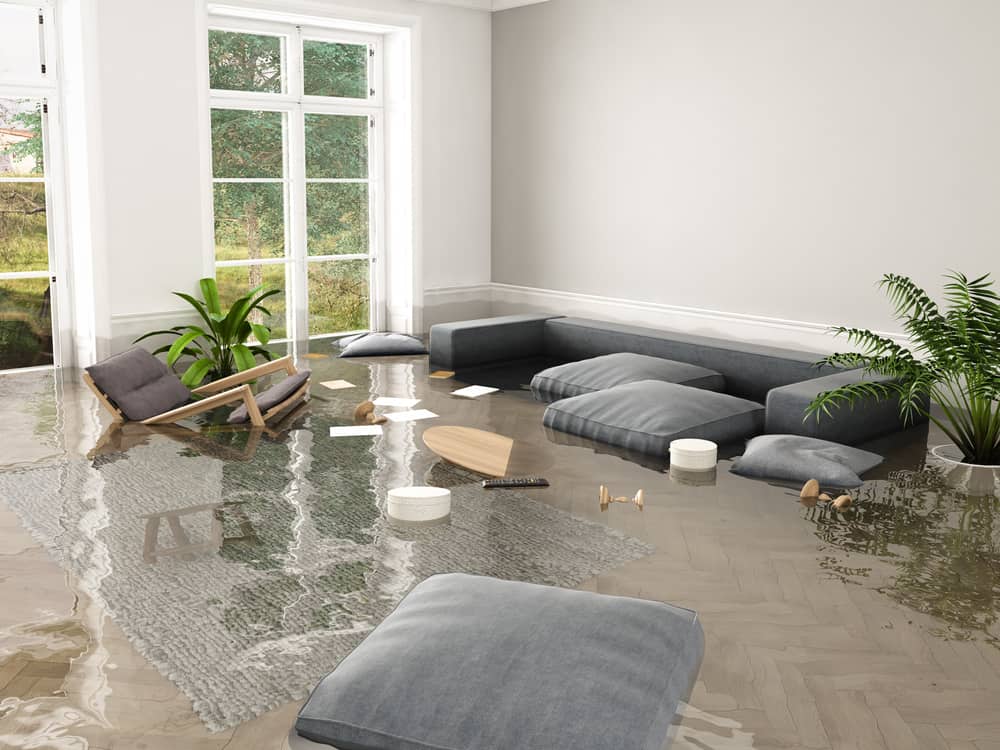
Emergency Water Removal in Babylon, NY
When you call, someone answers around the clock, every day. We ask a few quick questions about what you’re dealing with and get a crew moving toward your address. Because we’re based in West Babylon, response times to Babylon Village are among the fastest we offer anywhere on Long Island.
Once on-site, the first thing we do is assess the full scope not just what’s visible. We use moisture meters and thermal imaging to find water that has wicked into wall cavities, framing, and subfloor material. If your home was built in the early 1900s, as many in Babylon Village were, the construction behaves differently than a modern build, and we account for that.
Water extraction comes next, followed by industrial-grade drying equipment air movers, dehumidifiers, and in Category 3 situations like bay surge, antimicrobial treatment and chloride neutralization. Throughout the process, we’re documenting everything in a format that holds up with insurance adjusters. In Babylon, where properties often fall under FEMA’s Zone AE6 designation and the Substantial Damage rule may apply, that documentation determines whether your restoration qualifies for coverage.
Permits for structural work are coordinated through the Village of Babylon Building Department or the Town of Babylon Building Division depending on where your property sits. We know the difference and handle it accordingly.
Ready to get started?
Flooded Basement Cleanup in Babylon, NY
Water damage restoration in Babylon isn’t a single service it’s a sequence of connected steps, and skipping any one of them creates a problem down the road. We handle the full scope: water extraction, structural drying, dehumidification, mold prevention, mold remediation when needed, odor treatment, and reconstruction. One call, one company, no coordinating between multiple contractors while you’re trying to get your life back together.
For Babylon Village specifically, a few things shape how that work gets done. The Great South Bay sits at your doorstep, and when storm surge enters your home, it brings saltwater, sediment, and drainage backflow with it. That’s Category 3 water by IICRC classification, and it requires a different remediation protocol than a burst pipe. We treat it accordingly with proper decontamination, not just drying.
For the older homes throughout Babylon Village, we account for the possibility of pre-1980 materials like asbestos in floor tile or joint compound, which may require additional handling steps before restoration can proceed. For homeowners who commute into the city on the Babylon Branch and aren’t home when something goes wrong, we can respond to a neighbor’s call, a landlord’s notification, or a smart-home alert and begin work before you even get off the train.

Does homeowners insurance cover water damage from Great South Bay flooding in Babylon?
This is one of the most important questions Babylon homeowners can ask, and the answer depends on the source of the water. Standard homeowners insurance covers sudden, accidental water damage from internal sources a burst pipe, a washing machine overflow, a water heater failure. It does not cover flooding.
If the Great South Bay overtops your bulkhead during a storm and water enters your Babylon home, that is considered flood damage, and it requires a separate National Flood Insurance Program policy to be covered. Many Babylon Village homeowners carry both policies because of the town’s FEMA flood zone designations, but navigating which policy applies to a specific event and documenting it correctly is where claims can go wrong.
The source of the water, the path it took into the home, and how the damage is recorded all affect how your claim is evaluated. We work directly with both types of insurers and document every job in a format that supports your claim from the start, not one that creates questions later.
How fast does mold grow after a basement floods in Babylon, NY?
The EPA’s guidance is 24 to 48 hours that’s how long it takes for mold to begin developing in a water-damaged space under the right conditions. In Babylon Village, those conditions are often already present. The water table throughout much of Babylon is naturally high because of its proximity to the Great South Bay, which means water that enters a basement or cellar doesn’t drain quickly.
It sits, it wicks into framing and drywall, and it creates exactly the environment mold needs. This is why the timing of your response matters so much. A burst pipe discovered at 8 AM is manageable. That same event left until evening common for homeowners who commute into the city on the LIRR is already well into the mold window by the time anyone walks through the door.
Our 24/7 availability exists specifically for situations like this. We can respond before you get home, begin extraction, and stop the clock on mold development before it becomes a remediation job on top of a restoration job.
What should I do immediately after my Babylon home floods during a storm?
The first thing to do is make sure it’s safe to be in the space. If there’s any chance the water has reached electrical outlets, panels, or appliances, don’t enter until the power has been shut off. After that, call a restoration company not your insurance company first. Getting a professional on-site quickly means the damage is properly documented before anything is moved or disturbed, which strengthens your claim significantly.
Do not use a household wet-vac or fans and assume the job is done. Consumer-grade equipment cannot reach moisture inside wall cavities, under flooring, or in structural framing and in Babylon Village’s older homes, there’s a lot of wall cavity to worry about. If the water came from the bay or a drainage backflow event, it also needs to be treated as contaminated water, not just cleaned up. Attempting to dry it yourself without proper decontamination can leave behind health hazards that aren’t visible on the surface.
How much does water damage restoration typically cost in Babylon, NY?
Restoration costs vary based on how much water entered the home, how long it sat, what materials were affected, and what category of water you’re dealing with. Nationally, the average water damage restoration runs around $3,864, but the range is wide minor events can come in under $1,000, while extensive flooding with structural damage and mold remediation can exceed $10,000 or more.
In Babylon Village, a few local factors can push costs higher. The age of the housing stock means more complex drying scenarios older framing, irregular construction, and below-grade cellars that sit near the water table. Bay surge events involve Category 3 water, which requires decontamination in addition to drying and adds to the scope.
If the Substantial Damage rule applies to your property under FEMA guidelines, there may be elevation or permitting requirements that affect the reconstruction phase. The best way to understand what you’re looking at is a proper on-site assessment we offer that at no cost so you have real information before any decisions are made.
Can burst pipe water damage in older Babylon Village homes cause hidden mold problems?
Yes, and it’s one of the more common scenarios we see in Babylon Village specifically. The 1900 to 1950 wood-frame homes that make up much of the village’s historic core have galvanized supply lines that are well past their intended service life. These pipes don’t always fail dramatically they develop pinhole corrosion leaks that drip slowly inside wall cavities for days or weeks before anyone notices.
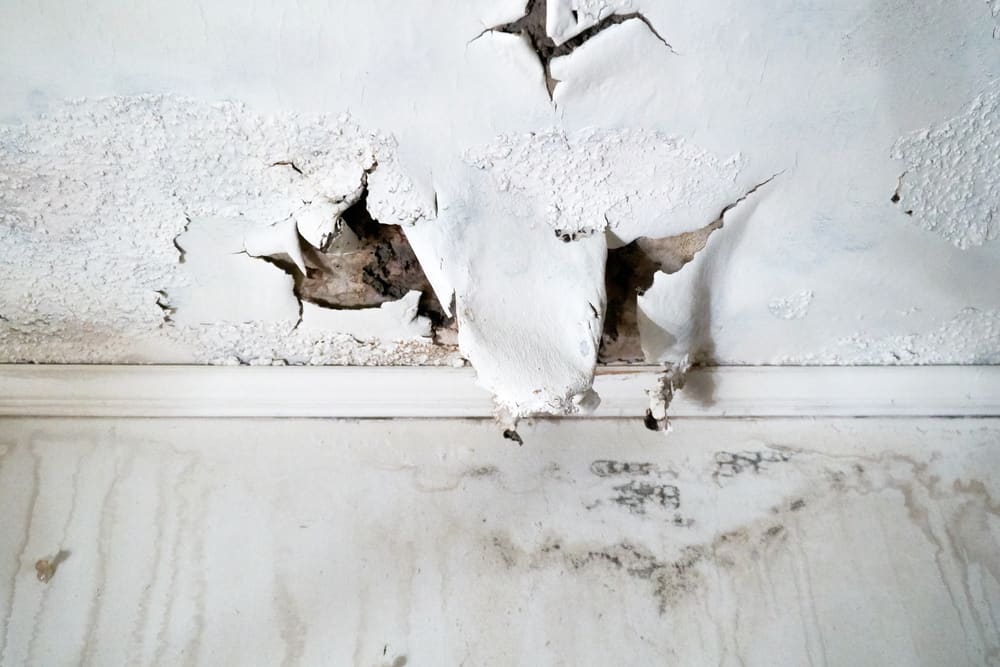
By the time there’s a visible stain on the ceiling or a soft spot in the floor, mold may already be growing behind the surface. Freeze-burst failures in January and February are a different situation sudden, high-volume, and harder to miss but the result can be the same if the water isn’t fully extracted and the structure properly dried.
In cellars that sit at or near bay flood level, water from a burst pipe has limited drainage and tends to wick laterally into framing and insulation. Standard fans don’t solve that. Industrial drying equipment, moisture mapping, and thermal imaging are what it takes to confirm the structure is actually dry not just dry to the touch.
How long does water damage restoration take for a typical Babylon home?
For most homes, the drying phase takes three to five days using professional equipment. Water extraction itself is typically done within one to three days depending on the volume involved. From there, repairs and reconstruction depend on what was damaged drywall replacement, flooring, framing and can extend the total timeline to two to three weeks for a moderate event.
In Babylon Village, a few things can affect that timeline. Older construction dries more slowly than modern materials, and below-grade cellars with limited drainage take longer to fully stabilize. If permits are required for structural work which they are for anything beyond cosmetic repairs the Village of Babylon Building Department or Town of Babylon Building Division needs to be involved, and permit processing adds time to the schedule.
If your property falls under FEMA’s Substantial Damage rule, there may be additional compliance steps before reconstruction can begin. We walk through all of this with you upfront so you have a realistic picture of what the process looks like for your specific home, not just a generic estimate.
Useful Links
Other Services we provide in Babylon