
Water Damage Restoration in Center Moriches, NY
When Moriches Bay Floods, Every Hour Costs You More
Hear from Our Customers

Flood Restoration Services in Center Moriches
When the water is gone and the floors are dry, what you really want is confidence confidence that the moisture inside your walls is gone too, that your insurance claim is in order, and that you’re not going to be dealing with a mold problem three months from now. That’s what professional water damage restoration actually delivers, and it’s a very different result than what a shop-vac and a box fan leave behind.
Center Moriches has a specific problem that a lot of inland communities don’t face: the ground here is already close to saturated. The flat glacial outwash plain that runs through the South Shore holds water. When Moriches Bay pushes inland during a nor’easter or a tropical system, that water doesn’t drain the way it would somewhere with elevation and gradient. It sits. It wicks into subfloors, wall cavities, and insulation and in a community that’s been formally designated as an active NFIP repetitive-loss area, this isn’t a hypothetical. It’s a pattern that’s repeated itself storm after storm.
Getting the right team in fast one with industrial drying equipment, moisture mapping technology, and nearly 30 years of South Shore experience means the difference between a restoration that actually holds and one that leaves hidden damage behind. With median property values in Center Moriches sitting at $586,900, cutting corners on this isn’t a savings. It’s a liability.
IICRC-Certified Water Damage Repair, Center Moriches
We’re based in West Babylon a fellow South Shore community that knows exactly what bay flooding looks like, how quickly it moves, and what it does to Long Island homes built in the post-war decades. This isn’t a national franchise dispatching crews from out of state after a storm. We’ve been working through Suffolk County for nearly three decades, including the Brookhaven South Shore communities that share Center Moriches’s flood profile.
Every technician on our team is IICRC-certified, which matters more than it might sound. That certification is the standard insurance companies rely on when evaluating claims and in a community like Center Moriches, where some homeowners carry both a standard homeowners policy and a separate NFIP flood policy, having documentation that holds up with adjusters is genuinely important. We’re also licensed, bonded, and insured, and we handle insurance coordination directly so you’re not stuck in the middle of a billing dispute while your home is still drying out.
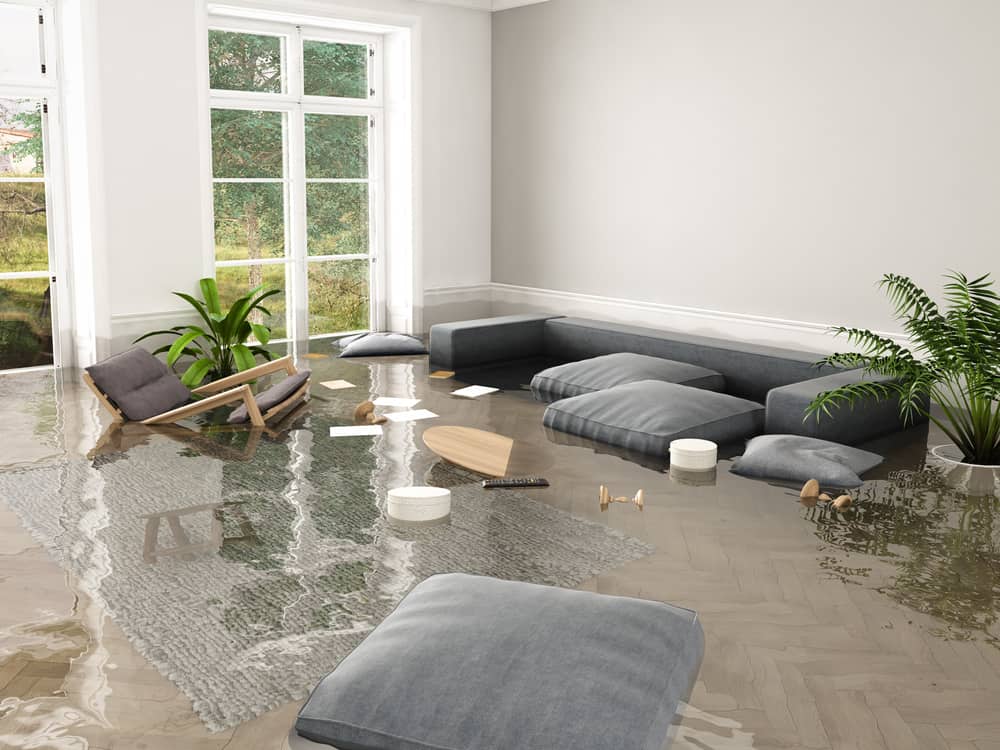
Emergency Water Removal Process, Center Moriches, NY
The first call gets a real response not a voicemail or a callback queue. Because water damage is a 24/7 problem, we operate around the clock, and the Suffolk County line (631) connects you directly to a team that can mobilize for Center Moriches. Once on-site, our first priority is assessment: understanding the source, the category of water involved, and how far the moisture has already traveled. In a home near Senix Creek or the Moriches Bay waterfront, that assessment often turns up saturation in places you wouldn’t think to look.
From there, extraction comes first industrial-grade equipment pulling standing water out faster and more completely than anything available at a hardware store. Then the structural drying phase begins, using air movers, commercial dehumidifiers, and moisture meters to target the water that’s already migrated into walls, subfloors, and framing. This phase typically runs three to five days, though homes in high-water-table areas like the South Shore outwash plain sometimes require additional time to reach safe moisture levels throughout the structure.
Throughout the process, we document everything moisture readings, equipment placement, daily progress in a format that supports your insurance claim. For Center Moriches homeowners dealing with both a homeowners policy and an NFIP flood policy, that documentation isn’t just helpful. It’s what keeps a claim from getting complicated. Work requiring structural repairs or reconstruction in the Town of Brookhaven follows applicable local permitting requirements, and we handle that coordination as part of the full-service process.
Ready to get started?
Residential Water Damage Repair in Center Moriches
Water damage restoration in Center Moriches isn’t a single service it’s a sequence of steps that have to happen in the right order to actually work. We cover the complete scope: water extraction, structural drying, dehumidification, antimicrobial treatment to address mold risk before it becomes visible growth, and full reconstruction when structural elements need repair. You don’t need to find a separate contractor for the rebuild phase. One call handles everything from the initial emergency through the finished restoration.
For homes along the Moriches Bay waterfront and the Senix Creek corridor, storm surge and tidal flooding are the primary drivers and those events typically involve Category 3 water, which is highly contaminated and requires more intensive remediation than a burst pipe or appliance overflow. Inland Center Moriches homes face their own set of risks: aging plumbing systems in post-war construction, water heaters that are past their service life, and washing machine connections that fail without warning.
January average lows around 25°F mean frozen pipe events are a real winter risk, and the flat terrain means that even a modest pipe failure in a crawl space or basement can spread further than expected before it’s noticed. Mold prevention is built into every job, not added as an afterthought. The EPA’s guidance is clear that water-damaged areas need to be dried within 24 to 48 hours to prevent mold growth and in a community with Center Moriches’s moisture environment, that window is taken seriously from the first hour on-site.

Does homeowners insurance cover storm surge flooding in Center Moriches, NY?
This is one of the most important things to understand before you file a claim, and the answer depends on how the water entered your home. Standard homeowners insurance covers sudden, accidental water damage from internal sources a burst pipe, an appliance failure, a roof leak from wind damage. It does not cover flooding. If storm surge from Moriches Bay pushed water into your home, that falls under flood damage, which requires a separate NFIP flood insurance policy to be covered.
Center Moriches is an active NFIP repetitive-loss community, which means a significant number of properties here have flooded repeatedly and gone through the claims process more than once. If you carry both a homeowners policy and an NFIP flood policy which many bayfront and creek-adjacent homeowners in Center Moriches do the documentation of how and where the water entered your home becomes critical. We handle the documentation and work directly with both types of insurers, which helps prevent the kind of coverage disputes that arise when damage isn’t properly categorized from the start.
How quickly does mold start growing after a basement floods in Center Moriches?
Faster than most people expect. The EPA’s guidance puts the window at 24 to 48 hours meaning mold spores can begin germinating within a day of water exposure under the right conditions, and visible growth typically appears within 48 to 72 hours. In Center Moriches specifically, the high water table and the moisture-retentive South Shore outwash plain create conditions where water lingers longer in structural materials than it would in a well-drained inland community. That compresses the practical window even further.
The bigger risk isn’t always what you can see. Moisture that wicks into wall cavities, insulation, and subfloor materials after a flood event can support mold growth for weeks before it becomes visible by which point remediation is significantly more involved and expensive than it would have been with early intervention. Getting a professional team in within the first 24 hours, with equipment capable of measuring moisture inside structural assemblies, is the most effective way to prevent a water damage event from becoming a mold remediation project.
How long does water damage restoration take for a typical Center Moriches home?
For most homes, the drying phase alone runs three to five days. A complete restoration extraction, structural drying, antimicrobial treatment, and any needed repairs typically takes around two to three weeks for moderate damage, though the timeline extends when structural elements need reconstruction or when mold remediation is required alongside the water damage work.
In Center Moriches, the timeline can run slightly longer than in inland communities for a specific reason: the high water table and flat terrain mean that ground moisture continues to exert pressure on basement walls and slabs even after the visible water is removed. Professional moisture meters track this throughout the drying process, and we don’t call a job complete until readings confirm that structural materials have reached safe moisture levels throughout not just at the surface. Homes near Senix Creek or the Moriches Bay waterfront that experienced storm surge events may also require additional time if contaminated water (Category 3) was involved, since the decontamination and antimicrobial treatment steps add to the overall schedule.
What's the difference between a burst pipe water damage job and a storm flooding job?
The category of water involved is the biggest difference, and it affects both the restoration process and how your insurance claim gets handled. A burst pipe delivers what the industry calls Category 1 water clean water from a supply line. It’s the least hazardous type and typically the most straightforward to remediate, assuming it’s caught quickly. An appliance overflow or washing machine failure usually falls into Category 2, which is moderately contaminated.
Storm flooding from Moriches Bay or Senix Creek is a different situation entirely. That water has traveled over land, through drainage systems, and potentially through sewage infrastructure before entering your home making it Category 3, or black water, which is highly contaminated and requires full decontamination of affected surfaces, not just drying. The remediation protocol is more intensive, the antimicrobial treatment requirements are stricter, and the documentation requirements for insurance are more detailed. Both types of water damage are within our scope, but knowing which category you’re dealing with from the first hour on-site is what drives the right response from the start.
Can I stay in my home during water damage restoration in Center Moriches?
It depends on the extent of the damage and the category of water involved. For a contained burst pipe event affecting one room, most families can remain in the home during the drying process the equipment runs continuously, but it’s manageable. For a storm surge event involving Category 3 water, or for flooding that has affected HVAC systems, subfloor materials across multiple rooms, or structural elements, temporary displacement is often the safer and more practical choice.
The honest answer is that it’s a case-by-case determination, and the on-site assessment is what gives you a real picture. If there are children in the home and about 35% of Center Moriches households include kids under 18 the decision to stay or go carries additional weight, particularly when contaminated water or elevated mold risk is involved. We’ll give you a straight answer about what the conditions actually call for, not a one-size-fits-all recommendation. If temporary displacement is warranted, that’s also a detail that can be documented for your insurance claim.
Why does working with an IICRC-certified company matter for my insurance claim in Center Moriches?
Insurance adjusters particularly those handling NFIP flood claims, which are common in Center Moriches given its repetitive-loss designation expect restoration work to follow established, documented protocols. The IICRC S500 is the industry standard for professional water damage restoration, and it governs everything from how water categories are classified to how drying equipment is placed and how progress is documented. When a restoration company follows that standard and can show the documentation to prove it, claims move more smoothly and are less likely to be disputed.
Working with a non-certified company creates real risk in this regard. If the work isn’t performed and documented to IICRC standards, an adjuster has grounds to question the scope, the methodology, or the results which can complicate or delay your payout at a moment when you need it most. In a community like Center Moriches, where many homeowners are navigating both a homeowners policy and a separate NFIP flood policy simultaneously, having a restoration company that understands how to document damage correctly for both insurers isn’t a minor detail. It’s what keeps the process from becoming a second problem on top of the damage itself.
Useful Links
Other Services we provide in Center Moriches