
Water Damage Restoration in East Quogue, NY
When Shinnecock Bay Floods Your Home, You Need More Than a Mop
Hear from Our Customers

Flood Restoration Services in East Quogue
When water gets into your East Quogue home, the visible damage is only part of the problem. The part you can’t see moisture sitting inside wall cavities, under subfloor assemblies, behind baseboards is what causes mold to show up weeks later and turns a manageable situation into a much bigger one. Getting that moisture out completely, the first time, is the whole job.
East Quogue sits at an average elevation of just 13 feet above sea level, with Shinnecock Bay to the south and a water table that rises quickly during heavy rain. That combination means water intrusion here tends to go deeper and spread faster than in higher-ground communities. Homes along the bay and in lower-lying areas of the hamlet have a different relationship with groundwater than a house sitting on a ridge in central Suffolk and the restoration approach has to reflect that reality.
For homeowners in Southampton Pines or anywhere near Shinnecock Bay, the outcome you’re looking for isn’t just “dry.” It’s structurally sound, documented for insurance, and clear of any moisture that could quietly become a mold problem during the months you’re not watching. That’s the standard we hold every job to.
Residential Water Damage Repair in East Quogue
We’ve been serving Suffolk County homeowners for close to three decades. That’s not a marketing number it means our team has worked through multiple hurricane seasons, the post-Sandy recovery on the South Fork, and the full range of water damage scenarios that coastal communities like East Quogue actually face. We’re based in West Babylon, licensed, bonded, insured, and reachable directly at 631-587-5300.
Every technician on our team is IICRC-certified, which matters more than it might sound. The IICRC is the industry’s recognized standard for water damage restoration, and that certification is what insurance adjusters including NFIP flood adjusters handling claims on East Quogue’s FEMA Zone AE and VE properties expect to see in the documentation. Work done by non-certified crews can create complications with claims that end up costing homeowners far more than the restoration itself.
We handle everything from initial water extraction through full rebuild, so you’re not coordinating four different contractors while your home is still wet.
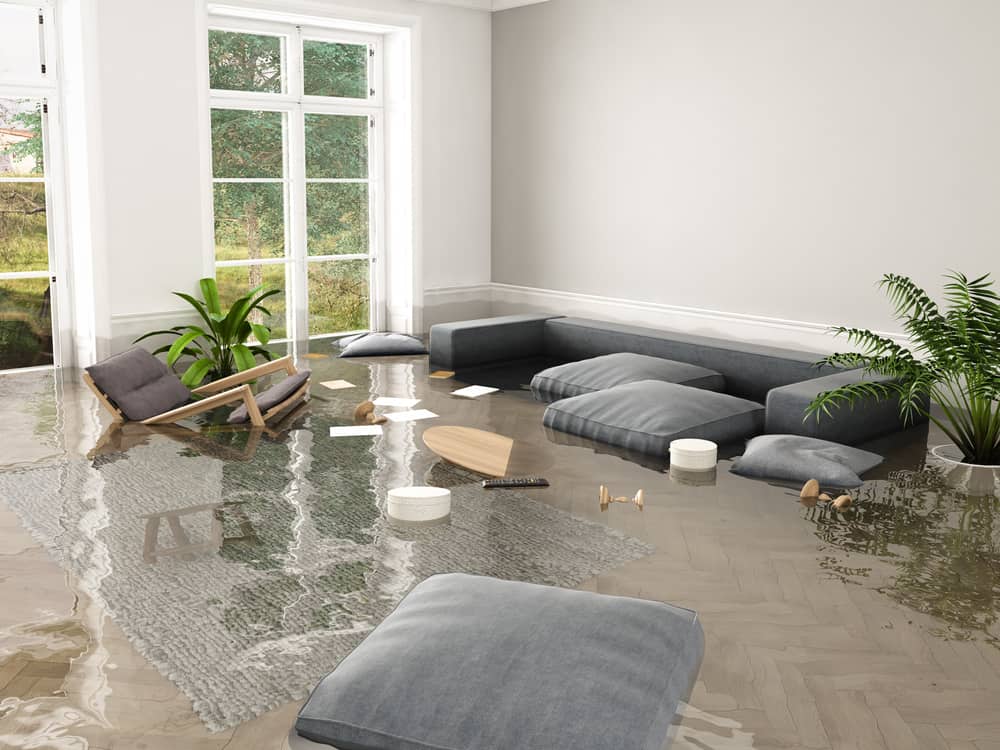
Emergency Water Removal Process in East Quogue
The process starts with a call and a same-day assessment. A certified technician comes out, walks the property, and uses moisture meters and detection equipment to map exactly where water has traveled including inside walls and under floors where you can’t see it. For East Quogue properties near Shinnecock Bay or in areas with a high seasonal water table, that initial mapping step is especially important because water tends to wick further into structural materials in low-elevation, bay-adjacent homes.
Once the scope is documented, extraction begins. Industrial-grade water removal equipment pulls standing water out fast, and then the drying phase starts commercial air movers, dehumidifiers, and targeted drying equipment running continuously until moisture readings hit the right levels. This typically takes several days depending on how much water entered and how long it had been sitting. For seasonally vacant homes in East Quogue where a pipe may have burst in January and gone undetected until April, the drying and remediation process is more involved and the documentation of that timeline matters significantly for the insurance claim.
Throughout the process, we work directly with your insurance company, handling the paperwork, adjuster communication, and billing. If the damage requires reconstruction drywall, flooring, structural repairs that’s handled in-house as well, so you have one point of contact from start to finish.

Ready to get started?
Burst Pipe and Flood Damage Restoration East Quogue
East Quogue homeowners deal with a wider range of water damage sources than most communities on Long Island. Storm surge from Shinnecock Bay, flash flooding during summer convective storms, frozen pipes in seasonally vacant homes, and groundwater infiltration from a high water table each one requires a different technical approach. The IICRC classifies water damage into three categories based on contamination level, and the remediation protocol changes significantly depending on whether you’re dealing with a clean-water pipe burst (Category 1), a washing machine overflow (Category 2), or floodwater from the bay (Category 3, which carries the highest contamination risk and the most stringent cleanup requirements).
For East Quogue’s seasonal homeowners specifically, the frozen pipe scenario deserves its own attention. A pipe that bursts in a vacant home in February may not be found until the owners return in spring. By that point, water has been sitting inside walls and under floors for weeks or months, mold has likely begun establishing itself, and what might have been a straightforward extraction job has become a full remediation and rebuild. We respond immediately when that discovery happens assessing the full scope, documenting everything for the insurance claim, and beginning remediation the same day.
It’s also worth knowing that restoration work in East Quogue falls under Town of Southampton jurisdiction. Depending on the extent of the damage, building permits may be required for reconstruction, and properties near Shinnecock Bay may be subject to wetlands regulations. We’re familiar with working within that local regulatory context.

Does homeowners insurance cover water damage from flooding in East Quogue?
This is one of the most common sources of confusion for East Quogue homeowners, and it’s worth being direct about: standard homeowners insurance does not cover flooding. It covers sudden, accidental water damage from internal sources a burst pipe, an appliance overflow, a water heater failure but water that enters your home from the outside, including storm surge from Shinnecock Bay or surface flooding during a heavy rain event, falls under flood insurance, which is a completely separate policy through the National Flood Insurance Program (NFIP).
Many East Quogue properties particularly those near the bay or in FEMA Zone AE designations are required to carry NFIP flood insurance as a condition of their mortgage. If you have both policies, you may be filing two separate claims with two different adjusters for the same event, which is where the process gets complicated fast. We work directly with both types of insurance, handle the documentation required for each, and coordinate with adjusters so you’re not left trying to manage that process while your home is still wet.
How quickly does mold start growing after a basement floods in East Quogue?
Mold spores can begin germinating within 24 hours under the right conditions, and visible growth typically appears within 48 to 72 hours. In East Quogue’s coastal environment where humidity levels are naturally higher than inland areas and basements are more prone to lingering moisture due to the high water table those conditions are almost always present after a flooding event. That 24-to-48-hour window isn’t a general guideline; it’s the actual timeline you’re working against.
This is why waiting to see how bad it gets before calling is one of the more costly decisions a homeowner can make. Every hour of delay after a flooded basement or burst pipe increases the likelihood that moisture has penetrated deeper into structural materials and that mold has begun establishing itself in places you can’t see. The EPA is explicit on this point: water-damaged areas need to be dried within 24 to 48 hours to prevent mold growth. Getting a certified team on-site quickly with the industrial drying equipment to actually reach moisture inside walls and under floors is the only reliable way to stay ahead of it.
What should I do if I arrive at my East Quogue seasonal home and find water damage?
First, don’t try to assess the full extent of the damage yourself. What’s visible on the surface water stains, warped flooring, wet drywall is rarely the whole picture. In a home that’s been vacant through a Long Island winter, moisture has had time to travel through wall assemblies, under subfloors, and into structural cavities. The damage is almost always more extensive than it looks on arrival.
Call us immediately at 631-587-5300. A certified technician will come out the same day, map the full moisture profile of the property using professional detection equipment, and document everything in a format that supports your insurance claim. Do not run consumer-grade fans or attempt to dry the space yourself before a professional assessment improper drying can push moisture deeper into materials and, in some cases, create conditions that complicate the insurance documentation. If the property is in a FEMA flood zone and the damage appears to involve exterior water intrusion, notify your NFIP insurer as well as your homeowners carrier before beginning any work.
How long does water damage restoration typically take for a home in East Quogue?
For a standard residential water damage event a burst pipe, an appliance overflow, moderate basement flooding the drying phase typically runs three to five days, and the full restoration process including any necessary repairs averages around two weeks. That’s the national average, and it holds reasonably well for East Quogue homes where the damage is caught quickly.
The timeline extends significantly in two scenarios that are common in East Quogue specifically. The first is coastal flooding or storm surge events, where Category 3 contaminated water requires more intensive remediation protocols and longer drying cycles. The second is the seasonal vacancy scenario a home that has had water sitting inside it for weeks or months before discovery. In those cases, mold remediation is almost always part of the scope, structural materials may need to be removed and replaced, and the full process can run several weeks to several months depending on severity. We’ll give you a realistic timeline after the initial assessment, not a number designed to get you to sign something.
Does water damage restoration in East Quogue require permits from the Town of Southampton?
It depends on the scope of the work. Extraction, drying, and remediation the initial response phase generally don’t require permits. But if the restoration involves reconstruction, which is common after significant flooding events, the Town of Southampton requires building permits for rehabilitation, renovation, and restoration work. There’s also a threshold to be aware of: if the cost of restoring a structure to its pre-damage condition equals or exceeds 50% of the property’s market value before the damage occurred, the Town’s code classifies it as “substantial damage,” which triggers additional requirements including compliance with current floodplain management standards.
Given that East Quogue’s median home value is over $800,000, that 50% threshold is a real consideration for severe damage scenarios particularly for bayfront or near-bay properties in FEMA flood zones. Properties near Shinnecock Bay may also be subject to the Town’s wetlands regulations under Chapter 325, which can affect exterior work or any work involving soil disturbance. We’re familiar with working within the Town of Southampton’s regulatory framework and can help you understand what permits apply to your specific situation before work begins.
How does storm surge damage from Shinnecock Bay differ from regular water damage?
Storm surge from Shinnecock Bay is classified as Category 3 water damage under the IICRC’s water damage standard the highest contamination category. Unlike a burst pipe (Category 1, clean water) or a washing machine overflow (Category 2, gray water), floodwater that enters a home from the bay carries contaminants, sediment, and biological material that require a fundamentally different remediation approach. Porous materials drywall, insulation, carpet, wood framing that have been contacted by Category 3 water typically cannot be dried and salvaged. They need to be removed and replaced.
This distinction matters enormously for both the scope of work and the insurance claim. NFIP flood policies have specific documentation requirements, and the remediation protocol has to align with IICRC standards for Category 3 events to hold up in the claims process. East Quogue has documented storm surge flooding history Dune Road has been closed repeatedly during major storm events, and the hamlet was under mandatory evacuation orders during Hurricane Sandy, with flooding recorded on the western side of the community. If your property has experienced bay flooding, the restoration approach needs to reflect the actual contamination level of the water involved, not just the visible water line.
Useful Links
Other Services we provide in East Quogue