
Water Damage Restoration in Greenlawn, NY
When Your Commute Home Ends in a Flooded Basement
Hear from Our Customers

Flood Restoration Services in Greenlawn
A flooded basement in a 1960s Cape Cod off Pulaski Road isn’t just a water extraction job. The homes that make up most of Greenlawn’s housing stock built during the postwar boom, with a median construction year of 1963 carry aging galvanized pipes, original sump pump pits, and pre-1980 materials that complicate the cleanup in ways most homeowners don’t anticipate. When water gets in, it doesn’t stay where you can see it. It moves into walls, under subfloors, and into structural cavities that a shop vac and a box fan will never reach.
What proper restoration actually delivers is peace of mind grounded in documentation. We map every affected area, record every moisture reading, and perform the work to IICRC standards the same standards your insurance adjuster expects to see when they review the claim. That matters in a community where average home values are approaching $850,000 and the financial stakes of a half-finished restoration are very real.
For a community where many residents are on the LIRR by 7 a.m. and not home until evening, the 24–48 hour window the EPA identifies as critical for preventing mold growth can close fast. Getting the right team in quickly before you’re even back at the Greenlawn station is what separates a contained water event from a mold remediation project six months down the road.
Residential Water Damage Repair in Greenlawn
We’ve been serving Suffolk County homeowners for close to three decades. That’s not a corporate timeline it’s a real Long Island history built through nor’easters, frozen pipe winters, and the kind of storm events that have repeatedly put the Town of Huntington under water. The August 2024 flooding that brought heavier than normal flooding, downed trees, and sinkholes to Greenlawn and the surrounding area wasn’t a surprise to us. We’ve seen versions of it before.
We’re based in West Babylon, fully licensed, bonded, and insured, and our technicians carry IICRC certification the credential that insurance companies recognize and that ensures the work follows a documented, accepted standard. We have a dedicated 631 number for Suffolk County, which means when you call, you’re reaching a team that actually knows the difference between a Harborfields-area Cape Cod and a newer build, and knows what that means for the restoration scope.
This isn’t a national brand with a Greenlawn landing page. We’re a Long Island company that has been doing this work in communities like yours long enough to know what’s inside these walls.
Emergency Water Removal Process in Greenlawn
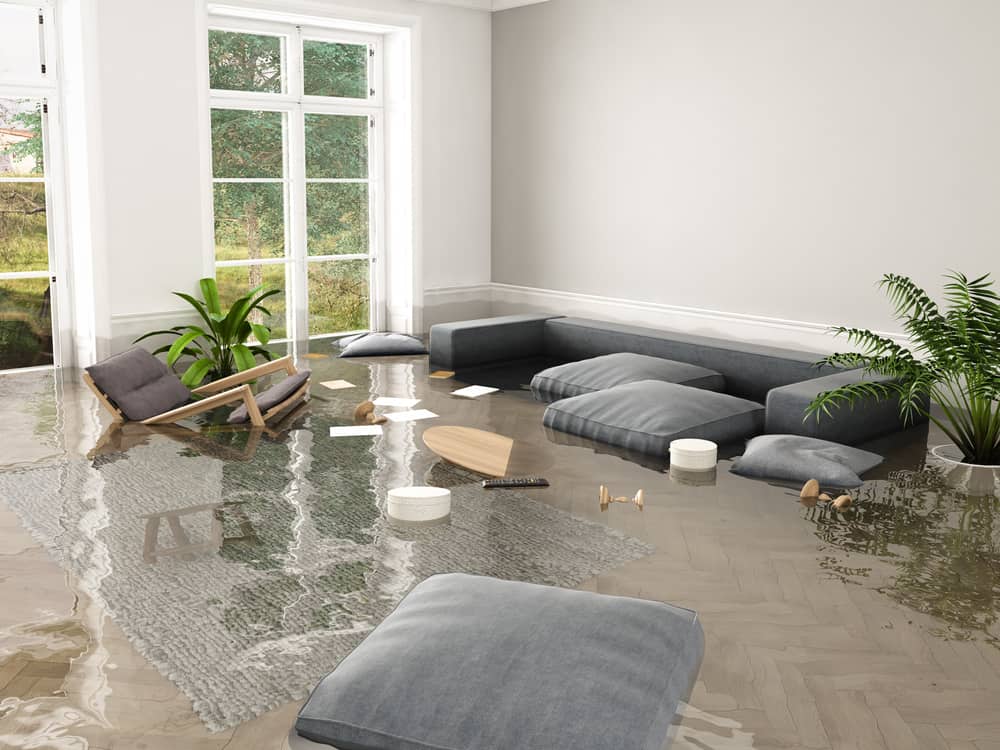
The first call triggers an immediate response 24 hours a day, seven days a week. If you’re still on the Port Jefferson Branch heading home and you’ve just found out your basement has water in it, that call can go in before you reach the station. We can dispatch a crew to your Greenlawn property while you’re still in transit, so the drying clock starts as early as possible. That window matters more than most people realize.
When our crew arrives, the first priority is stopping the source if it’s still active a burst pipe, a failed sump pump, an overflowing appliance. From there, industrial-grade extraction equipment pulls standing water out of the space. This isn’t the same as a wet vac. The equipment we use reaches into floor cavities and wall assemblies that consumer-grade tools can’t touch. Moisture meters and thermal imaging identify exactly where the water has traveled including behind drywall and under flooring so nothing gets missed.
Structural drying follows, using professional air movers and dehumidifiers calibrated to the space. In Greenlawn’s older homes, this phase requires careful attention to pre-1980 building materials. If the damage has disturbed asbestos pipe insulation or lead-containing surfaces common in homes built before 1978 that triggers a separate compliance protocol under federal RRP rules and New York State’s mold licensing requirements. We handle both the restoration and the compliance side, so you’re not left coordinating between two separate contractors. Once drying is complete, the full documentation package is ready for your insurance company.
Ready to get started?
Burst Pipe and Basement Flood Cleanup in Greenlawn
Water damage restoration in a 1950s or 1960s Greenlawn home involves layers that newer construction doesn’t. Galvanized steel supply lines in homes of this era are at or past their expected service life, which makes burst pipe water damage one of the most common emergency calls in this ZIP code. Sump pump failures during nor’easters when the power goes out at exactly the moment the pump is needed most are another frequent cause of basement flooding in Greenlawn. Both are typically covered by homeowners insurance when properly documented, and we manage that documentation process directly with your carrier.
Our scope of service runs from initial water extraction through structural drying, moisture mapping, antimicrobial treatment, and full rebuild if structural repairs are needed. There are no named service tiers here the scope is determined by what the damage actually requires, not by a package price. If mold remediation is needed, New York State’s Article 32 law requires that the assessment and the remediation be performed by separately licensed parties. We operate in full compliance with that requirement, which protects you legally and ensures the work holds up if your claim is reviewed. If a contractor tells you they’ll handle both the assessment and the remediation themselves, that’s a red flag under New York State law.
Storm damage restoration, flooded basement cleanup, and residential water damage repair are all handled under one contract, with one point of contact. For Greenlawn homeowners managing a commute and a household, that matters.

Does homeowners insurance cover water damage from a burst pipe in Greenlawn, NY?
In most cases, yes but the details matter. Standard homeowners insurance covers sudden, accidental water damage from internal sources like burst pipes, failed appliances, and sump pump overflow. What it does not cover is flooding from an external source, like storm surge or groundwater rising through the foundation. That requires a separate flood insurance policy.
In Greenlawn, the most common insurance-covered events are burst pipes during cold snaps, sump pump failures, and appliance-related water damage all of which fall under the “sudden and accidental” category that standard policies recognize. The key is proper documentation from the start. If the damage isn’t correctly categorized and documented when the claim is filed, insurers can and do deny it. We work directly with insurance companies, handling the documentation and adjuster coordination so the claim is built correctly from the first call not patched together after the fact.
How fast does mold grow after a basement flood, and why does the response timeline matter?
The EPA is specific on this: water-damaged areas need to be dried within 24 to 48 hours to prevent mold growth. That’s not a wide window, and in a commuter hamlet like Greenlawn where many homeowners are away from home for 10 to 12 hours at a stretch, a water event that starts in the morning can be sitting for half a day before anyone discovers it.
Mold spores don’t need much warmth, moisture, and a surface to land on. The finished basements, drywall, and wood framing common in Greenlawn’s postwar homes give mold everything it needs to establish itself quickly. Once visible growth appears, you’re no longer dealing with a drying job you’re dealing with a remediation project that is more expensive, more disruptive, and more regulated. Calling immediately, even before you get home, is the single most important thing you can do to keep a water event from becoming a mold event.
What happens if my Greenlawn home has asbestos or lead paint and there's water damage?
This is a real concern for Greenlawn homeowners, and it’s one that most basic restoration companies aren’t equipped to handle under one contract. Homes built before 1978 which describes the majority of Greenlawn’s housing stock given the median construction year of 1963 commonly contain asbestos pipe insulation, asbestos floor tiles, and lead-based paint. When floodwater disturbs those materials, the cleanup becomes a regulated event under both federal EPA rules (the RRP Rule for pre-1978 homes) and New York State environmental guidelines.
That means the work can’t just proceed as a standard water extraction job. The hazardous materials have to be identified, contained, and handled by properly licensed personnel before the restoration work continues. We’re equipped to manage both sides of this the restoration and the compliance requirements so you’re not left trying to coordinate a separate hazmat contractor while your home is still wet. If you’re unsure whether your home contains these materials, that’s part of what the initial assessment identifies.
How long does water damage restoration take for a typical Greenlawn home?
For most homes, the drying phase alone takes three to five days using professional-grade air movers and dehumidifiers. Water extraction typically happens in the first one to three days. From there, the full restoration timeline depends on what the damage revealed if it’s limited to one room with no structural involvement, you’re looking at roughly one to two weeks total. If the water has traveled into walls, subfloors, or structural framing, or if mold remediation is required, the timeline extends from there.
In Greenlawn’s older homes, the timeline can be affected by factors specific to the area. Pre-1980 building materials may require additional handling steps before drying equipment can be placed. Older wall assemblies and floor construction can hold moisture differently than newer builds, which means the moisture mapping phase matters more you want to confirm everything is genuinely dry before closing walls back up. Rushing that phase is how you end up with a mold problem three months later. We provide clear timeline communication throughout so you’re not left guessing about when you can get back to normal.
What should I do immediately after discovering water damage in my home?
The first thing is to call a restoration company not your insurance company first, not a general contractor. Getting a restoration crew on site quickly is what determines whether you’re dealing with a contained water event or a structural and mold problem. Your insurer will want documentation of the damage, and having a professional team there from the start means that documentation is built correctly.
While you’re waiting for the crew to arrive, if it’s safe to do so, shut off the water source if it’s still active the main shutoff valve is typically in the basement or utility area of most Greenlawn homes. Don’t run fans or a household dehumidifier thinking it will help consumer-grade equipment doesn’t reach the moisture inside walls and can actually push contaminated air around the space. Don’t try to pull up wet flooring or cut into drywall yourself. The professional assessment needs to happen first so the full scope is documented before anything is disturbed. If you’re on the LIRR heading home and you’ve just found out remotely, call on the way we can dispatch a crew before you arrive.
Does New York State's mold law affect how water damage restoration works in Greenlawn?
Yes, and it’s worth understanding before you hire anyone. New York State’s Article 32 mold law requires that for any mold project covering 10 square feet or more, the company performing the mold assessment cannot be the same company performing the mold remediation on that project. The assessor writes the remediation plan, a separately licensed remediator carries out the work, and the original assessor returns to perform clearance testing before the project is legally complete.
This law exists specifically to protect homeowners from conflicts of interest a company that assesses and remediates its own findings has no external check on whether the work was actually necessary or correctly scoped. In Greenlawn, where water damage in a 1960s home can quickly involve mold behind walls and under flooring, this separation requirement is directly relevant. We operate in full compliance with Article 32, which means the work is done to a standard that holds up legally and that your insurance company can rely on when reviewing the claim. If a contractor tells you they’ll handle both the assessment and the remediation themselves, that’s a red flag under New York State law.
Useful Links
Other Services we provide in Greenlawn