
Water Damage Restoration in Remsenburg, NY
When Moriches Bay Comes Indoors, We Get It Out Fast
Hear from Our Customers

Flood Restoration Services in Remsenburg
Water damage doesn’t resolve itself. Whether it’s storm surge pushing in from Moriches Bay, a burst pipe that failed during a cold January night, or a slow leak that went undetected in a home that sat empty all winter the longer it sits, the worse it gets. The EPA is clear that mold can begin forming within 24 to 48 hours of water intrusion.
What you need when this happens is straightforward: someone who shows up, assesses the full scope honestly, dries the structure properly using professional equipment, and handles the insurance side so you’re not fighting that battle on top of everything else. That’s what water damage repair in Remsenburg looks like when it’s done right.
Remsenburg presents two specific challenges that set it apart from inland communities. First, the seasonal occupancy reality nearly 28% of housing units in this area are seasonal or occasional use, which means water damage can go undetected for weeks or months before anyone walks through the door. Second, the coastal exposure properties along Seatuck Cove and the bay-facing sections of South Country Road face real storm surge risk, and some carry FEMA Zone AE designations that require flood insurance. Both factors affect how the damage is categorized, how the claim is handled, and what the remediation actually involves.
Trusted Water Damage Company in Remsenburg
We’re based in West Babylon and have been serving all of Suffolk County including the Town of Southampton for close to three decades. That tenure means we’ve worked through every major storm cycle that’s hit the Remsenburg coastline, including the aftermath of events that caused widespread damage throughout the Moriches region and beyond.
We’re IICRC-certified, licensed, bonded, and insured. Those credentials matter in a community like Remsenburg, where properties routinely exceed $1 million in value and the stakes of a poorly executed restoration job are significant. IICRC certification means our work follows established industry protocols the kind that hold up when an insurance adjuster reviews the documentation.
We work directly with your insurance company. That includes navigating the added complexity that comes with properties carrying both standard homeowners coverage and a separate NFIP flood policy, which is common for waterfront homes in FEMA flood zones throughout Southampton Town and Remsenburg specifically.
Water Extraction and Drying Process in Remsenburg
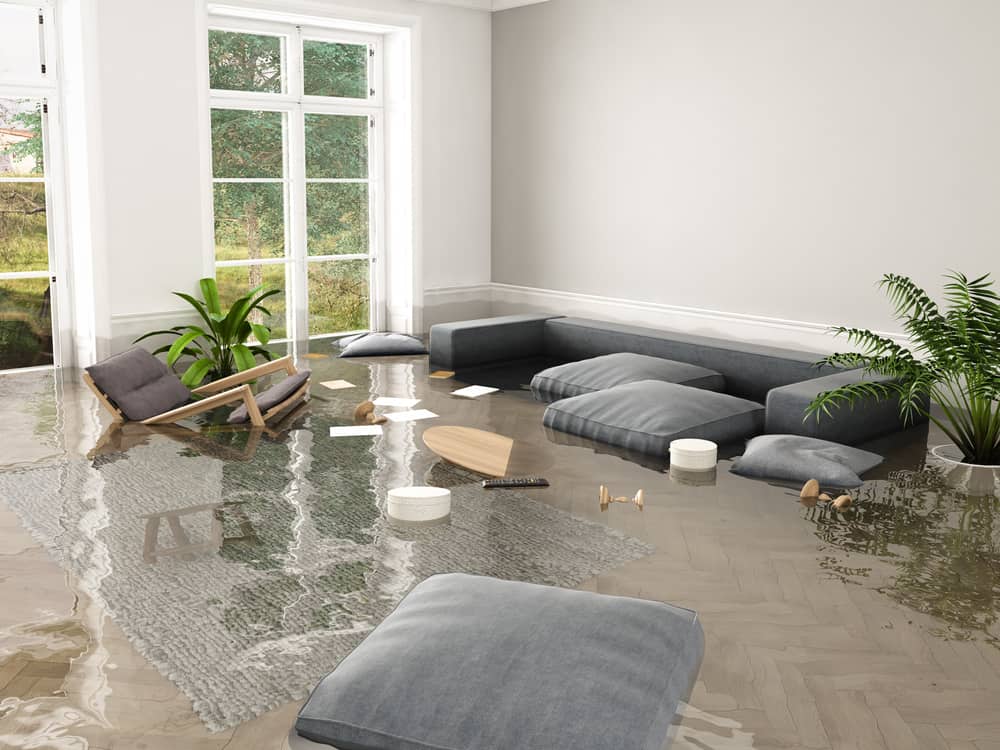
The first step is getting someone on-site. We offer 24/7 emergency response throughout Suffolk County, which matters here because water damage in Remsenburg often isn’t discovered during business hours it’s a property manager calling on a Sunday morning after a nor’easter, or a homeowner returning from the city in April to find a pipe that failed in February.
Once on-site, we conduct a full assessment using moisture meters and thermal imaging to map where the water has traveled including inside walls, under floors, and in any structural cavities that aren’t visible to the eye. This step is critical. Consumer fans and wet-vacs miss the moisture you can’t see, and that hidden moisture is what becomes mold six weeks later. We document the damage thoroughly for your insurance claim, which is especially important when the damage may have been progressing for an extended period before discovery.
From there, industrial extraction equipment removes standing water, followed by professional-grade air movers and dehumidifiers that drive moisture out of the structure itself. The drying phase typically runs several days depending on the scope. Throughout that process, moisture readings are tracked and logged. Once the structure meets drying standards, any necessary antimicrobial treatment is applied, and the rebuild phase begins drywall, flooring, structural repairs, and finish work.
We handle the full scope in-house, so you’re not coordinating three separate contractors from 75 miles away. One company, start to finish. For work within Southampton Town, any structural repairs requiring permits are handled in compliance with the Town of Southampton Building Department requirements, including any applicable FEMA flood zone elevation standards for properties in Zone AE.

Ready to get started?
Storm Damage Restoration Services in Remsenburg, NY
The range of water damage scenarios in Remsenburg is genuinely broader than what most inland communities face. On one end, you have a straightforward burst pipe in a year-round home clean water, contained area, manageable scope. On the other end, you have storm surge from Moriches Bay pushing contaminated water into a finished basement, or a seasonal home that’s been sitting with a slow roof leak since November.
Each scenario requires a different protocol, different equipment, and different documentation for insurance purposes. We handle all of it: water extraction and emergency water removal, structural drying and dehumidification, mold remediation when moisture has been present long enough for growth to develop, fire and smoke damage restoration, odor treatment, and full reconstruction through to finished repairs.
For Remsenburg’s older homes some with plumbing systems that are decades old and original architectural details that can’t simply be swapped out for contractor-grade replacements our approach is precise. We remove the moisture and address the damage without tearing out more than necessary.
For seasonal and second-home owners specifically, the documentation and insurance coordination piece is often the most valuable part of what we do. When damage has been progressing in an unoccupied home, establishing a clear record of what existed prior to treatment and billing correctly across multiple policies requires experience that only comes from years of working with Suffolk County insurers and adjusters. Nearly 30 years in this market gives us exactly that foundation.

Does homeowners insurance cover water damage in a Remsenburg seasonal property?
This is one of the most complicated insurance questions in the Remsenburg market, and the answer depends on several factors. Standard homeowners insurance typically covers sudden, accidental water damage from internal sources a burst pipe, a failed water heater, an appliance overflow. What it generally does not cover is flooding, which includes storm surge from Moriches Bay.
For that, you need a separate flood insurance policy, typically through the National Flood Insurance Program. Many waterfront properties in Remsenburg with FEMA Zone AE designations are already required to carry NFIP coverage.
The seasonal occupancy piece adds another layer of complexity. Most standard homeowners policies include vacancy clauses that limit or void coverage once a home has been unoccupied for 30 to 60 consecutive days. If a pipe burst in your Remsenburg home in January and wasn’t discovered until April, your insurer may dispute coverage based on the vacancy timeline. This is exactly the kind of situation where having a restoration company that understands the claims process and can document the damage thoroughly and accurately from the moment we arrive makes a real difference in the outcome.
How fast does mold grow after a basement floods in Remsenburg?
The EPA’s guidance is that water-damaged areas need to be dried within 24 to 48 hours to prevent mold growth. Mold spores are already present in the air they don’t need to travel in from outside. Once there’s moisture and an organic surface like drywall, wood framing, or subfloor material, germination can begin within 24 hours. Visible growth typically appears within 48 to 72 hours, but microscopic colonization starts before you can see anything.
For Remsenburg homeowners, this timeline is particularly relevant because of the seasonal occupancy situation. A flooded basement in a home that’s been closed for the winter has almost certainly already exceeded the 48-hour window by the time anyone discovers it. That doesn’t mean the situation is hopeless it means the remediation scope is larger than it would have been with an immediate response, and the documentation of what existed prior to treatment becomes especially important for the insurance claim. The sooner professional extraction and drying equipment is deployed after discovery, the better the outcome.
What is the difference between flood damage and water damage for insurance purposes?
This distinction matters enormously, and it catches a lot of homeowners off guard. For insurance purposes, water damage refers to damage caused by water originating inside the home a burst pipe, an overflowing appliance, a roof leak that lets rain in. Standard homeowners insurance covers sudden, accidental events in this category. Flood damage, by contrast, refers to water that enters the home from the outside storm surge, tidal overflow, groundwater rising and coming in through the foundation. Standard homeowners insurance does not cover flood damage, period.
For Remsenburg properties on or near Moriches Bay, this distinction is critical. If storm surge from a nor’easter or a tropical system pushes water into your home, that’s a flood event and without a separate NFIP flood insurance policy, you’re paying out of pocket. Properties in FEMA Zone AE are required to carry flood insurance, but properties just outside the mapped flood zone are not, even if they’re at real risk.
When we arrive on-site, part of the assessment process is helping identify the likely source and category of the water intrusion, which directly affects which policy the claim goes to and how it’s documented.
How long does water damage restoration take for a large Remsenburg home?
The timeline depends on the scope of the damage, the size of the affected area, and how long the water has been present. For a contained event say, a burst pipe that’s caught quickly in a single room the extraction and drying phase can be completed in three to five days, with repairs following shortly after. For a more extensive event involving multiple rooms, structural saturation, or mold growth from prolonged moisture exposure, the full restoration process can take several weeks.
In Remsenburg specifically, the scale of many properties adds to the timeline. A 4,000 or 5,000 square foot waterfront home with a finished basement, custom millwork, and high-end finishes requires more equipment, more careful drying protocols, and more precise moisture monitoring than a smaller property. Rushing the drying phase to save time is a mistake if the structure isn’t fully dried before repairs begin, you’re sealing moisture inside the walls, which leads to mold problems months later.
We track moisture readings throughout the drying phase and don’t move to repairs until the numbers confirm the structure is ready.
Can water damage in Remsenburg cause structural damage to my home?
Yes, and it’s more common than most homeowners expect. Water is patient it follows gravity into every available space, and once it’s inside a structure, it begins breaking down materials over time. Wood framing absorbs moisture and begins to weaken. Subfloor material swells, warps, and eventually deteriorates. Drywall becomes soft and loses structural integrity. Insulation collapses and loses its thermal value.
In older Remsenburg homes some with plumbing systems that are decades old and original framing that dates back much further these materials are often already at or near the end of their useful life, which means water damage accelerates deterioration that was already underway.
The more serious structural risk comes when water damage goes undetected for an extended period, which is a real possibility in a community where a significant share of homes sit empty for months at a time. By the time the damage is discovered, what might have been a straightforward extraction and drying job has progressed to compromised framing, rotted subfloor, and mold colonization throughout the wall cavities. A thorough assessment using moisture meters and thermal imaging is the only reliable way to understand the full scope and that assessment is the foundation of everything that follows, including the insurance claim.
How do I protect my Remsenburg home from water damage while it's unoccupied?
This is one of the most practical questions a Remsenburg seasonal homeowner can ask, and the answers are straightforward. The most important thing you can do is maintain adequate heat in the home during winter not necessarily comfortable living temperatures, but enough to keep pipes from freezing. The general guidance is to keep the thermostat no lower than 55 degrees Fahrenheit. Pipes that run along exterior walls or through uninsulated spaces are the most vulnerable, and in some of the older homes along South Country Road and Basket Neck Lane, those runs are more common than in newer construction.
Beyond heating, a monitored water sensor or smart leak detector connected to a property manager or alarm service gives you the ability to respond quickly when something goes wrong rather than discovering it months later. Shutting off the main water supply when the home is closed for an extended period eliminates the risk of a pipe failure entirely, though it also means the home can’t be used without turning it back on.
For homes near Moriches Bay or in low-lying areas with tidal creek influence, a functional sump pump with a battery backup is worth the investment groundwater can rise during heavy rain events even without a direct storm surge event, and a sump pump that loses power during a storm is no protection at all.
Useful Links
Other Services we provide in Remsenburg