
Hear from Our Customers
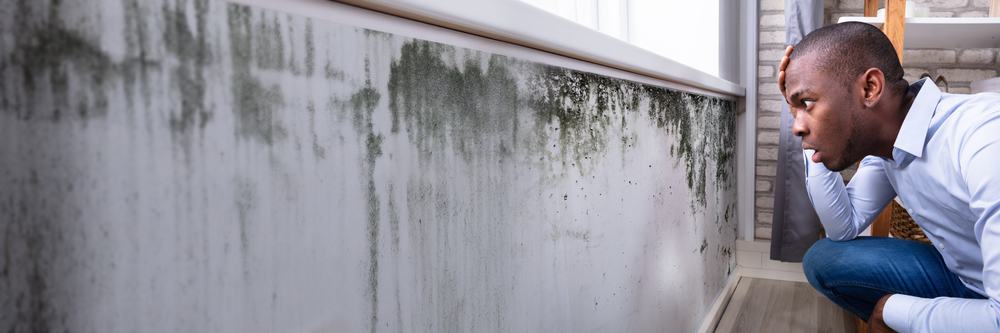
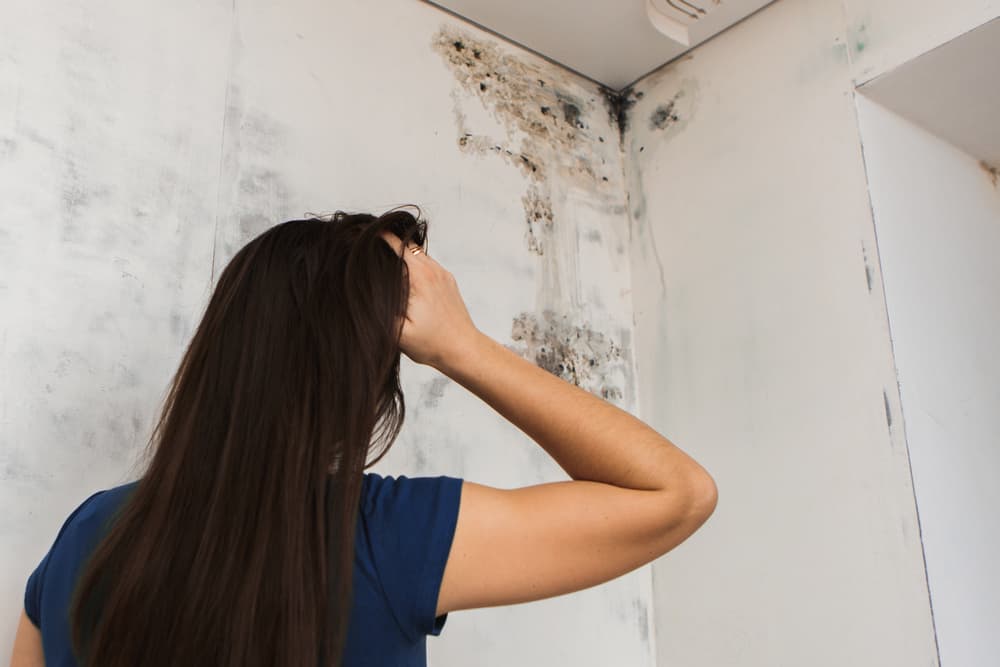
Most Baldwin homeowners don’t find mold because they went looking for it. They find it after a flood pushes water under a subfloor, or a musty smell in the basement won’t go away no matter how many times they clean, or a home inspector flags something during a pre-closing walkthrough and suddenly the whole deal is in question. By that point, the mold has usually been there for a while.
That’s the real problem with mold in Baldwin and across the South Shore — it doesn’t announce itself. Baldwin’s older housing stock, with a significant share of homes built before 1939 and most of the rest going up in the post-war decades, wasn’t built with modern moisture barriers or ventilation standards. Add in the coastal humidity that routinely pushes past the 60% threshold where mold begins to grow, and you’ve got conditions that work against you year-round. The neighborhoods near Milburn Creek and Baldwin Harbor face even more pressure — tidal flooding and storm surge events create exactly the kind of sustained moisture that mold needs to take hold inside wall cavities and subfloors.
A professional mold inspection gives you a clear picture: where the mold is, what kind it is, how concentrated it is, and what needs to happen next. Not a guess. Not a visual estimate. A lab-backed written report you can take to your insurance company, your real estate attorney, or your contractor — and actually do something with.
First Response Restoration and Cleaning Inc. has been working on Long Island homes since 1993. That’s three decades of South Shore basements, post-storm attics, and aging Capes and colonials — the exact housing stock that makes up most of Baldwin. Our owner Richard Peterson is personally licensed by the New York State Department of Labor as both a mold assessor and remediator, and every technician on our staff holds IICRC certification. The person who shows up at your door carries the same credentials as the company itself.
Based in West Babylon, just down the Southern State Parkway, we serve Nassau County through a dedicated line — 516-698-1776 — because Baldwin and Nassau County aren’t an afterthought. They’re a primary service area. We’re fully licensed, bonded, and insured, and our work is backed by certified lab analysis, not just someone’s opinion after walking through your home.
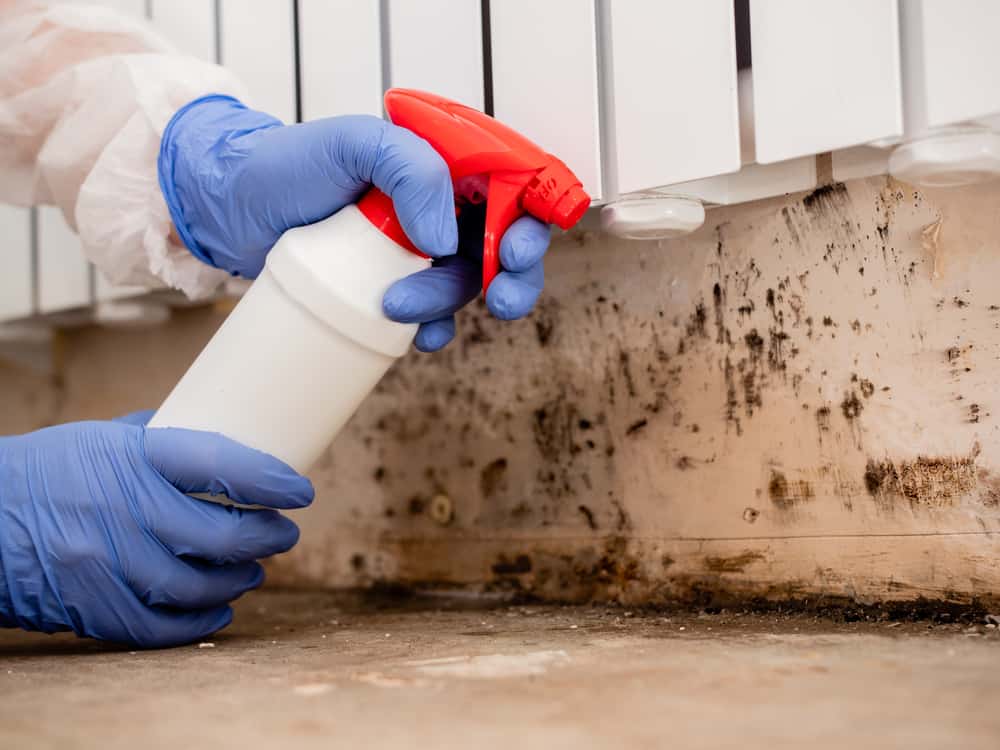
When one of our technicians arrives at your Baldwin home, the inspection follows a defined five-point protocol — not a visual walk-through with a flashlight. It starts with air testing and surface swab sampling, which go to a certified third-party laboratory for analysis. That step alone separates a real inspection from the kind of quick look that leaves you with more questions than answers.
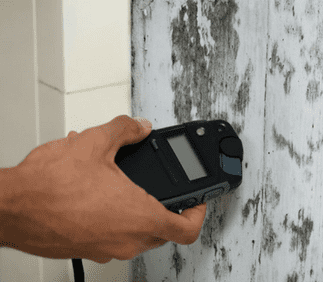
From there, the process includes a water intrusion inspection, moisture level measurement throughout the home, and infrared technology scanning to detect hidden mold inside wall cavities, beneath flooring, and in attic spaces. This matters especially in Baldwin’s older homes, where plaster walls and original hardwood floors can conceal moisture damage that’s been building for years — sometimes since a storm event that happened long before the current owner moved in. Every mold source is photographed and documented.
The inspection concludes with an internal versus external air particle comparison — the step that actually tells you whether your home’s air quality is safe, not just whether mold is visible somewhere. You receive a written report with specific remediation recommendations based on the lab results. If remediation is needed, we handle that too, through our licensed team, with no handoff to a separate contractor.
New York State requires all mold assessors and remediators to hold a NYS Department of Labor license under Article 32 of the Labor Law. We are fully licensed, which means the report we produce meets the legal and documentation standards that insurance companies and real estate attorneys require in Nassau County.
Ready to get started?
Our mold inspection service covers the full scope of what a Baldwin home actually faces — not a checklist built for a generic suburban house in a dry climate. Attic mold inspection is a standard part of the process here, because Baldwin’s older rooflines and inadequate insulation make ice dam damage a recurring winter issue. Water gets in, sits in attic framing and insulation, and stays there. Basement mold inspection is equally critical, given the high water table across the South Shore and the frequency of basement seepage during heavy rain events and nor’easters.
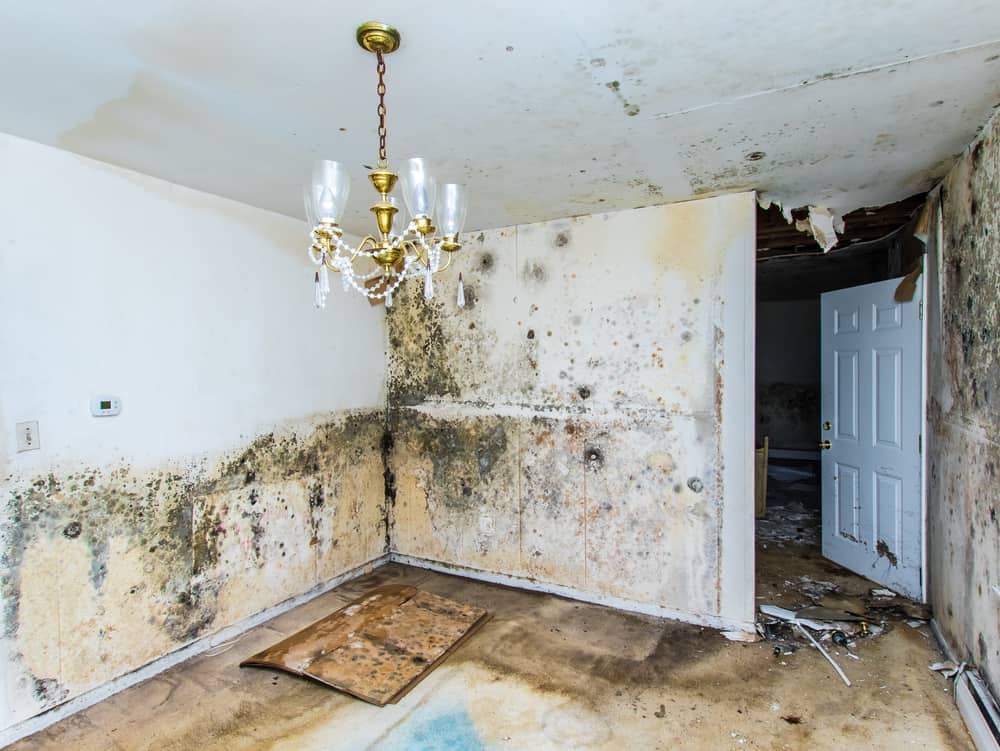
For homes in Baldwin Harbor or near Milburn Creek — areas that have seen repeated flooding — we pay particular attention to subfloor cavities, lower wall sections, and any space that absorbed water during past storm events. If your Baldwin home experienced any flooding during or after Superstorm Sandy, there’s a real possibility of mold that was never fully addressed, even if the visible damage was repaired at the time.
We serve residential and commercial properties throughout Baldwin, including single-family homes, multi-unit buildings, and mixed-use properties. Every inspection produces a written lab report with mold species identification, spore concentration levels, and specific next steps. For homeowners navigating an insurance claim or a real estate transaction, that documentation is what actually moves things forward — not a verbal assessment and a handshake.
The national average for a professional mold inspection runs around $670, with most homeowners paying somewhere between $300 and $1,000 depending on the size of the home and the scope of the inspection. In Baldwin, where median home values sit close to $600,000 and many properties are larger pre-war or post-war single-family homes, inspections on the higher end of that range are common — especially when infrared scanning and full air sampling are included.
What’s worth keeping in mind is what the alternative costs. A mold problem that goes undetected doesn’t stay small. Remediation for a contained issue might run $1,500 to $3,500. An extensive case — one that’s spread through wall cavities or subfloor systems in an older Baldwin home — can reach $10,000 to $20,000 or more. The inspection is the step that tells you which situation you’re actually in, before you’re committed to a repair bill you weren’t expecting.
In New York State, anyone performing mold assessment or remediation for pay is legally required to hold a license issued by the NYS Department of Labor under Article 32 of the Labor Law. This requirement has been in effect since January 1, 2016, and it applies to every job — no exceptions for small projects or residential work. Fines for unlicensed mold work can reach $10,000, and the liability insurance requirement for licensed assessors is at least $50,000.
This matters for Baldwin homeowners beyond just the legal technicality. If you’re filing an insurance claim or using the inspection report in a real estate transaction, the report needs to come from a licensed assessor to be taken seriously by insurance adjusters and attorneys in Nassau County. An inspection from an unlicensed operator — regardless of how thorough it seems — may not hold up when it counts. We hold the required NYS DOL license for both mold assessment and remediation.
Yes — and this is one of the more common situations in South Shore Nassau County. After Superstorm Sandy in 2012, an estimated 100,000 Long Island homes were damaged, and many of the repairs in Baldwin and surrounding communities were done quickly, under pressure, and without complete mold remediation. If water got into wall cavities, subfloors, or attic spaces and wasn’t fully dried and treated within 24 to 48 hours, mold had the conditions it needed to establish itself — even if the visible damage was patched over.
The challenge is that mold in these concealed spaces doesn’t always produce visible signs. A musty smell that comes and goes, unexplained respiratory irritation, or staining that keeps reappearing on a wall surface are all indicators worth investigating. Infrared technology can detect moisture and mold inside wall cavities without opening the wall — which is how we find what a standard visual inspection would miss in a Baldwin home that looks fine on the surface.
The terms get used interchangeably, but they’re not the same thing. Mold testing refers specifically to the collection and laboratory analysis of air or surface samples — it tells you what mold species are present and at what concentration. Mold inspection is the broader process: a physical assessment of the property to identify moisture sources, visible mold growth, water intrusion points, and conditions that support mold development, combined with the testing component.
A testing-only approach without a full inspection can miss the underlying cause entirely. You might confirm that mold spores are elevated in a basement, but without identifying the water intrusion point driving the growth, the problem comes back after remediation. In Baldwin homes — particularly older properties with aging plumbing, original basement walls, and rooflines susceptible to ice dam damage — finding the source is as important as finding the mold itself. We conduct both: a full physical inspection and certified lab-backed testing, with a written report that covers both findings.
For a typical Baldwin single-family home, the on-site inspection takes between two and four hours, depending on the size of the property and how many areas require detailed assessment. Older homes with finished basements, attic access, and multiple water intrusion points naturally take longer than a straightforward newer construction — and most of Baldwin’s housing stock falls into the older category.
Lab results from the air and surface samples typically come back within 24 to 48 hours after the samples are submitted. Once results are in, you receive a written report with the lab findings, identified mold sources, and specific remediation recommendations. For homeowners on a deadline — a pre-closing inspection with a tight timeline, or a post-storm situation where you need documentation for an insurance claim — we can discuss expedited options when you call. The Nassau County line is 516-698-1776, and we’re available around the clock.
This is one of the most time-sensitive situations a Baldwin homebuyer can face, and it comes up regularly in Nassau County’s active real estate market. A general home inspector is not licensed or equipped to identify mold species, measure spore concentrations, or produce the kind of documentation that holds up in a real estate negotiation. What they can do is flag a concern — and when they do, you need a licensed mold assessor to follow up before you commit to the purchase.
A professional mold inspection at this stage gives you one of three outcomes: confirmation that the concern is minor and manageable, documentation of a real problem that gives you negotiating leverage on price or repair credits, or a clean report that lets you close with confidence. In Baldwin’s pre-war and post-war attic spaces — where inadequate ventilation, original insulation, and ice dam history are common — attic mold is a legitimate finding that deserves a real answer, not a guess. Getting the inspection done before closing is almost always less expensive than inheriting the problem after the deed transfers.
Useful Links
Other Services we provide in Baldwin