
Hear from Our Customers
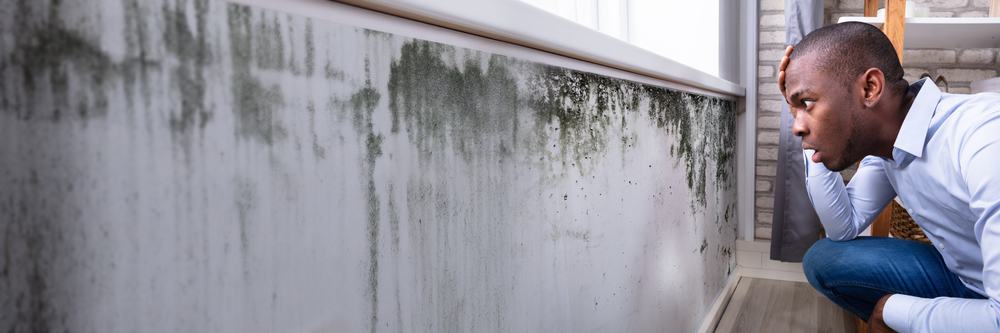
A lot of Bellmore homeowners don’t find out they have a mold problem until they’re already dealing with the consequences — a buyer backing out, a doctor asking questions, or a remediation contractor quoting numbers that feel like a gut punch. A thorough mold inspection doesn’t just tell you whether mold is present. It tells you what kind, how concentrated, where it’s coming from, and what needs to happen next. That’s information you can actually use.
Bellmore’s housing stock is predominantly post-WWII construction — Cape Cods, ranches, and colonials built in the 1940s through 1960s that are now pushing 70 to 80 years old. At that age, block foundations seep, original plumbing develops slow leaks inside wall cavities, and attic ventilation that was never great to begin with has gotten worse. These aren’t hypothetical risks. They’re the conditions that produce hidden mold — the kind that doesn’t show up on a surface until it’s already well-established behind it.
Add in the south shore’s consistent four inches of monthly precipitation year-round and the coastal humidity that comes with sitting near the Great South Bay, and you have a moisture environment with no real off-season. A proper mold inspection gives you a certified lab report, a written remediation recommendation, and documentation that holds up with your insurance carrier, your real estate attorney, or anyone else who needs to see it in writing.
We’ve been working on Long Island homes since the mid-1990s — long before Hurricane Sandy redefined what south shore homeowners understand about flooding and mold risk, and long before New York State’s Article 32 licensing law made credentials mandatory. That history isn’t a marketing line. It means the technician walking into your Bellmore home has seen the same 1952 block basement, the same unventilated attic, the same post-storm moisture pattern dozens of times before.
Every technician on our workforce holds IICRC certification — not just the owner, every person we dispatch. Richard Peterson, our owner, is personally licensed by the NYS Department of Labor in both mold inspection and mold remediation under Article 32. We maintain a dedicated Nassau County line at 516-698-1776, because Bellmore and the surrounding communities aren’t an afterthought — they’re a core part of the territory we’ve been serving for three decades.
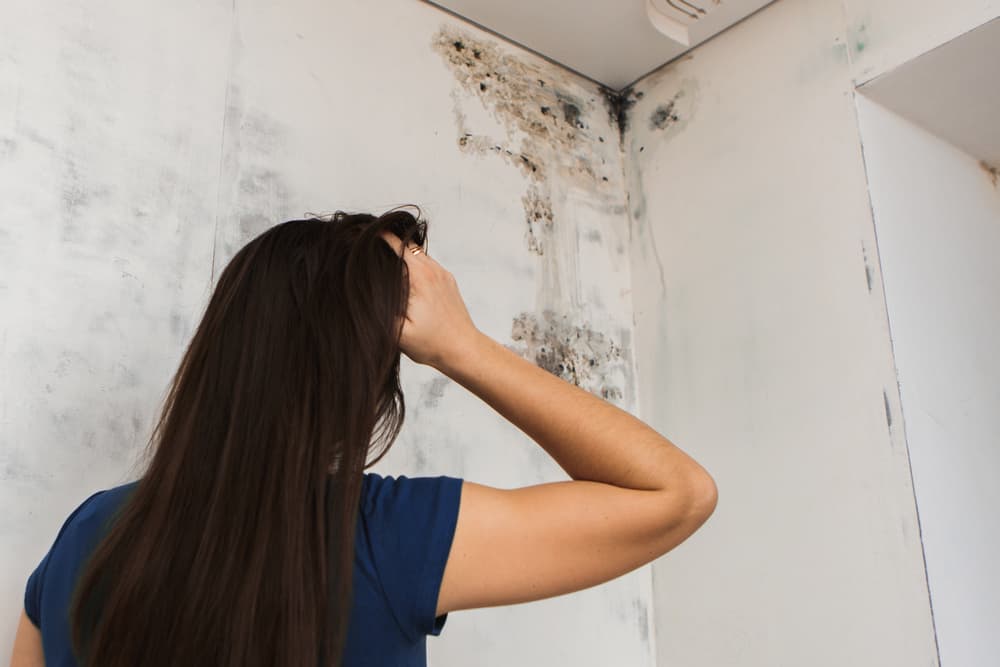
The inspection starts with a full walkthrough of your home — basement, crawl space, attic, and any area with a documented or suspected moisture history. In Bellmore, that often means paying close attention to block foundations in south Bellmore properties near Shore Road, attic decking in homes that haven’t had ventilation updates, and anywhere a nor’easter or tidal event has pushed water in the past. The technician isn’t just looking — they’re using infrared technology to detect moisture signatures inside walls and under flooring that a visual inspection would miss entirely.
From there, air samples are collected from interior spaces and compared against an outdoor baseline taken at your property the same day. This matters in a coastal community like Bellmore, where outdoor mold spore counts are naturally elevated during warm months near the Great South Bay. Surface swab samples are collected where visible growth or suspicious discoloration is present. Every sample goes to a certified third-party laboratory — nothing is assessed in-house or based on a technician’s visual judgment alone.
When the lab results come back, you receive a written report that includes photographs of every mold source, moisture meter readings, certified species identification, spore concentration data, and a specific remediation recommendation. If you’re dealing with an insurance claim, a real estate transaction under New York’s updated Property Condition Disclosure requirements, or a health concern, that report is the document you need — and it’s built to hold up wherever you need to use it.
Ready to get started?
The inspection we conduct in Bellmore isn’t a walk-through with a flashlight and a verbal opinion. It’s a documented, multi-tool process that covers air testing, surface swab sampling, water intrusion assessment, moisture level measurement, infrared scanning for hidden mold, and an internal-versus-external air particle comparison. The written report includes certified laboratory results with mold species identification, spore concentration data, photographs of all findings, and a specific remediation scope of work.
New York’s Article 32 law requires that mold assessment and mold remediation be performed by two separate, independent licensed entities on the same project. This is a legal protection for you — it eliminates the conflict of interest that exists when the same company diagnoses and treats the problem. We perform the assessment and deliver a report that gives you everything you need to move forward with a licensed remediator, your insurance carrier, or your real estate attorney. The findings are actionable because we also understand the full remediation process — so the recommended scope of work reflects what it actually takes to fix the problem, not just identify it.
If you’re dealing with post-storm moisture in a south Bellmore basement, a home inspection flag on a property near the Bellmore-Merrick school district, or a health concern that’s been lingering through another Long Island winter, the inspection is designed to give you a clear, documented answer — not more uncertainty.
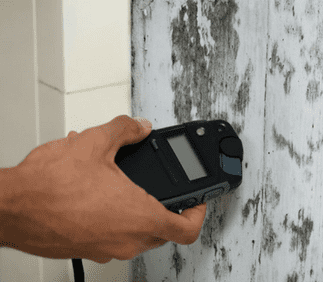
It’s a legitimate concern — and for many Bellmore homeowners, the answer is yes. Hurricane Sandy’s storm surge pushed saltwater through storm drains and into foundations across south Bellmore, and areas like Shore Road have been documented as zones of chronic flooding, not just a one-time event. Saltwater flooding is particularly problematic because salt deposits left behind in block foundations and wall cavities draw moisture from the surrounding air through a process called hygroscopic absorption. That means a basement that looked dry weeks after a storm may still be feeding mold growth inside the walls.
Even outside of major storm events, Bellmore’s consistent four inches of monthly precipitation year-round gives moisture no real off-season. Homes that have experienced repeated seepage events — even minor ones — accumulate moisture damage in ways that aren’t always visible from the surface. If your home has a flooding history, even a partial one, a professional mold inspection with infrared scanning is the only way to know what’s actually happening inside those walls.
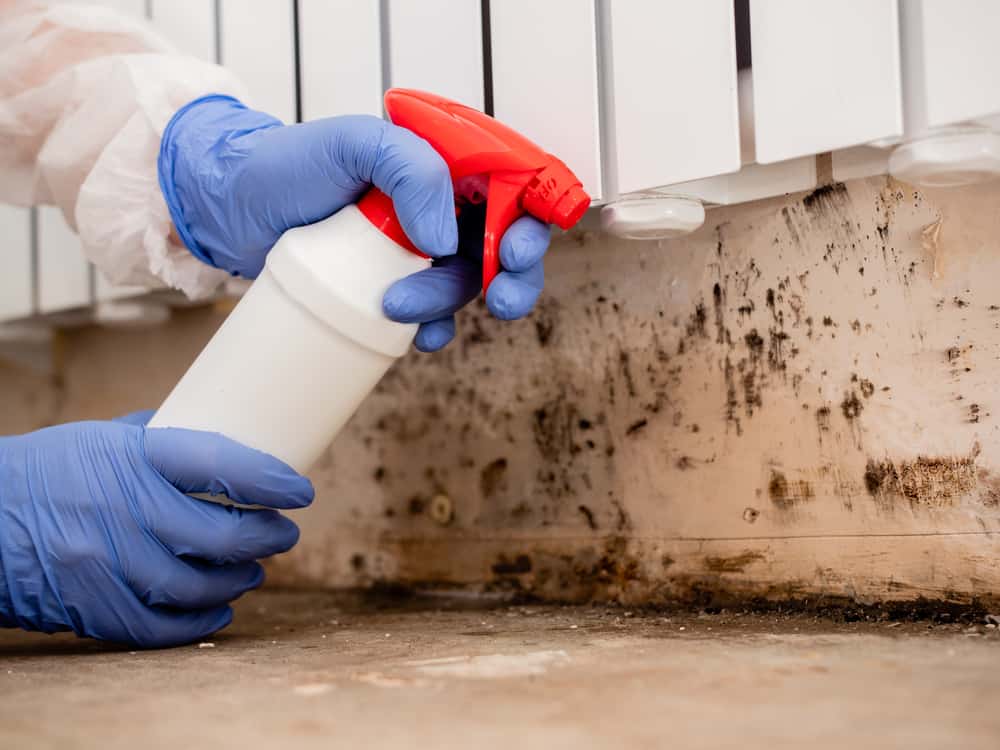
A real mold inspection goes well beyond a visual check. The process includes air sampling from interior spaces, surface swab collection from areas of visible or suspected growth, a full water intrusion assessment, moisture meter readings throughout the home, and infrared scanning to detect hidden moisture inside walls, under flooring, and in ceiling cavities. Every sample is sent to a certified third-party laboratory — results aren’t based on a technician’s visual judgment.
What you receive at the end is a written report with certified lab results, mold species identification, spore concentration data, photographs of every finding, and a specific remediation recommendation. That report is what you need for an insurance claim, a real estate transaction, or any situation where someone needs documentation in writing. A verbal assessment or a one-page summary isn’t going to satisfy a Nassau County insurance adjuster or a real estate attorney — a full lab-backed report will.
Nationally, professional mold inspections typically range from around $303 to $1,043, with most falling near $670 depending on the size of the home and the scope of testing required. For a mid-sized post-war home in Bellmore — the Cape Cods, ranches, and colonials that make up most of the town’s residential stock — you’re generally looking somewhere in the $400 to $700 range for a standard inspection. Larger homes or those requiring more extensive sampling will fall toward the higher end.
What’s worth keeping in mind is the cost of not acting. In a market where Bellmore homes are selling at a median of around $800,000, a missed mold problem can mean a collapsed real estate deal, a remediation bill in the tens of thousands, or a health situation that’s been quietly worsening for months. The inspection cost is a small fraction of what it costs to deal with a mold problem that’s had time to spread — and a lab-backed report gives you the documentation to pursue an insurance claim if the situation warrants it.
No — and that’s actually the law, not just a policy. New York State’s Article 32 of the Labor Law, which has been in effect since January 1, 2016, requires that mold assessment and mold remediation be performed by two separate, independent licensed entities on the same project. The intent is straightforward: it eliminates the financial incentive for an inspector to “find” mold in order to sell remediation services. If a company tells you they’ll inspect your home and then immediately perform the remediation themselves, they’re either operating outside the law or misrepresenting what Article 32 requires.
This separation is a protection for you as a homeowner. It means the inspection findings you receive are objective — the inspector has no financial stake in what the remediation scope looks like. We perform licensed mold assessments and deliver a written report with a remediation recommendation. What you do with that report, and who you hire to act on it, is your decision. The report is built to give you enough information to make that decision with confidence.
Since June 2023, New York State amended the Property Condition Disclosure Statement to require sellers to disclose known indoor mold conditions to buyers. That change applies directly to Bellmore home sales. If you know mold is present and don’t disclose it, you’re exposed to legal liability. If you’re not sure whether mold is present — which is the situation most sellers are actually in — a professional inspection before listing gives you a defensible answer either way.
For buyers, the calculus is similar. A home inspection might flag suspected mold in an attic or basement, but a general home inspector isn’t a licensed mold assessor and can’t produce a certified lab report. If you’re under contract on a Bellmore property and a mold concern comes up, you need a licensed mold assessment before closing — not a verbal opinion from the home inspector. With homes in Bellmore transacting near $800,000, that inspection is a straightforward piece of due diligence.
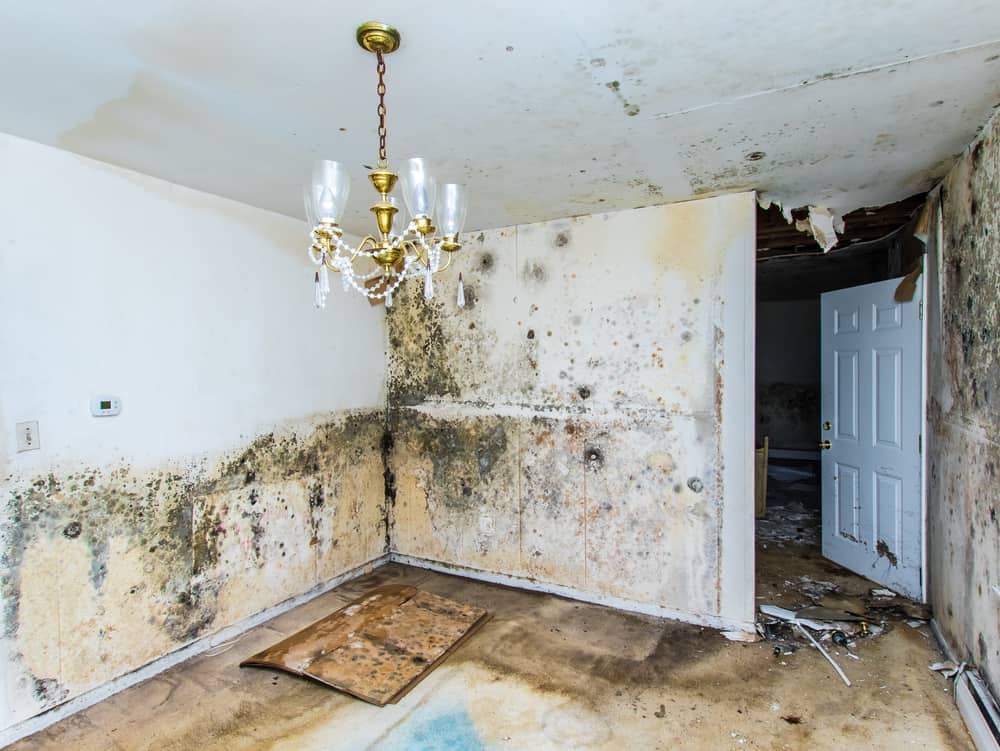
In Bellmore’s post-war housing stock, the most common locations are attics, basements, and the interior of wall cavities — and in all three cases, the mold is usually not visible from the surface. Attics in homes built in the 1940s through 1960s frequently have inadequate ventilation by modern standards. Warm, humid air rises from the living space, meets the cooler roof deck, and condenses — feeding mold growth on the sheathing and rafters. It’s one of the most common findings on Long Island home inspections and one of the most frequently missed by homeowners who rarely go up there.
Basements in Bellmore’s block-foundation homes are porous by design — water moves through mortar joints during periods of high groundwater, which in a coastal community can be triggered by storm events, tidal fluctuation, and the consistent seasonal precipitation the area receives. Wall cavities hide mold when plumbing leaks slowly behind drywall, when exterior moisture works its way in through aging siding or flashing, or when post-flood conditions were addressed on the surface but not behind it. Infrared scanning is the tool that finds mold in all three of these locations without opening walls — and it’s a standard part of every inspection we conduct in Bellmore.
Useful Links
Other Services we provide in Bellmore