

Hear from Our Customers
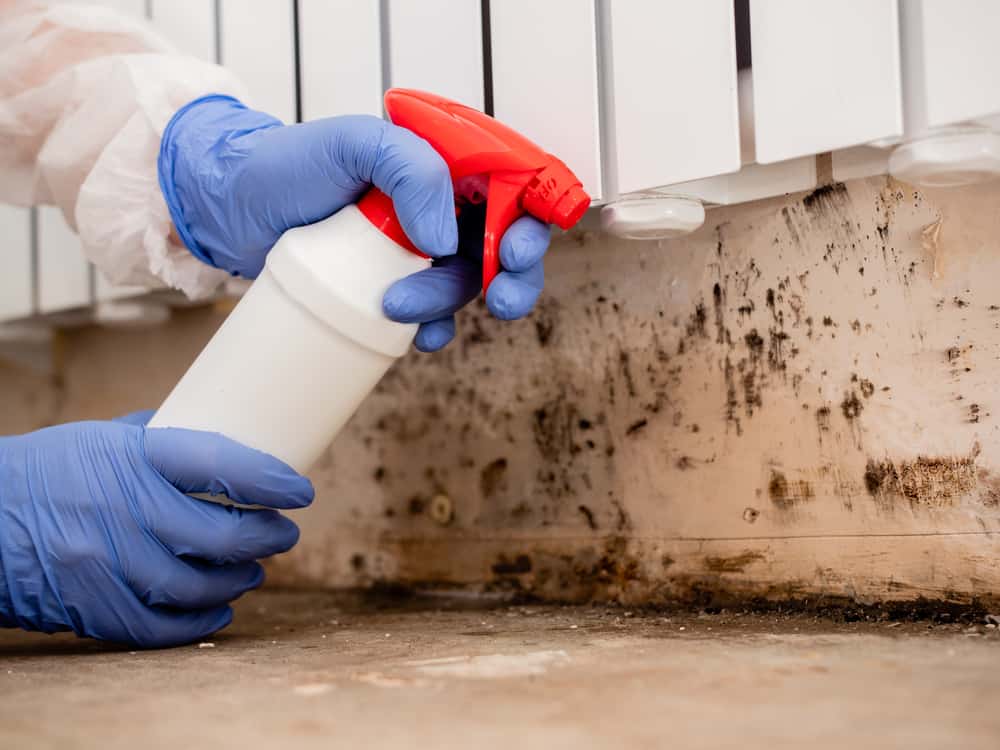
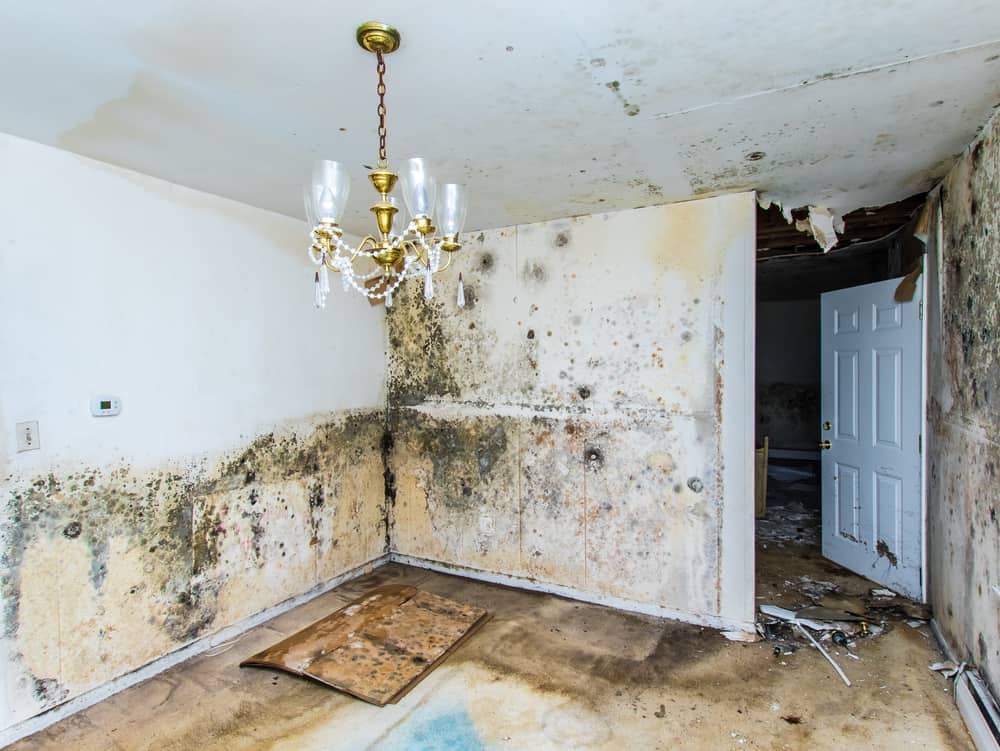
Most homes in Bethpage were built between 1940 and 1969. That means the walls, attics, and basements in this community are 55 to 85 years old — built before moisture barriers and ventilation standards existed. Add in Bethpage’s documented high water table and the chronic basement seepage that comes with it, and you have a housing stock that quietly accumulates moisture problems over decades. The mold that grows in those conditions doesn’t announce itself. It hides behind finished basement walls, inside attic insulation, and under flooring that looks perfectly fine from the surface.
A professional mold inspection gives you a clear, documented answer. Not a guess. Not a visual once-over. A certified lab report that tells you what species are present, at what concentration, and where the moisture source is feeding them. That kind of documentation matters whether you’re dealing with an insurance claim after a basement flood, buying or selling a home in a market where properties move in three weeks or less, or just trying to figure out why someone in your house keeps coughing.
When you know what’s actually there, you can make a real decision. That’s the point of a proper inspection — not to scare you into anything, but to give you the information you need to protect a home that’s worth protecting.
We’ve been serving Bethpage and Nassau County for over 31 years. That’s not a tagline — it’s a track record built one inspection at a time across Long Island’s aging housing stock, including the post-war neighborhoods that make up most of Bethpage. Richard Peterson, our owner, holds personal New York State DOL licensure in both mold inspection and mold remediation under Article 32 of the NY Labor Law. He’s also bonded, fully insured, and has been doing this work since before state licensing was even required.
What sets us apart from most companies operating in the 11714 area is simple: every technician on our staff holds IICRC certification — not just the owner. When someone shows up at your door, they carry the same credentials as the person who built the company. That’s not common in this industry, and it matters when the work being done affects your home’s air quality and your family’s health.
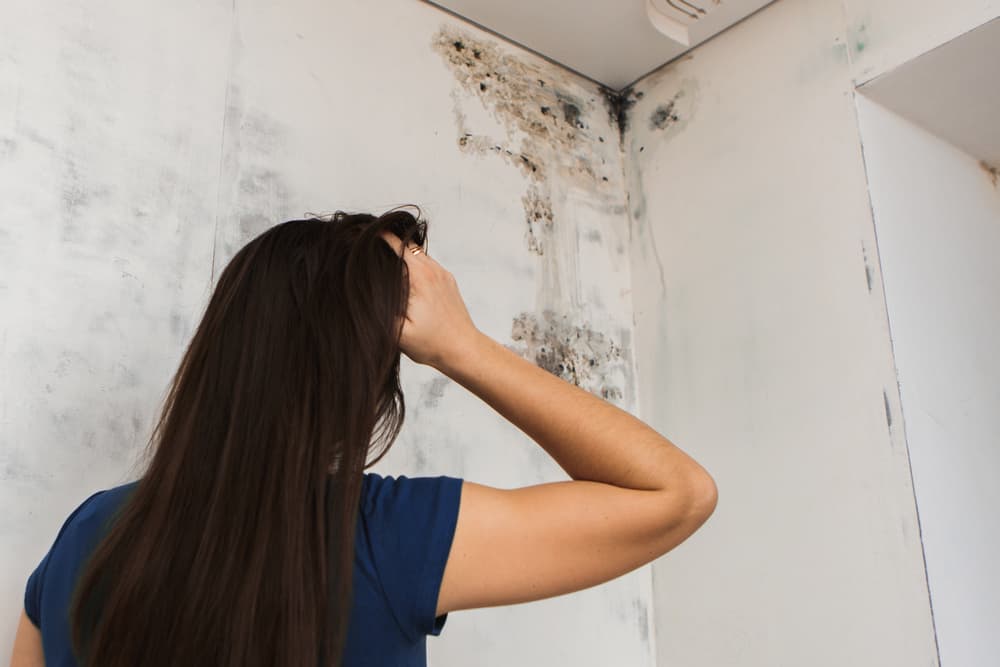
The inspection starts with a full walk-through to identify visible signs of mold, water intrusion, and moisture damage. In Bethpage homes — especially finished basements and older attic spaces — that visual scan is just the starting point. We use calibrated moisture meters to measure what the eye can’t catch, pushing them into walls and floors to detect hidden moisture. Then infrared thermal imaging scans the surfaces for temperature differentials that indicate moisture hiding inside wall cavities, behind insulation, or under subfloor material. This is where a lot of inspections find what a basic walkthrough would have missed entirely.
From there, we collect air samples from inside the home and compare them against an outdoor baseline. This comparison is how we establish whether indoor mold spore levels are elevated relative to what’s naturally in the air outside — a critical distinction that separates a real problem from a false alarm. We take surface swab samples from any suspect areas. All samples go to a certified third-party laboratory for analysis.
Once results come back, you receive a written report with species identification, spore concentration data, the confirmed moisture source, and specific remediation recommendations if they’re needed. That report is formatted to meet insurance company standards, which matters when you’re filing a claim or need documentation for a real estate transaction. The whole process is built to give you answers — not more questions.
Ready to get started?
Every mold inspection we perform in Bethpage includes air testing, surface swab sampling, water intrusion inspection, moisture level measurement, infrared thermal imaging, certified lab analysis, and a written report. That’s the full five-point protocol — not a scaled-back version depending on the size of your home or the urgency of your situation. The scope is the same whether you’re in a 1,200-square-foot ranch off Stewart Avenue or a larger Colonial closer to the Hicksville border.
Bethpage’s housing conditions create specific inspection demands that a generic protocol doesn’t address well. The high water table means basement moisture can come from below, not just through walls — and our inspection accounts for that. Attics in post-war Cape Cods frequently have inadequate ventilation and deteriorated insulation that traps humidity through Long Island’s humid summers, creating conditions where mold grows slowly and silently for years before anyone notices. The infrared scan is especially valuable here because it finds moisture accumulation before it becomes a visible colony.
For homeowners near the Bethpage Community Park area or anywhere along the Route 135 corridor, where older home construction is most concentrated, this level of inspection is the standard you should expect — not an upgrade. We’re available 24 hours a day, seven days a week, and serve Bethpage through the Nassau County line at 516-698-1776. If you need documentation for an insurance claim or a pre-closing inspection before a real estate deadline, call that number first.
The national average for a professional mold inspection runs between $300 and $1,000, with most thorough inspections landing in the $500 to $800 range depending on the size of the home and the number of samples collected. In Bethpage, where the median home value sits above $600,000 and homes routinely sell in under three weeks, the cost of a proper inspection is a small number relative to what’s at stake. A missed mold problem in a $700,000 Cape Cod isn’t just a health issue — it’s a financial one.
What you’re paying for is not just someone walking through your house. You’re paying for certified lab analysis, a written report with species identification and spore counts, infrared scanning, moisture metering, and documentation that holds up with insurance companies and real estate attorneys. That’s a different service than a visual assessment, and it’s priced accordingly. If you see a quote that seems unusually low, it’s worth asking exactly what’s included — because a report without lab results isn’t really a mold inspection.
The most obvious sign is a persistent musty smell — especially in basements, crawlspaces, or attics — that doesn’t go away even after cleaning. In Bethpage’s older housing stock, that smell often means moisture has been sitting somewhere hidden for a long time. Visible discoloration on walls, ceilings, or around windows is another clear indicator, though mold doesn’t always show itself on the surface.
Beyond the obvious, there are subtler signs worth taking seriously. If someone in your home has developed unexplained respiratory symptoms, chronic congestion, or allergy-like reactions that seem worse indoors than outside, indoor air quality is worth investigating. The same applies if your home recently had any kind of water event — a burst pipe, a backed-up drain, a roof leak, or a basement flood. Mold can begin growing in as little as 24 to 48 hours after water exposure, and it doesn’t stop once the surface dries out. If you’ve had water in the house and you’re not sure whether it was fully dried within that window, an inspection is the only way to know for certain.
If you’re buying a home in Bethpage — especially one built before 1970, which describes the majority of the housing stock here — a mold inspection before closing is a smart move. General home inspectors look at a lot of things, but mold is not their specialty. They can flag visible discoloration or note suspected moisture damage, but they don’t collect air samples, run lab analysis, or use infrared imaging to find hidden moisture inside walls. That gap is exactly where mold problems get missed.
Bethpage’s real estate market moves fast. Homes in the $500,000 to $750,000 range can go under contract in three weeks or less. That timeline pressure can push buyers to skip the mold inspection, but it’s worth building into your due diligence schedule. A certified mold inspection with a written lab report gives you negotiating leverage if something is found, and it gives you peace of mind if nothing is. Either way, you’re making a better-informed decision on a significant purchase. We offer rapid turnaround specifically because buyers in Nassau County often can’t afford to wait.
These two terms get used interchangeably, but they’re not the same thing. Mold testing typically refers to collecting a sample — air, swab, or bulk — and sending it to a lab for analysis. That’s one piece of the process. A full mold inspection includes testing, but it also includes a physical assessment of the property: identifying moisture sources, measuring humidity levels with calibrated meters, scanning for hidden moisture with infrared technology, and documenting findings in a written report with specific recommendations.
Testing alone tells you whether mold is present. An inspection tells you where it’s coming from, how extensive it is, and what needs to happen next. For Bethpage homeowners dealing with the kinds of moisture pathways common in post-war construction — groundwater seeping through aging foundation walls, condensation building up in poorly ventilated attics, slow plumbing leaks inside wall cavities — testing without the full inspection context often leads to incomplete answers. You find the mold but not the source, which means it comes back even after remediation. The inspection is what connects the dots.
“Black mold” is a term that gets used a lot, and it carries a lot of fear with it — some of it warranted, some of it exaggerated. The species most people are referring to is Stachybotrys chartarum, which is dark in color and can produce mycotoxins under certain conditions. But not every dark-colored mold is Stachybotrys, and not every Stachybotrys colony is actively producing toxins. The only way to know what species you’re actually dealing with is through certified laboratory analysis — which is exactly why the lab component of a professional inspection matters.
In Bethpage, where homes have been managing moisture challenges for decades, a variety of mold species can be present simultaneously. Some are more common and less concerning; others require more aggressive remediation protocols. A proper inspection identifies all of them, not just the one you’re worried about. The written report you receive will include species-level identification and concentration data, which is the information your doctor, your insurance company, or your remediation contractor actually needs to respond appropriately. Guessing based on color alone isn’t a reliable strategy.
New York homeowner’s insurance policies vary significantly in how they handle mold, and the answer almost always comes down to the cause. If mold resulted from a sudden, covered water event — a burst pipe, an appliance failure, storm damage — most standard policies will cover at least a portion of the remediation costs, and some will cover the inspection as part of the claim. If the mold resulted from long-term moisture buildup, a chronic leak, or deferred maintenance, most policies will not cover it, because they treat that as a maintenance issue rather than a sudden loss.
For Bethpage homeowners, this distinction matters. The high water table and chronic basement seepage common in this area can make it difficult to establish a clear “sudden event” timeline, which is exactly why having a certified inspection report with documented findings is so important when filing a claim. Insurance adjusters respond to documentation — species identification, spore counts, moisture source confirmation — not verbal descriptions. A written report from a licensed mold assessor under New York State’s Article 32 carries weight that a general contractor’s assessment simply doesn’t. If you’re in the middle of a claim or anticipating one, getting the inspection done by a fully licensed and insured company is the step that protects your position.
Useful Links
Other Services we provide in Bethpage