
Mold Inspection in Laurel Hollow, NY
Estate Homes Here Deserve More Than a Flashlight and a Guess
Hear from Our Customers
Residential Mold Detection Services, Nassau County
Mold doesn’t announce itself. In a home with a finished basement, a crawl space that rarely gets opened, or an attic above a complex roofline, it can grow for months before you notice anything. By the time there’s a smell or a visible patch, it’s usually been there a while. A proper mold inspection tells you what’s actually present, where it’s coming from, and what it’s going to take to fix it.
Laurel Hollow’s wooded, hilly terrain creates real moisture challenges that most homeowners don’t think about until something goes wrong. Groundwater moves through hillside properties during wet seasons, pressing against basement walls. The dense tree canopy slows drying after rain. Shaded foundations stay damp longer. These aren’t hypothetical risks they’re the conditions that exist on most properties in this village, and they create the exact environment where mold takes hold quietly.
For a home valued at $1 million, $3 million, or more, the math is simple. A mold inspection costs a fraction of what remediation runs when the problem has spread. And if you’re buying or selling in Laurel Hollow, a written, lab-backed inspection report isn’t optional it’s the document your attorney, your insurer, and the other party’s team will all want to see.
Licensed Mold Inspection Company, Laurel Hollow NY
First Response Restoration and Cleaning Inc. has been serving Long Island homeowners for over 31 years. Richard Peterson, our owner, holds personal NYS Department of Labor licenses in both mold inspection and mold remediation and every technician on our staff is IICRC-certified. Not just the lead. Everyone. That’s not standard in this industry, and it matters when someone is walking through your home making decisions that affect your health and your property value.
Laurel Hollow sits right on the Nassau-Suffolk county line, and we serve both sides with dedicated phone lines 516-698-1776 for Nassau County. We’re not a regional company stretching to cover this area. We already do. We’ve worked with North Shore homeowners on properties that range from post-war estates to newer custom builds, and we understand what the moisture conditions in Laurel Hollow actually look like not just in theory, but from years of inspections in homes like yours.
We’re licensed, bonded, and insured, and we operate 24 hours a day, seven days a week.
Professional Mold Assessment Services, Laurel Hollow
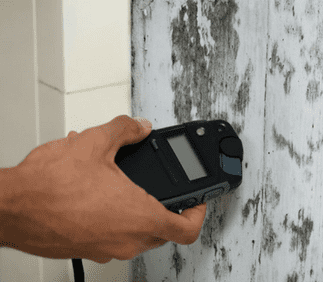
When you call, we dispatch a licensed mold assessor not a salesperson, not a general contractor who does mold on the side. The inspection starts with a full walkthrough of your property, covering the areas where mold is most likely to develop in Laurel Hollow homes: basements, crawl spaces, attic systems, and any area that’s had past water intrusion. We use infrared thermal imaging as a standard part of every inspection, not an add-on. That technology detects temperature differentials behind walls, under flooring, and inside ceiling cavities places where mold can be growing long before it’s visible.
From there, we collect air samples and surface swab samples, which go to a certified laboratory for analysis. We also measure moisture levels throughout the home and compare indoor air particle counts to outdoor baseline levels. That comparison matters it tells us whether what’s in your air is coming from inside your home or just the environment outside.
Once the lab results come back, you receive a written report that documents everything: mold species identified, concentration levels, source locations, photographs, and specific remediation recommendations based on what the data actually shows. This is the report that holds up with insurance companies, real estate attorneys, and buyers. New York State requires mold assessors to be licensed under Article 32 of the NY Labor Law, and our documentation meets that standard. If your village building permit process requires supporting documentation for any remediation work that follows, our report covers that too.
Ready to get started?
Indoor Air Quality Testing for Mold, Nassau County
The inspection we conduct covers every mold-relevant system in your home. Air testing, surface swab sampling, water intrusion assessment, moisture level measurement, and infrared scanning are all part of the process not tiered options, not upgrades. For a Laurel Hollow estate home with significant square footage, multiple mechanical systems, and the kind of building complexity that comes with large custom construction, that level of thoroughness isn’t excessive. It’s what the property actually requires.
We handle residential mold inspection for homeowners who’ve noticed a problem, buyers and sellers navigating a transaction, and post-water-damage assessments after a storm, a pipe failure, or a roof leak. We also provide commercial mold inspection for non-residential properties and given that Cold Spring Harbor Laboratory sits within Laurel Hollow’s borders, we understand that indoor air quality in a research or institutional environment carries a different level of consequence than a standard property maintenance issue.
If the inspection findings indicate remediation is needed, we handle that too same company, same team, no handoff to a separate contractor who has to re-learn what was found. That continuity matters. The person who wrote the inspection report is connected to the team that executes the remediation plan, which means nothing gets lost in translation and the work is done to address what was actually found.
Does a mold inspection in Laurel Hollow require a New York State licensed assessor?
Yes and this is worth understanding before you hire anyone. Under Article 32 of the New York State Labor Law, anyone performing mold assessment for compensation in New York is required to hold a license issued by the NYS Department of Labor. This requirement has been in effect since January 1, 2016, and fines for unlicensed mold work can reach $10,000 per violation. That applies to every property in Laurel Hollow, whether it’s a residential estate or a commercial building.
The practical reason this matters to you is documentation. An inspection report produced by an unlicensed assessor carries no legal standing. It won’t satisfy your insurance company, it won’t hold up in a real estate transaction, and it won’t be accepted by an attorney reviewing a purchase contract. If you’re buying or selling a home in Laurel Hollow where prices routinely start above $1.25 million you need a report that will actually be accepted by every party involved. Richard Peterson holds personal NYS DOL licenses in both mold assessment and mold remediation, so the documentation we produce meets that standard.
What does a professional mold inspection actually include, and how long does it take?
A real mold inspection is more involved than a visual walkthrough. At First Response, the process includes air sampling, surface swab sampling, water intrusion assessment, moisture level measurements throughout the home, and infrared thermal imaging to detect hidden moisture behind walls, under flooring, and inside ceiling cavities. We also compare indoor air particle counts to outdoor baseline readings that comparison is what tells us whether elevated spore levels are coming from inside your home or from the surrounding environment.
For a large estate home which is the norm in Laurel Hollow given the two-acre minimum zoning and the scale of properties here the inspection typically takes several hours. The physical inspection is one part of it. After that, samples go to a certified laboratory, and the written report comes back with actual lab results: mold species identified, concentration levels, source locations, photographs, and specific remediation recommendations. That’s the document you’ll use with your insurer, your attorney, or your real estate agent. Turnaround on the lab analysis is typically 24 to 48 hours, and the completed report follows shortly after.
How much does a mold inspection cost in Laurel Hollow, NY?
Nationally, mold inspections average around $670, with a typical range of $300 to over $1,000 depending on the size of the property, the number of samples collected, and the scope of the inspection. For a large estate home in Laurel Hollow where square footage, building complexity, and the number of potential mold habitats are all significantly higher than a standard suburban home you should expect to be toward the higher end of that range. That’s not a markup for the zip code. It’s a reflection of how much more there is to inspect.
The more relevant number is what you’re protecting. Mold remediation for a large property, when the problem has spread into wall cavities, attic insulation, or HVAC ductwork, can run $5,000 to $20,000 or more. An inspection is a fraction of that cost, and it tells you whether you have a problem, how serious it is, and exactly where it is before you’re making decisions without information. For a pre-purchase inspection on a $3 million estate, the cost of the inspection is a rounding error compared to what you’re committing to.
Can mold grow in a Laurel Hollow home without any visible signs or obvious smell?
Absolutely, and it’s more common than most homeowners expect. Mold needs moisture and an organic surface to grow on it doesn’t need to be visible to be present. In Laurel Hollow homes specifically, the conditions that make hidden mold likely are built into the landscape. Hillside properties experience groundwater movement that presses against foundation walls during wet seasons. Dense tree cover keeps soil and exterior surfaces damp longer after rain. Basements and crawl spaces on large estate properties often go weeks or months without regular human entry, which means moisture conditions can develop and mold can establish itself without anyone noticing.
Ice dams are another factor worth mentioning. Large homes with complex rooflines which are common throughout Laurel Hollow are more susceptible to ice dam formation in winter. When a dam forces meltwater under shingles, it enters attic spaces and wall cavities where it sits against insulation and framing. That moisture doesn’t always announce itself with a visible stain. It can sit there through the rest of winter and into spring before anyone realizes there’s a problem. Infrared thermal imaging, which we use on every inspection, is specifically designed to find that kind of hidden moisture before it becomes a major remediation project.
I'm buying a home in Laurel Hollow do I need a separate mold inspection or does a home inspection cover it?
A standard home inspection and a mold inspection are two different things performed by two different types of professionals. A home inspector looks at the overall condition of the property structure, systems, roof, electrical, plumbing. They may note visible mold or conditions that suggest moisture problems, but they are not licensed mold assessors, they don’t collect air or surface samples, and they don’t produce a lab-backed mold report. In New York State, mold assessment for compensation requires a separate NYS DOL license that home inspectors don’t hold.
For a property purchase in Laurel Hollow, where you’re likely committing to a home valued well above $1 million, a dedicated mold inspection gives you something a home inspection can’t: actual laboratory data on what’s in the air and on the surfaces of that home, produced by a licensed assessor whose report will hold up with your attorney, your lender, and your insurer. If the inspection finds something, you have documented evidence to negotiate with. If it comes back clean, you close with confidence. Either way, you’re making a multi-million-dollar decision with real information rather than a visual impression.
We had water in our basement after a storm how soon should we schedule a mold inspection in Laurel Hollow?
As soon as possible. Mold can begin growing within 24 to 48 hours once moisture levels are elevated and humidity is above 60 percent. After a storm event on Long Island’s North Shore whether it’s a nor’easter driving water through a foundation wall or heavy rain overwhelming a drainage system on a hillside lot the clock starts immediately. The longer you wait, the more established the growth becomes, and the more extensive the remediation will be.
Laurel Hollow’s village municipal code includes a dedicated chapter on flood damage prevention, which tells you that water intrusion events are a recognized local concern not a rare occurrence. If your basement flooded, if you had a roof leak, or if a pipe failed, the first call after the water is addressed should be to a licensed mold assessor. We operate 24 hours a day, seven days a week, and our trucks carry moisture detection equipment alongside inspection tools. We can assess the situation, document the cause and extent of the damage for your insurance company, and give you a clear picture of what needs to happen next all in a single visit.
Useful Links
Other Services we provide in Laurel Hollow