
Mold Inspection in Baiting Hollow, NY
When a Closed Cottage Hides Six Months of Damage
Hear from Our Customers
Residential Mold Testing Baiting Hollow, NY
Most homeowners in Baiting Hollow don’t call about mold until something’s obviously wrong a smell they can’t shake, a stain that keeps coming back, or a family member whose allergies won’t quit indoors. By that point, the mold has usually been there a while. A thorough inspection doesn’t just confirm what you already suspect. It tells you where the moisture is coming from, what species you’re dealing with, how far it’s spread, and what it’s going to take to fix it. That’s the difference between guessing and knowing.
Living on the North Fork means your Baiting Hollow home is dealing with humidity levels that routinely hit 70 to 80 percent during summer months well above the range where mold growth slows down. Add in the ground moisture that rolls off the surrounding farmland and vineyards along Sound Avenue, and you’ve got conditions that push into basements, crawl spaces, and wall cavities year after year. For Woodcliff Park cottages that sit closed from October through April, that combination can do serious, invisible damage before you ever turn the key in the spring. After an inspection, you know the full picture not just what’s visible, but what’s been quietly growing behind the walls.
Mold Inspection Company Baiting Hollow, NY
We’ve been doing this work on Long Island since before most of Baiting Hollow’s newer developments were built. Richard Peterson has run this operation for over three decades, and the team we’ve built holds IICRC certification across the board not just at the ownership level. Every technician who walks into your home meets the same standard.
We hold both the New York State Mold Assessor License and the Mold Remediator License legally required under state law since 2016, and fully verifiable through the NY Department of Labor. That matters in Suffolk County, where plenty of companies are operating without them. Our dedicated Suffolk County line is 631-587-5300, and we serve the full North Fork, including Baiting Hollow and seasonal properties along the Sound. If the inspection finds something, we can handle remediation and reconstruction too one team, start to finish.
Professional Mold Inspector Baiting Hollow, NY
When you call, we start by asking the right questions how old is the structure, has it been seasonally closed, have you had any water intrusion events, what are you actually seeing or smelling. That context shapes where we focus when we arrive, because a 100-year-old Woodcliff Park cottage and a newer unit at The Vistas at Baiting Hollow have very different risk profiles.
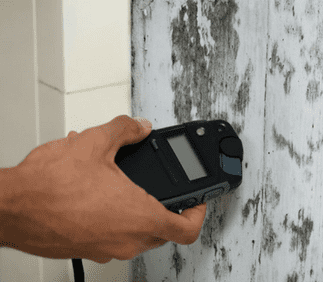
On-site, the inspection covers air sampling, surface swab collection, water intrusion assessment, and calibrated moisture readings throughout the structure. We also use infrared thermal imaging to detect moisture activity behind walls and under floors areas that a visual inspection alone would never catch. In Baiting Hollow homes where original plaster walls, uninsulated crawl spaces, and older foundation systems are common, that thermal step isn’t optional. It’s where we find the problems that have been hiding the longest.
Everything goes to an accredited laboratory for analysis. When the results come back, you get a full written report mold species identified, spore counts compared to outdoor control samples, moisture source documentation, photos, and specific recommendations written in plain language. Whether you need it for a real estate transaction, an insurance claim, or simply your own peace of mind, that report holds up. Under New York State law, mold assessment and remediation must be performed by separately licensed contractors our inspection report is legally compliant and built to be used.
Ready to get started?
Indoor Air Quality Testing Baiting Hollow, NY
The mold inspection service we provide in Baiting Hollow covers every high-risk area specific to North Fork homes. That means attic spaces where nor’easter moisture has infiltrated through roof penetrations or failed flashing. It means basement and crawl space assessment in older homes where Long Island Sound humidity has been migrating through foundation walls for years. It means HVAC system checks in newer condo developments like The Bluffs at Fox Hill, where tightly sealed modern construction can trap moisture and distribute spores through the ductwork if the system isn’t maintained correctly.
Air samples are collected from multiple locations inside the home and compared against an outdoor control sample that comparison is what tells us whether your indoor air quality has a real problem, not just background spore levels that exist in any environment. Surface swabs are taken where visible growth or staining is present. Moisture meters give us exact readings at the wall, floor, and ceiling level. Thermal imaging fills in the rest.
For Baiting Hollow homeowners managing real estate transactions, the written report we produce is exactly what buyers, sellers, real estate attorneys, and insurance adjusters need to move forward. For seasonal property owners opening up for the summer, it’s the document that tells you whether your family is walking into a safe home or a mold situation that needs to be addressed before anyone unpacks. Either way, you leave with a clear answer not a vague assessment.
Can mold really develop in my Baiting Hollow home during winter if no one's there?
Yes and it’s one of the most common scenarios we see on the North Fork. When a seasonal property in Baiting Hollow closes in October without active heating, dehumidification, or ventilation running through the winter, indoor humidity has nowhere to go. Cold surfaces walls, window frames, floor joists become condensation points, and mold doesn’t need much to get started. Within a few weeks of sustained dampness, active growth can take hold in closets, behind walls, under floors, and in attic spaces.
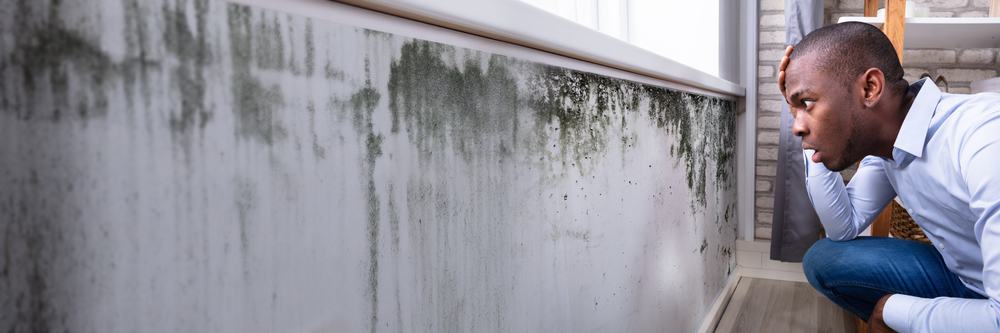
By the time you return in April or May to open the property, the mold has had months to establish itself. The smell hits you first. Then you start noticing the spots. The problem is that what you can see is rarely the full picture the more significant growth is usually behind surfaces. That’s exactly why a professional mold inspection at seasonal opening is worth doing before you bring your family back for the summer.
How much does a mold inspection cost in Baiting Hollow, NY?
Nationally, professional mold inspections typically run between $300 and $1,000 depending on the size of the property and the scope of testing required. For a Baiting Hollow home particularly an older cottage with a crawl space, a larger single-family with an attic and basement, or a condo unit where HVAC assessment is part of the process the actual cost will depend on square footage and how many sample locations are needed to get an accurate picture.
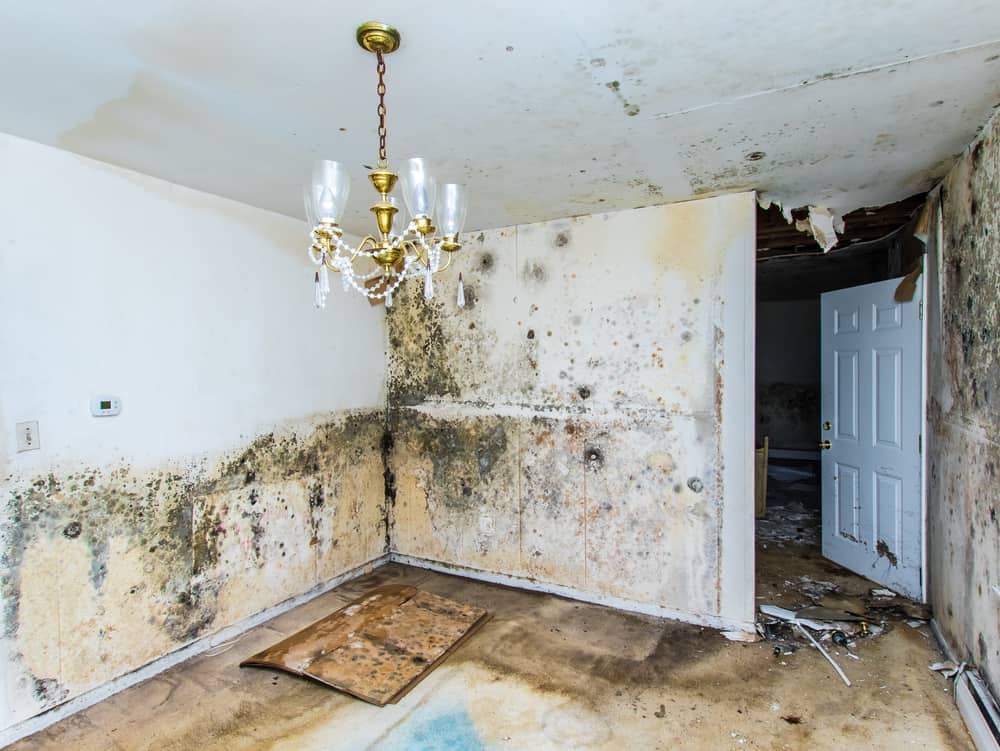
What’s worth keeping in mind is the math on the other side of that number. A mold problem that goes undetected and undisclosed in a Baiting Hollow home selling around $575,000 can reduce the sale price by 20 to 37 percent that’s $115,000 to $212,000 in lost value. Remediation costs, if mold is left to grow unchecked, can run $1,150 to $20,000 or more depending on how far it’s spread. The inspection cost is a small number relative to what it protects. Call us at 631-587-5300 and we can give you a straightforward quote based on your specific property.
What are the signs of mold in a North Fork cottage or older Baiting Hollow home?
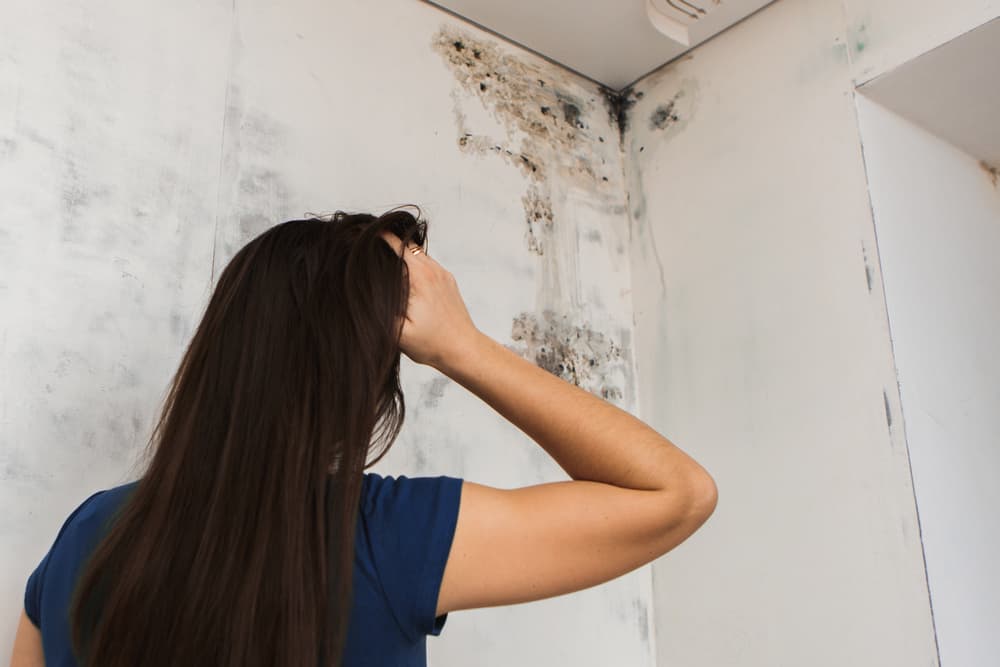
The most obvious sign is a persistent musty odor especially in spaces that have been closed off, like basements, closets, or rooms that don’t get regular airflow. Visible dark spotting on walls, ceilings, or around window frames is another clear indicator. Water stains that keep reappearing after you’ve already addressed the source are worth taking seriously too, because they often mean moisture is still present somewhere in the structure.
In older Baiting Hollow homes particularly the cottages in Woodcliff Park and other properties with original plaster walls or uninsulated crawl spaces mold can be well established behind surfaces before anything visible appears. Unexplained respiratory symptoms, worsening allergies indoors, or a general sense that the air quality feels off are all reasons to schedule a professional mold inspection rather than wait for visible confirmation. Mold doesn’t always announce itself clearly. That’s the whole point of having someone with the right equipment come in and look.
Is a mold inspection required before selling a home in Baiting Hollow, NY?
New York State does not legally require a mold inspection before a home sale, but it does require sellers to disclose known mold conditions on the property condition disclosure statement. If mold is discovered after closing without prior disclosure, that creates real legal exposure for the seller. More practically, in an active North Fork real estate market where Baiting Hollow homes are averaging around $575,000, buyers are increasingly requesting independent mold testing as part of their due diligence especially for older homes or properties that have been seasonally used.
Getting a mold inspection before you list gives you control of the narrative. If there’s a problem, you can address it before it derails a transaction. If the home is clean, you have a lab-verified report you can share with buyers to move the process forward with confidence. Real estate attorneys and agents in the Riverhead area see this come up regularly, and having documentation in hand before an offer is on the table is almost always the smarter position to be in.
What's the difference between mold testing and mold remediation and do I need both?
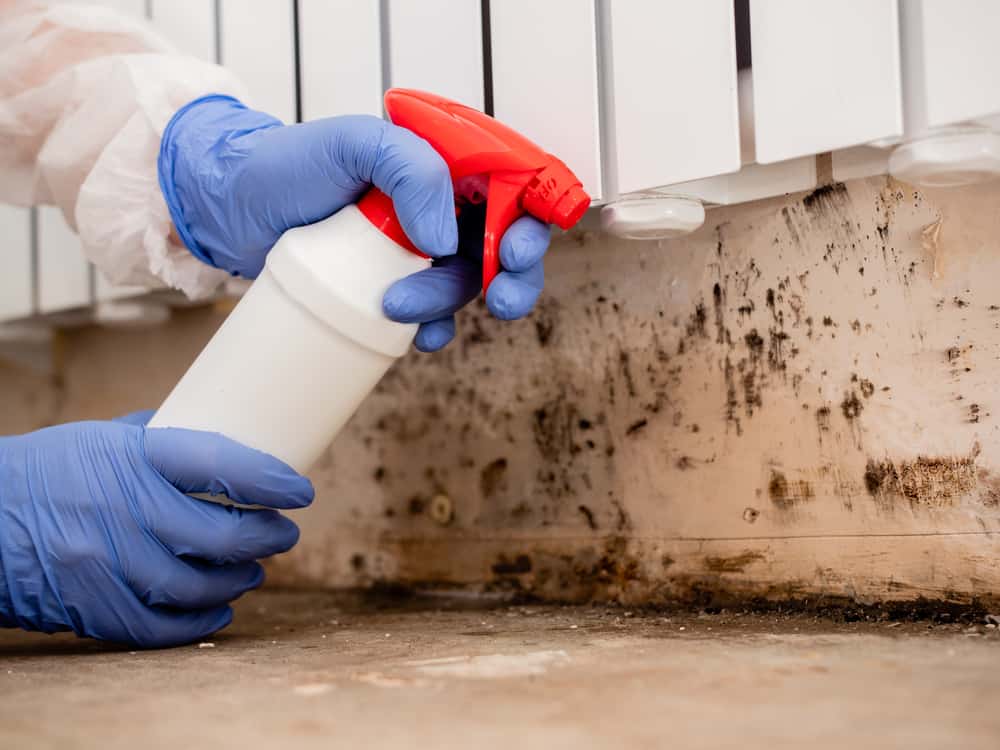
These are two separate services, and under New York State law, they’re required to be performed by separately licensed contractors. Mold assessment the inspection and testing phase identifies whether mold is present, what type it is, how concentrated the spore levels are, and where moisture is entering the structure. Mold remediation is the physical removal and cleanup process that follows a confirmed finding.
We hold both the NY State Mold Assessor License and the Mold Remediator License, which means we can legally perform both services. However, the assessment and remediation scopes are kept separate the inspection report stands on its own, and any remediation recommendation is based on lab findings, not on upselling. If the inspection finds nothing significant, we tell you that. If it finds a problem, we walk you through exactly what remediation would involve and what it would cost before any work begins. For Baiting Hollow homeowners managing seasonal properties or preparing for a sale, having one licensed team that can carry the process from inspection through remediation and reconstruction simplifies everything considerably.
How long does a mold inspection take for a typical Baiting Hollow property?
For most residential properties in Baiting Hollow a single-family home, a seasonal cottage in Woodcliff Park, or a condo unit at one of the developments along the Sound the on-site portion of the inspection typically runs two to four hours. Larger homes with full basements, attic spaces, and crawl areas will take longer than a smaller seasonal cottage, and properties where water intrusion has been reported in multiple locations will require more time to assess thoroughly.
After the on-site visit, samples go to an accredited laboratory for analysis. Turnaround time for lab results is typically three to five business days, after which we compile the full written report. If you’re working against a real estate closing deadline or trying to get a seasonal property opened before summer, let us know the timeline when you call we’ll do what we can to work around it. Reach us on the Suffolk County line at 631-587-5300 and we’ll get your inspection scheduled.
Useful Links
Other Services we provide in Baiting Hollow