
Hear from Our Customers
Most homeowners who call us aren’t guessing anymore — they’ve already noticed something. A smell that won’t go away. A family member with persistent symptoms. A basement that flooded during Sandy and was “dried out” but never professionally assessed. What you get from a thorough mold inspection isn’t just a yes or no. It’s a certified lab report that tells you exactly what’s growing, where it’s coming from, and what needs to happen next.
Bayville’s position on the Long Island Sound peninsula creates conditions that inland Nassau County towns simply don’t face. The ambient humidity here runs above 60% for extended stretches of the year — that’s the threshold where mold can start colonizing building materials within 24 to 48 hours. Add the salt air off the Sound, the aging housing stock where more than a quarter of homes were built before 1940, and the documented history of tidal flooding that reaches well into residential streets — and you have a community where hidden mold isn’t a remote possibility. It’s a reasonable expectation.
After a professional inspection, you stop wondering. You have documentation that holds up with insurance adjusters, real estate attorneys, and the Village of Bayville’s building department. If there’s a problem, you know its scope. If there isn’t, you have the lab results to prove it — and that matters just as much when you’re buying, selling, or filing a claim.
We’ve been serving Nassau and Suffolk County homeowners for over 31 years. That’s not a number we throw around lightly. It means our team was working through the nor’easters of the 1990s, responding after Hurricane Irene, and on the ground in the aftermath of Superstorm Sandy — including in Bayville, where the presidential and numbered streets flooded to the ceiling and residents came home to damage they hadn’t fully processed yet.
Every technician on our team holds IICRC certification — not just the owner, not just the senior staff. Everyone. We’re fully licensed by the New York State Department of Labor as both a mold assessor and mold remediator under Article 32 of the NY Labor Law, and Richard Peterson holds personal licensure in both disciplines. We’re also licensed, bonded, and insured.
When you call our Nassau County line at 516-698-1776, you’re reaching a team that knows the North Shore, knows the Long Island Sound’s impact on coastal homes, and has seen what decades of humidity and storm exposure do to a Bayville property. We’re not learning on the job here.
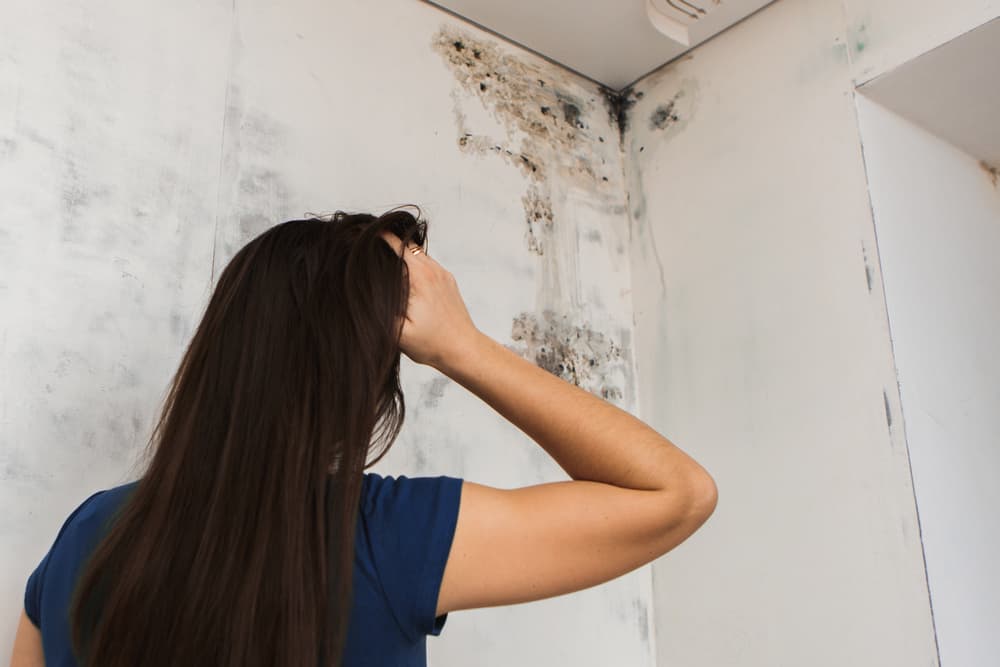
We start with a full walkthrough of your Bayville property — not just the obvious spots, but the areas that homes in this village are specifically known for: crawl spaces, basement walls, attic decking, and anywhere water has a history of entering. Given that approximately half of all homes in Bayville sit in a FEMA-designated Flood Hazard Area, we treat every inspection with that context in mind from the moment we arrive.
From there, we run air testing to capture airborne spore concentrations, take swab samples from any suspect surfaces, and use infrared thermal imaging to detect moisture and temperature differentials behind walls and under flooring — the kind of hidden mold that a visual inspection will never catch. We also measure moisture levels throughout the structure using calibrated meters and compare your indoor air quality against outdoor baseline levels. That internal-versus-external comparison matters in a coastal environment like Bayville, where ambient spore counts are naturally higher than inland communities.
Every sample goes to a certified laboratory. When the results come back, you receive a written report — not a verbal summary, not a ballpark opinion — with actual lab findings, identified mold species, spore concentration levels, and specific recommended next steps. If your situation involves a flood insurance claim or a pre-purchase transaction on a Bayville property, that report is the document that makes the process move forward. We can also take you through remediation and full restoration if that’s where things go, all under one roof.
Ready to get started?
A mold inspection in Bayville, NY isn’t one-size-fits-all — because Bayville homes aren’t. You’ve got pre-war colonials, mid-century ranches built in the 1950s and 60s construction boom, and waterfront properties along Shore Road and West Shore Road that have taken the brunt of Long Island Sound storm surge more than once. Our inspection protocol is built to account for all of it.
The five-point assessment covers air testing, surface swab sampling, water intrusion source identification, moisture level measurement, and infrared thermal imaging for hidden mold detection. We document mold sources photographically, run the internal-versus-external air quality comparison, and produce a written report backed by certified laboratory results. That report includes specific remediation recommendations — not vague suggestions, but a clear path forward based on what the lab actually found.
For Bayville homeowners navigating the National Flood Insurance Program, the Village’s building permit requirements for flood-zone work, or a real estate transaction on a high-value North Shore property, the written, lab-backed report we produce is the tool that makes those processes work. The Village of Bayville’s Building Department even makes FEMA elevation certificates available at no charge — and our inspection documentation fits directly into that regulatory framework. From the initial assessment through remediation and full property restoration, everything runs through one team, one point of contact, and one consistent process.
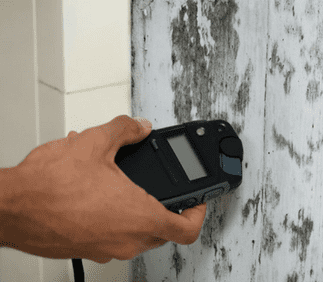
Faster than most people expect — and faster in Bayville than in most inland communities. Under standard conditions, mold can begin colonizing wet building materials within 24 to 48 hours of water intrusion. In Bayville’s coastal environment, where ambient humidity regularly exceeds 60% during warmer months due to the Long Island Sound, that window can compress to around 36 hours. The moisture doesn’t have to evaporate — it just has to sit.
This is especially relevant for Bayville homes that experienced basement or crawl space flooding during Superstorm Sandy or any of the nor’easters that have hit the peninsula over the years. A basement that was pumped out and dried with fans may look fine on the surface, but if water was trapped inside wall cavities, under flooring, or in insulation — and it often is — mold can be actively growing more than a decade later without any visible signs. That’s exactly why we use infrared thermal imaging and moisture metering in every Bayville inspection. The goal is to find what the water left behind, not just what you can see.
Yes — and for many Bayville homeowners, it’s the difference between a claim that moves forward and one that stalls. Standard homeowners insurance does not cover flood damage, which is why the Village of Bayville actively encourages residents to carry National Flood Insurance Program coverage. When a mold problem in your Bayville home traces back to a storm surge event, tidal flooding, or water intrusion from a nor’easter, the documentation your insurance company requires isn’t a verbal description of what happened or a photo on your phone.
What adjusters and insurance attorneys actually work with is a written report from a licensed mold assessor — one that includes certified laboratory results, identified mold species, spore concentration levels, the source of the moisture intrusion, and specific remediation recommendations. That’s exactly what our inspection produces. We’re licensed by the New York State Department of Labor as a mold assessor under Article 32 of the NY Labor Law, which means our reports carry the legal standing that insurance companies and real estate attorneys require. If your Bayville property has a flood history, getting that documentation in order sooner rather than later protects your claim and your property value.
They’re related, but they’re not the same thing — and the distinction matters under New York State law. A mold inspection is a comprehensive assessment of your property: it includes a physical walkthrough, moisture measurement, infrared imaging, identification of water intrusion sources, and an evaluation of conditions that are supporting or likely to support mold growth. A mold test refers specifically to the collection and laboratory analysis of samples — air samples, swab samples, or bulk material samples — to identify what mold species are present and at what concentrations.
In New York, Article 32 of the NY Labor Law requires that anyone conducting a mold assessment or collecting samples for testing hold a license from the NYS Department of Labor. This applies to any professional charging for mold inspection services in Bayville or anywhere else in the state. The law was enacted specifically to protect homeowners from unqualified contractors making mold determinations without the training or accountability to back them up. When you hire us, you’re working with a fully licensed mold assessor — and the inspection we conduct includes both the comprehensive assessment and the certified laboratory testing, so you get the full picture, not just a partial answer.
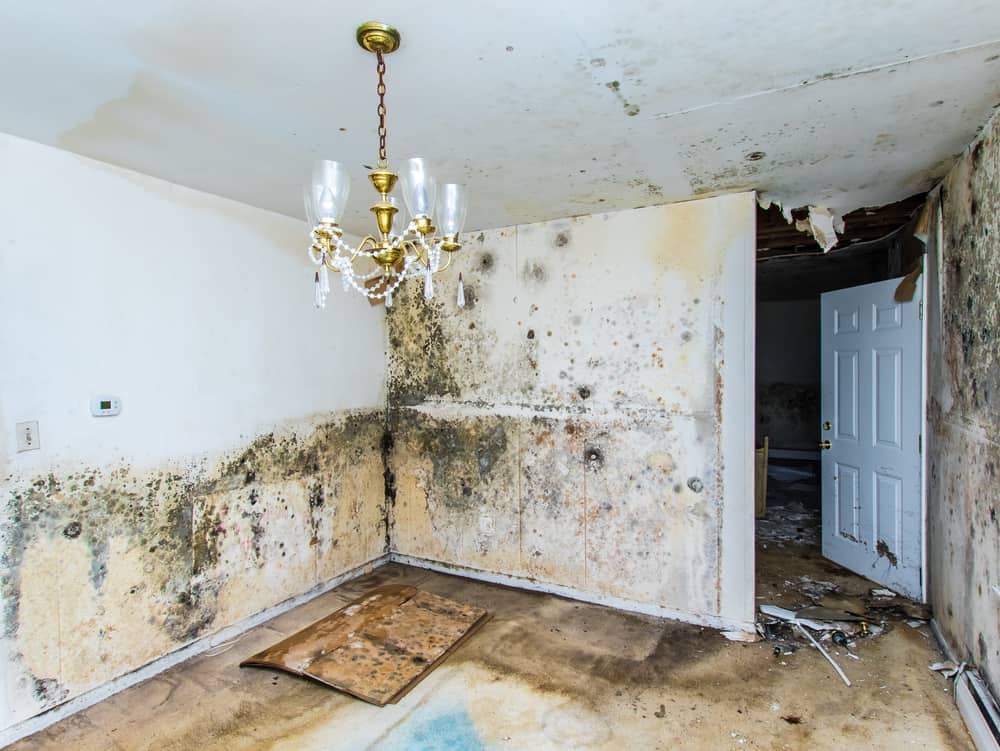
Absolutely — and in Bayville specifically, this is one of the most common scenarios we encounter. The homes in this village are old. More than 25% were built before 1940, and the majority of the housing stock predates modern vapor barriers, current attic ventilation standards, and the waterproofing practices that are now standard in new construction. These are homes that have had decades to accumulate slow plumbing leaks, inadequate crawl space moisture management, and storm-related water intrusion — often without any of it being visible from inside a finished room.
Mold growing inside a wall cavity, under original hardwood flooring, or in roof decking doesn’t always produce a smell — at least not one that’s strong enough to notice, especially in a home you’ve lived in for years. It also doesn’t always discolor surfaces. The only reliable way to detect it is with tools: infrared thermal imaging that identifies moisture differentials behind surfaces, calibrated moisture meters that measure what’s actually wet inside a wall, and air sampling that captures airborne spore concentrations even when there’s no visible colony. That’s why our inspection protocol in Bayville goes well beyond what the eye can see. If the mold is there, we’re going to find it.
Most homeowners on Long Island pay somewhere between $300 and $1,000 for a professional mold inspection, with the majority landing around $600 to $700 for a standard residential assessment. The final cost depends on the size of the property, how many areas need to be tested, and whether additional sampling is warranted based on what the initial inspection finds. Larger or more complex properties — including multi-story homes, properties with extensive crawl spaces, or homes with a documented flood history — may fall toward the higher end of that range.
The more useful way to think about the cost is in terms of what it prevents. Mold remediation for a typical residential case runs between $1,150 and $3,400. For severe infestations — the kind that can develop in a Bayville home that flooded during Sandy and was never professionally assessed — costs can reach $20,000 or more. On a property with a median value approaching $820,000, an undetected mold problem doesn’t just create a health risk. It creates a financial one. The inspection that costs a few hundred dollars today is the investment that keeps a much larger problem from surfacing at the worst possible time — during a sale, during a claim, or when a family member’s health makes it impossible to ignore.
It’s a fair question, and one worth asking any company you’re considering. The concern is real: if a company profits from remediation, do they have an incentive to find mold everywhere? The honest answer is that the conflict exists in theory — but the way you protect yourself against it is by looking at the credentials behind the inspection, not by hiring a separate inspection-only company by default.
In New York, the mold assessor and mold remediator roles are governed separately under Article 32 of the NY Labor Law. A licensed mold assessor is legally accountable for the accuracy of their findings. Our assessments are backed by certified laboratory results — not our opinion, not a visual judgment call, but actual lab data. If the lab says mold is present at elevated levels, the report reflects that. If it doesn’t, the report reflects that too. We’ve been doing this work on Long Island for over 31 years, and our reputation in Nassau County communities like Bayville is built on giving homeowners accurate information — because a client who trusts the assessment is the only kind of client worth having. The full-service capability we offer means that if remediation is needed, you don’t have to start over with a new vendor. But that decision is always yours, based on what the data shows.
Useful Links
Other Services we provide in Bayville