
Mold Inspection in Gordon Heights, NY
When Wooded Lots and Older Walls Hide More Than You Think
Hear from Our Customers
Mold Detection Services in Gordon Heights
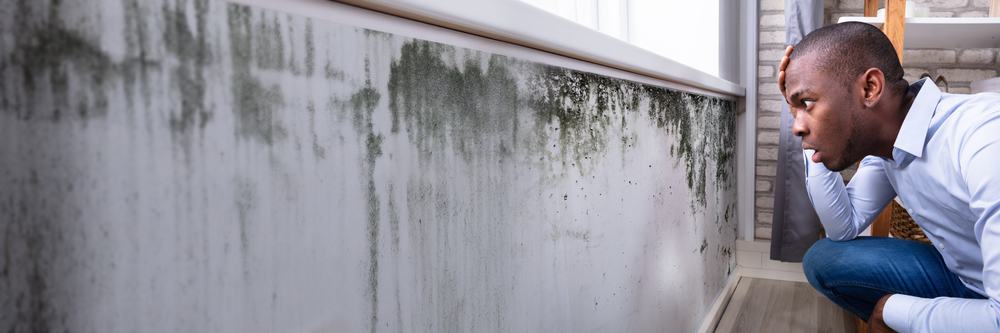
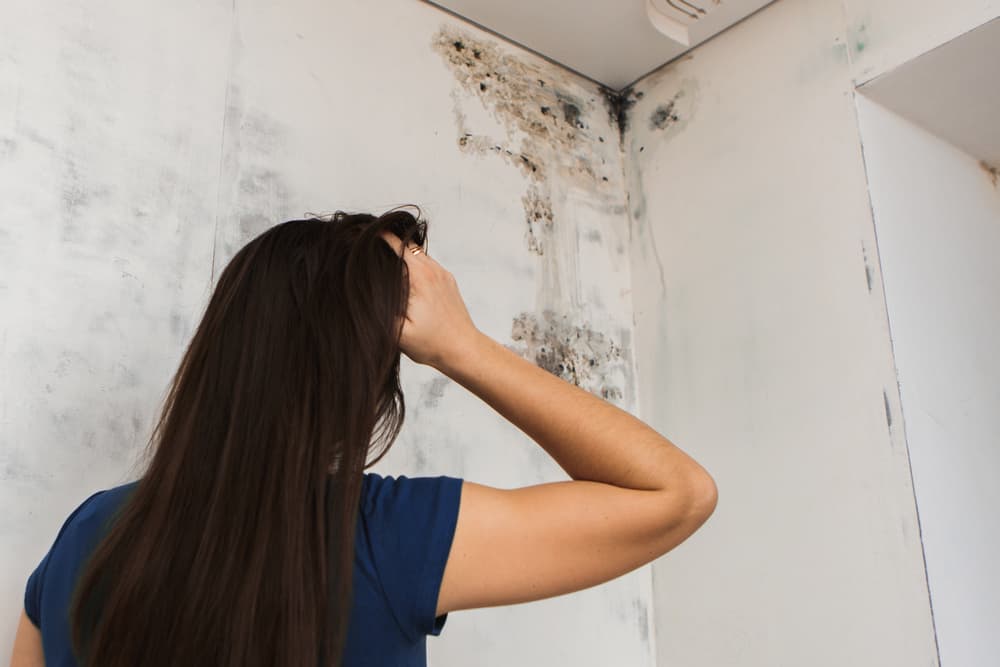
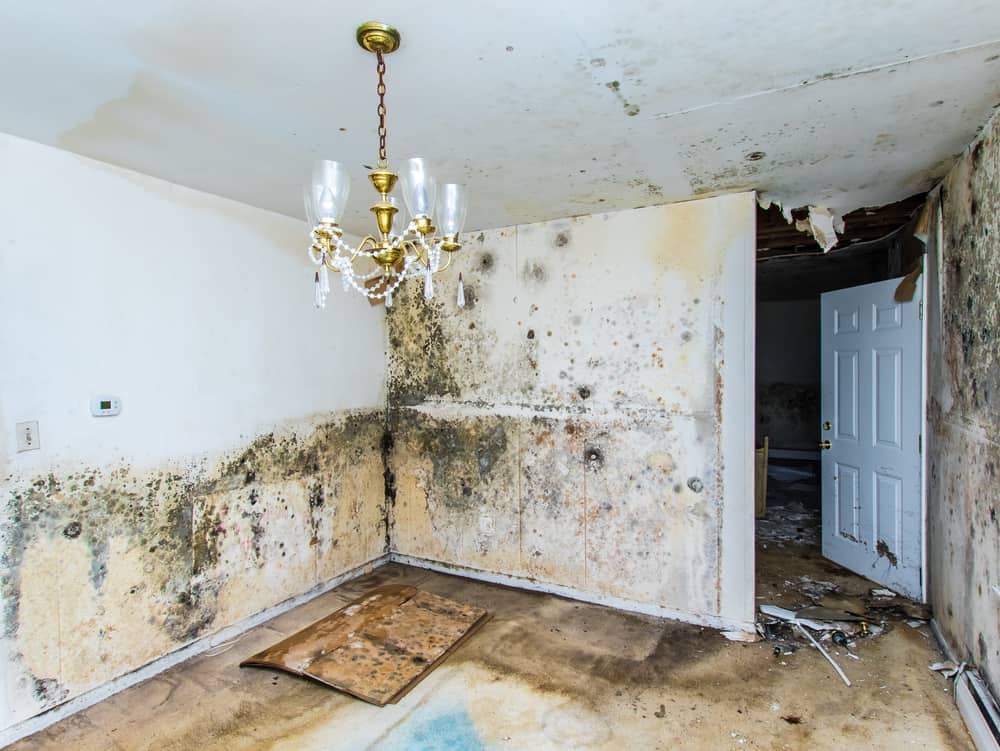
Most homeowners in Gordon Heights don’t find mold on purpose. They find it because a smell won’t go away, a kid starts coughing, or a home sale suddenly gets complicated. By that point, the mold has usually been there for a while growing quietly behind a basement wall or inside the attic of a ranch roof that doesn’t breathe the way it should.
A professional mold inspection gives you a documented, lab-verified answer. Not a guess, not a field opinion actual air and surface samples sent to an accredited laboratory. You find out exactly what’s in your home, where it’s coming from, and what needs to happen next. That clarity alone is worth more than most people expect.
For Gordon Heights specifically, the combination of older housing stock and dense tree cover creates conditions that keep moisture against your foundation and inside your wall assemblies longer than in more open neighborhoods. Ranch and hi-ranch homes here are especially prone to attic moisture buildup during Suffolk County’s humid summers, when attic temperatures can push past 130 degrees and drive moisture into insulation and sheathing. Catching that early before it becomes a remediation project is the whole point.
Mold Inspection Company Serving Gordon Heights, NY
We’ve been serving homeowners across Long Island since the early 1990s through every major storm, every flooding season, and every type of home Long Island has to offer. That includes the ranch homes, hi-ranches, and colonials that make up most of the housing stock in Gordon Heights and the surrounding Brookhaven Town communities.
This isn’t a national franchise routing calls to whoever’s available. We’re a Long Island company with a dedicated Suffolk County line, real technicians, and 31 years of local reputation behind every inspection. Every person on our team carries IICRC certification not just the owner, not just senior staff. That’s a standard we don’t relax on any job, whether it’s a finished basement in a colonial near Strathmore on the Green or a ranch attic anywhere else in Gordon Heights.
New York State has required mold assessors and remediators to hold active licenses from the NY Department of Labor since 2016. We hold both and those license numbers are verifiable online before you ever pick up the phone.
Residential Mold Inspection Process in Gordon Heights
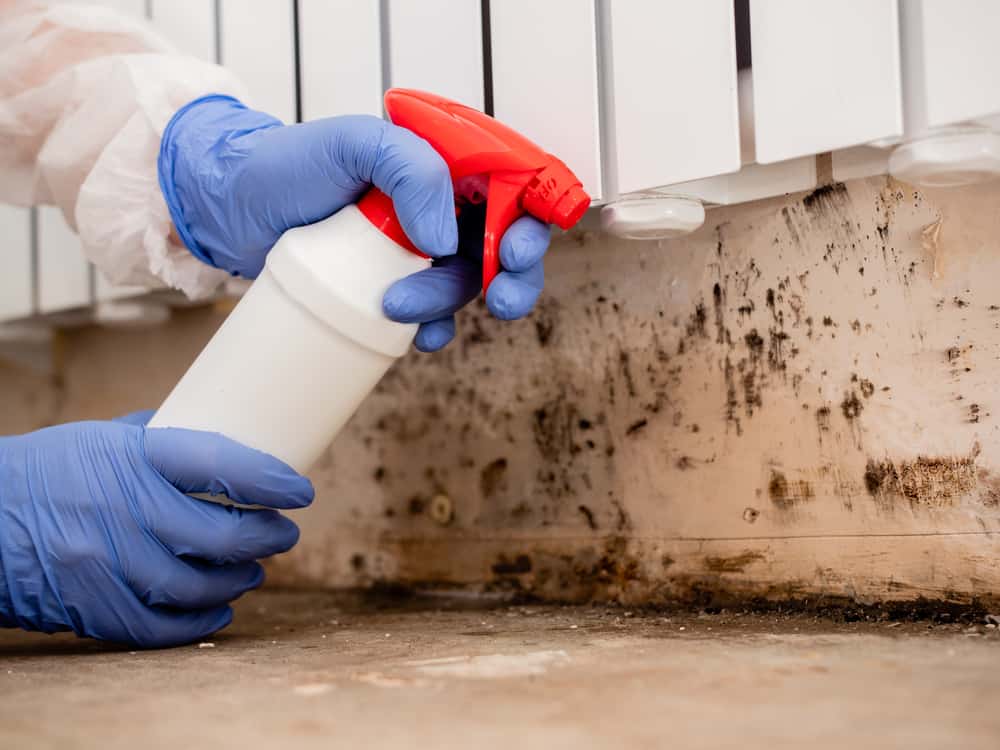
The inspection starts with air testing drawing airborne samples from inside your home and comparing them against an outdoor baseline sample. This comparison is what tells you whether what’s in your air is normal background mold or something that’s actively growing inside the structure. From there, swab samples are taken from any visible surface growth or suspected areas, which go to the same accredited lab for species identification and concentration analysis.
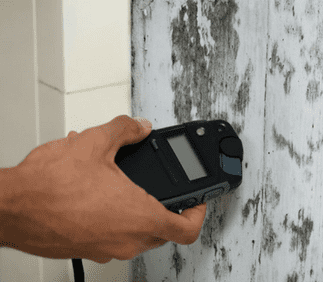
While samples are being collected, our technician is also conducting a water intrusion inspection tracing where moisture is entering the home and taking moisture level readings throughout the affected areas. This is where infrared thermal imaging comes in. Most mold in Gordon Heights homes isn’t visible. It’s behind the drywall in a finished basement, inside the insulation in a low-pitch ranch attic, or tucked into a wall cavity where a slow plumbing leak has been sitting for months. Infrared picks up the temperature and moisture signatures those areas produce, without opening a single wall.
Everything gets documented with photographs, and when the lab results come back, you receive a written report in plain language what was found, what it means, and what the recommended next steps are. If your inspection is tied to an insurance claim after a storm or flooding event, that report is built to support the documentation your insurer will ask for.
Ready to get started?
Home Mold Testing and Assessment in Gordon Heights, NY
Our mold inspection in Gordon Heights, NY includes air sampling, surface swab collection, moisture measurement, water intrusion tracing, infrared thermal imaging, and full photographic documentation all in a single visit. Lab analysis is handled by a certified, accredited laboratory, and the written report you receive at the end is the kind of document that holds up with insurance adjusters, real estate attorneys, and buyers or sellers in a transaction.
For homeowners in Gordon Heights, the most common problem areas are basement wall assemblies in older colonials, attic insulation in ranch and hi-ranch homes, and any space adjacent to the foundation perimeter exactly the areas that wooded lots and central Suffolk County’s seasonal humidity put under the most pressure. If mold is found, we can move directly into remediation without handing you off to another company. And if remediation requires structural repairs drywall removal, insulation replacement, or anything that affects the building itself that reconstruction is handled by our same licensed team. You don’t have to coordinate multiple contractors through what’s already a stressful situation.
Because we hold both the NY State Mold Assessor and NY State Mold Remediator licenses, the entire process inspection through final clearance stays under one roof, one team, and one standard of accountability.
How much does a mold inspection cost in Gordon Heights, NY?
Mold inspection costs nationally range from about $303 to $1,043 depending on the size of the home, the number of samples collected, and whether specialized equipment like infrared thermal imaging is used. In Gordon Heights, the older housing stock and common presence of finished basements and attic spaces often means a more thorough inspection is warranted which can affect the scope and cost compared to a smaller or newer home.
What matters most is understanding what you’re paying for. An inspection that includes lab-verified air and surface samples, infrared imaging, moisture measurement, and a written report is a fundamentally different product than a quick visual walkthrough. Given that median home values in Gordon Heights sit above $413,000, and that undetected mold can reduce a property’s value by 20 to 37 percent, the cost of a thorough inspection is almost always the least expensive part of the entire problem. Call for a specific quote based on your home’s size and what you’re dealing with.
What are the most common signs that I need a mold inspection in my home?
The most obvious signs are a persistent musty smell that doesn’t go away after cleaning, visible dark spotting on walls or ceilings especially in bathrooms, basements, or attic spaces and unexplained respiratory symptoms like chronic congestion, coughing, or worsening allergies in household members. If you’ve had any water event in the home a backed-up basement drain, a plumbing leak, or storm-related water intrusion and it wasn’t professionally dried within 24 to 48 hours, mold has likely already started growing somewhere.
In Gordon Heights, the combination of wooded lots and older home construction means moisture intrusion doesn’t always announce itself loudly. A slow leak behind a finished basement wall or condensation building up in an under-ventilated attic can go unnoticed for months. By the time you smell it, it’s already established. If anything feels off, an inspection is the only way to know for certain and a negative result is still useful information.
Does New York State require mold inspectors to be licensed in Gordon Heights?
Yes. New York State law has required all mold assessors and mold remediators to hold active licenses issued by the NY Department of Labor since January 1, 2016. This applies to every job performed in Gordon Heights, throughout the Town of Brookhaven, and across all of Suffolk County. Any company conducting a mold inspection or remediation in New York without these licenses is operating outside the law and any report or remediation they produce may not be legally defensible.
Before hiring any mold inspection company, ask for their NY State Mold Assessor license number and verify it through the NY DOL’s online contractor search tool. This takes about two minutes and tells you immediately whether the company is operating legally. We hold both the NY State Mold Assessor and Mold Remediator licenses, and those credentials are verifiable before you ever schedule an appointment. It’s a simple check that most homeowners don’t know to do and it’s the fastest way to filter out companies that shouldn’t be operating in your home.
Can mold grow in my attic if I haven't had any flooding or visible water damage?
Absolutely and in Gordon Heights, attic mold is one of the more common findings during inspections, even in homes that have never had basement flooding or visible water intrusion. The issue is moisture, not liquid water. Ranch and hi-ranch homes, which make up a significant portion of Gordon Heights’s housing stock, often have low-pitch roof assemblies with limited attic ventilation. During Suffolk County’s hot, humid summers, attic temperatures can climb well above 130 degrees, and the moisture in that superheated air gets driven into the insulation and roof sheathing. Over time, that creates exactly the conditions mold needs to grow.
Bathroom exhaust fans that vent into the attic instead of through the roof are another common culprit in older homes. So is inadequate soffit ventilation. None of these issues produce visible water but they all produce mold. Infrared thermal imaging during an inspection can identify moisture signatures inside attic insulation and along the roof deck without opening anything up, which is why it’s a standard part of our inspection process.
Should I get a mold inspection before buying a home in Gordon Heights, NY?
If you’re purchasing a home in Gordon Heights, a mold inspection before closing is one of the more financially rational things you can do. Standard home inspections don’t include mold testing they may note visible staining or moisture, but they don’t collect samples, don’t use infrared imaging, and don’t produce lab-verified findings. You can close on a home with a clean general inspection report and still have active mold growing inside the wall assembly of the basement or inside the attic.
With median home values in Gordon Heights above $413,000 and annual property taxes approaching $10,000, the financial stakes of homeownership here are real. Discovering mold after closing means you own the problem and remediation costs can run anywhere from $1,150 to $20,000 depending on severity and location. A pre-purchase mold inspection gives you documented, lab-verified information before you sign anything, and if mold is found, you have the leverage to negotiate repairs or walk away. That’s a much better position than discovering it six months after you move in.
How is mold inspection different from mold remediation, and do I need both?
A mold inspection is the assessment phase sampling, testing, measuring, and documenting what’s present and where it’s coming from. Mold remediation is the removal and treatment phase physically eliminating the mold, addressing the moisture source, and restoring the affected materials. New York State actually requires these two functions to be performed by separately licensed parties in most cases, which is why the assessment license and the remediation license are issued separately by the NY Department of Labor.
What this means practically is that the company doing your inspection should not be handing you a remediation quote before the lab results are even back. The findings drive the recommendation not the other way around. We hold both licenses, which means if your inspection does identify active mold growth, you can move directly into remediation with our same team without starting over with a new company. But the inspection findings come first, they’re lab-verified, and the remediation scope is based on what the data actually shows not on what generates the largest project.
Useful Links
Other Services we provide in Gordon Heights