
Mold Inspection in Hempstead, NY
Hempstead's Older Homes Hide More Than You Think
Hear from Our Customers

Residential Mold Detection Hempstead, NY
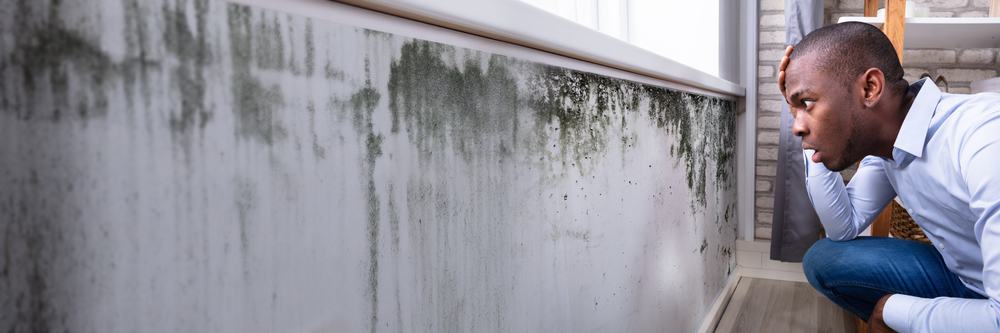
Hempstead’s housing stock is some of the oldest in Nassau County. Homes built in the early and mid-1900s come with aging plumbing, roofing that’s been patched more than replaced, and ventilation that was never designed for today’s humidity levels. Mold doesn’t wait for you to find it it moves into wall cavities, under flooring, and into attic insulation long before you see a spot or smell something off.
A thorough mold inspection in Hempstead gives you clarity. You stop guessing whether that musty smell in the basement is a problem or just an old house being an old house. You find out whether the water that came in after last year’s nor’easter left something behind. If mold is present, you get a written report with certified lab results not a verbal opinion that tells you exactly what you’re dealing with and what needs to happen next.
That kind of documentation matters here. Whether you’re a homeowner, a landlord managing a rental on the south side of the village, or a buyer about to close on a property near Fulton Avenue, you need results that hold up with your insurance company, your attorney, or the Village’s code enforcement office. That’s what a professional inspection actually delivers.
Licensed Mold Inspection Company Hempstead, NY
First Response Restoration and Cleaning Inc. has been serving Nassau and Suffolk Counties for over 31 years. We understand what mold looks like in a 1940s Cape Cod in West Hempstead, what causes recurring basement moisture in homes near the Southern State Parkway corridor, and why attic mold is so common in the older Colonials and Tudors throughout Hempstead and the surrounding Nassau County communities.
Our owner, Richard Peterson, is personally licensed by the New York State Department of Labor under Article 32 of the Labor Law the state’s mandatory licensing framework for all mold assessment and remediation work. Every technician on our team holds IICRC certification. That’s not standard in this industry. A lot of companies lead with the owner’s credentials and send someone else to your door. That’s not how we operate.
We carry a dedicated Nassau County line at 516-698-1776 because this market is a real focus not an afterthought. When you call, you’re reaching a team that knows Hempstead, knows the housing stock, and knows what to look for.
Mold Assessment Services Hempstead, NY
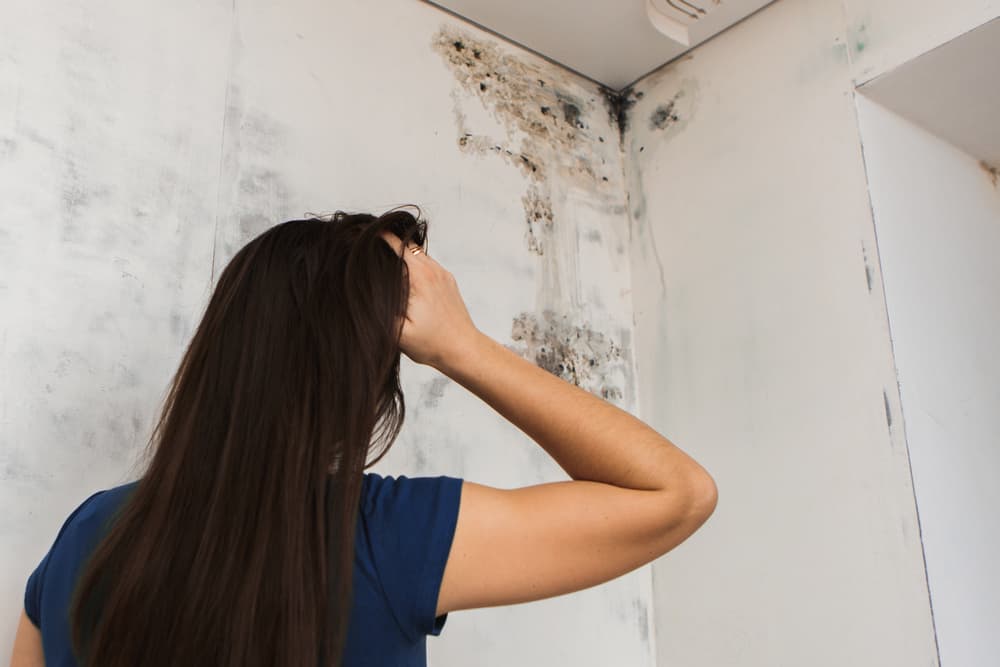
The inspection starts with a full walkthrough not just the visible surfaces, but the areas where mold actually hides in homes like yours. That means the basement, the attic, inside wall cavities, around old plumbing, and anywhere water has ever intruded. In Hempstead’s older housing stock, those areas are rarely obvious, and a surface-level look misses most of what matters.
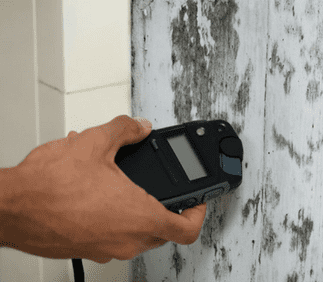
From there, we collect air samples and surface swabs, measure moisture levels throughout the property, and run infrared technology scanning to detect temperature differentials that indicate hidden moisture behind walls and under flooring without cutting into anything. We also pull an external air sample to compare against your indoor readings. That comparison is what tells you whether your indoor air quality is actually elevated or within a normal range. It’s a step most inspectors skip, and it’s one of the most useful data points in the entire report.
Every sample goes to a certified third-party laboratory. When the results come back, you receive a detailed written report mold species identified, spore concentration levels documented, and specific remediation steps outlined if action is needed. Because New York State requires all mold assessors to be licensed under Article 32, that report carries legal standing. It’s the documentation that Nassau County housing authorities, insurance adjusters, and real estate attorneys will actually accept.
Ready to get started?
Indoor Air Quality Testing for Mold Hempstead, NY
A mold inspection in Hempstead through First Response covers five specific areas: air testing, surface swab sampling, water intrusion inspection, moisture level measurement, and infrared technology scanning for hidden mold. You also get photographs of every identified mold source, an internal versus external air particle comparison, and a full written report with certified lab results and recommended next steps.
This matters more in Hempstead than in a lot of surrounding communities because the risk profile here is genuinely different. The village has some of the highest concentrations of older rental housing in Nassau County multi-family buildings, converted single-family homes near Hofstra University, and aging apartment stock throughout the downtown corridor. Deferred maintenance, high occupancy, and poor ventilation are a consistent combination in these properties. If you’re a landlord managing units in Hempstead, a professional mold inspection report is also what you’ll need to clear a violation under Chapter 78 of the Village’s Housing Code or to document compliance before a tenant dispute escalates.
For homebuyers coming in from the city via the LIRR Hempstead Branch, pre-purchase mold inspection in Hempstead is one of the smarter investments you can make before closing especially on a home that’s been through multiple owners, multiple renovations, and Long Island’s decades of coastal storms. We handle residential and commercial mold inspection in Hempstead, so whether it’s a single-family home, a rental property, or a commercial building near the Nassau Hub, the process is the same: thorough, documented, and lab-verified.
How much does a mold inspection in Hempstead, NY typically cost?
The national average for a professional mold inspection runs around $670, with most jobs falling somewhere between $300 and $1,000 depending on the size of the property and the scope of testing involved. In Hempstead specifically, the price can vary based on whether you’re inspecting a small single-family home, a multi-unit rental building, or a commercial property near the Nassau Hub area.
What’s worth understanding is what you’re actually paying for. A legitimate mold inspection in Hempstead includes air sampling, surface swabs, moisture readings, infrared scanning, and certified lab analysis not just a walkthrough. The lab results alone take time and cost money. If someone is quoting you significantly below that range, it’s worth asking what’s actually included and whether they’re sending samples to a certified third-party lab or making a judgment call on-site. The written report with lab-backed findings is what gives the inspection its real value especially if you ever need it for an insurance claim, a code violation response, or a real estate transaction.
What's the difference between mold inspection and mold testing are they the same thing?
They’re related but not identical. A mold inspection is the broader process a trained assessor physically examines your property, identifies visible mold growth, looks for moisture sources and water intrusion pathways, and evaluates conditions that could support mold growth. Mold testing refers specifically to the collection and lab analysis of air or surface samples to identify mold species and measure spore concentrations.
In practice, a thorough mold inspection in Hempstead should include both. The visual inspection tells you where the problem likely is; the testing tells you what you’re dealing with and how significant it is. The indoor-versus-outdoor air comparison is especially useful it establishes whether your indoor spore levels are elevated relative to the natural baseline outside, which is the clearest indicator of an active mold problem. Under New York State’s Article 32 licensing law, only a licensed mold assessor can legally perform this work for pay, so whoever you hire should be able to show you their NYS DOL license before they start.
Can mold really grow in my Hempstead basement after a flood, even if it dried out?
Yes and this is one of the most common scenarios we see across Nassau County. Mold can begin growing within 24 to 48 hours of a water event if moisture isn’t fully extracted and the area isn’t properly dried. The problem with basement flooding in Hempstead is that older homes in the village were built without modern waterproofing systems, and Long Island’s naturally high water table means even a slow seep through a foundation crack can keep basement walls damp for weeks without anyone realizing it.
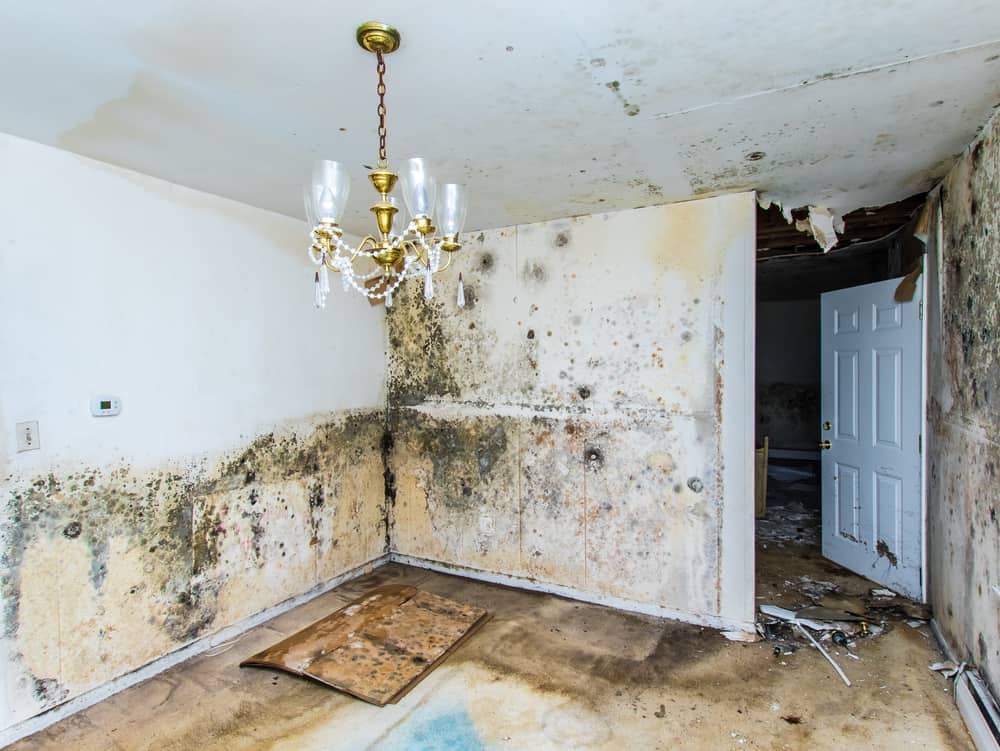
What looks dry on the surface often isn’t. Moisture hides inside wall cavities, under flooring, and in insulation exactly the places you can’t see without moisture meters and infrared scanning. A basement that “dried out” after a storm may still be harboring active mold growth inside the walls. If your Hempstead home has flooded in the past even once and you haven’t had a professional mold inspection, that’s the gap worth closing. The inspection will either confirm you’re clear or show you exactly where the problem is hiding.
As a Hempstead landlord, am I legally required to address mold in my rental units?
Under New York State law, significant mold growth is considered a breach of the warranty of habitability meaning tenants have the right to a livable space free from conditions that affect their health and safety. If a tenant reports mold and you don’t address it, you’re exposed to rent abatement claims and potential housing court proceedings. The Village of Hempstead also has its own Housing Code under Chapter 78 that empowers code enforcement officers to issue violations for conditions related to moisture and habitability.
The practical reality for landlords in Hempstead is that the village has a large rental housing stock and active code enforcement. A professional mold inspection gives you documentation lab-verified, written, and signed by a licensed NYS DOL assessor that you can use to demonstrate you took the complaint seriously and responded appropriately. It also protects you if the inspection finds no significant mold present. Either way, having that report on file is far better than relying on a verbal assessment or a DIY test kit that won’t hold up in any formal proceeding.
How do I know if I need black mold testing or a full mold inspection in Hempstead?
“Black mold” is one of the most searched terms in this space, but it’s worth clarifying what it actually means. The term typically refers to Stachybotrys chartarum, which is one specific mold species and it’s not always black, and not all black-colored mold is Stachybotrys. The only way to know what species you’re dealing with is through lab analysis, which is part of a full mold inspection.
If you’re seeing discoloration on walls, smelling something musty in a basement or bathroom, experiencing unexplained respiratory symptoms, or dealing with the aftermath of water damage, a full professional mold inspection in Hempstead is the right starting point not a species-specific test. The inspection will identify what’s present, what species it is, and what concentration levels exist in your indoor air. That’s the complete picture. Targeting one species without assessing the full environment is like treating a symptom without diagnosing the problem.
Should I get a mold inspection before buying a home near Hempstead's older neighborhoods?
For a home in Hempstead village or the surrounding areas especially anything built before 1970 a pre-purchase mold inspection is one of the most straightforward ways to protect yourself before closing. Standard home inspectors are not licensed mold assessors in New York State, and their scope doesn’t include air sampling or lab analysis. They may flag visible moisture or staining, but they can’t tell you what’s growing inside the walls.
Hempstead’s older Colonials, Tudors, and post-war cape cods have decades of plumbing history, roof repairs, and basement water events behind them. A previous owner may have painted over a moisture problem or patched a leak without ever addressing the mold that followed. A professional mold inspection with infrared scanning and certified lab results gives you the actual condition of the property before you own the problem. If mold is found, you have leverage to negotiate repairs or walk away. If it’s clear, you close with confidence. Either outcome is better than finding out six months after moving in.
Useful Links
Other Services we provide in Hempstead