
Mold Inspection in Huntington Bay, NY
Waterfront Homes Hide Mold Longer Than You Think
Hear from Our Customers

Residential Mold Detection Huntington Bay
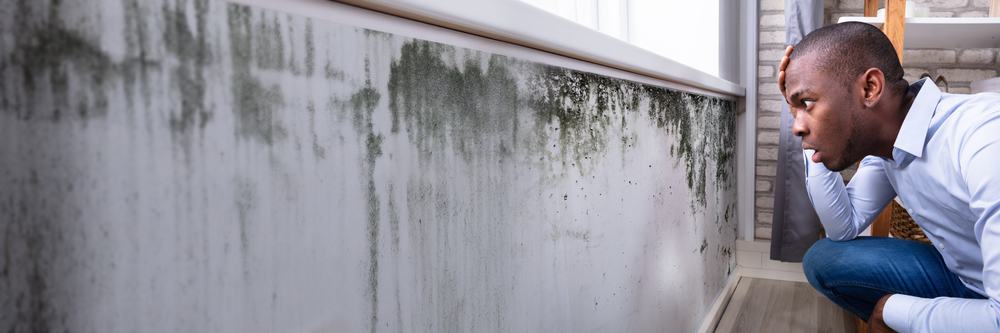
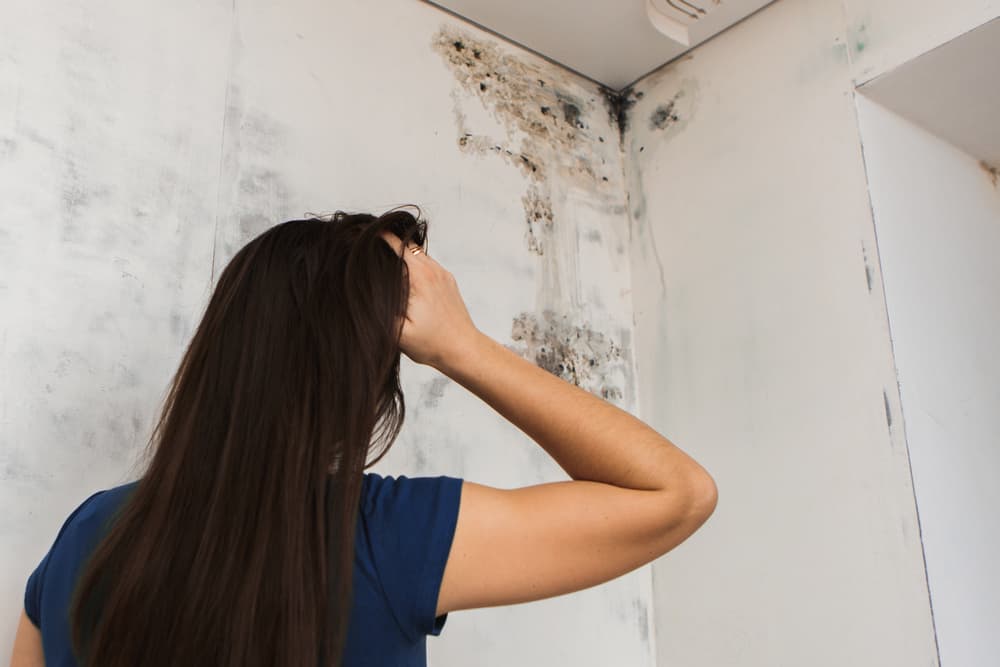
Most homeowners in Huntington Bay don’t discover mold until it’s already spread behind plaster walls, under floors, inside attic cavities that haven’t been opened in decades. By the time there’s a visible sign, the problem is rarely small. Catching it early changes everything: smaller remediation scope, lower cost, and no disruption to a real estate transaction or insurance claim.
The waterfront setting here isn’t just a lifestyle it’s a mold accelerant. Homes along the bay and in communities like Bay Hills and Wincoma deal with persistently elevated humidity, salt air that degrades building seals over time, and older construction materials that absorb moisture in ways modern drywall simply doesn’t. A professional mold inspection gives you a documented, lab-verified picture of what’s actually happening inside your home not a guess, not a visual estimate.
For a Huntington Bay home worth $1.48 million or more, that documentation matters. Whether you’re buying, selling, or just trying to understand why someone in the house keeps waking up congested, a thorough inspection is the only way to know for certain what you’re dealing with.
Licensed Mold Assessor Huntington Bay NY
We’ve been serving Long Island homeowners since the early 1990s long before mold licensing was even required in New York State. When the NY Department of Labor made mold assessor and remediator licenses mandatory in 2016, we already had the experience, the training, and the standards in place. We hold both licenses, and every technician not just the owner carries full IICRC certification.
We’re based in West Babylon and have worked extensively across Suffolk County’s North Shore communities, including the older estate-era homes that define Huntington Bay. We know what happens to a plaster wall after a nor’easter pushes water through an aging foundation. We know how marine humidity behaves differently than inland moisture. That’s not something you read in a manual it’s three decades of actual fieldwork in communities just like yours.
If mold is found and remediation is needed, we handle that too. Inspection, remediation, and reconstruction one licensed team, no handoffs, no coordination headaches.
Mold Assessment Process Huntington Bay NY
The inspection starts before a single sample is collected. Our technician walks the property looking for signs of water intrusion, past moisture events, and structural conditions that create mold risk things like aging roof systems, foundation wall seepage, and HVAC configurations common in Huntington Bay’s older colonial and estate-style homes. In a village where many homes were built in the 1920s through 1960s, this initial walkthrough often reveals issues that owners didn’t know existed.
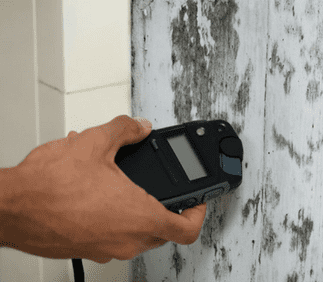
From there, we collect air samples and surface swab samples from areas of concern. Infrared thermal imaging detects moisture activity behind walls and ceilings places where mold can colonize for months without any visible indication. All samples go to an accredited laboratory approved by the New York State Department of Health (NYSDOH ELAP). You get real lab results, not a field estimate.
The final report documents everything: what was found, where it was found, photographic evidence, moisture readings, and a clear outline of recommended next steps. If your situation involves an insurance claim common after nor’easter flooding or storm-related water intrusion that documentation is exactly what your adjuster needs. We handle the insurance communication too, so you’re not navigating that process alone.
Ready to get started?
Indoor Air Quality Testing Huntington Bay NY
A mold inspection in Huntington Bay isn’t a quick walkthrough with a flashlight. The homes here many of them 60 to 100 years old, with original construction systems and decades of exposure to Long Island Sound humidity require a level of thoroughness that goes beyond what a general home inspector can legally or technically provide. Under New York State law, mold assessment is a licensed service, separate from a standard home inspection. We hold that license, which means our findings carry legal weight for real estate transactions, insurance claims, and health-related documentation.
The inspection covers the full structure: attic spaces where ice dam damage creates hidden moisture pathways, basements and crawl spaces where hydrostatic pressure pushes water through aging concrete, HVAC systems and ductwork where condensation builds up during Huntington Bay’s humid summers, and wall cavities in older plaster-construction homes where moisture has nowhere to escape. Infrared imaging is standard not an add-on because in a home with original lath-and-plaster walls, thermal detection is often the only way to find what’s hiding inside.
If you’re buying or selling in Huntington Bay, the inspection report we produce is the kind of documentation that holds up to your attorney, your lender, and your insurance company. And if the inspection identifies a problem that needs remediation, you don’t have to start the search over. The same licensed team handles it.
Does living near the water in Huntington Bay actually increase mold risk?
Yes and meaningfully so. Huntington Bay’s position on the East Neck peninsula, surrounded by the bay and connected harbors, creates ambient humidity levels that are consistently higher than inland communities like Commack or Hauppauge. Salt air accelerates the degradation of building seals, vapor barriers, and HVAC components over time, which creates more entry points for moisture. Once moisture gets inside a wall cavity or attic space, mold can begin developing within 36 to 72 hours and in a coastal environment, that window can be shorter.
The older homes in communities like Bay Hills, Wincoma, and Knollwood Beach compound this risk. Original plaster walls, wood framing, and pre-modern construction systems are far more porous than contemporary materials. They absorb and hold moisture in ways that newer construction doesn’t. If your home was built before 1970 and has never had a professional mold inspection, there’s a reasonable chance moisture has found its way into spaces you’ve never looked.
How much does a mold inspection in Huntington Bay, NY typically cost?
A professional mold inspection generally runs between $300 and $700 for most residential properties, depending on the size of the home and the scope of the assessment. Larger estate-style homes common in Huntington Bay may fall toward the higher end of that range, particularly when infrared thermal imaging and multiple sample collections are involved. Lab analysis fees are sometimes included and sometimes quoted separately, so it’s worth clarifying that upfront.
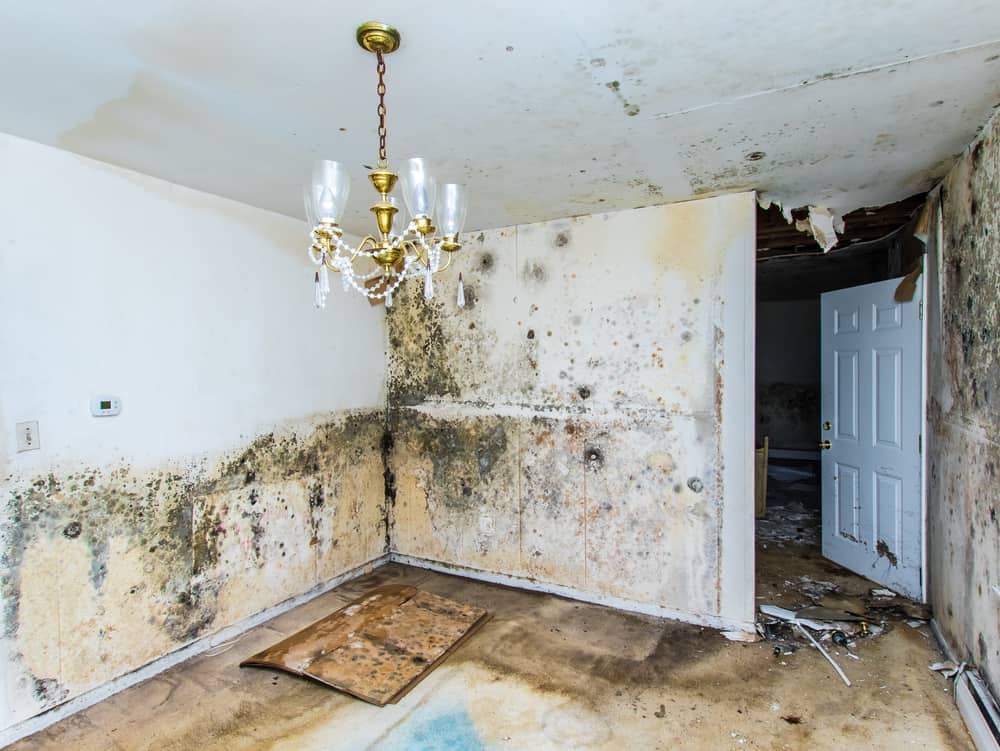
The more relevant number, though, is what an undetected mold problem costs. Remediation for a moderate mold issue runs $1,150 to $3,400. Severe cases the kind that develop inside wall cavities or attic systems over years can exceed $20,000. And if mold is discovered during a real estate transaction without prior documentation, it can reduce your home’s sale price or kill the deal entirely. On a Huntington Bay property worth $1.48 million, a 20 to 37 percent value reduction represents a potential loss of $296,000 to $548,000. The inspection cost is not the risk skipping it is.
What is the difference between mold inspection and mold testing in New York State?
In New York, “mold assessment” and “mold testing” are sometimes used interchangeably by homeowners, but there’s an important legal distinction. Since January 1, 2016, New York State requires anyone performing mold assessment which includes collecting samples, evaluating conditions, and producing a written assessment to hold a NY Department of Labor Mold Assessor License. This is a separate credential from a general home inspector license, and general home inspectors are not permitted to perform mold assessment services.
What this means practically: if someone without a mold assessor license walks through your home and hands you a report, that report has no legal standing. It can’t be used for an insurance claim, a real estate transaction, or a health-related proceeding. We hold the NY State Mold Assessor License, so the documentation we produce is legally valid and defensible. Before hiring anyone to inspect a home in Huntington Bay, you can verify their license through the NY Department of Labor’s online database and you should.
Can mold grow inside the walls of an older Huntington Bay home without any visible signs?
This is one of the most common situations we find in Huntington Bay’s older housing stock and one of the most important reasons a visual inspection alone isn’t enough. Homes built in the 1920s through 1960s, which make up a significant portion of the village’s estate-era communities, were constructed with plaster-over-lath wall systems and wood framing that can harbor mold colonies deep inside the wall cavity for months or years before any visible sign appears on the surface. By the time you see discoloration or smell something musty, the growth is typically well-established.
Infrared thermal imaging is the most effective tool for detecting hidden moisture and mold activity in these older wall systems. It identifies temperature differentials caused by moisture presence even when the surface looks completely normal. We use thermal imaging as a standard part of every inspection, not as an optional upgrade. For a home with original plaster walls or a roof that has experienced any ice dam damage, this step isn’t optional it’s how you actually find out what’s inside.
When is the best time of year to schedule a mold inspection in Huntington Bay?
There’s no wrong time to schedule a mold inspection, but there are specific windows when Huntington Bay homeowners most commonly discover problems and being ahead of those windows is always better than reacting to them. Spring is the primary discovery season: post-winter thaw reveals ice dam damage on older roofs, frozen pipe bursts, and accumulated condensation in attic spaces that developed over the heating season. If your home has an older roof system, a spring inspection after any significant winter is a smart call.
Summer brings its own risk. Long Island’s humid season runs hard from June through August, and air conditioning systems running continuously create condensation in ductwork and around air handlers. HVAC-related mold is most commonly found during summer inspections. Fall is when nor’easter season begins, and any storm that drives water into a basement or through a compromised roof creates a 36 to 72 hour window before mold begins developing. If your home takes on water during a storm, an inspection within days not weeks is the right move.
Does homeowner's insurance cover mold damage in Huntington Bay, NY?
It depends on the cause. Most standard homeowner’s insurance policies in New York cover mold damage when it results directly from a covered peril a burst pipe, storm-related water intrusion, or sudden roof damage, for example. What they typically don’t cover is mold that developed from long-term neglect, gradual moisture buildup, or a pre-existing condition that wasn’t disclosed. The distinction matters, and it’s one that adjusters look at carefully.
This is where proper documentation from a licensed mold inspection becomes financially important. A written assessment from a NY State licensed mold assessor with lab-verified results, moisture readings, and photographic evidence gives your insurance company the documentation they need to process a legitimate claim. It also protects you from a denial based on the argument that the damage was pre-existing or neglected. We handle insurance documentation and adjuster communication from the first call through project completion, which is a meaningful advantage when you’re already dealing with the disruption of a mold problem in your home. For Huntington Bay homeowners with high-value properties and complex policies, that support is worth having in your corner.
Useful Links
Other Services we provide in Huntington Bay