
Hear from Our Customers
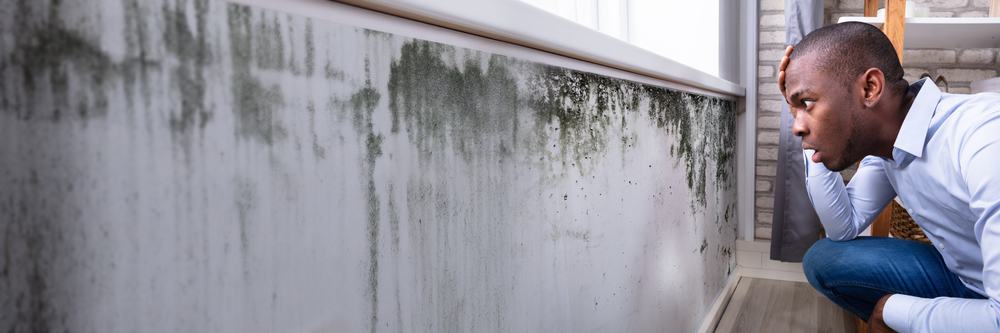
Plainedge was built fast, built flat, and built to last — but 60 to 70 years of wear on post-war homes tells a different story inside the walls. Porous cinder block basements, original galvanized plumbing, and attic insulation that’s long past its prime create exactly the kind of chronic dampness that mold needs to take hold. Because Plainedge sits on the flat edge of the Hempstead Plains with nowhere for storm water to run, a heavy nor’easter or a backed-up sump pump doesn’t just cause a mess — it starts a 24-hour clock before mold begins growing.
A professional mold inspection gives you something a visual walk-through never can: documented evidence of what’s actually there. Air samples measured against outdoor baseline readings, surface swabs sent to a certified lab, moisture readings behind walls, and infrared scans that pick up temperature differentials invisible to the naked eye. The result is a written report with real data — not a gut feeling, not a sales pitch.
For homeowners buying or selling one of Plainedge’s generationally-owned homes, that report is negotiating power. For families who’ve been smelling something musty in the basement since March, it’s peace of mind. Either way, you stop guessing and start knowing.
We’ve been working inside Nassau and Suffolk County homes since before most of the mold inspection companies showing up in your search results existed. Based in West Babylon with a dedicated Nassau County line at 516-698-1776, we’re not a national franchise learning Plainedge and the surrounding neighborhoods — we’re a Long Island company that’s been in these homes for three decades.
Our owner Richard Peterson holds New York State DOL licenses for both mold assessment and mold remediation under Article 32 — the state law that’s required licensing for all paid mold work since 2016. Every technician on our staff is IICRC-certified, which means the person walking through your Plainedge home carries the same credentials as ownership. That’s not standard in this industry.
What that means for you: honest findings, documented results, and a company whose 31-year reputation depends on getting the assessment right — not on selling you a remediation job you don’t need.
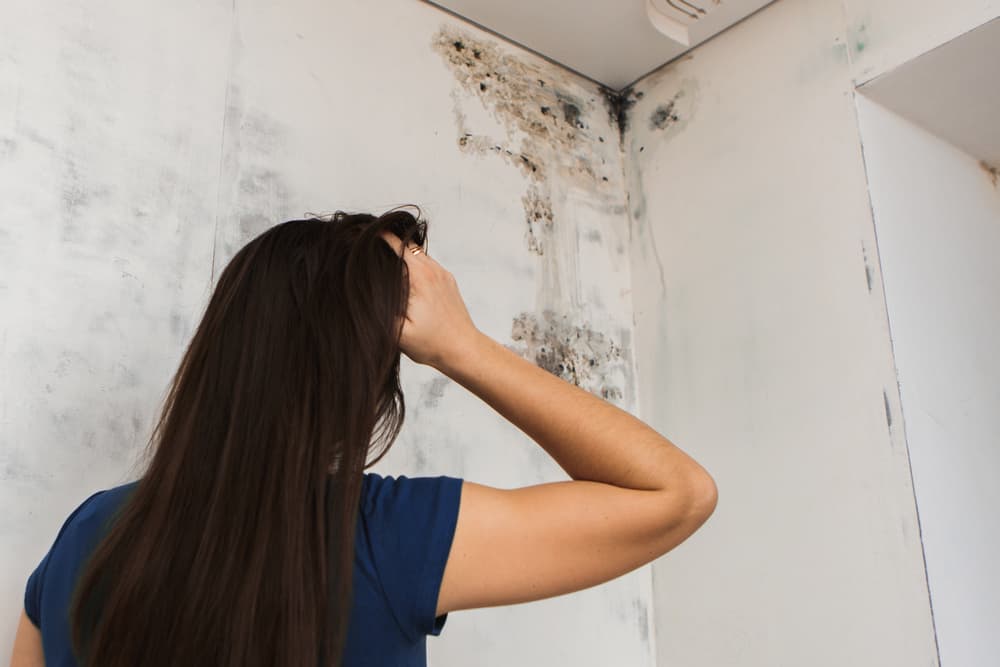
The inspection starts before we take a single sample. Our technician does a full walk-through of your home — basement, attic, crawl spaces, bathrooms, and any area with a documented or suspected moisture history. In Plainedge’s post-war housing stock, that usually means paying close attention to the basement foundation walls, the attic ridge line, and any exterior walls adjacent to older plumbing runs.
From there, we collect air samples from inside the home and compare them against an outdoor baseline. That comparison is what actually tells the story — if indoor spore counts are elevated relative to outside air, you have a mold condition worth addressing. Surface swab samples from visible growth areas go to a certified third-party laboratory, which identifies the mold species and concentration levels. Infrared thermal imaging scans wall cavities and ceiling spaces for hidden moisture pockets — the kind that show up in homes where a slow pipe leak or ice dam has been feeding a colony behind drywall for months without anyone knowing.
Once the lab results are back, you receive a written report that documents everything: what was found, where it was found, what species were identified, and what remediation steps are specifically recommended. That report meets the standard that insurance companies, real estate attorneys, and Nassau County health professionals require — and it’s yours to keep and use however you need it.
Ready to get started?
A lot of companies advertise mold inspection and testing as if they’re the same thing. They’re not. Testing without a proper inspection tells you mold exists somewhere — a proper inspection tells you where it is, why it’s there, and what needs to happen next. In Plainedge, where the housing stock runs almost entirely from the late 1940s through the mid-1960s, that distinction matters. These homes have specific failure points — and a thorough inspection is built around knowing where to look.
Every mold inspection we provide includes air sampling with internal-to-external comparison, surface swab collection, moisture meter readings throughout the home, infrared thermal imaging for hidden mold detection, a full water intrusion assessment, and photographs documenting every identified source. All samples are analyzed by a certified third-party laboratory. The final written report includes lab results, identified mold species, moisture source findings, and specific recommended next steps — formatted to meet insurance claim and real estate transaction standards.
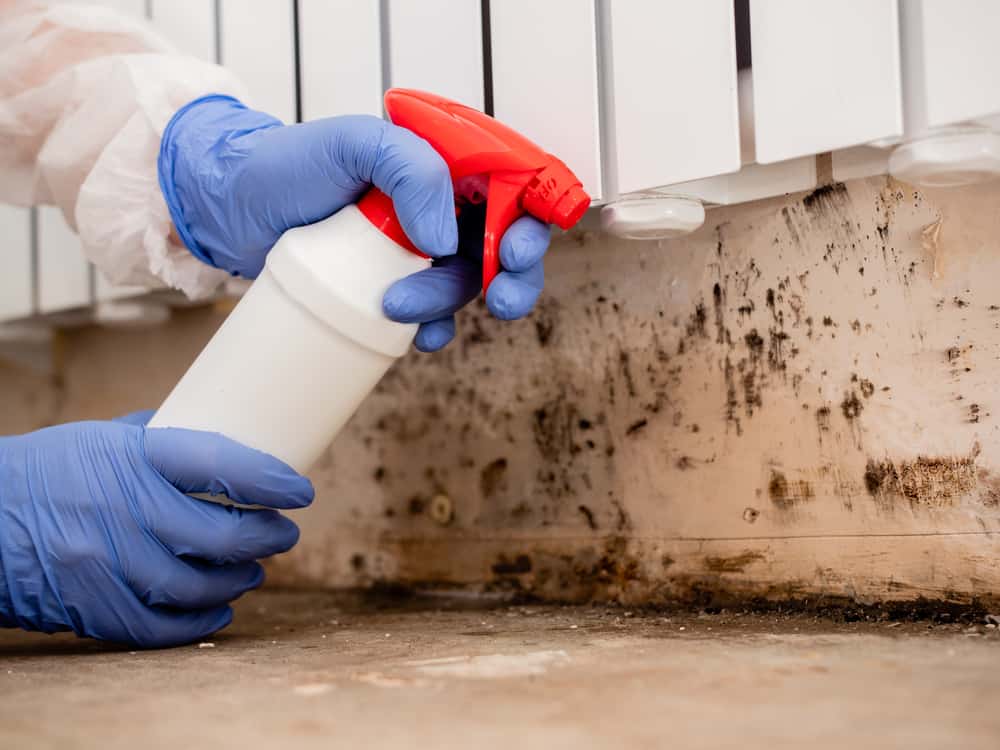
If the inspection finds something that needs remediation, we handle that too — under the same NYS DOL-licensed remediator credentials, without handing you off to a different company. For Plainedge homeowners dealing with post-flood mold after a wet spring or a sump pump failure, that single-company continuity means faster response and cleaner documentation from start to finish.
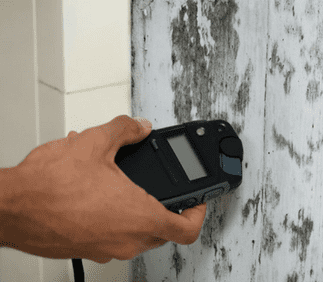
It’s a fair question — and the honest answer is yes, mold is genuinely common in Plainedge homes, for reasons that are specific to this community. Virtually every home in Plainedge was built between the late 1940s and mid-1960s. At 60 to 70 years old, these homes have cinder block or poured concrete basements that wick groundwater, original plumbing systems approaching the end of their service life, and attic insulation that’s long lost its moisture resistance. Add the flat terrain of the Hempstead Plains — which gives storm water nowhere to drain quickly — and you have a recurring basement flooding problem that multiple local restoration companies have dedicated service pages to addressing.
Mold doesn’t need a flood to grow. It needs humidity above 60% and a surface to attach to. In an un-air-conditioned or poorly ventilated basement in Nassau County during July, that threshold gets crossed regularly. If your Plainedge home is over 50 years old and hasn’t had a professional mold assessment, you’re not overreacting by getting one — you’re doing what the age of your home warrants.
Mold inspection costs in the Nassau County area typically fall between $300 and $1,000 depending on the size of the home, the number of samples collected, and whether infrared thermal imaging is part of the process. For most Plainedge homes — single-family Cape Cods, split-levels, and ranches in the 1,200 to 2,000 square foot range — you’re generally looking at a mid-range investment that includes air sampling, surface swabs, moisture readings, and a written lab report.
What matters more than the base price is what’s actually included. A cheap inspection that only does two air samples and skips infrared scanning can miss a mold colony sitting behind a bathroom wall or in an attic corner. In a 1955 Plainedge home that’s never had a professional assessment, that’s a real risk. The cost of a thorough inspection is a fraction of what remediation runs if a hidden problem goes undetected — and the written lab report has real financial value if you’re filing an insurance claim or negotiating a real estate transaction.
Mold inspection and mold testing are related but not the same thing, and the distinction matters when you’re trying to understand what’s actually happening in your home. A mold inspection is the physical process — a trained technician examines your home for visible mold growth, moisture sources, water intrusion points, and conditions that support mold development. Mold testing is the sampling component: collecting air or surface samples and sending them to a certified laboratory to identify what species are present and at what concentration.
You generally need both to get a complete picture. Testing without inspection tells you mold spores are elevated — but not where they’re coming from or why. Inspection without testing gives you a visual assessment but no scientific documentation of what’s in the air. In Plainedge specifically, where homes have multiple potential hidden moisture sources — cinder block basement walls, aging pipe runs inside walls, ice-damaged attic spaces — the combination of infrared scanning, physical inspection, and certified lab testing is what produces a report you can actually act on and that holds up for insurance or real estate purposes.
If you’re buying a home in the Plainedge school district — which draws from parts of Bethpage, North Massapequa, Farmingdale, Seaford, and Levittown — there’s a very good chance you’re looking at a home built in the 1950s or 1960s. Standard home inspections are not mold inspections. A general home inspector will note visible staining or obvious moisture damage, but they’re not equipped to do air sampling, surface swab collection, or infrared scanning for hidden mold behind walls. Those are entirely different tools and credentials.
For a home that’s been in one family for 40 or 50 years, a professional mold inspection with certified lab results is one of the most practical forms of due diligence you can do before closing. If the inspection finds a problem, you have documented evidence to negotiate repairs or a price adjustment. If it comes back clean, you have a written lab-backed report that gives you real confidence in the purchase — not just a home inspector’s visual note that “no mold was observed.”
Mold can begin colonizing a wet surface within 24 to 48 hours under the right conditions — and in a Plainedge basement in spring or summer, those conditions are almost always present. The combination of warm temperatures, high ambient humidity, and organic materials like drywall, wood framing, insulation, and stored belongings gives mold everything it needs to establish quickly after a flooding event.
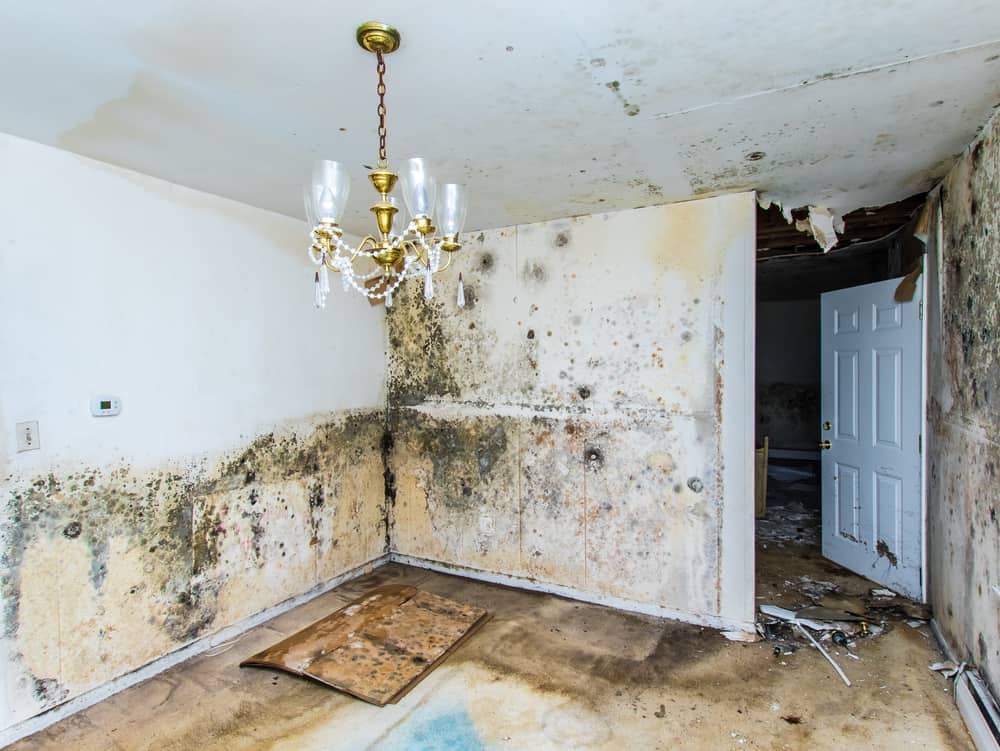
Plainedge’s flat terrain means basement flooding after heavy rain or sump pump failure is a documented, recurring issue in this community — not a rare event. If your basement took on water, the clock starts immediately. Getting a mold inspection done within the first few days after water intrusion — once the water has been extracted and drying has begun — allows a certified technician to assess whether mold has already started, identify any hidden moisture pockets that drying equipment missed, and document the condition for an insurance claim before remediation begins. Waiting weeks to schedule an inspection after a flood significantly increases both the remediation scope and the cost.
Whether your homeowners insurance covers mold inspection and remediation in New York depends heavily on the cause of the mold. If the mold resulted from a sudden, covered water event — a burst pipe, an appliance leak, or storm-related water intrusion — most standard homeowners policies will cover at least a portion of the inspection and remediation costs, subject to your deductible and policy limits. If the mold is the result of long-term moisture buildup or deferred maintenance, coverage is less likely.
The documentation piece is where most claims succeed or fail. Insurance companies require a written report from a licensed mold assessor — not a visual walk-through, not a store-bought test kit result — to process a mold-related claim. In Nassau County, where property values and repair costs are both high, having a certified lab-backed inspection report from a NYS DOL-licensed assessor is what gives your claim the standing it needs. Our inspection reports are specifically formatted to meet that standard, which means you’re not starting the claims process from scratch after the fact.
Useful Links
Other Services we provide in Plainedge