
Mold Inspection in Ridge, NY
When the Pine Barrens Keeps Your Home Wet Year-Round, Mold Doesn't Wait for an Invitation

Hear from Our Customers
Residential Mold Detection in Ridge, NY
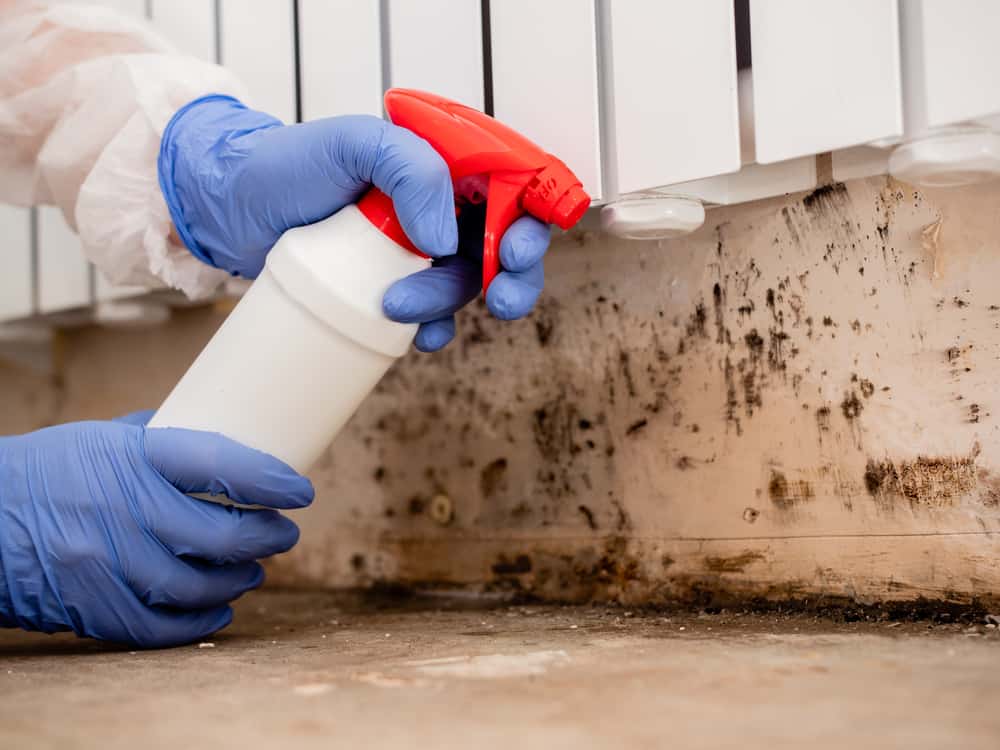
Most Ridge homeowners who call us don’t know exactly what they have they know something feels off. A musty smell in the bedroom. Allergies that got worse after a wet spring. A neighbor in Leisure Village who mentioned mold in their unit. That uncertainty is exactly what a thorough mold inspection is supposed to eliminate.
After we’re done, you’ll know whether mold is present, what species it is, how concentrated it is compared to outdoor baseline levels, and where the moisture source is that’s feeding it. You won’t get a raw lab printout and a handshake. You’ll get a written report in plain language that tells you what you have and what to do about it.
Ridge’s position along the Pine Barrens groundwater system means basements and crawl spaces here face sustained moisture pressure that most homeowners underestimate especially after heavy rain events that recharge the aquifer beneath Brookhaven Town. And for the thousands of homeowners in Leisure Village, Leisure Knoll, and Leisure Glen, attached and semi-attached construction adds another layer of risk: moisture problems in one unit can migrate through shared wall cavities into the next. Knowing what you’re dealing with before it spreads is the whole point.
Licensed Mold Inspection Company in Ridge, NY
We’ve been operating on Long Island for over three decades. That’s not a marketing number it means we’ve inspected homes throughout Ridge and Brookhaven Town through nor’easters, wet Pine Barrens springs, and every seasonal moisture pattern Suffolk County produces. We know what mid-century ranch homes on wooded lots look like when moisture finally finds its way in. We’ve worked throughout the Ridge area and the communities surrounding it, and we understand the specific conditions here in a way that a newer company or a national franchise simply doesn’t.
We hold active New York State licenses in both mold assessment and mold remediation both verifiable through the NY Department of Labor and every technician on our team is IICRC-certified. Not just the owner. Everyone. We’re also fully licensed, bonded, and insured, and we’re available 24 hours a day, seven days a week, because moisture damage doesn’t wait for Monday morning.
Mold Assessment Services in Ridge, NY
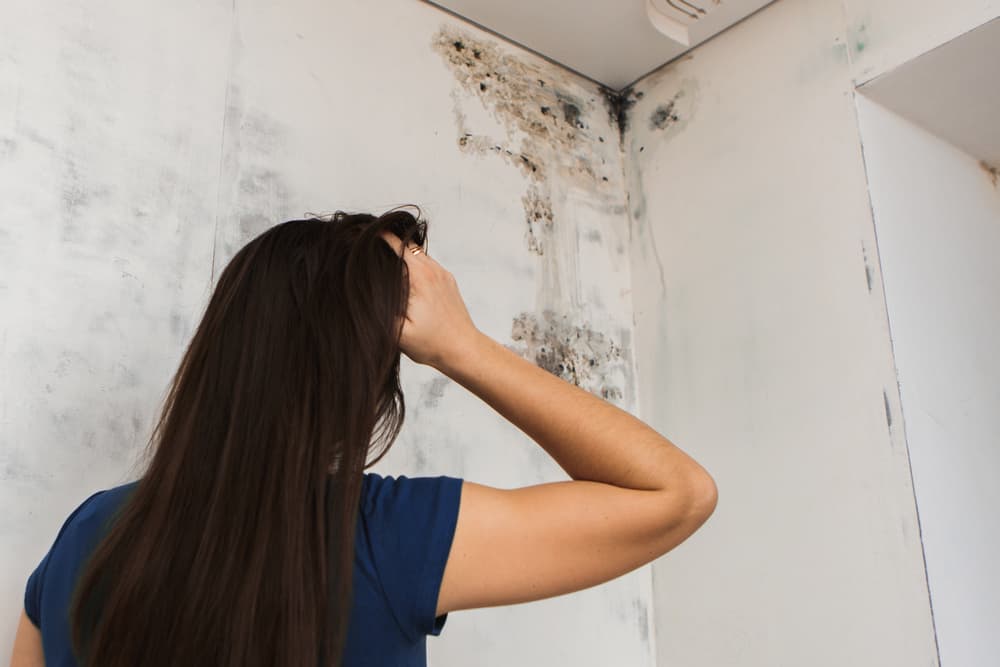
When we arrive at your Ridge home, the first thing we do is a full visual walkthrough not a quick scan, but a deliberate review of the areas where mold most commonly develops in this area: basement rim joists, attic decking, crawl spaces, and anywhere near exterior walls that stay shaded under heavy tree canopy. Ridge’s wooded lots keep surfaces damp longer than most people realize, and that’s where we start looking.
From there, we collect air samples using spore trap cassettes to measure airborne mold concentrations, and we take swab samples from any visible growth for species identification. We use calibrated moisture meters throughout the home to find elevated readings inside walls, under flooring, and in ceiling cavities and where conditions call for it, we use infrared thermal imaging to detect hidden moisture that no visual inspection would catch. This matters especially in older homes and in the attached units throughout Leisure Village, where moisture can travel through shared building materials without showing up on any surface.
Every sample goes to a certified, accredited laboratory not an in-house analysis. Once results are back, we compile a written report with findings, species identification, spore count comparisons, and specific next steps. New York State law requires that mold assessors and remediators hold separate NY Department of Labor licenses, and we hold both meaning if remediation is needed, you don’t have to start over with a new company.
Ready to get started?
Indoor Air Quality Testing for Mold in Ridge, NY
A mold inspection from us is a five-point process: air testing, surface swab sampling, water intrusion inspection, moisture level measurement throughout the property, and full photographic documentation of every finding. That documentation matters whether you’re filing an insurance claim after a basement flood, preparing to list your home, or simply trying to understand what’s been making your household sick.
For Ridge residents specifically, the inspection is built around the conditions that drive mold risk here. That means paying close attention to below-grade moisture from the Pine Barrens groundwater system, attic conditions in homes shaded by mature tree canopy, and the lateral moisture migration patterns common in the attached housing stock of Leisure Village and Leisure Knoll. If you’re in one of the 55-plus communities along William Floyd Parkway, we’re familiar with the building types, the HOA structures, and the age of construction most of these units were built between the 1960s and 1980s, and they present specific vulnerabilities that we look for every time.
If the inspection finds active mold growth that requires remediation, we handle that too under the same NY State Mold Remediator license, with the same team. And if structural materials need to be removed and rebuilt, we do that as well. You won’t be handed off to a stranger. The same company that found the problem will see it through to the end.
Is mold more common in Ridge, NY homes near the Pine Barrens?
It’s a fair question, and the honest answer is yes Ridge’s proximity to the Pine Barrens creates conditions that are genuinely different from most other Long Island communities. The groundwater system beneath the Central Pine Barrens region is highly sensitive to rainfall and seasonal fluctuation. In wet years, groundwater levels rise significantly in this area, which increases basement seepage and foundation moisture in homes throughout Ridge and the surrounding Brookhaven Town area. That sustained below-grade moisture is one of the most reliable drivers of mold growth in basements and crawl spaces.
On top of that, Ridge’s heavy tree canopy reduces sunlight exposure to home exteriors, keeping siding, rooflines, and foundation perimeters damp for extended periods after rain. The combination high ambient groundwater, shaded exteriors, and the natural humidity of a Pine Barrens-adjacent environment means Ridge homes sit in a higher sustained moisture environment than most. That doesn’t mean every home has mold, but it does mean the conditions that produce mold are present here more consistently than in more open or coastal communities. A professional mold inspection is the only way to know for sure what’s happening inside your specific home.
Can mold spread between units in Leisure Village or Leisure Knoll?
Yes, and this is one of the more important things to understand if you live in an attached or semi-attached community like Leisure Village or Leisure Knoll in Ridge. Mold doesn’t stop at a property line it follows moisture. In attached construction, shared wall cavities, floor assemblies, and attic spaces can all serve as pathways for moisture migration from one unit into an adjacent one. If a neighbor has had a slow leak, a failing vapor barrier, or a basement moisture problem that went unaddressed, there’s a real possibility that the conditions have spread beyond their unit without either of you knowing it.
The homes in Leisure Village were built in phases from the 1960s through the 1980s, which means many of the building materials insulation, vapor barriers, window flashing, and roof underlayment are at or past the end of their useful life. Aging materials are less effective at managing moisture, and that increases the risk of cross-unit migration. If you’ve noticed a musty smell, unexplained respiratory symptoms, or visible discoloration near a shared wall, it’s worth having a professional mold inspection done. An air test and moisture scan can tell you whether what you’re experiencing originates in your unit or is coming from somewhere else in the building.
How much does a mold inspection cost in Ridge, NY?
A professional mold inspection in Ridge typically runs between $300 and $700, depending on the size of the home, the number of samples collected, and whether infrared thermal imaging is used to detect hidden moisture. Larger homes or those with multiple areas of concern will generally fall toward the higher end of that range. The cost also reflects laboratory analysis fees every sample we collect goes to a certified, accredited lab, not an in-house analysis, and that accreditation is what makes the results usable for insurance claims, real estate transactions, or legal documentation.
It’s worth putting that number in context. Mold remediation the work required to actually remove mold once it’s confirmed typically costs between $1,150 and $20,000 depending on how far it has spread. In Ridge, where median home values are approaching $440,000 to $460,000, an undetected mold problem can reduce resale value by 20% or more and cause buyers to walk away from a deal entirely. A $300 to $700 inspection is a straightforward investment compared to those stakes. If you’re in one of the Leisure communities and living on a fixed income, the earlier you catch a problem, the less expensive it is to resolve.
What's the difference between a mold inspection and mold testing in New York?
These terms get used interchangeably, but they’re not quite the same thing. A mold inspection is the broader process it includes a visual assessment of the property, moisture measurements, water intrusion analysis, and photographic documentation. Mold testing refers specifically to the collection and laboratory analysis of samples, which can include air samples (measuring airborne spore concentrations) and surface swab samples (identifying mold species on visible growth). A complete mold inspection includes testing as part of the process, but testing alone without the full inspection context gives you numbers without the explanation of what’s driving them.
In New York State, there’s also an important legal distinction. Since January 1, 2016, anyone conducting mold assessments or mold remediation in New York is required to hold a valid license issued by the NY Department of Labor. The mold assessor license and the mold remediator license are separate credentials a company needs both to legally inspect and then remediate in the same home. Before you hire anyone for mold inspection or testing in Ridge, you can verify their license status directly through the NY Department of Labor’s online search tool. We hold both licenses, and both are current and verifiable.
What are the most common signs of mold in older Ridge, NY homes?
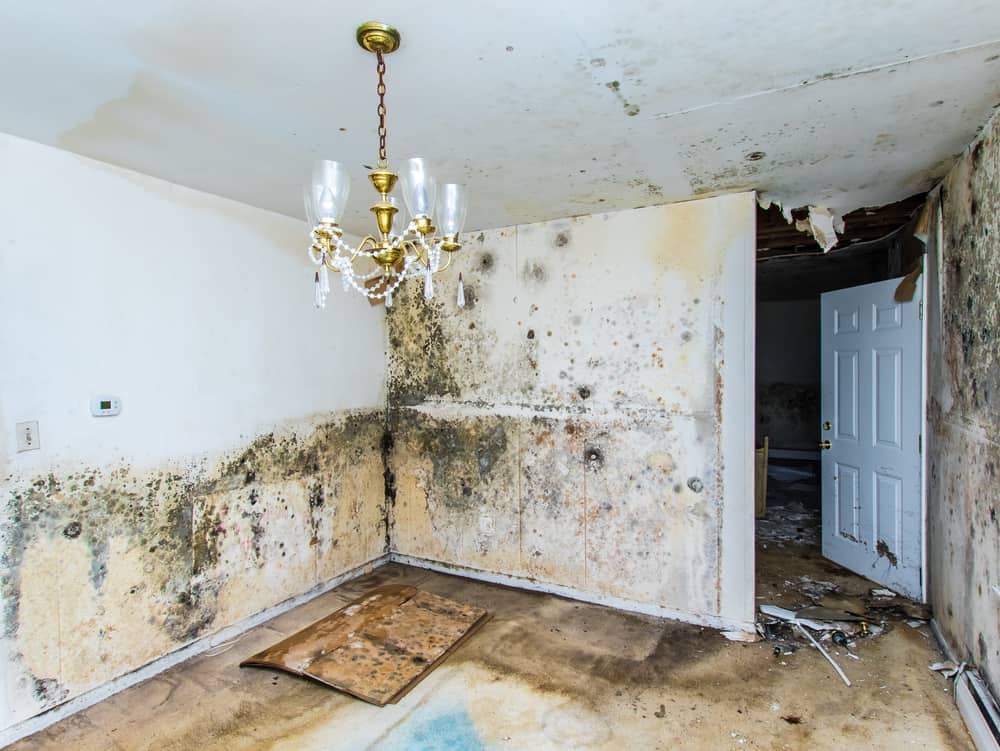
The most common signs we encounter in Ridge homes are a persistent musty odor in basements or bedrooms, visible discoloration on drywall or ceiling tiles (which can appear as dark spots, greenish patches, or white powdery growth), and unexplained respiratory symptoms chronic congestion, worsening allergies, or asthma flare-ups that seem to improve when the household members spend time away from home. These symptoms are more common in older homes where building materials have had decades to absorb and retain moisture.
In Ridge specifically, attic mold is frequently discovered in ranch-style and hi-ranch homes where the roof deck stays shaded by tree canopy and ventilation is limited. Blocked gutters common on wooded lots where leaf debris accumulates cause water to back up against fascia boards and roof decking, creating exactly the kind of sustained moisture exposure that produces attic mold over time. Basements in homes near the Pine Barrens groundwater system are another frequent concern, particularly after wet springs when the water table rises. If your home was built before 1990 and you haven’t had a professional mold inspection in the last few years, it’s a reasonable precaution regardless of whether you’re seeing obvious signs.
Do I need a mold inspection before buying or selling a home in Ridge, NY?
For buyers, a mold inspection before closing on a Ridge home is one of the more practical forms of due diligence available particularly given the age of the housing stock here. Many of the homes in Ridge, including the units throughout the Leisure communities, were built between the 1960s and 1980s. At that age, building envelopes, vapor barriers, and HVAC systems are all candidates for failure, and moisture problems can develop slowly over years without producing obvious visible signs. A standard home inspection will flag some concerns, but a dedicated mold inspection with air sampling and moisture scanning goes considerably deeper.
For sellers, a pre-listing mold inspection can work in your favor. If a problem exists and you find it first, you control the timeline and the cost of addressing it rather than having it surface during a buyer’s inspection and derail the deal at the worst possible moment. In a market where Ridge home values are approaching $440,000 to $460,000, buyers and their agents are thorough. An inspection report showing a clean bill of health with accredited lab results to back it up is a legitimate selling point. And if something does come up, knowing about it early gives you the option to remediate before listing rather than renegotiating under pressure.
Useful Links
Other Services we provide in Ridge