
Hear from Our Customers
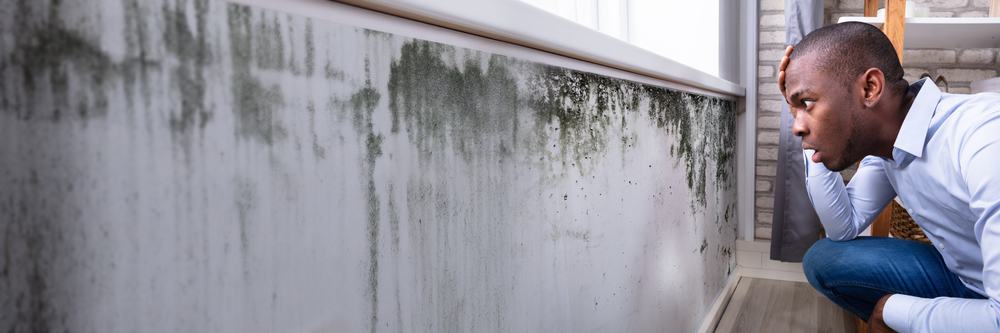
Ronkonkoma sits on top of one of the highest water tables on Long Island. Lake Ronkonkoma — the largest lake on the island — is a groundwater lake, which means the water level beneath your neighborhood moves with the seasons. Every time it rains hard, every time the snow melts in March, that water table rises and pushes against your foundation. For homes built in the 1960s and 70s — which is most of Ronkonkoma — that means basement moisture isn’t a fluke. It’s a structural reality.
The problem with moisture is that it doesn’t announce itself. It works quietly, inside wall cavities, under finished flooring, behind the drywall in a basement bedroom someone converted twenty years ago. By the time you smell something or see a dark spot, mold has usually been there for a while. A thorough mold inspection in Ronkonkoma catches what a flashlight and a quick look around won’t — and gives you real answers, not guesses.
What changes after a proper inspection isn’t just peace of mind. It’s clarity. You know whether you have an active mold problem or a moisture risk that hasn’t turned yet. You know what your insurance company needs if you’re filing a claim. You know what to disclose — or what to fix — before a real estate closing. That’s what an inspection is actually worth.
We’ve been working in Suffolk County for over three decades. Not a franchise. Not a company that showed up last year with a Google ad. A real restoration company, based in West Babylon, that has been responding to water damage and mold situations across Long Island — including Ronkonkoma — since before most of our current customers bought their homes.
Our owner, Richard Peterson, holds active New York State licenses in both mold assessment and mold remediation — verifiable directly through the NY Department of Labor. That dual licensing matters because New York law requires them separately, and not every company operating in the Ronkonkoma area holds both. Every technician on our team carries IICRC certification, which is the industry’s recognized standard for mold and restoration work. That’s not just the owner — that’s every person who shows up at your door.
From the Lakeland neighborhood to the Lake Hills area north of the expressway, we know the housing stock in Ronkonkoma. We know what 1970s construction looks like from the inside, and we know what decades of Suffolk County humidity does to a home that wasn’t built with modern moisture management in mind.
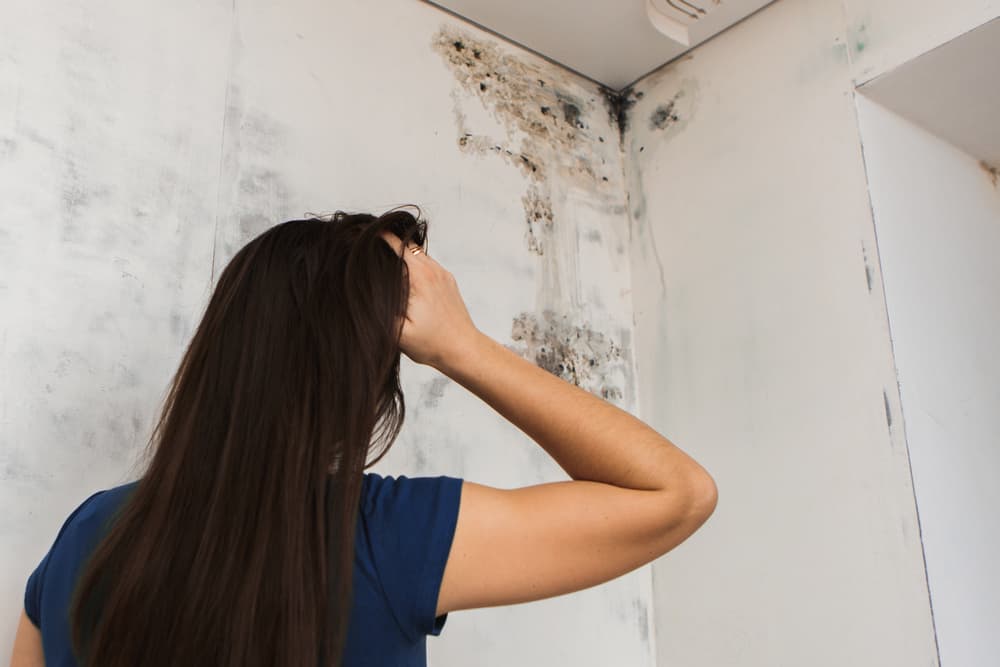
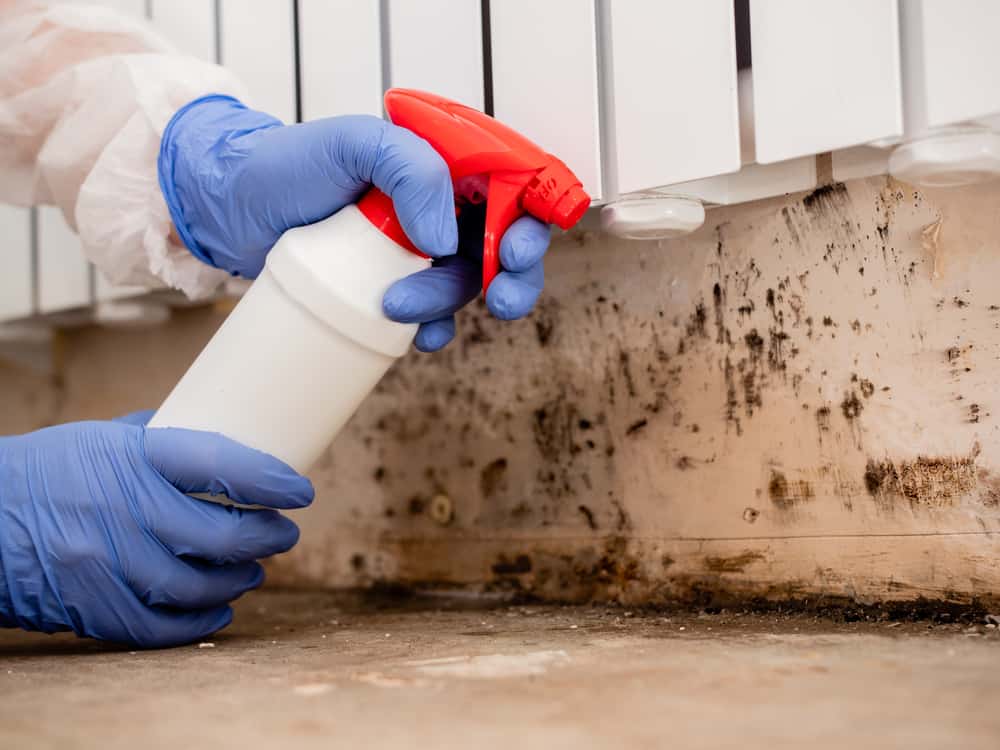
The inspection starts with air testing — pulling airborne spore samples from inside the home and comparing them against an outdoor baseline. This matters because elevated indoor spore counts can indicate active mold colonization even when there’s nothing visible on the walls. In Ronkonkoma’s older housing stock, where finished basements and converted living spaces are common, this step alone catches problems that visual inspections miss entirely.
From there, any surfaces showing visible growth or discoloration get swab-sampled and sent to an accredited independent laboratory for analysis. All results come from a third-party lab — not our own assessment — which keeps the findings objective and legally defensible. If you’re dealing with an insurance claim after a basement flood, or you’re a buyer trying to close on a home near the Ronkonkoma LIRR station, that documentation is what actually holds up.
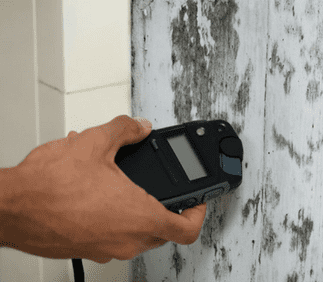
We also use infrared thermal imaging to detect moisture hidden inside walls, under floors, and above ceilings. This is where the inspection goes beyond what most companies offer. Moisture that hasn’t turned to visible mold yet still shows up as a temperature differential on thermal imaging — and finding it early is the difference between a manageable remediation and a full gut job. The inspection wraps up with a comprehensive written report: what was found, where it is, what the lab results show, and what the recommended next steps are in plain language.
Ready to get started?
A mold inspection in Ronkonkoma, NY through First Response covers the full picture — not just a walkthrough. Air sampling, surface swab testing, moisture measurement with calibrated meters, water intrusion tracing, infrared thermal imaging, and a written report with lab results and recommended remediation steps. Every sample goes to an accredited lab. Every finding gets documented with photographs. You receive a report you can actually use — for your insurance company, your real estate attorney, or your contractor.
For residential homeowners in Ronkonkoma — whether you’re in a single-family home in Lakeland, a cape cod in Lake Hills, or a property near Veterans Memorial Highway — the inspection is designed around the specific conditions of this area. That means paying close attention to basements, crawl spaces, and attic spaces in post-war construction, where moisture barriers were rarely part of the original build and where decades of Suffolk County humidity have had time to do their work.
For commercial clients — businesses occupying space near MacArthur Airport, tenants moving into the Station Yards development, or companies operating out of older commercial buildings along the Route 454 corridor — we also provide commercial mold inspection and indoor air quality testing. New construction isn’t immune to mold, and a pre-occupancy inspection before employees and equipment move in is a straightforward way to protect your investment from day one.
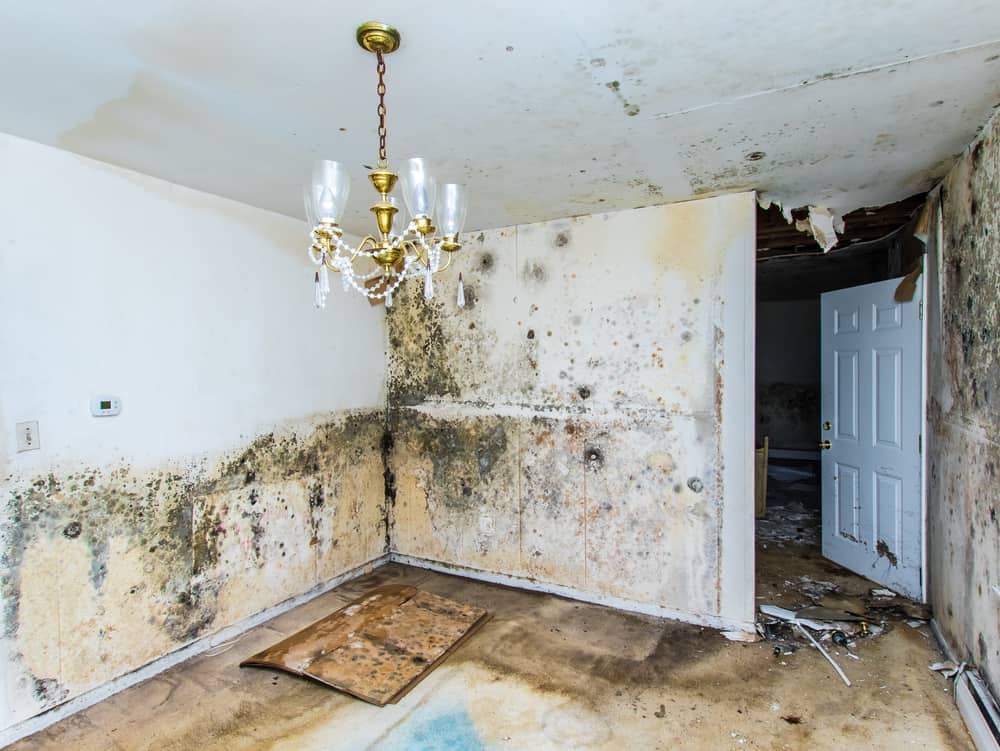
It comes down to geography and age. Ronkonkoma sits adjacent to Lake Ronkonkoma, which is a groundwater lake — meaning it reflects the level of the regional water table, not surface runoff. That water table is naturally high here, and when it rises after heavy rain or snowmelt, it pushes against the foundation walls of homes throughout Ronkonkoma. Most of Ronkonkoma’s housing stock was built in the 1960s and 1970s, well before modern vapor barriers and moisture management standards were part of residential construction. That combination — high hydrostatic pressure and aging foundations — creates chronic basement moisture conditions that are ideal for mold growth.
The other factor is time. Slow leaks from aging plumbing, inadequate attic ventilation in post-war ranch homes, and HVAC ductwork running through unconditioned spaces can all introduce moisture gradually — often without any visible signs until mold is already established. A professional mold inspection that includes infrared thermal imaging and air testing catches these issues before they become major remediation projects.
For most residential homes in Ronkonkoma, a professional mold inspection typically runs between $300 and $800 depending on the size of the home and the scope of testing involved. That range reflects the local market and accounts for the additional steps — air sampling, surface swab testing, lab analysis, and infrared imaging — that a thorough inspection requires. A visual-only walkthrough will cost less, but it also won’t catch mold behind walls, under flooring, or inside ductwork.
The more useful comparison isn’t inspection cost versus nothing — it’s inspection cost versus remediation cost. Full mold remediation in a Suffolk County home can run anywhere from a few thousand dollars to well over $10,000 depending on how far the problem has spread. Catching it early, before it’s colonized framing or subfloor materials, is almost always significantly less expensive. For buyers closing on a home near the Ronkonkoma LIRR station or anywhere in the 11779 ZIP code, that $300–$800 inspection is a straightforward cost against a $600,000 purchase.
Mold testing — or mold assessment — is the inspection process: identifying whether mold is present, where it is, what type it is, and how extensive the growth is. Mold remediation is the physical removal and cleanup process. New York State law actually requires these two functions to be performed by separately licensed professionals — a mold assessor and a mold remediator — and the assessment must be completed before remediation begins. It also requires a post-remediation clearance test to confirm the work was done correctly.
Whether you need both depends on what the inspection finds. Some homes have moisture risk but no active mold growth — in which case the inspection gives you the information you need to address the source before it becomes a problem. Others have confirmed mold that requires professional remediation. We hold both the NY State Mold Assessor License and the Mold Remediator License, so if your Ronkonkoma home does need remediation after the inspection, you’re not starting over with a new company.
Yes, and it happens more than people expect. The Station Yards development near the Ronkonkoma LIRR station is bringing significant new construction to the area, and new buildings are not automatically mold-free. Moisture trapped inside wall assemblies during construction — from wet lumber, concrete that hasn’t fully cured, or inadequate ventilation during the building process — can create mold conditions inside brand-new structures before anyone moves in. This is particularly relevant for commercial tenants leasing retail or office space in newly built or recently renovated buildings in Ronkonkoma.
Renovations on existing Ronkonkoma homes carry similar risk. When walls are opened up during a remodel, old moisture damage that was hidden for years gets exposed — and if the renovation doesn’t address the underlying moisture source before closing everything back up, you’re sealing the problem in. A pre-occupancy or post-renovation mold inspection is a straightforward step that protects your investment before it becomes a costly surprise.
New York State has required all mold assessors and mold remediators to hold active licenses issued by the NY Department of Labor since January 1, 2016. These are two separate licenses — one for assessment and one for remediation — and any company performing mold work in Ronkonkoma or anywhere in New York without them is operating outside the law. The good news is that these licenses are publicly verifiable. You can look up any contractor’s license status directly on the NY DOL’s online contractor license search tool before you hire anyone.
When you’re comparing mold inspection companies in Suffolk County, asking for license numbers and verifying them takes about two minutes and tells you immediately whether a company is operating legally. Some companies that appear in local search results for Ronkonkoma are regional or out-of-area operators whose license status may not be immediately clear. We hold both licenses — assessment and remediation — and our credentials are verifiable through the NY DOL.
The best time is whenever you have a reason to suspect a problem — but there are seasons in Ronkonkoma where demand spikes for good reason. Spring is the most common trigger. When the snow melts and the spring rains hit, the water table rises and basement seepage events increase across Ronkonkoma. Homeowners who find water in their basement in March or April are often calling for mold inspections by May, once they realize the moisture didn’t just dry up on its own.
Summer brings a different issue — high humidity. Central Long Island gets genuinely humid in July and August, and basements without active dehumidification become mold incubators during those months. Fall and winter carry their own risks: nor’easters, frozen pipes, and storm-related water intrusion. The practical answer is that if you’ve had any water event in the last six to twelve months — flooding, a leak, visible condensation, or a persistent musty smell — don’t wait for the calendar to tell you it’s time. Mold doesn’t follow a seasonal schedule, and the longer it’s left, the more it spreads.
Useful Links
Other Services we provide in Ronkonkoma