
Mold Remediation in Asharoken, NY
When the Water Comes In, the Clock Starts
Hear from Our Customers
Certified Mold Remediation in Asharoken
Living on the isthmus means your home is working against moisture from both sides, every single day. Northport Bay to the south, Long Island Sound to the north, and a humidity level that rarely gives your walls, crawl space, or attic a real break. When mold takes hold in that environment, surface cleaning doesn’t cut it. The moisture source has to be found and addressed, or you’re right back where you started by next season.
What changes after proper mold remediation is the air quality, the smell, and the confidence that the problem is actually gone. For the older homes that line Asharoken Avenue many built between the 1940s and 1960s, before vapor barriers and modern moisture management were standard that means a thorough inspection, real containment, complete removal, and a clearance report that documents the outcome. Not a quick spray and a handshake.
For homeowners protecting a high-value waterfront property in Asharoken, that documentation matters. Whether you’re staying put or eventually selling, a verified remediation record is the difference between a clean transaction and a complicated one.
Mold Remediation Companies in Asharoken, NY
We’ve been working on Long Island’s North Shore for over three decades. That includes the post-Sandy aftermath, the nor’easter cleanups, and the slow-build moisture problems that show up in mid-century homes throughout Asharoken and the surrounding Northport and Eatons Neck corridor year after year.
Richard Peterson, our owner, holds personal New York State licenses in both mold assessment and mold remediation not a company-level filing, but his own individual credentials, verifiable through the NYS Department of Labor. Every technician on our team is IICRC-certified, which means the people physically working in your Asharoken home have been formally trained and tested to industry standards, not just handed a company shirt.
We’re not a franchise. There’s no regional call center fielding your emergency. When you call First Response Restoration, you’re reaching a locally operated Long Island company that knows what coastal properties in Suffolk County actually deal with and how to fix it completely.
The Mold Remediation Process in Asharoken
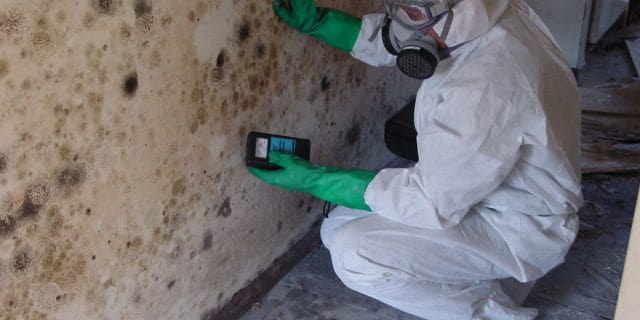
It starts with a thorough assessment. Before anything is touched, the scope of the problem needs to be understood not just what’s visible, but what’s hiding behind walls, under flooring, in the crawl space, or in the attic. In Asharoken’s coastal environment, mold often grows in places that aren’t immediately obvious, especially in homes where humidity has been working on the structure for years. Moisture mapping is part of this step, not an afterthought.
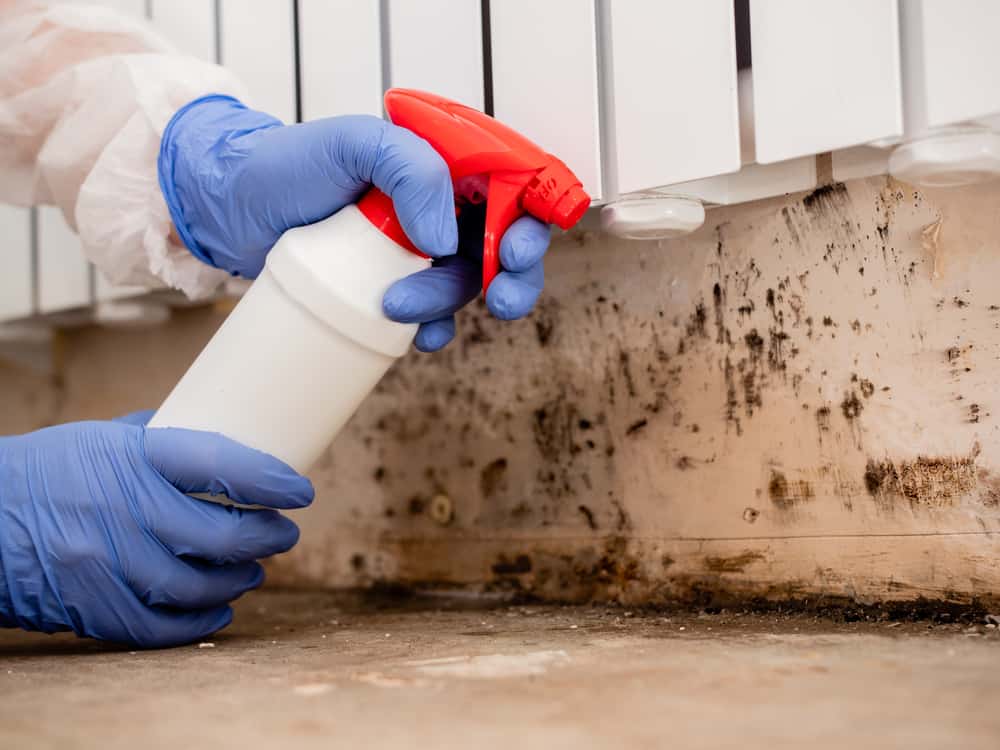
Once the scope is clear, we put proper containment in place. This isolates the affected area so that disturbing the mold during removal doesn’t spread spores through the rest of the house. HEPA filtration runs throughout the process. We remove contaminated materials, apply antimicrobial treatment to affected surfaces, and dry the area to the moisture levels required before anything is closed back up.
Because Asharoken is an incorporated village with its own building permit authority, any structural work involved drywall removal, framing repair may require a permit through the village’s Superintendent of Buildings. We’re familiar with that layer of the process. After the remediation work is complete, independent air quality testing confirms that spore counts are back to normal, and you get a written clearance report. That’s the finish line not when our crew packs up, but when the test comes back clean.
Ready to get started?
Black Mold Remediation in Asharoken, NY
We handle the full range of mold remediation in Asharoken, NY everything coastal properties actually deal with. Crawl space mold remediation is one of the most common needs here the combination of a shallow water table, tidal influence from both surrounding water bodies, and older foundation designs creates chronic moisture conditions below the living space. Attic mold remediation is equally common in the mid-century homes throughout Asharoken, where ventilation designs that were standard in 1955 trap moisture in today’s high-humidity coastal environment.
Black mold remediation, basement mold remediation, post-storm mold cleanup we handle all of it. And because we include an integrated cleaning division, the work doesn’t stop at the structural remediation. Surface decontamination, content cleaning, and final restoration are handled by our same team, under the same roof, on the same job. You’re not coordinating a second contractor after we leave.
For Asharoken homeowners navigating insurance claims whether that’s a standard homeowner’s policy, a flood insurance claim through FEMA’s National Flood Insurance Program, or both we help with the documentation that adjusters actually need. The clearance report, the scope of work, the before-and-after records. That’s part of the job, not a separate conversation.
Why does mold keep coming back in my Asharoken home after treatment?
If mold is returning after a previous treatment, the moisture source was never fully addressed. In Asharoken, that’s an especially common scenario because the conditions that produce mold coastal humidity, a high water table with tidal influence from Northport Bay and Long Island Sound, and older construction without modern vapor barriers don’t go away between jobs. Surface treatment alone will slow things down temporarily, but it won’t stop the cycle.
Real mold remediation identifies where the moisture is entering or accumulating and corrects that pathway. For crawl space mold in Asharoken homes, that often means encapsulation in addition to removal. For attic mold, it typically involves correcting the ventilation conditions that allowed condensation to build up in the first place. The remediation work and the moisture correction have to happen together one without the other is a short-term fix in a long-term environment.
How quickly can mold grow after flooding in Asharoken?
Mold can begin growing within 24 to 48 hours of water intrusion and in a coastal environment like Asharoken’s, where ambient humidity is already elevated from the surrounding water on both sides of the isthmus, that window can be even tighter. After a nor’easter or storm surge event overtops the dunes on the Long Island Sound side of Asharoken Avenue, the conditions inside an affected home are ideal for rapid mold growth: wet materials, warm temperatures, and high ambient moisture in the air.
The practical takeaway is that waiting to see if things dry out on their own is a risk. If water has entered the structure not just pooled on a hard surface, but reached drywall, framing, insulation, or subfloor professional drying and assessment should happen as quickly as possible. We operate 24/7 specifically because the post-storm window in communities like Asharoken doesn’t wait for business hours.
Does homeowner's or flood insurance cover mold remediation costs in Asharoken?
It depends on the cause and how the claim is documented. Standard homeowner’s insurance typically covers mold remediation when it results from a sudden, covered event like a burst pipe or storm-related water intrusion but not from long-term neglect or gradual moisture buildup. Flood insurance through FEMA’s National Flood Insurance Program, which many Asharoken homeowners carry given the village’s severe flood risk profile, covers direct flood damage but has its own rules about what qualifies as mold-related loss.
What matters most in either case is documentation. Adjusters need a clear record of the damage, the cause, the scope of work, and the outcome. We help with that documentation process not just handing you a bill and walking away, but making sure the paperwork reflects what actually happened in a format that insurance companies recognize. For homeowners dealing with both a flood claim and a homeowner’s claim simultaneously, that coordination support makes a real difference.
What is the difference between mold remediation and mold removal?
Mold removal is a term that gets used loosely, and it can be misleading. The idea that mold can be fully “removed” from a home isn’t quite accurate mold spores exist naturally in the air everywhere, indoors and out. What remediation actually does is bring indoor mold levels back down to normal, safe concentrations, remove the visible growth and contaminated materials, treat affected surfaces, and correct the conditions that allowed mold to develop in the first place.
In practical terms, mold remediation is the more complete and accurate description of what a properly done job looks like. It includes containment, HEPA filtration, removal of affected materials, antimicrobial treatment, moisture correction, and post-remediation verification through independent air quality testing. For Asharoken homeowners particularly those in older homes with complex moisture histories the distinction matters because a “removal” that skips any of those steps is likely to result in mold returning within a season or two.
Do I need a permit for mold remediation work in Asharoken, NY?
It depends on the scope of the work. If mold remediation involves removing and replacing drywall, repairing or replacing structural framing, or making other changes to the building structure, a building permit from Asharoken’s village government is typically required. Asharoken is an incorporated village with its own Superintendent of Buildings who oversees permit issuance and inspections separate from the Town of Huntington’s permit process, which applies to unincorporated areas of the town but not to the village itself.
On top of the local permit requirement, New York State’s Article 32 of the Labor Law requires that all mold remediation contractors hold valid state-issued licenses. This applies throughout New York, including in Asharoken. Working with a contractor who isn’t properly licensed under Article 32 creates both legal exposure and practical risk unlicensed work may not be recognized by your insurance company or accepted by a future buyer’s home inspector. First Response Restoration carries all required state licensing, and those credentials are verifiable through the NYS Department of Labor.
How do I know if my Asharoken home has hidden mold I can't see?
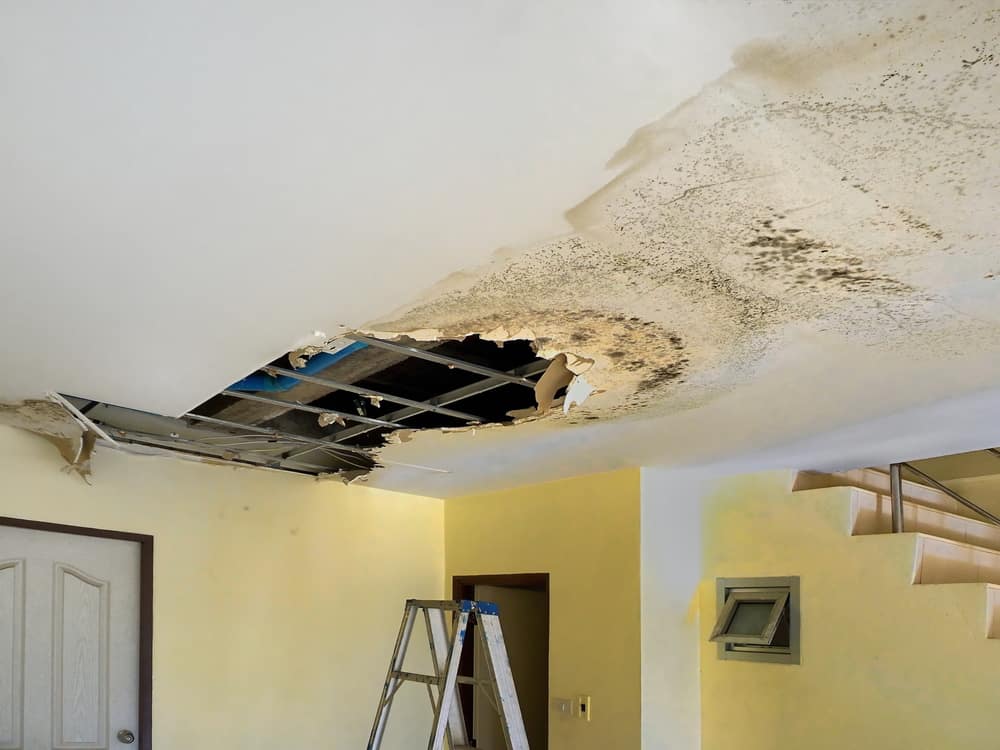
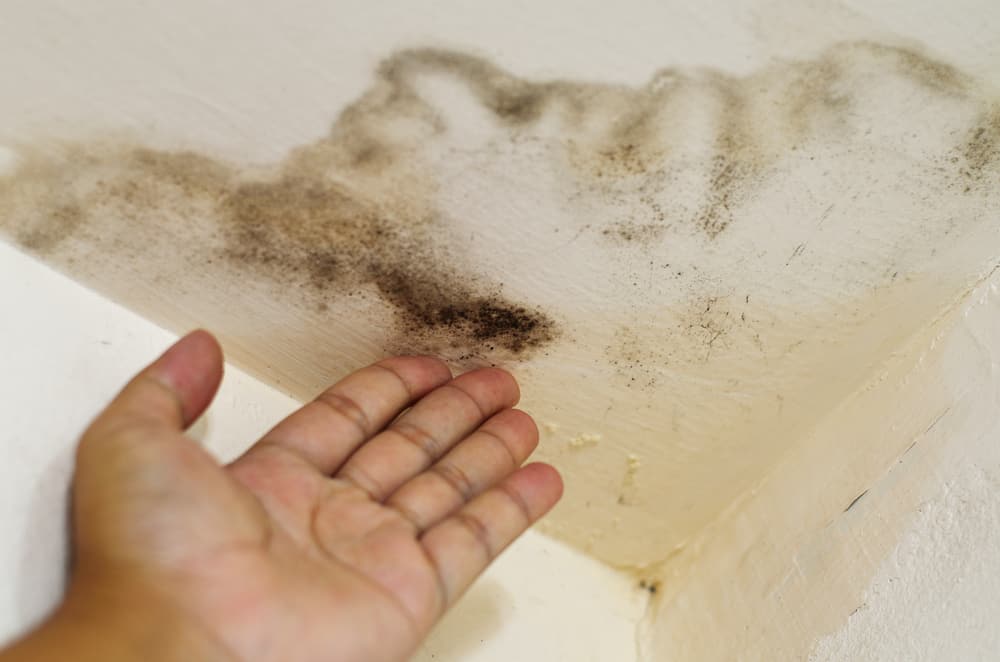
The most common signs are a persistent musty smell that doesn’t go away after cleaning, unexplained allergy symptoms or respiratory irritation that improve when you leave the house, visible water staining on walls or ceilings without an obvious active leak, and a history of flooding or water intrusion even if it seemed to dry out at the time. In Asharoken specifically, homes that experienced storm surge during Sandy or significant flooding during past nor’easters should be considered higher-risk for hidden mold, particularly in crawl spaces, wall cavities, and attic spaces where moisture can linger long after the visible water is gone.
The only way to know for certain is a professional assessment that includes moisture mapping not just a visual inspection of surfaces. Mold grows where moisture accumulates, and in a home surrounded by water on two sides, that can happen in places that aren’t obvious until they’re tested. An assessment gives you a clear picture of what’s actually there, so you’re making decisions based on real information rather than guessing.
Useful Links
Other Services we provide in Asharoken