
Mold Remediation in Bellerose Terrace, NY
Pre-War Homes, Modern Mold Problems Solved for Good
Hear from Our Customers
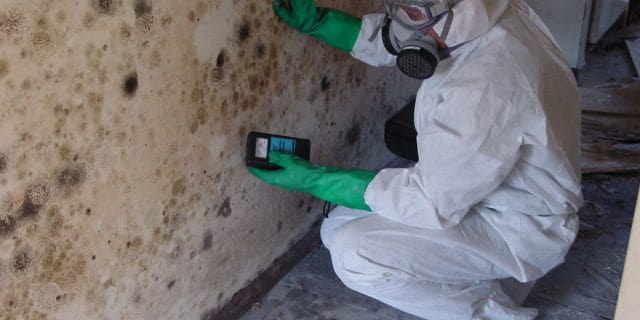
Basement Mold Remediation, Nassau County
Mold in a Bellerose Terrace home is not just a cosmetic issue. It is a health issue, a property value issue, and in attached homes and row houses potentially your neighbor’s problem too. When mold is handled correctly, you get your home back. Clean air. No visible growth. No musty smell creeping up from the basement. And no wondering whether what you are breathing is safe for your kids.
The pre-war housing stock that defines Bellerose Terrace most of it built around 1938 was never designed with modern moisture control in mind. Stone and poured concrete foundations. Minimal insulation. Older plumbing that seeps slowly before anyone notices. When mold takes hold in materials like that, surface treatment alone does not work. The outcome you actually want is remediation that goes into the wall cavity, addresses the moisture source, and leaves nothing behind to regrow.
Bellerose Terrace sits within the Hook Creek Watershed, which means groundwater behavior here is different from drier parts of Nassau County. After a nor’easter or a sump pump failure and both happen regularly in this neighborhood moisture can push through foundation cracks fast. A median home value of $562,700 is on the line. A mold problem left unaddressed can erase 20 to 37 percent of that. Fixing it properly the first time is not an expense. It is protection.
Certified Mold Remediation Companies, Nassau County
We have been working in Nassau County for close to three decades. That is not a tagline it means we have been inside hundreds of pre-war homes throughout the Town of Hempstead, including the dense, attached housing that lines the streets of Bellerose Terrace. We know what these homes look like behind the walls. We know where moisture hides and how far mold can travel in a shared structure.
Every technician who walks into your home is individually IICRC-certified. Not just the company every person on the crew. That matters in a state where New York’s Article 32 mold law requires licensed professionals for all assessment and remediation work, and where plenty of operators either do not know the law or choose to ignore it.
When the job is done, we do not leave you with a gutted wall and a list of contractors to call. We handle reconstruction too drywall, insulation, whatever was removed during remediation. One company, start to finish. That is the difference when you are dealing with a pre-war home in Bellerose Terrace, where getting it wrong has real consequences for you and your neighbors.
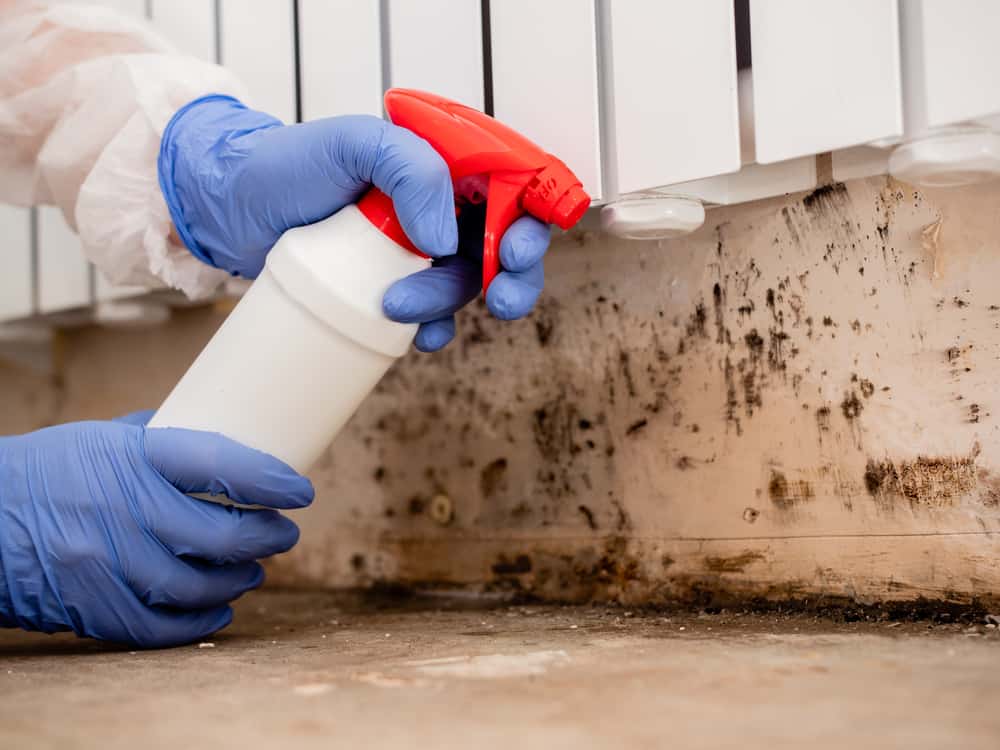
Professional Mold Remediation Process, Bellerose Terrace
It starts with a 13-point mold inspection. Air sampling, swab testing, infrared imaging to find moisture behind walls you cannot see, and full photographic documentation. Lab results come back within two to three business days with a written report not a verbal opinion, a written report that tells you exactly what is present, how severe it is, and what remediation requires. That documentation also becomes the foundation of any insurance claim, which matters when the mold followed a storm or a sump pump failure that your homeowners policy may cover.
Under New York State’s Article 32, mold assessment and mold remediation must be performed by two separate, independently licensed companies. That law exists to protect you from the “free inspection” scam where one company inflates the problem and sells you the fix. We operate in full compliance the assessment is independent, and the remediation plan is written before any work begins.
Once remediation starts, our crew arrives with everything already on the truck air movers, industrial dehumidifiers, moisture monitors, containment materials. Work begins immediately. In Bellerose Terrace’s attached homes and row houses, proper containment is especially important because mold spores do not respect shared walls. After remediation is complete, independent post-clearance testing confirms the job is done. Then reconstruction begins replacing whatever was removed so your home is whole again, not just treated.
Ready to get started?
Black Mold Remediation Services, Bellerose Terrace NY
Mold in Bellerose Terrace shows up in predictable places basements with aging foundations that were never waterproofed, attics with minimal insulation where condensation builds through the winter, crawl spaces that have been sealed up and ignored for decades. It also shows up in less obvious places: inside wall cavities after a slow pipe leak, behind bathroom tile in homes with original plumbing, and in shared attic spaces that span multiple attached units. We handle all of it.
Basement mold remediation in pre-war homes here often involves more than cleaning visible growth. It means identifying whether the foundation is the moisture source, whether the drainage system is adequate, and whether the materials older wood framing, plaster, original insulation can be saved or need to come out. Attic mold remediation follows a similar logic: the mold is a symptom, and the ventilation or insulation issue driving it has to be addressed at the same time. Crawl space mold remediation in this neighborhood’s older housing stock frequently requires encapsulation work after the mold is cleared, so the moisture problem does not return with the next rainy season.
Emergency mold remediation is available 24 hours a day, seven days a week. If a sump pump failed overnight during a storm and you are looking at standing water in a basement that has not been updated since the Truman administration, you do not wait until Monday morning. Call (516) 698-1776 that is a real Nassau County number, answered by people who know Bellerose Terrace.
Does mold spread between attached homes in Bellerose Terrace's row houses?
It can, and this is one of the more specific risks in Bellerose Terrace that does not get talked about enough. In attached homes and row-house construction which makes up a significant portion of the housing stock here shared wall cavities, shared attic spaces, and connected crawl spaces can allow mold spores to migrate from one unit to an adjacent one. You might have a neighbor with a basement moisture problem you do not even know about, and spores can travel through gaps in shared structural elements.
This is one of the reasons proper containment during remediation matters so much in this type of construction. Professional mold remediation in attached homes requires negative air pressure containment to prevent cross-contamination during the work itself. If you are discovering mold in a shared-wall area of your Bellerose Terrace home, it is worth having the full scope assessed not just the visible surface because what is on your side of the wall may not tell the complete story.
How much does mold remediation typically cost in Nassau County, NY?
The honest answer is that it depends on scope, and scope in Bellerose Terrace’s pre-war homes can vary significantly. A contained mold problem in a single area a bathroom, a section of basement wall typically runs in the range of $1,500 to $4,000. Larger jobs involving multiple rooms, structural materials like wood framing or plaster, or significant moisture source repairs can reach $10,000 to $30,000 for a full remediation and reconstruction.
What drives cost up in older Bellerose Terrace homes is the material itself. Pre-war construction used wood framing, plaster walls, and original insulation that absorbs moisture differently than modern drywall. When those materials are contaminated, they often need to come out rather than be treated in place and that adds to the scope. The good news is that many mold situations in Bellerose Terrace follow insurable events like sump pump failures, pipe bursts, or storm water intrusion. If the mold has a covered water damage origin, your homeowners insurance may cover a meaningful portion of the cost. We document everything in a way that supports that claim from day one.
What is the difference between mold remediation and mold removal in Bellerose Terrace?
Mold removal implies you can take every mold spore out of a building and that is not realistic. Mold spores exist naturally in the air everywhere, including inside every home in Bellerose Terrace. The goal is not zero spores. The goal is getting indoor mold levels back to a normal, non-harmful range and eliminating the active growth that is damaging your home and your air quality.
Mold remediation is the accurate term for that process. It involves containing the affected area, removing contaminated materials that cannot be cleaned, treating surfaces with appropriate antimicrobial agents, filtering the air with HEPA equipment, and then verifying through post-clearance testing that the levels are back in the normal range. Remediation also addresses the moisture source which is the part that actually prevents it from coming back. In a pre-war home with an aging foundation or older plumbing, skipping that step means the mold returns within months. Any company that promises complete mold removal without addressing moisture is either inexperienced or not being straight with you.
Does New York State law affect how mold remediation works in Bellerose Terrace?
Yes, and it is worth understanding before you hire anyone. New York State’s Article 32 of the Labor Law which has been in effect since January 1, 2016 requires that mold assessment and mold remediation be performed by two separately licensed, independent companies. The same contractor cannot inspect your home, write the remediation plan, and then do the remediation work. That separation exists specifically to protect homeowners from inflated scopes and self-serving assessments.
What this means practically is that before any remediation work begins in your Bellerose Terrace home, a licensed mold assessor independent from the remediation company must evaluate the property and produce a written remediation plan. After the work is done, independent post-clearance testing must confirm the results. If a company offers you a free inspection bundled with a remediation quote in the same conversation, they are either unaware of the law or ignoring it. Either way, that is a company to avoid. We operate in full compliance with Article 32 on every job.
Can I stay in my home during mold remediation in Bellerose Terrace?
It depends on the location and scope of the work. For a contained remediation in a single area a basement section or a bathroom many homeowners stay in the home during the process, particularly if the affected area can be properly sealed off from living spaces. Our crew uses negative air pressure containment and HEPA filtration to prevent spores from spreading during the work, which makes it manageable in a lot of cases.
For larger jobs involving multiple rooms, significant structural material removal, or mold in HVAC systems where spores could circulate through the whole house, temporary relocation is usually the safer call especially if you have children or anyone with respiratory sensitivities. In Bellerose Terrace’s attached homes, the scope question matters even more because containment has to account for shared walls and shared air pathways. The assessment report will tell you what you are dealing with, and at that point you will have a clear picture of whether staying is reasonable or whether a few nights elsewhere makes more sense.
How do I know if mold in my Bellerose Terrace basement is a health risk?
The honest answer is that you cannot tell by looking at it. Color is not a reliable indicator not all black mold is the toxic Stachybotrys strain, and plenty of mold species that look harmless can still trigger respiratory symptoms, allergic reactions, and chronic sinus issues, especially in children and anyone with asthma. The only way to know what you are dealing with is air sampling and lab analysis.
What you can pay attention to are the symptoms. If people in your home are experiencing persistent coughing, frequent headaches, worsening allergies, or a general feeling of being run-down that improves when they leave the house, mold exposure is worth investigating. In Bellerose Terrace, where basements in pre-war homes are often semi-finished and used as living space, the exposure risk is higher than in homes where the basement is simply a utility area. A basement that smells musty after a wet season especially following the kind of groundwater pressure this neighborhood sees during nor’easters should be tested, not watched. The cost of a proper inspection is a fraction of what remediation costs if you wait.
Useful Links
Other Services we provide in Bellerose Terrace