
Mold Remediation in Brookhaven, NY
From the Sound to the Bay, Brookhaven Homes Deserve Better Than a Band-Aid Fix
Hear from Our Customers
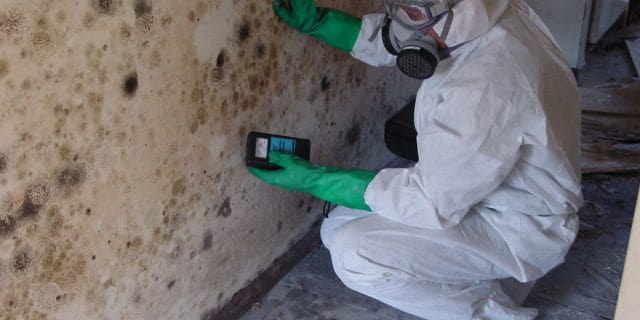
Certified Mold Remediation Brookhaven, NY
When mold is handled correctly, the first thing you notice is that the problem doesn’t come back. That sounds obvious, but it’s not the experience most Brookhaven homeowners have had. Whether you’re in a post-war ranch in Coram where the basement has flooded more times than you can count, or a north shore home in Stony Brook where crawl space moisture just quietly builds every summer the real fix starts with understanding why the mold grew in the first place.
Brookhaven’s geography creates conditions that most remediation companies treat too generally. The south shore communities Mastic Beach, Shirley, East Patchogue are still carrying moisture damage that traces back to Sandy, when more than one in five homes in Mastic Beach alone took on ocean water. On the north shore, Long Island Sound humidity works its way into crawl spaces and older framing year after year. Inland, the Pine Barrens microclimate means groundwater moves in ways that surprise homeowners who’ve never had a basement issue before. A proper remediation accounts for all of that.
When the work is done right, you get a home that clears air quality testing, documentation your insurance company will actually accept, and the peace of mind that comes from knowing the job was verified not just finished.
Mold Remediation Companies Brookhaven, NY
We’ve been working on Long Island for approximately 31 years, which means we were here for every nor’easter that pushed water into south shore basements in Brookhaven, every post-Sandy remediation surge, and every spring flood season that overwhelmed drainage systems in Farmingville and Medford. This isn’t a franchise with a local phone number it’s a company that built its reputation through actual work in actual homes across Suffolk County.
Our owner, Richard Peterson, holds personal New York State licenses in both mold assessment and mold remediation under Article 32 of the Labor Law licenses that are individually issued, individually verified, and attached to his name specifically. Every technician on our team is IICRC-certified, which means the people physically working in your Brookhaven home have been formally trained and tested, not just briefed on the job site.
From Bellport to Port Jefferson, from Yaphank to Sound Beach, we’ve seen what Brookhaven’s moisture environment does to homes over time and we know how to fix it in a way that holds.
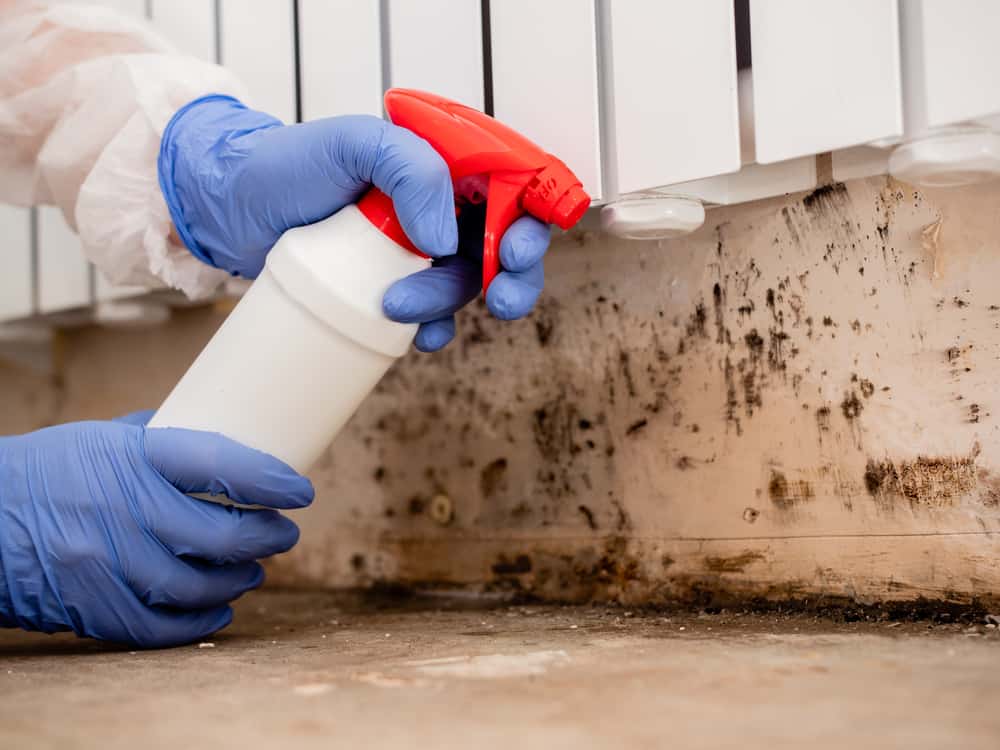
Professional Mold Remediation Process Brookhaven, NY
It starts with a thorough assessment. Before anything is removed or treated, we identify the moisture source because skipping that step is exactly why mold comes back after a previous remediation. In Brookhaven, that source could be groundwater movement near the Pine Barrens, a drainage failure in an older Selden neighborhood, or chronic humidity infiltrating a crawl space on the north shore. We map where moisture is present, not just where mold is visible.
Once we understand the source, containment goes up. This keeps spores from spreading to unaffected areas of your home while the work is being done a step that’s required under New York State’s Article 32 standards and one that separates a proper remediation from a surface-level cleanup. We remove contaminated materials, apply antimicrobial treatment to affected surfaces, and clean the work area completely. We handle the full cycle, including post-remediation cleaning, so you’re not coordinating a second crew after the restoration work is finished.
The job closes with post-remediation air quality verification. You get a clearance report that confirms mold spore counts are back within normal range documentation that works for insurance claims, real estate transactions, and your own peace of mind. In a market where median home values in Brookhaven are approaching $559,000, that documented proof matters.
Ready to get started?
Black Mold Remediation Services Brookhaven, NY
Mold remediation in Brookhaven isn’t one-size-fits-all and our service isn’t either. Basement mold remediation in the dense inland neighborhoods of Coram, Medford, and Holbrook typically involves post-war construction that wasn’t built with modern vapor barriers. Attic mold remediation in north shore homes near Mount Sinai or Miller Place often ties back to inadequate ventilation combined with Long Island Sound humidity. Crawl space mold remediation is one of our most common calls from the Port Jefferson and Setauket area, where older home foundations sit close to grade and moisture has nowhere to go. Each of these scenarios requires a different approach and we’ve worked through all of them.
For south shore homeowners in communities like Mastic Beach, Shirley, and East Patchogue many of whom are dealing with recurring issues that trace back to Sandy flooding the scope of work often includes a deeper moisture investigation before remediation begins, because storm-related water intrusion tends to reach wall cavities and subfloor systems that aren’t obvious on a surface inspection. We offer emergency mold remediation 24/7 for situations where water intrusion is active or recent.
All work is performed in full compliance with New York State Article 32 of the Labor Law. We assist with insurance documentation from start to finish a practical advantage in a town where homeowner claims related to water and mold damage are anything but uncommon. If the Town of Brookhaven’s storm damage grant program applies to your situation, we can discuss that as well.
Does mold remediation in Brookhaven, NY require a licensed contractor by law?
Yes and this is one of the most important things to verify before hiring anyone. Under New York State Article 32 of the Labor Law, which has been in effect since January 1, 2016, it is unlawful for any person to perform mold assessment, mold remediation, or mold abatement work in New York without a valid state-issued license. These are individual licenses not company-wide certifications and they require specific training, testing, and ongoing continuing education to maintain.
In Brookhaven’s local search results, you’ll find national franchise landing pages, out-of-area lead-generation websites, and operators whose actual licensure status isn’t easy to verify. That matters because hiring an unlicensed contractor can expose you to legal liability, potential denial of your insurance claim, and the real risk that improper remediation spreads mold spores rather than containing them. Richard Peterson, our owner, holds personal NYS licenses in both mold assessment and mold remediation verifiable through the NYS Department of Labor. Ask any contractor you consider for their license number and look it up before work begins.
How much does mold remediation typically cost for a Brookhaven homeowner?
For most residential projects, professional mold remediation runs between $1,200 and $3,800, with a national average around $2,300. That range covers standard basement, crawl space, or contained area remediation. Larger scopes attic remediation, whole-floor water damage, or situations where mold has spread into wall cavities can reach $6,000 to $9,000 or more depending on square footage and material involvement.
In Brookhaven specifically, cost is often influenced by the extent of the moisture damage rather than the visible mold alone. South shore homes in Mastic Beach or Shirley that took on storm water may have moisture in subfloor systems and wall assemblies that aren’t apparent on a surface inspection which means the full scope isn’t always clear until the assessment is done. We provide written estimates before any work begins, so you know what you’re committing to upfront.
What's the difference between mold remediation and mold removal?
Mold removal typically refers to the physical act of cleaning or eliminating visible mold wiping it down, scrubbing a surface, or removing contaminated material. Mold remediation is a broader, more controlled process that includes identifying the moisture source, containing the work area to prevent cross-contamination, removing affected materials, applying antimicrobial treatment, and verifying the result through air quality testing. Remediation is the standard required under New York State’s Article 32 licensing law and for good reason.
The distinction matters practically because mold that is “removed” without addressing the moisture source will return. In Brookhaven, where homes range from 1950s-era ranch construction in Farmingville to older crawl space foundations on the north shore, the moisture source is often structural or environmental not something that gets fixed by cleaning a surface. True remediation treats the condition, not just the symptom. When you see the word “removal” used by a contractor, it’s worth asking specifically what their process includes and whether it meets Article 32 requirements.
Will my homeowner's insurance cover mold remediation in Brookhaven, NY?
It depends on the cause. Most standard homeowner’s insurance policies cover mold remediation when it results from a sudden, accidental covered event a burst pipe, storm-related water intrusion, or a roof leak from a covered peril. What policies typically exclude is mold that developed from long-term neglect, chronic moisture, or gradual seepage that wasn’t reported promptly. The line between those two scenarios isn’t always obvious, and how the damage is documented at the time of remediation directly affects whether a claim is approved or denied.
This is particularly relevant in Brookhaven’s south shore communities, where homeowners have been navigating insurance claims related to water damage since Sandy. We assist customers with insurance documentation throughout the process not as a legal service, but as a practical one. We document the damage in the format insurers require, which makes a real difference in how claims are processed. If you’re unsure whether your situation is covered, the first step is getting a proper assessment that clearly identifies the cause of the moisture that documentation is what your claim will ultimately rest on.
How do I know if I have black mold, and is it more dangerous than other types?
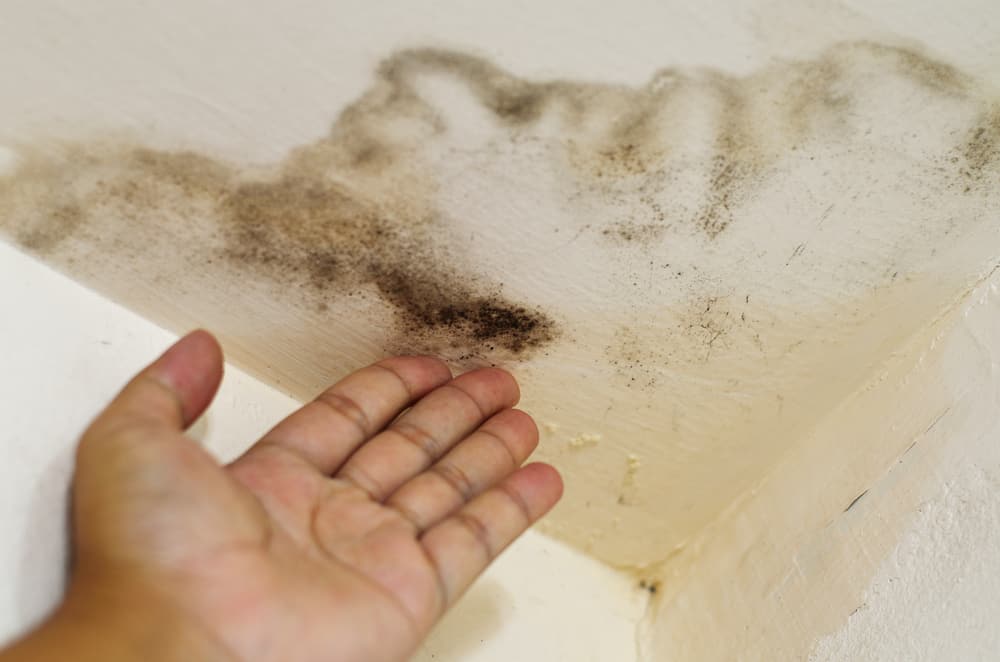
You can’t identify mold species by color alone black mold is a common term for Stachybotrys chartarum, but plenty of mold that appears black or dark green is a different species entirely, and some Stachybotrys growth isn’t visibly black. The only way to confirm what type of mold is present is through professional air sampling or surface testing. What matters more practically is that any mold growth in your home regardless of species indicates a moisture problem that needs to be addressed, and that elevated mold spore counts affect indoor air quality for anyone in the space.
That said, Stachybotrys does produce mycotoxins that are associated with more serious health effects, particularly for people with respiratory conditions, young children, or anyone with a compromised immune system. In Brookhaven, where many south shore homes experienced significant water intrusion during Sandy and not all of that damage was fully remediated, the conditions for Stachybotrys growth sustained moisture in cellulose materials like drywall and wood framing have been present in some homes for years. If you’re noticing persistent musty odors, visible dark growth, or respiratory symptoms that improve when you leave the house, those are reasons to get a professional assessment rather than wait.
Why does mold keep coming back even after I've already had it treated in my Brookhaven home?
Recurring mold after a previous remediation is almost always a moisture problem, not a mold problem. If the source of water or humidity that allowed mold to grow wasn’t identified and corrected before the mold was removed, the conditions that created it are still there and mold will grow again, often in the same location or nearby. This is the most common complaint among Brookhaven homeowners who’ve already paid for remediation once.
The south shore communities in Brookhaven carry a specific version of this problem. Homes in Mastic Beach, Shirley, and East Patchogue that were affected by Sandy flooding often had surface-level remediation done in the years that followed, but moisture that worked its way into subfloor systems, wall cavities, or crawl space framing wasn’t always fully addressed. That moisture doesn’t disappear on its own. Inland homes in Coram and Medford face a different version sump pump failures, cracked foundations, or drainage systems that can’t keep up during heavy spring rainfall. In both cases, the fix starts with a thorough moisture assessment that maps where water is actually entering the home, not just where mold is currently visible. We begin every job with that step because without it, remediation is temporary at best.
Useful Links
Other Services we provide in Brookhaven