
Mold Remediation in Garden City, NY
Garden City Homes Are Old Enough to Hide a Lot
Hear from Our Customers
Certified Mold Remediation Garden City NY
The air in your home feels different when the source is gone not just the surface, but the moisture problem feeding it. That’s the difference between a company that wipes down what’s visible and one that traces the problem back to where it started. For a home in Garden City’s Estates Section or Cathedral Section, where original plaster walls and cast iron plumbing are still part of the structure, that distinction matters more than it does almost anywhere else on Long Island.
Garden City’s housing stock is genuinely old. Roughly 37% of homes here were built before 1939, and those homes were constructed without modern vapor barriers, without sealed crawl spaces, and without the attic ventilation standards we use today. That’s not a criticism of the architecture these are beautiful, well-built homes. But it does mean moisture moves through them differently, and mold finds places to live that a newer home simply wouldn’t offer.
When remediation is done right, you get more than a clean surface. You get written lab results, a clear moisture source identified and addressed, and a home that can pass a post-remediation clearance test. If you’re in the middle of a sale and Garden City’s real estate market is competitive enough that this comes up constantly that documentation is exactly what your attorney and the buyer’s inspector are going to ask for.
Mold Remediation Companies Garden City NY
We’ve been working in Nassau County since the late 1990s. That’s not a marketing number it means we’ve seen what Long Island’s humid summers, aging infrastructure, and nor’easter seasons actually do to homes over time. We know the difference between a crawl space issue in a 1930s colonial off Stewart Avenue and a finished basement problem in a newer build closer to Old Country Road.
Every technician who comes to your home is individually IICRC certified. Not the company the person walking through your door. That matters in a community like Garden City, where you expect the professional in front of you to actually hold the credential, not just the business they work for.
We’re locally owned, Nassau County-based, and we carry full reconstruction capability. When building materials have to come out, we can put them back. You don’t have to find a second contractor and start the coordination process over again.
Professional Mold Remediation Process Garden City NY
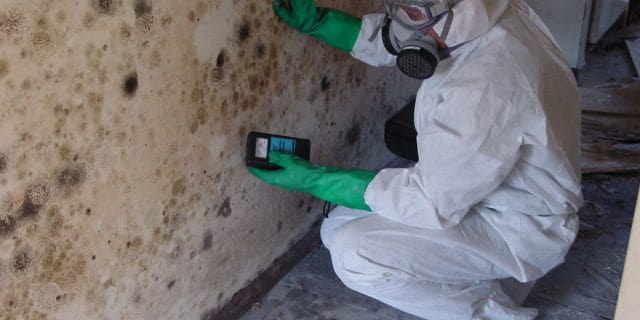
It starts with a 13-point inspection. We’re not walking through your home with a flashlight we use air testing, swab sampling, infrared imaging to find moisture behind walls, and direct moisture level measurements throughout the affected areas. Internal and external mold particle counts get compared, and within two to three business days, you have written lab results in hand. That’s the documentation that holds up with insurance adjusters, real estate attorneys, and future buyers.
Once we know what we’re dealing with and where the moisture is coming from, we address the source before we touch the mold. Skipping that step is why mold comes back. In Garden City’s older homes particularly those with original drainage systems, aging plumbing, or foundation walls that predate modern waterproofing the moisture source is often something that’s been slowly working for months before the mold became visible. We find it.
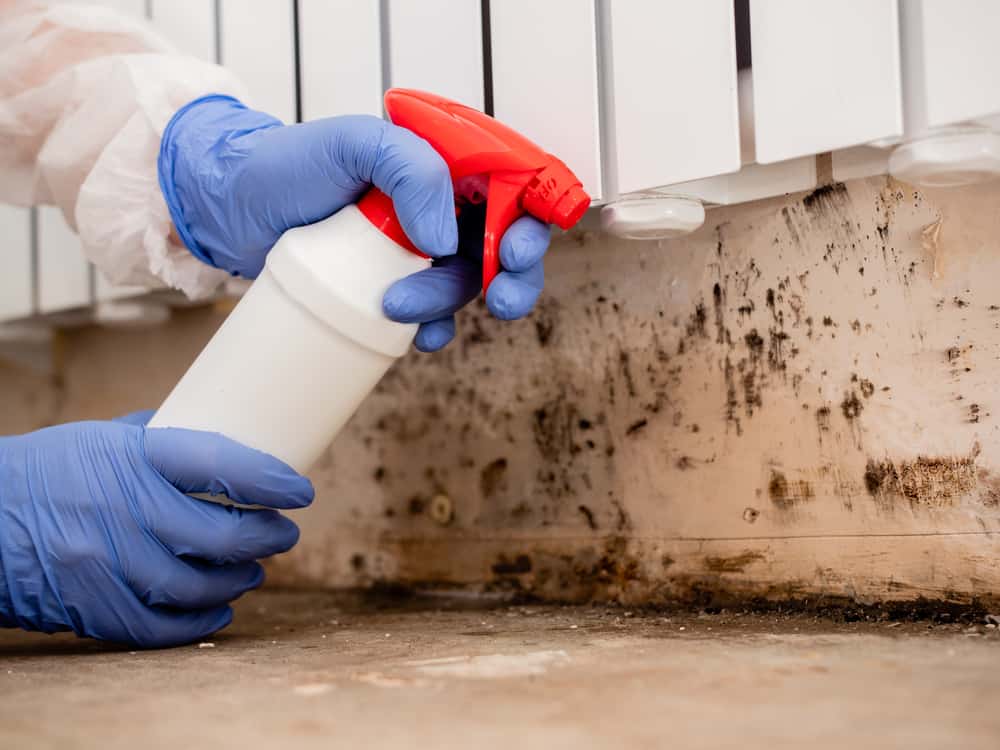
Remediation itself follows IICRC S520 standards: proper containment, HEPA air filtration, controlled removal of affected materials, and post-remediation clearance testing to confirm the job is done. It’s also worth knowing that New York State law requires the company that assesses your mold and the company that remediates it to be separate a consumer protection rule that we comply with fully and will explain clearly if you have questions about it.
Ready to get started?
Black Mold Remediation Garden City NY
Basement mold remediation in Garden City deals with a specific set of conditions: Nassau County’s high water table, foundation walls that were built long before modern waterproofing standards existed, and finished basement spaces that homeowners have added over the years. When moisture pushes through those walls and finds drywall, insulation, or framing on the other side, mold follows quickly. We handle the full scope containment, removal, moisture correction, and reconstruction of finished spaces when materials need to come out.
Attic mold remediation is equally relevant here. The Tudor Revival and Colonial Revival homes that define the Estates and Cathedral sections have complex rooflines dormers, multiple valleys, hip sections and original ventilation that was never designed to meet today’s standards. Mold in these attic spaces is often invisible from below and only detectable through air testing and infrared imaging. That’s exactly what our inspection process is built to find.
Crawl space mold remediation, emergency mold remediation for sudden water events, and mold cleanup following HVAC failures or slow plumbing leaks are all part of what we handle in Garden City. And because we offer full reconstruction, you’re not left with exposed framing or stripped walls after the remediation crew leaves we restore the space to where it was before the problem started.
Does homeowners insurance cover mold remediation costs in Garden City, NY?
It depends on the cause, and that’s the honest answer. Most homeowners insurance policies in New York will cover mold remediation if the mold resulted directly from a covered water event a burst pipe, an appliance failure, or storm-related water intrusion that happened suddenly. What they typically won’t cover is mold that developed from a slow, ongoing leak that went undetected for months. In Garden City’s older homes, where original plumbing systems are still in use and slow seepage through aging foundation walls is common, this distinction becomes important quickly.
The best thing you can do before you call your insurance carrier is get proper documentation in place. That means a written inspection report with lab results, moisture readings, and photographic evidence of the affected areas. We provide all of that as part of the inspection process. Having that documentation ready before you file makes the claims conversation significantly smoother and reduces the back-and-forth with adjusters. If you’re unsure what your policy covers, we can walk you through what documentation your carrier will likely need.
How much does mold remediation typically cost in Garden City, NY?
The range is wide because the scope varies so much. A localized mold issue say, inside a single bathroom wall or a small section of attic sheathing might run $1,500 to $3,500. A more extensive problem involving a finished basement, multiple rooms, or a significant attic remediation in one of Garden City’s larger older homes can reach $8,000 to $15,000 or more, particularly when building materials need to be removed and the space needs to be reconstructed afterward.
What drives cost up in Garden City specifically is the age and complexity of the housing stock. Homes built in the 1920s and 1930s often have materials and construction configurations that require more careful, labor-intensive work than a newer build. Plaster walls, original framing, and complex rooflines all affect how the remediation is approached. The cost of doing it right containment, HEPA filtration, source correction, clearance testing, and reconstruction is higher than a surface-level cleanup, but it’s also the only version that actually solves the problem long-term.
What is the difference between mold remediation and mold removal in Garden City?
Mold removal implies taking away what’s visible wiping down a surface, removing a patch of drywall, spraying something on a wall. Mold remediation is a structured, documented process that addresses the full scope: identifying the moisture source, containing the affected area to prevent spore spread, removing contaminated materials, treating surfaces to established standards, and then verifying through post-remediation testing that the environment is clear. Those are fundamentally different things, and the outcome for your home reflects which one was actually done.
In Garden City, where homes are often sold with significant equity on the line and buyers are represented by experienced real estate attorneys, this distinction has real financial consequences. A clearance test and a written remediation report carry weight in a transaction. A receipt for a surface cleanup does not. If you’ve had mold discovered during a home inspection which happens regularly in the village’s older housing stock what you need is documented remediation, not a quick cosmetic fix that a buyer’s inspector will see through immediately.
How do I know if my older Garden City home has mold I can't see?
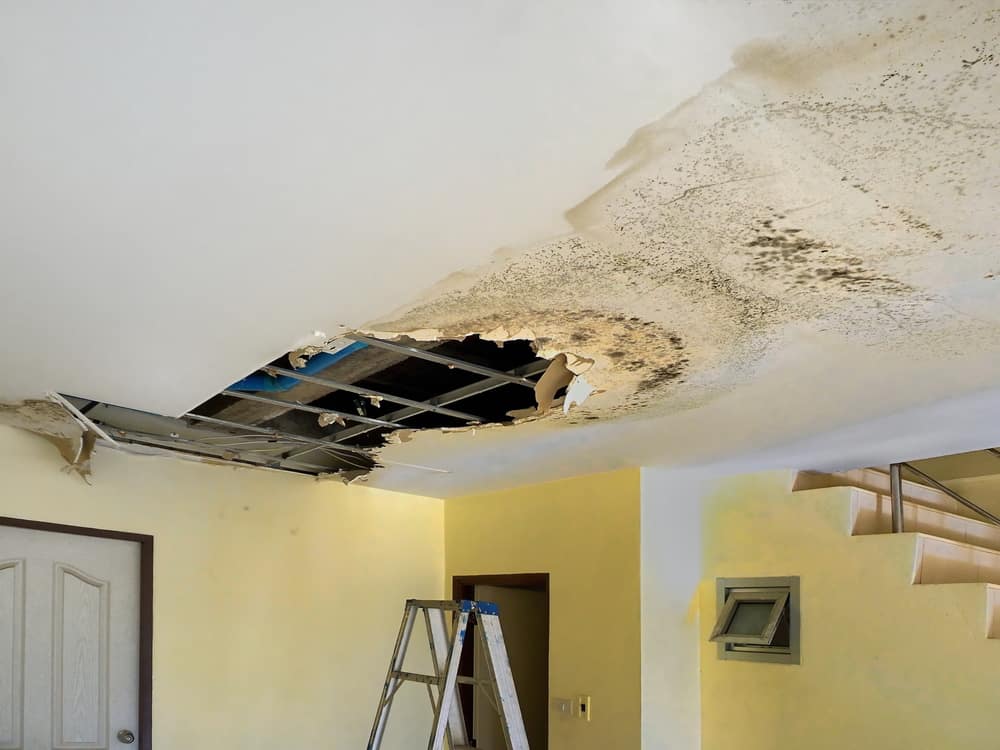
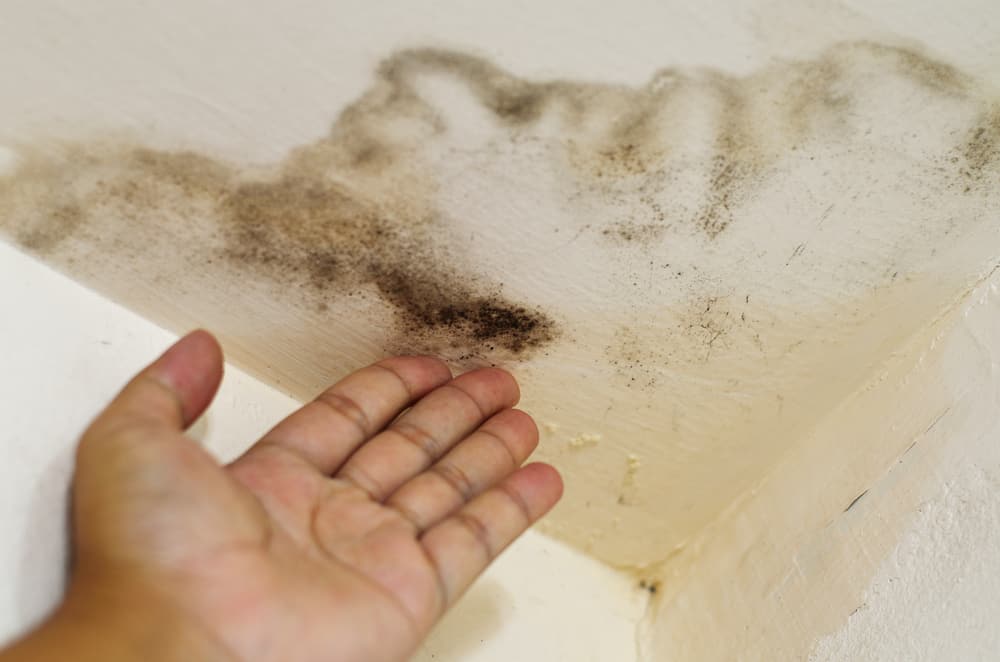
The most reliable signs are a persistent musty smell in a specific area of the house, unexplained allergy or respiratory symptoms that improve when you leave the home, visible moisture staining or discoloration on walls or ceilings, and a history of any water intrusion even one that seemed minor at the time. In Garden City’s older homes, hidden mold is particularly common in attic spaces with inadequate ventilation, inside wall cavities around original plumbing, and in basement areas where ground moisture pushes through aging foundation walls.
The only way to know for certain is a professional inspection that goes beyond a visual walkthrough. Infrared imaging shows temperature differentials that indicate moisture behind surfaces. Air testing captures mold spore counts and compares them to outdoor baseline levels. Swab sampling from specific surfaces confirms species and concentration. If you’ve recently had any water event a roof leak, a slow drip under a sink, a wet basement after a heavy rain and you haven’t had the space professionally assessed, there’s a reasonable chance something is growing that you haven’t found yet.
How long does the mold remediation process take from start to finish?
For a contained, localized problem, the active remediation work typically takes one to three days. Larger projects a full basement remediation, an attic with significant coverage, or a multi-room situation can run five to seven days or longer, particularly when building materials need to come out and the space needs to be reconstructed. Post-remediation clearance testing adds time to the timeline as well, since the area needs to be stabilized before testing can confirm the environment is clear.
The inspection and lab results phase takes two to three business days from the time samples are collected. We understand that in a community like Garden City where many homeowners are managing demanding professional schedules alongside everything else timeline transparency matters. We’ll give you a realistic scope and schedule from the beginning, not a vague estimate that keeps shifting. If you’re working against a real estate closing date or a contractor timeline for a renovation, tell us upfront and we’ll factor that into how we sequence the work.
Can mold in my Garden City home affect its resale value or a pending sale?
Yes, and significantly. Research consistently shows that homes with a known mold history can lose 20% to 37% of their market value, and roughly half of prospective buyers walk away entirely when mold is disclosed or discovered during an inspection. In Garden City, where the median home value is close to $1 million, that’s not an abstract risk it’s a six-figure exposure. Buyers in this market are represented by experienced attorneys and thorough inspectors, and a mold finding without proper remediation documentation is going to surface in due diligence every time.
The good news is that properly documented remediation with lab-confirmed results, a written clearance report, and a clear record of what was done and why actually gives sellers something to stand on. It demonstrates that the issue was found, addressed professionally, and verified. That’s a very different conversation than trying to disclose a mold history without documentation. If you’re preparing a Garden City home for sale and mold has come up, getting the remediation done correctly and documented completely is the move that protects your position in the transaction.
Useful Links
Other Services we provide in Garden City