
Mold Remediation in Greenlawn, NY
North Shore Homes Hide Mold Longer Than You'd Think
Hear from Our Customers
Professional Mold Remediation Greenlawn NY
Most Greenlawn homeowners who call us aren’t panicking they’re frustrated. They’ve noticed something, done some research, and now they want a straight answer about what’s in their home and what it’s going to take to fix it. That’s exactly the kind of conversation we’re built for.
When mold is properly remediated not just wiped down, but fully addressed at the source the air in your home changes. Musty odors clear. Family members who’ve been dealing with unexplained congestion or allergy flare-ups often notice a real difference. And you stop wondering what’s growing behind that wall or under that floor.
For a Greenlawn home, that matters more than it might in other places. Many homes here were built in the 1950s and 60s, during the post-war suburban boom that shaped so much of Long Island’s North Shore. Those homes weren’t built with modern vapor barriers, and their attics and crawl spaces weren’t designed with today’s understanding of moisture management. Add in the humidity that rolls in off Long Island Sound from June through September, and you’ve got a house that’s working against itself every summer. Getting mold out of a home like that and keeping it out requires understanding how these older structures actually behave, not just running through a generic checklist.
Certified Mold Remediation Company Greenlawn NY
We’ve been working on Long Island for over three decades. That’s not a number we throw around lightly it means we’ve seen what happens to North Shore homes after a bad nor’easter, after a sump pump fails at 2 a.m., after a slow crawl space leak goes unnoticed for two seasons.
Richard Peterson, our owner, holds personal New York State licenses in both mold assessment and mold remediation issued under Article 32 of the Labor Law, and verifiable through the state. Every technician on our team is individually IICRC-certified. That means the people doing the work in your home have been formally trained and tested, not just handed a shirt and sent out on a job.
We serve Greenlawn and the surrounding Huntington township communities, and we know this area’s housing stock well. From older homes near Broadway to the residential streets feeding into the Harborfields school district, the mold problems here have patterns and we know them.
Mold Removal and Remediation Process Greenlawn
The first thing we do is figure out where the moisture is coming from. That step is non-negotiable, because mold without a moisture source is a problem you can solve but mold with an active moisture source will always come back. In Greenlawn homes, that source is often a crawl space with an inadequate vapor barrier, a basement wall with a hairline foundation crack letting in groundwater, or an attic where blocked soffit vents are trapping summer humidity against the roof deck. We map it before we touch anything else.
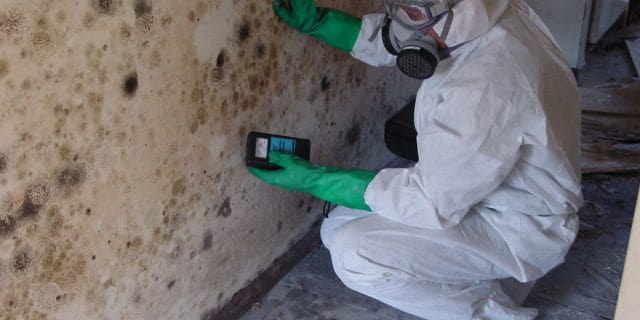
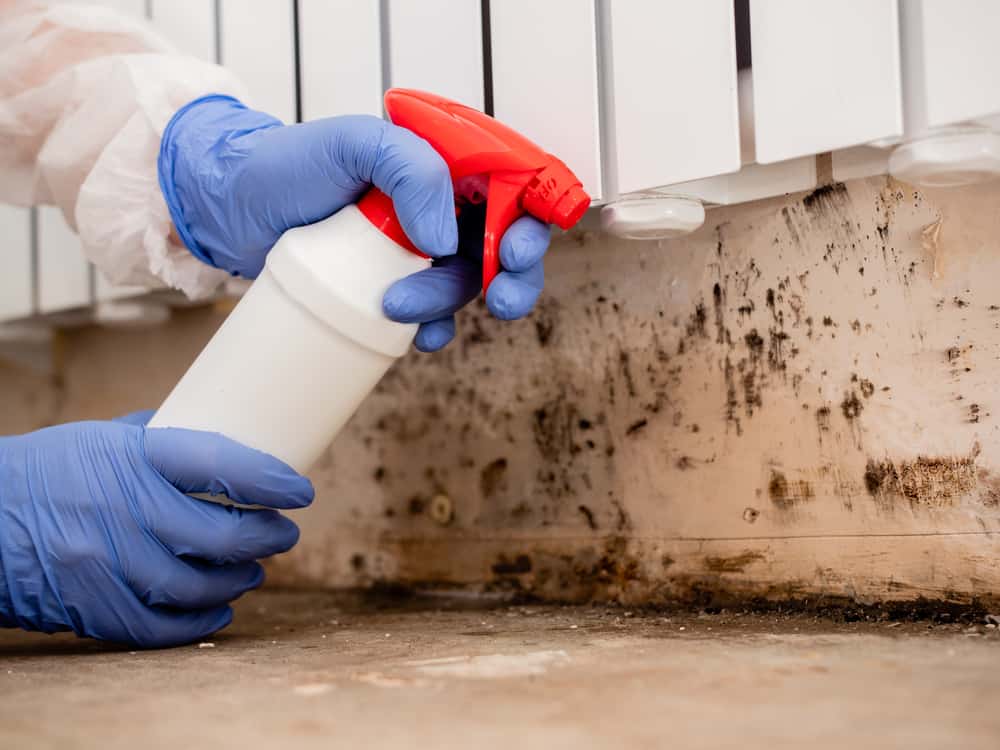
Once we know what we’re dealing with, we set up proper containment. That means negative air pressure, HEPA filtration, and physical barriers to keep spores from spreading to unaffected areas of your home during the work. From there, we remove contaminated materials that can’t be salvaged, treat affected surfaces with EPA-registered antimicrobials, and address the structural drying needed to bring moisture levels back to normal.
What most companies skip and what we include as a standard step is post-remediation verification. After the work is done, air quality testing confirms that spore counts have returned to normal levels. You get a clearance report. That documentation matters whether you’re staying in the home or planning to sell and in a real estate market where Greenlawn homes are valued close to or above $900,000, it’s not something you want to skip. New York State’s Article 32 also requires that licensed contractors handle this work, and we’re fully compliant.
Ready to get started?
Black Mold and Basement Mold Remediation Greenlawn
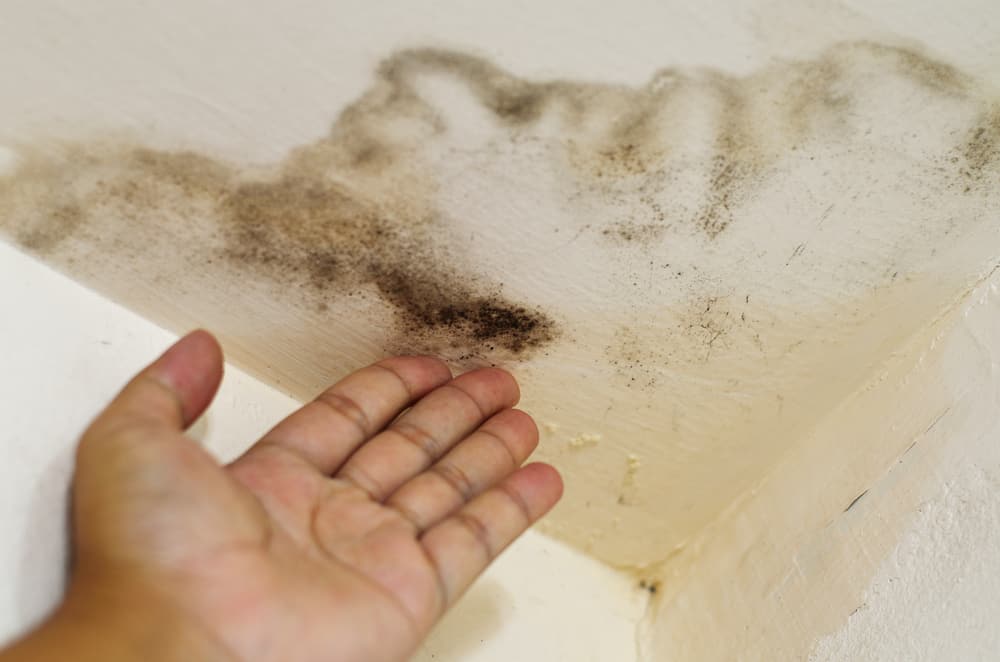
Mold in a Greenlawn home doesn’t pick one spot and stay there. It follows moisture, and moisture in these older North Shore homes moves through multiple pathways. That’s why our remediation scope covers the full structure attics, basements, crawl spaces, wall cavities, and HVAC systems not just the area that’s visibly affected when you call.
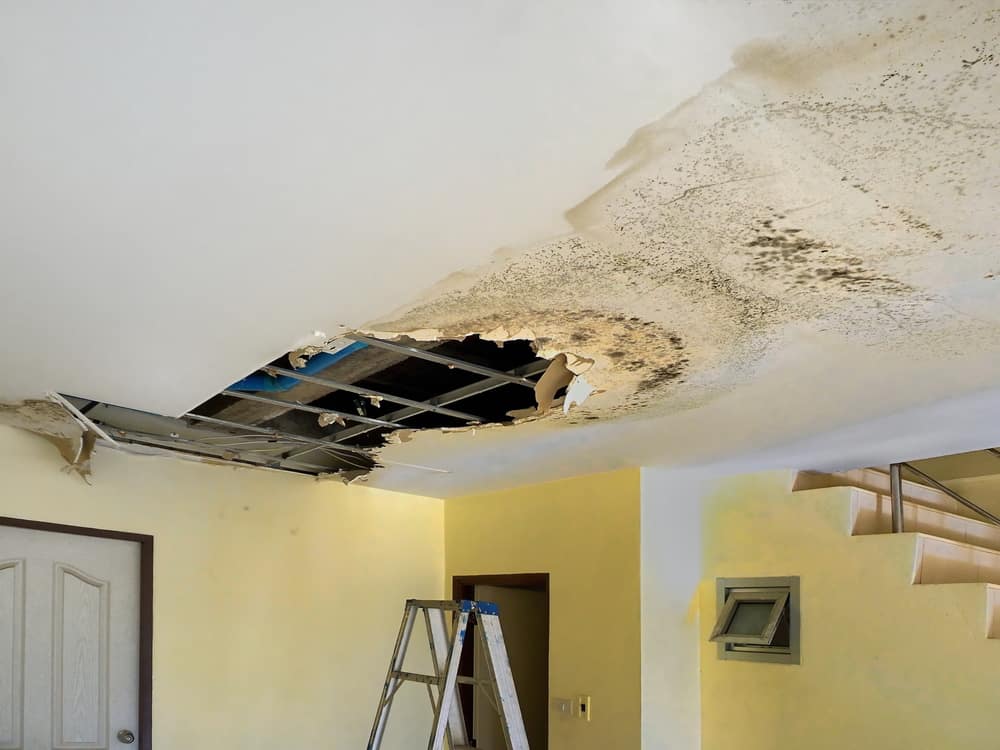
Attic mold is one of the most common issues we see in this area, and it’s almost always tied to ventilation. Homes built in the 1950s and 60s frequently have blocked or undersized soffit vents, and when Long Island’s summer humidity gets trapped against the roof deck, mold follows. Basement and crawl space mold is driven by a different set of factors Suffolk County’s water table, foundation age, and the kind of heavy rainfall events that put the county under a state of emergency as recently as August 2024. We’ve responded to homes in this area after storms like that one, and we know what the aftermath looks like.
We also have an integrated cleaning division, which means once the remediation is complete, we handle the post-remediation cleaning of affected surfaces, contents, and spaces. You don’t need to coordinate a second company. One call, one team, one complete job from start to finish including the clearance documentation you’ll need if this ever comes up in a future real estate transaction.
Does mold remediation in Greenlawn, NY require a licensed contractor?
Yes and this is one of the most important things to verify before you hire anyone. New York State’s Article 32, which took effect in January 2016, makes it unlawful for any person to perform mold remediation without a valid state-issued license. That applies to every job in Greenlawn, regardless of size. The law also prohibits the same company from performing both the mold assessment and the mold remediation on the same project which is why you’ll sometimes see inspection-only companies refer you elsewhere for the actual work.
You can verify a contractor’s license through the New York State Department of Labor’s online lookup tool. Richard Peterson, our owner, holds individual state licenses in both mold assessment and mold remediation. Those are his personal credentials not a company-level claim which means he’s personally accountable for every job our team performs. Before any contractor enters your home, ask for their license number and look it up. A legitimate company will hand it over without hesitation.
How much does professional mold remediation typically cost in Greenlawn?
The honest answer is that cost depends heavily on where the mold is, how far it’s spread, and whether any structural materials need to be removed. Nationally, the average for professional mold remediation sits around $2,300 to $2,500. Attic mold remediation typically runs between $1,500 and $9,000 depending on the extent of the growth and whether insulation needs to be replaced. Basement and crawl space remediation generally ranges from $500 to $4,000 for surface-level issues, but can go higher when structural materials like framing or subfloor are involved.
In Greenlawn specifically, the older housing stock tends to push scopes larger than homeowners expect not because we’re inflating the work, but because 1950s and 60s construction often has multiple moisture pathways that all need to be addressed at once. A clearance inspection and post-remediation air quality testing add to the total, but that documentation is worth having on a home valued close to $900,000. We provide written estimates before any work begins, and we don’t expand scope without explaining why.
What is the difference between mold remediation and mold removal?
Mold removal is one step inside a larger process. Remediation is the full process. The distinction matters because you can physically remove visible mold from a surface and still leave behind the conditions that caused it which means it comes back, often in the same spot or somewhere nearby. True remediation starts with identifying and correcting the moisture source, then moves through containment, removal of contaminated materials, antimicrobial treatment, structural drying, and finally post-remediation verification through air quality testing.
In a North Shore community like Greenlawn, where coastal humidity, an aging housing stock, and a high regional water table all contribute to persistent moisture conditions, skipping any one of those steps tends to result in a repeat problem. We’ve spoken with homeowners who paid for “mold removal” elsewhere and were dealing with the same issue within a year. The difference is almost always that the moisture source wasn’t addressed. Remediation done correctly resolves the problem at its root not just its surface.
How quickly does mold start growing after water gets into my home?
Mold can begin colonizing wet surfaces within 24 to 48 hours of water intrusion. In Greenlawn’s climate where outdoor humidity regularly exceeds 60 percent from June through September that window may be even shorter, because the ambient moisture in the air slows the drying process and gives spores more opportunity to take hold. A basement that floods during a storm on a Saturday night can have active mold growth by Monday morning if it isn’t dried out quickly.
This is why we’re available around the clock, every day of the year. When a sump pump fails during a nor’easter or a pipe bursts in January, the response time in the first few hours directly affects the scope of the remediation that follows. The faster water is extracted and structural drying begins, the smaller the mold problem you’re dealing with afterward. If you’ve had any kind of water intrusion event even one that seemed minor and it’s been more than 24 hours, it’s worth having someone take a look before assuming it dried on its own.
Will my homeowner's insurance cover mold remediation in Greenlawn, NY?
It depends on what caused the mold. Most standard homeowner’s insurance policies in New York cover mold remediation when it results from a covered event a sudden pipe burst, storm-related water intrusion, or an appliance failure. What they typically don’t cover is mold that developed from long-term moisture conditions, like a slow crawl space leak or chronic attic condensation that went unaddressed for months or years. The distinction comes down to whether the water event was sudden and accidental or gradual and ongoing.
For Greenlawn homeowners, the August 2024 North Shore storm that prompted a Suffolk County disaster emergency declaration is a good example of a covered triggering event water intrusion from that kind of storm would generally fall under a covered claim. The key is documenting the damage correctly from the start. We help customers understand what their policy is likely to cover, photograph and document the damage in a format that supports a claim, and communicate with adjusters in a way that avoids the most common reasons claims get delayed or denied.
Mold was found during a home inspection in Greenlawn what happens now?
This is one of the more common scenarios we handle, and the timeline pressure is real. When mold turns up during a home inspection on a Greenlawn property where the median home value is pushing $900,000 both the buyer and seller need to move quickly and carefully. The first step is getting a licensed mold assessor to evaluate the scope of the problem. That assessment determines what needs to be remediated and gives everyone involved a clear picture of what they’re actually dealing with, rather than reacting to a home inspector’s general finding.
Once remediation is complete, post-remediation air quality testing produces a clearance report and that document is what real estate attorneys, buyers’ agents, and lenders typically require before a transaction can move forward. We understand how to work within closing timelines without cutting corners on the process. Rushing remediation and skipping verification creates liability for the seller and uncertainty for the buyer. Done correctly and documented properly, remediation resolves the issue in a way that protects everyone involved in the transaction and keeps the deal on track.
Useful Links
Other Services we provide in Greenlawn