
Mold Remediation in Hampton Bays, NY
When Bay Air Gets In, Mold Doesn't Wait
Hear from Our Customers
Professional Mold Remediation Hampton Bays, NY
Most mold problems in Hampton Bays aren’t one-time events. The hamlet sits surrounded by Shinnecock Bay, Tiana Bay, the Atlantic, and the Peconic and that ambient coastal humidity doesn’t stop pressing against your home just because the visible mold got wiped off. When remediation addresses only the surface, the mold comes back. When it addresses the moisture source, it doesn’t.
That’s the difference you feel when the work is done right. No more musty smell when you walk through the door. No more wondering if the air your family is breathing is clean. If you own a crawl space home near the canal or a bay-side property in East Tiana, you already know that moisture is a constant the goal is making sure it stops becoming a mold problem.
For seasonal homeowners who close up for winter and return in spring, proper remediation means opening your Hampton Bays property to a clean, documented, ready-to-occupy home not a mold discovery that derails the whole season before it starts.
Certified Mold Remediation Companies Hampton Bays, NY
We’ve been operating on Long Island for over three decades. Our owner, Richard Peterson, holds personal New York State licenses in both mold assessment and mold remediation not a company-level credential, but his individual professional license, verifiable through the NYS Department of Labor. Our technician team is IICRC-certified, meaning the people doing the actual work in your home have been formally trained and tested to industry standards.
That matters more in Hampton Bays than most places. The housing stock here a lot of it built between the 1940s and 1970s, much of it sitting close to the water table in areas like Ponquogue and West Tiana presents moisture challenges that take real coastal experience to understand. We’ve been working in homes like yours throughout Hampton Bays and the surrounding South Shore for 31 years. We know what’s behind the walls, under the floors, and in the crawl spaces of these communities.
Mold Cleanup and Remediation Process Hampton Bays, NY
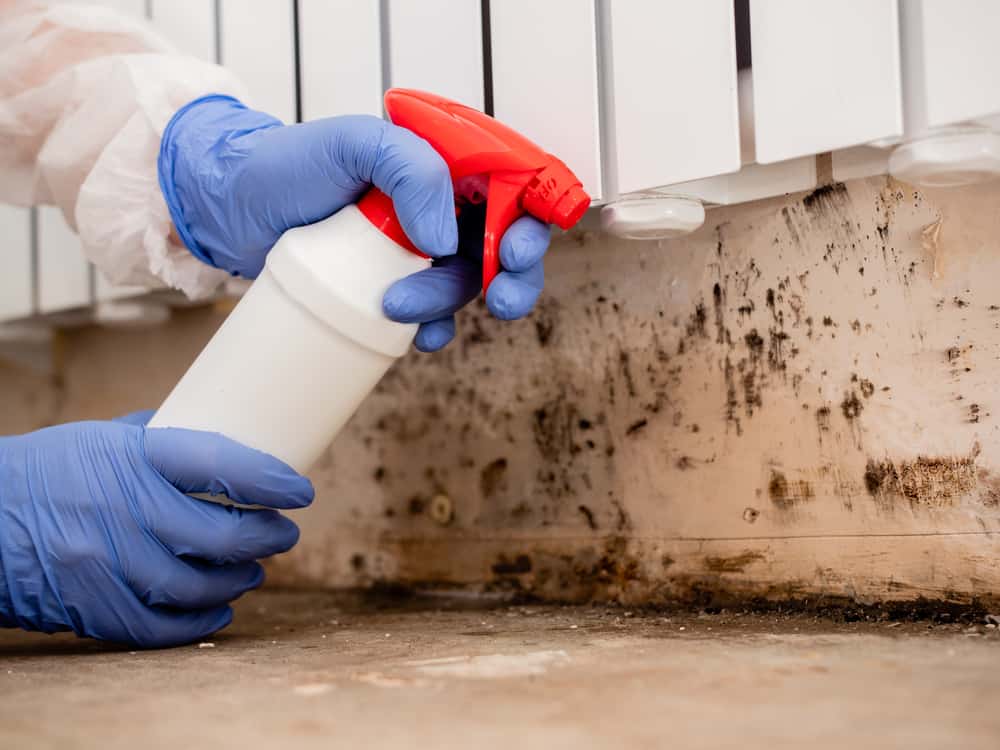
It starts with a thorough assessment not a quick visual scan, but a moisture mapping process that identifies where water is entering the structure and why. In Hampton Bays, that means checking crawl spaces for groundwater intrusion, attics for ventilation failures that trap coastal humidity, and basements for the kind of slow seepage that’s common in homes near the Shinnecock Canal and the bay-side streets. We can’t fix mold without understanding what’s feeding it.
Once the source is identified, we set up containment before any removal begins. This keeps mold spores from spreading to unaffected areas of your home during remediation a step that’s required under New York State’s Article 32 licensing law and one that unlicensed operators frequently skip. We remove affected materials, treat structural surfaces with EPA-registered antimicrobial agents, and dry the space to target humidity levels.
After the work is complete, independent air quality testing confirms that spore counts have returned to normal. You receive a written clearance report documentation that the job was done correctly. For seasonal homeowners coordinating work remotely, or for anyone navigating a real estate transaction in Hampton Bays, that clearance report isn’t optional. It’s the proof that protects you.
Ready to get started?
Black Mold Remediation Services Hampton Bays, NY
Mold remediation in Hampton Bays isn’t one-size-fits-all, because the problem rarely shows up in just one place. Crawl space mold is common in the older homes throughout the hamlet particularly in barrier island areas like Ponquogue, where the water table sits close enough to the surface that unencapsulated crawl spaces stay damp year-round. Attic mold is another frequent finding, especially in homes where bathroom fans terminate into the attic instead of through the roof, trapping coastal humidity against the sheathing. Basement mold tends to follow storm events and seasonal groundwater rise, and in a community that sits between multiple tidal water bodies, that’s not an occasional problem it’s a recurring one.
We handle all of it under one roof. Our remediation scope covers assessment, containment, removal of affected materials, antimicrobial treatment, structural drying, and post-remediation verification. Our integrated cleaning division means the full restoration cycle through to final cleaning of affected surfaces and living areas is handled by one team, one point of contact. There’s no gap between what our remediation crew did and what a separate cleaning company would find when they arrived.
All work is performed in full compliance with New York State Article 32 mold licensing requirements, which became law on January 1, 2016. If a contractor can’t show you a valid NYS mold remediation license, they’re operating illegally and your insurance claim may not hold up because of it.
Why does mold keep coming back in my Hampton Bays home every year?
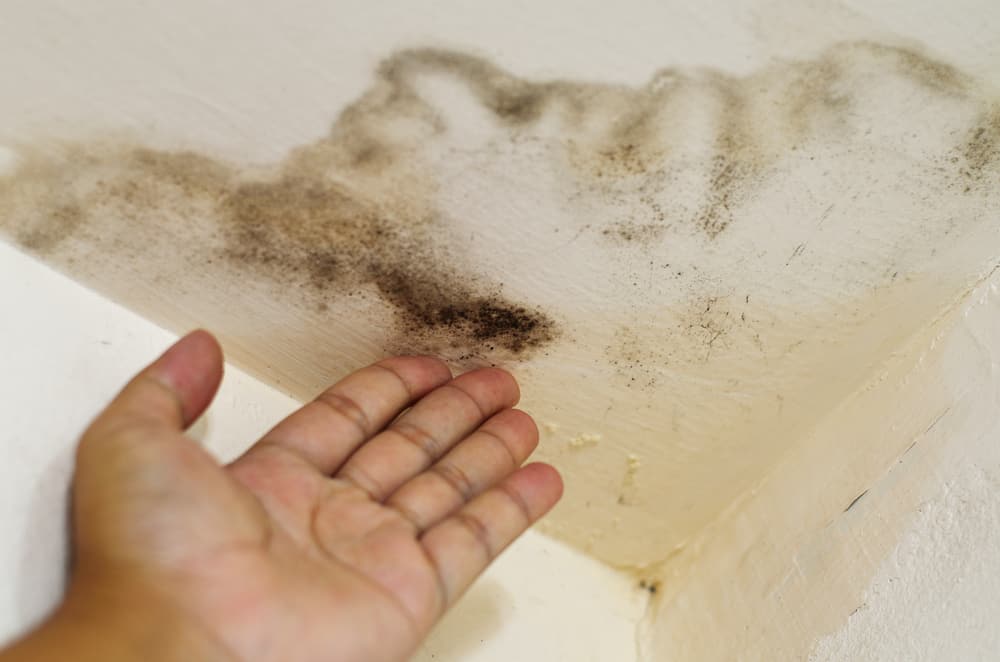
Recurring mold almost always means the moisture source was never properly addressed. In Hampton Bays specifically, that source is rarely just a single leak it’s the combination of a high water table, elevated coastal humidity from Shinnecock Bay and the Peconic, and older home construction that wasn’t built with today’s moisture-barrier standards. A crawl space that stays damp because of groundwater proximity, or an attic that traps humid air because of inadequate ventilation, will keep producing mold no matter how many times the visible growth gets wiped off.
The only way to stop the cycle is to identify exactly where and why moisture is entering the structure, correct that pathway, and then remediate the mold that resulted from it. That’s a different process than surface cleaning, and it’s why homeowners who’ve had mold “treated” before still end up calling again a season later. When the moisture source is fixed as part of the remediation, the mold doesn’t have what it needs to come back.
How much does mold remediation cost in Hampton Bays, NY?
Cost varies based on where the mold is, how much surface area is affected, and whether structural materials need to be removed and replaced. For most residential projects in Hampton Bays, you’re looking at a range of roughly $1,500 to $6,000 though crawl space encapsulation or extensive attic remediation in larger homes can push that higher. What affects cost most is scope: a small area of surface mold on a basement wall is a very different job than mold throughout a crawl space beneath a mid-century bay-side home. Getting an accurate number requires an on-site assessment, not a phone quote. Be cautious of any company that gives you a firm price without seeing the space and equally cautious of quotes that seem unusually low, since incomplete remediation in a coastal environment like Hampton Bays almost always means paying twice.
Is mold remediation covered by homeowners insurance in New York?
It depends on the cause. If mold developed as a direct result of a covered event a burst pipe, storm damage, a sudden roof failure most standard homeowners insurance policies will cover the remediation as part of that claim. If the mold developed from long-term moisture intrusion, deferred maintenance, or gradual seepage, most policies won’t cover it. That distinction matters a lot in Hampton Bays, where the line between storm-related flooding and ongoing groundwater intrusion can be genuinely blurry, especially in bay-adjacent neighborhoods that took water during Hurricane Sandy or subsequent nor’easters.
Documentation is critical for any insurance-related mold claim. That means a written assessment, a clear remediation scope, and a post-remediation clearance report. We provide all of that as standard not as an add-on. If you’re navigating a claim, having that paper trail from a fully licensed, Article 32-compliant contractor is what makes the difference between a reimbursed claim and a denied one.
My seasonal home in Hampton Bays was closed all winter what should I check for when I open it?
Closed-up seasonal properties are among the highest-risk environments for mold on all of Long Island, and Hampton Bays homes are particularly vulnerable. When a house sits unoccupied from November through April with minimal heating and no active ventilation, coastal humidity accumulates inside the building envelope. A slow drip under a sink, a failed sump pump, a compromised roof flashing any of these can generate enough moisture over a five-month period to produce extensive mold growth before anyone walks through the door.
When you open your seasonal property, start with the spaces you can’t easily see: the crawl space, the attic, and the basement. Musty odor when you first enter is a reliable early indicator. Discoloration on walls, ceilings, or subfloor materials is a more obvious sign. If you’re not sure, a professional mold assessment before you settle in for the season is worth it both for your family’s health and for catching the problem before it gets into structural framing, which significantly increases remediation cost and complexity.
What is the difference between mold remediation and mold removal?
Mold removal typically refers to physically cleaning or wiping away visible mold growth. Mold remediation is a more comprehensive process that includes identifying the moisture source, containing the affected area to prevent cross-contamination, removing affected materials where necessary, treating surfaces with antimicrobial agents, drying the structure to target humidity levels, and verifying through air quality testing that the mold has been successfully addressed. Remediation follows established industry protocols specifically the IICRC S520 Standard and results in documented clearance.
In a coastal environment like Hampton Bays, the distinction is especially important. Surface removal without moisture source correction and post-treatment verification will not produce a lasting result. The humidity levels that Hampton Bays homes experience particularly in crawl spaces, attics, and basements in the older housing stock throughout the hamlet mean that mold has everything it needs to reestablish itself quickly if the underlying conditions aren’t corrected. Remediation addresses the whole problem. Removal addresses only what’s visible.
How do I know if a mold remediation contractor in Hampton Bays is actually licensed?
Under New York State’s Article 32 of the Labor Law, which took effect January 1, 2016, anyone performing mold remediation in New York is legally required to hold a valid NYS mold remediation license. This is an individual license not a company registration and it’s issued by the NYS Commissioner of Labor. You can verify any contractor’s license directly through the New York State Department of Labor’s online license lookup tool. If a contractor can’t give you a license number to verify, they’re operating outside the law.
This matters in Hampton Bays because the Hamptons contractor market includes operators who offer cut-rate services without holding the required credentials. Hiring an unlicensed contractor for mold work can result in a denied insurance claim, legal liability, and most practically a remediation that doesn’t meet the standards required to produce a valid clearance report. Our owner, Richard Peterson, holds personal NYS licenses in both mold assessment and mold remediation. That’s verifiable, it’s legally meaningful, and it’s not something every company operating in this area can say.
Useful Links
Other Services we provide in Hampton Bays