
Mold Remediation in Hewlett, NY
Hewlett's Moisture Problem Has a Solution
Hear from Our Customers
Certified Mold Remediation, Nassau County
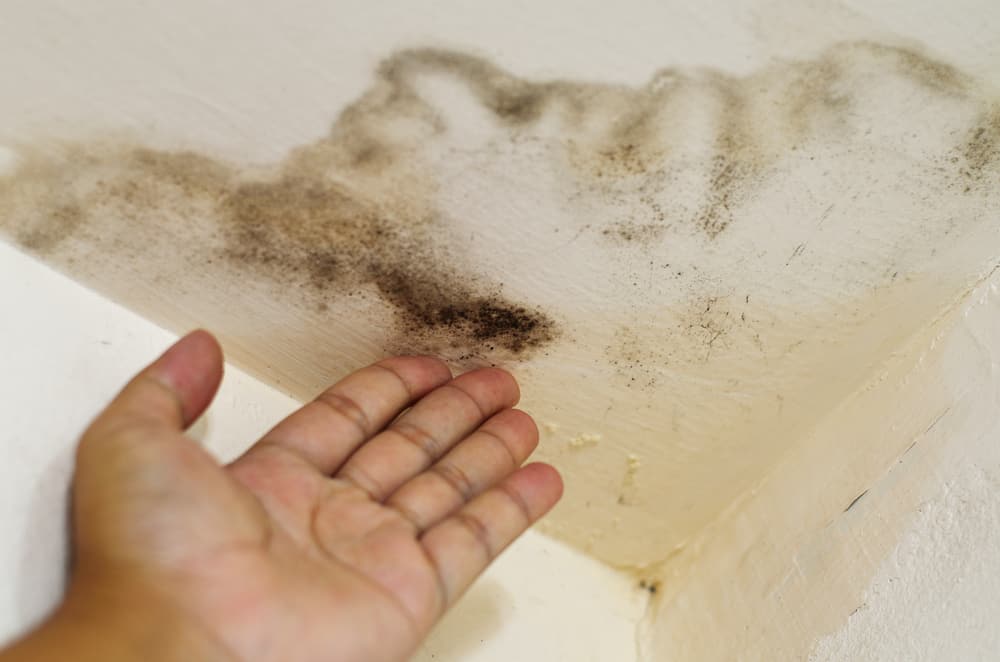
Mold doesn’t just look bad. It affects how your home smells, how your family breathes, and in a market where Hewlett homes are valued between $624,000 and $870,000 it directly threatens what is likely your most significant financial asset. A mold problem that shows up during a buyer’s inspection can send 50% of prospective buyers walking. The ones who stay will negotiate hard.
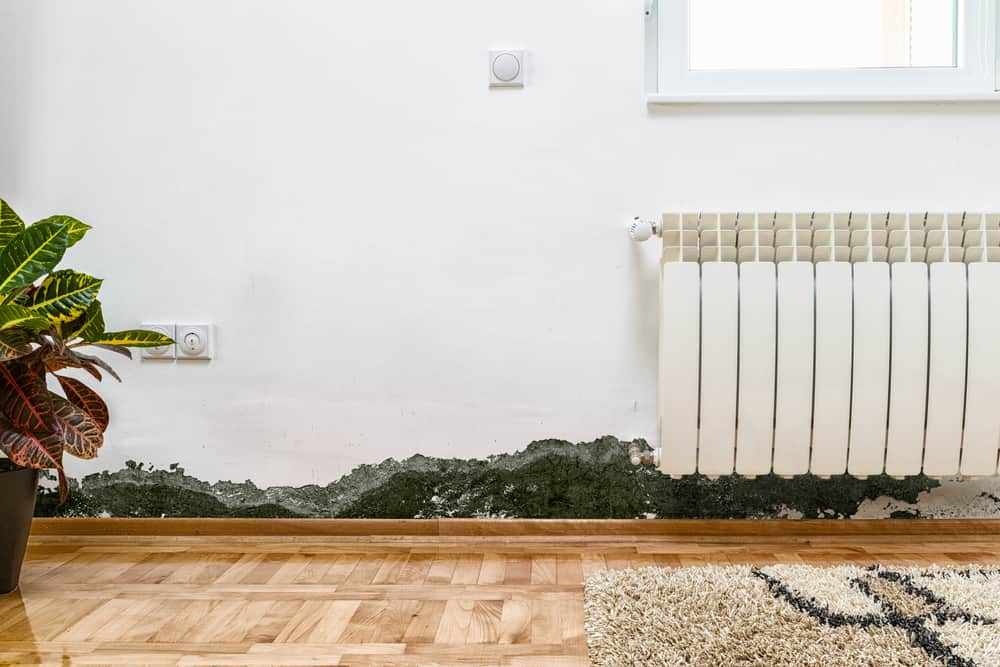
For homes in Hewlett and the surrounding Five Towns communities, the underlying conditions that drive mold growth are specific and well-documented. Nassau County’s high water table puts constant hydrostatic pressure on basement walls and floor slabs. The coastal humidity rolling in from Jamaica Bay and the Atlantic regularly pushes past 60% during summer the threshold where mold growth accelerates dramatically. If your home was built between the 1940s and 1970s, which describes most of Hewlett’s Cape Cods and ranch homes, it was constructed before modern vapor barriers and ventilation standards existed.
When we complete mold remediation correctly, you get more than a clean surface. You get documentation lab-verified clearance results that hold up for insurance claims, real estate transactions, and your own peace of mind. You get a home where the air quality is measurably better. And you get a clear answer on what caused it, so it doesn’t come back in six months.
Mold Remediation Companies in Hewlett, NY
We’ve been serving Nassau County homeowners for nearly three decades. That means our team has worked through every type of mold problem in every type of Long Island home including the mid-century Cape Cods along Hewlett’s residential streets and the waterfront properties in Hewlett Harbor and Hewlett Bay Park that carry their own unique moisture exposure.
What sets us apart from national franchises is this: every technician who shows up at your door holds individual IICRC certification. Not just our company every person doing the work. That matters because certification at the company level tells you very little about who is actually in your home.
We also handle full reconstruction. Most remediation companies stop when the mold is gone and leave you to find a contractor for the rebuild. We manage the entire scope from the initial 13-point inspection through lab results, remediation, and full structural restoration under one roof.
Professional Mold Remediation Process, Hewlett NY
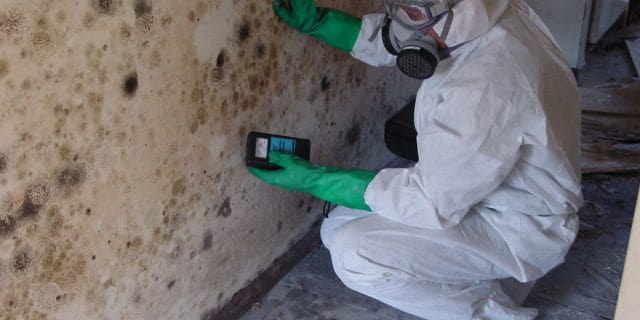
It starts with a 13-point mold inspection not a visual walkthrough with a flashlight. The inspection includes air testing, swab sampling, infrared imaging to detect moisture and mold hidden behind walls and ceilings, moisture level measurement throughout the affected areas, and a comparison of internal and external mold particle counts. Lab results come back within 2 to 3 business days, and you receive a written report with everything documented.
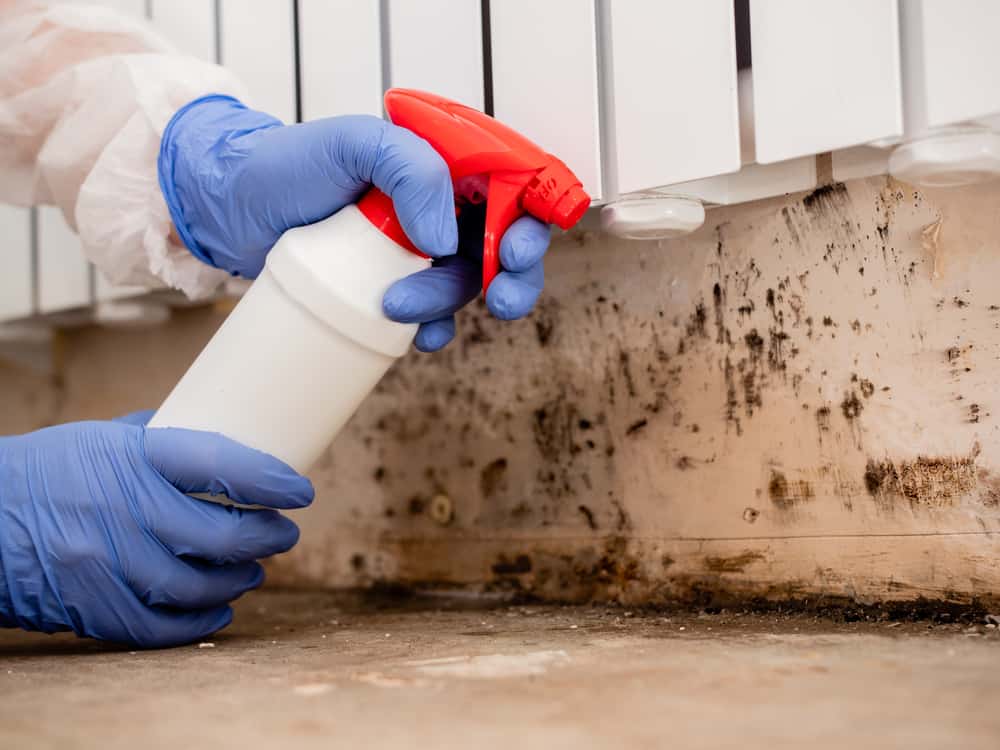
From there, remediation is planned around what the inspection actually found not a standard package applied to every job. In Hewlett, that often means addressing the moisture source first. A basement that flooded during a nor’easter, a crawl space under a Cape Cod that has never been properly sealed, or an attic where warm air has been condensing against roof sheathing for years each situation requires a different approach. It’s also worth knowing that under New York State’s 2016 mold law, the company that assesses your mold cannot be the same company that remediates it. We work within that framework, so your assessment is always independent.
Once remediation is complete, post-clearance testing confirms the job is done not just visually, but with documented lab results. If reconstruction is needed, that work begins immediately. There’s no waiting on a second contractor.
Ready to get started?
Basement and Attic Mold Remediation, Hewlett NY
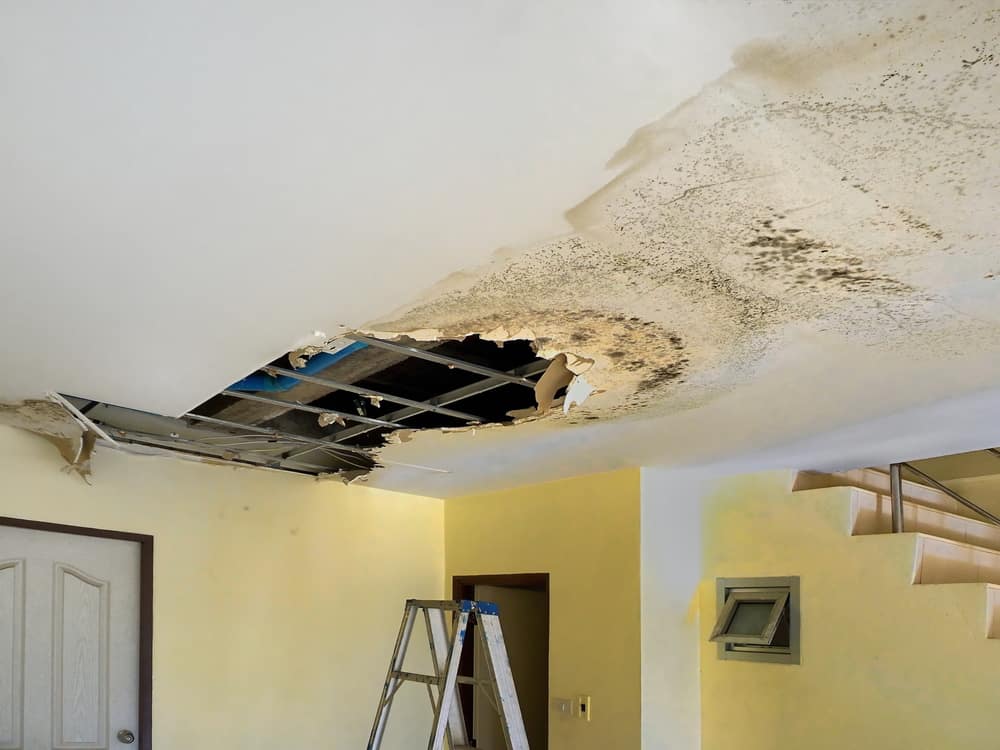
The most common mold calls we receive in Hewlett come from three places: basements and crawl spaces dealing with groundwater intrusion, attics in Cape Cod-style homes where inadequate ventilation has allowed moisture to accumulate against the roof sheathing, and living spaces affected by water damage from storms or plumbing failures. We handle all three, and our approach is the same in each case find the source, eliminate the mold, document the result.
The 13-point inspection covers air quality testing, surface swab sampling, infrared thermal imaging, moisture mapping, water intrusion assessment, and a full written report with lab results. We offer emergency mold remediation 24 hours a day, seven days a week because the Five Towns area has a real storm flooding history, and mold begins growing within 48 hours of water intrusion. Waiting until Monday morning is not always an option.
For Hewlett homeowners navigating an insurance claim, we can help you understand what your policy covers and provide the documentation your carrier will need. And because we’re a full reconstruction company, any structural work drywall replacement, subfloor repair, framing restoration is handled in-house. One call covers the entire scope, from discovery through finished restoration.
How much does mold remediation cost for a Hewlett, NY home?
The honest answer is that cost depends heavily on scope, and scope depends on what the inspection actually finds. Nationally, the average mold remediation runs around $2,300. Basement and crawl space remediation which is the most common scenario in Hewlett given Nassau County’s high water table and the chronic moisture pressure on South Shore foundations typically falls between $1,500 and $6,000. Larger infestations that have spread through wall cavities or structural framing can reach $10,000 to $30,000 for whole-house remediation.
What drives cost up is almost always the same thing: delayed response. Mold spreads. A contained basement problem that gets addressed quickly costs significantly less than the same problem discovered six months later when it has migrated into adjacent framing or HVAC systems. The inspection gives you a clear picture of what you’re actually dealing with before any remediation work begins, so there are no surprises mid-project.
Does homeowners insurance cover mold remediation in Nassau County?
It depends on the cause. Most standard homeowners insurance policies in New York will cover mold remediation if the mold resulted from a covered peril a burst pipe, storm-related flooding, or an appliance leak, for example. What they typically will not cover is mold that developed from long-term moisture intrusion or maintenance issues, which is a common scenario in Hewlett’s older housing stock where basement seepage has been happening gradually over years.
The documentation from a professional inspection matters enormously here. Insurance carriers want to see a clear chain of causation what caused the water intrusion, when it happened, and what the resulting mold damage looks like. A written inspection report with lab results gives your adjuster exactly what they need to process the claim. If you’re not sure whether your situation qualifies, the inspection is the right first step before you make any assumptions about coverage.
What causes mold to keep coming back in Hewlett basements?
The most common reason mold returns after remediation is that the moisture source was never properly addressed. In Hewlett and the surrounding Five Towns communities, basement mold is almost always a symptom of an underlying moisture problem not an isolated event. Nassau County’s high water table means that groundwater is constantly pushing against foundation walls and floor slabs, particularly during spring snowmelt and after heavy rainfall. If that hydrostatic pressure isn’t managed, the moisture will continue to find its way in regardless of how thoroughly the surface mold was treated.
Remediation that only addresses what’s visible on the surface is a temporary fix. The correct approach is to identify where the moisture is entering, address that pathway whether it’s a failed foundation seal, inadequate drainage, or a crawl space that has never been properly encapsulated and then remediate the mold. Post-remediation clearance testing confirms the environment is clean. If a company can’t explain what caused your mold problem before they start removing it, that’s worth asking about directly.
Is it safe to stay in my Hewlett home during mold remediation?
It depends on the size and location of the affected area. For contained mold problems a section of basement wall, a crawl space, or a single bathroom most homeowners can remain in the house during remediation as long as the work area is properly isolated with containment barriers and negative air pressure is maintained to prevent spores from migrating into living spaces. We use professional containment protocols on every job for exactly this reason.
For larger infestations that affect central living areas, HVAC systems, or significant portions of the home’s square footage, temporary relocation may be the safer choice particularly if anyone in the household has respiratory sensitivities, asthma, or compromised immune function. Hewlett is a family-oriented community, and if you have children or elderly family members in the home, it’s a conversation worth having directly with our remediation team before work begins. The inspection results will give you a clearer picture of what’s appropriate for your specific situation.
What's the difference between mold remediation and mold removal?
Mold removal is a surface treatment it gets rid of what you can see. Mold remediation is a complete process that includes identifying the source of moisture, containing the affected area to prevent spore spread, removing contaminated materials, treating the underlying surfaces, and verifying through post-clearance testing that the environment is clean. The distinction matters because mold is not just a surface problem. Mold spores are airborne, and a surface treatment that doesn’t address containment or air quality can actually spread the problem to areas that weren’t originally affected.
In an older home and most of Hewlett’s housing stock dates to the 1940s through 1970s mold rarely stays where you first find it. It follows moisture pathways through wall cavities, into insulation, and along structural framing. Professional mold remediation accounts for all of that. Mold removal, in the way the term is often used by less thorough operators, does not.
A home inspector found mold during our Hewlett home sale what happens now?
This is one of the most time-sensitive mold situations you can face, because a real estate transaction has a deadline. When a home inspector flags mold in a Hewlett property, the buyer’s next step is typically to request either remediation before closing or a price reduction to account for it. Either way, you need a professional assessment fast one that gives you a clear scope of the problem and a documented remediation plan you can present to the buyer’s agent.
It’s also worth knowing that under New York State’s 2016 mold law, the company conducting your assessment cannot be the same company performing the remediation. That’s a consumer protection, and it’s the law. Make sure whoever you call is working within that framework. We can move quickly on inspections and provide written lab results within 2 to 3 business days which is often the difference between keeping a transaction alive and losing it. In a market where Hewlett homes are selling at median values above $600,000, getting this handled correctly and quickly is worth prioritizing.
Useful Links
Other Services we provide in Hewlett