
Mold Remediation in Islip, NY
Bay Shore Humidity Has a Way of Finding Your Home First
Hear from Our Customers
Certified Mold Remediation in Islip, NY
The musty smell in the basement stops coming back every summer. The crawl space stops sweating every time the Great South Bay humidity climbs. You stop wondering whether the air your family is breathing is clean because you have a clearance report that says it is.
That’s what a real remediation looks like. Not just mold wiped off a surface, but the source identified and addressed so the problem doesn’t reset itself with the next wet season. For homes in Islip especially older Cape Cods and ranches north of Montauk Highway where crawl spaces and basements were built without modern moisture barriers that source work is the difference between a fix and a temporary patch.
For waterfront and canal-front properties in areas like Bayberry Point, the stakes are even higher. Tidal moisture, high water tables, and direct bay exposure create conditions that don’t let up. Homes here need a remediation process that accounts for what’s coming back through the ground and the air year-round not just what’s visible today. When that work is done right, you get your home back. And if you’re in the middle of a real estate transaction, you get the documentation that keeps the deal alive.
Licensed Mold Remediation Companies in Islip, NY
We’ve been serving Islip and Long Island for over three decades. Our owner, Richard Peterson, holds personal New York State licenses in both mold assessment and mold remediation issued under Article 32 of the NYS Labor Law, and verifiable directly through the Department of Labor. That’s not a company credential. That’s his name on the license, which means he’s accountable for every job that leaves this business.
Every technician on our team holds individual IICRC certification. That matters because the people physically working in your home have been formally trained and tested not just hired and handed a sprayer.
We’ve worked in the older Victorians along the south shore waterfront in Islip, in the mid-century ranches north of Montauk Highway, and in post-Sandy homes across Suffolk County that still carry moisture problems more than a decade later. We know this area. We know what south shore construction looks like from the inside and we know where mold hides in it.
Professional Mold Remediation Process in Islip, NY
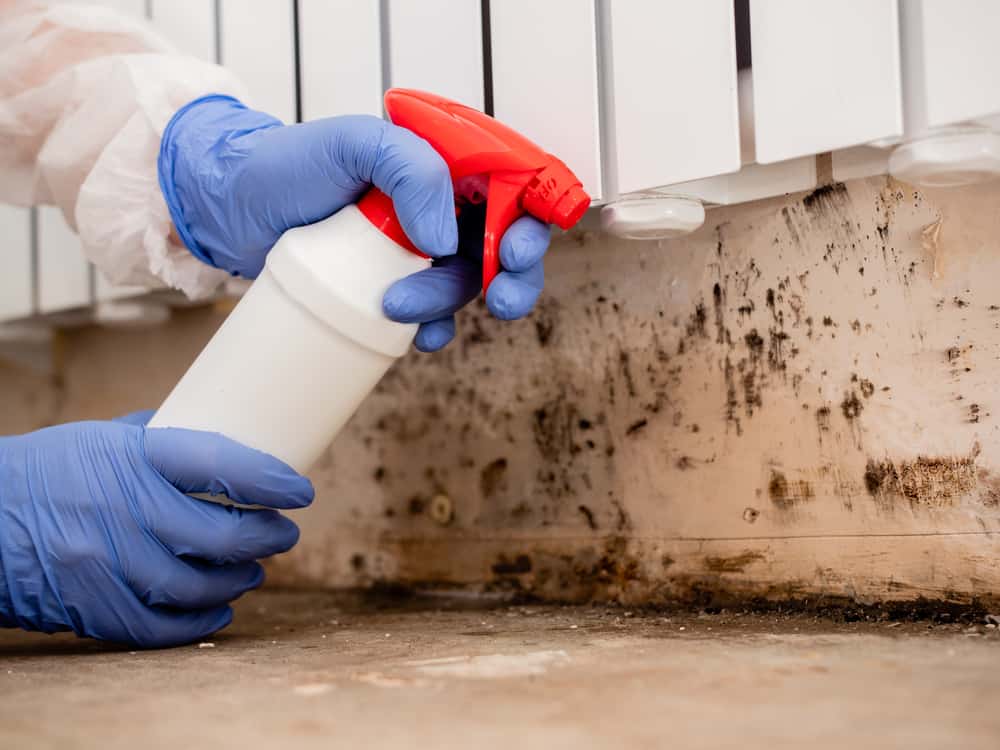
It starts with a thorough assessment. Before anything is removed, we identify the moisture source. In Islip, that often means checking crawl space ventilation, foundation walls in flood-zone properties south of Montauk Highway, and attic decking where summer bay humidity condenses against cooler surfaces. Skipping this step is exactly why mold comes back after a cheap remediation and it’s not a step we skip.
Once the source is mapped, we put containment in place to protect the rest of your home. Affected materials are removed following IICRC S520 protocols, and antimicrobial treatment is applied to the structural surfaces that remain. If the work involves removing and replacing drywall, subfloor material, or framing, the Town of Islip’s Division of Building may require a permit we can help you understand what applies to your specific project before work begins.
After remediation is complete, post-remediation air quality testing confirms that spore counts have returned to normal levels. You get a written clearance report the document that satisfies your insurance adjuster, your real estate attorney, and any future buyer’s home inspector. Our integrated cleaning division then handles the final cleanup, so you’re not left coordinating a second company to finish what we started.
Ready to get started?
Emergency Mold Remediation Services in Islip, NY
Mold starts growing within 24 to 48 hours of water intrusion. For a community that sits inside FEMA Zone AE flood designations, takes direct hits from nor’easters off the Great South Bay, and still carries post-Sandy moisture legacy in some homes, that window is not theoretical it’s the reason we operate 24 hours a day, seven days a week. When a storm floods your basement at 2 a.m. on a Saturday, you need someone who answers and can actually mobilize not a call center routing to a national dispatch.
Beyond emergency response, we handle the full range of mold remediation in Islip, NY: basement mold remediation for flood-zone properties, crawl space mold remediation for south shore homes with persistent humidity infiltration, attic mold remediation for older homes where insulation and ventilation haven’t kept pace with summer bay conditions, and black mold remediation when Stachybotrys is confirmed and enhanced containment protocols are required.
Many Islip homeowners particularly those carrying both standard homeowner’s insurance and NFIP flood coverage run into real confusion about which policy covers what after a storm event. We help you document the damage in the format each insurer needs and understand what your coverage actually includes. In a market where Islip homes have appreciated 12% year-over-year and median values push past $600,000, getting that documentation right isn’t a small thing.
How much does mold remediation cost in Islip, NY for a typical home?
For most residential projects, professional mold remediation runs between $1,223 and $3,754, with a national average around $2,347. But in Islip, the range can shift depending on what you’re dealing with. Older homes north of Montauk Highway Cape Cods, ranches, hi-ranches built between the 1940s and 1970s often have mold inside wall cavities, beneath original subfloor material, or in crawl spaces that were never properly sealed. That kind of hidden mold adds scope that a surface-level estimate won’t catch.
Waterfront and canal-front properties in areas like Bayberry Point tend to run higher as well, because the moisture conditions there are more persistent and the affected areas are often more extensive. Attic mold remediation in older south shore homes where inadequate ventilation has allowed summer bay humidity to condense against roof decking for years can also push costs above the average range. The only way to get an accurate number is a proper assessment, not a phone quote. Any company giving you a firm price before they’ve looked is guessing.
What is the difference between mold remediation and mold removal?
Mold removal refers specifically to the physical act of taking mold out scrubbing surfaces, removing contaminated materials, treating affected areas. Mold remediation in Islip, NY is the full process that removal is one part of. It includes identifying the moisture source, containing the affected area to prevent cross-contamination, removing the mold, treating the remaining structure, drying everything properly, and then verifying through post-remediation air quality testing that spore counts are back to normal.
The reason this distinction matters is that removal without remediation is how mold comes back. If you take the mold off a basement wall but don’t address why that wall is wet whether it’s bay humidity infiltrating a crawl space vent, a compromised foundation in a flood-zone property, or a drainage issue specific to your lot the mold returns with the next wet season. In a coastal community like Islip where moisture pressure is year-round, that’s not a hypothetical. It’s what happens when the job is done halfway.
Can I stay in my house during mold remediation in Islip, NY?
It depends on the scope and location of the mold. For smaller, contained jobs a section of basement wall, a portion of a crawl space most homeowners can remain in the home while work is in progress, as long as proper containment is in place and the affected area is isolated from the living space. Negative air pressure and physical barriers are standard parts of the containment setup for this reason.
For larger jobs involving significant black mold contamination, extensive attic remediation, or situations where mold has spread through HVAC systems, temporary relocation is often the safer call especially if anyone in the household has respiratory sensitivities, asthma, or immune concerns. Given that the CDC estimates one in three people has some sensitivity to mold, this isn’t a rare consideration. We’ll give you a straight answer on this during the assessment, based on what we actually find not a blanket recommendation designed to upsell containment or push you out of your home unnecessarily.
How do I verify that a mold remediation contractor in Islip is actually licensed in New York?
New York State Labor Law Article 32, which took effect January 1, 2016, requires every mold assessor, remediation contractor, and abatement worker operating in New York to hold a valid state-issued license. You can verify any contractor’s license directly through the New York State Department of Labor website just search by company name or license number. If a contractor can’t give you a license number to check, that’s your answer.
This matters more than it might seem. If mold remediation work is performed by an unlicensed operator, your insurance claim can be denied on the grounds that the work wasn’t completed by a legally qualified contractor. In a local search market where lead-generation sites with out-of-state phone numbers rank for “mold remediation Islip NY,” and where some operators aren’t upfront about their licensing status, it’s worth taking 60 seconds to verify before you sign anything. Richard Peterson holds personal NYS licenses in both mold assessment and mold remediation his license number is available and verifiable.
Why does mold keep coming back in my Islip basement every summer?
The most common reason is that the moisture source was never addressed only the visible mold was treated. In Islip specifically, summer conditions on the south shore create a near-perfect environment for recurring basement and crawl space mold. Great South Bay humidity climbs significantly from June through September, and in unventilated or poorly sealed crawl spaces, relative humidity on surfaces can push well past the 60% threshold where mold growth accelerates. If your crawl space doesn’t have an effective vapor barrier, or if your basement walls have any gap in their waterproofing, that humidity has a way in every single summer.
Post-Sandy legacy is also a real factor in some south shore homes. Properties that weren’t fully dried and remediated after the 2012 storm can have mold established inside wall assemblies and under flooring that surface cleaning never reached. If you’ve had the same basement mold problem treated more than once with the same result, the issue isn’t the mold it’s that the source hasn’t been properly identified and corrected. That’s where a thorough moisture assessment, not just a visual inspection, changes the outcome.
Mold was found during a home inspection in Islip what happens now and how fast does it need to be fixed?
When mold shows up during a home inspection in Islip, the clock starts running both on the biology and on the transaction. Mold begins growing within 24 to 48 hours of water intrusion, and in an active real estate market where Islip homes have appreciated 12% year-over-year and median values exceed $600,000, a failed or delayed remediation can collapse a deal or cost the seller a significant price reduction.
Most purchase contracts give both parties a defined window to negotiate repairs or remediation after an inspection report is issued. The seller typically needs to either remediate the mold before closing or negotiate a price adjustment that accounts for it. Either way, speed and documentation both matter. A proper remediation followed by post-remediation air quality testing and a written clearance report is what satisfies the buyer’s attorney, the lender, and any future inspector. A quick spray-and-paint job does not and in most cases, it will show up again on the next inspection. We can mobilize quickly, complete the work to Article 32 standards, and provide the clearance documentation that keeps the transaction on track.
Useful Links
Other Services we provide in Islip