
Hear from Our Customers
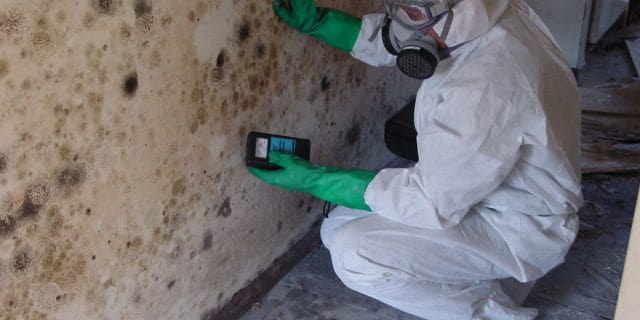
Most mold problems in Merrick don’t start with a leak you can see. They start with a crawl space that’s been breathing in tidal humidity for decades, or a basement that’s been quietly absorbing groundwater through a foundation wall that was poured before vapor barriers were standard. You treat the visible mold and leave the source alone, it’s back within a season. That’s not a worst-case scenario — that’s just how coastal South Shore homes work.
When mold remediation is done right, you stop reacting and start living in your house again. The air feels different. The smell is gone. You’re not wondering what’s behind the drywall every time someone in your family gets a headache. And if you’re thinking about selling — with median home values in Merrick sitting close to $800,000 — you have documentation that protects your equity, not a problem waiting to surface during inspection.
Merrick carries real flood exposure. Redfin data puts 64% of properties here at risk of severe flooding over the next 30 years, and that’s before you factor in the tidal canals running through residential neighborhoods or the shallow water table that keeps basements damp even in dry stretches. Proper mold remediation in Merrick isn’t optional maintenance. It’s how you protect what you’ve built.
We’ve been serving Nassau and Suffolk County homeowners for close to three decades. That’s not a number we throw around lightly — it means we’ve worked inside the mid-century Capes and colonials that define Merrick’s neighborhoods, homes with original crawl spaces, aging plumbing, and attic ventilation that was never built for today’s humidity levels.
Every technician who comes to your door is individually IICRC-certified. Not our company as a whole — each person. That distinction matters when someone is opening your walls and making decisions about what stays and what goes. We also handle full reconstruction after remediation, so you’re not left coordinating a second contractor once the cleanup is done.
We’re a local company with a Nassau County 516 line, not a national franchise routing calls through a regional office. When you call us, you reach people who understand what it means to maintain a home a few blocks from Merrick Bay.
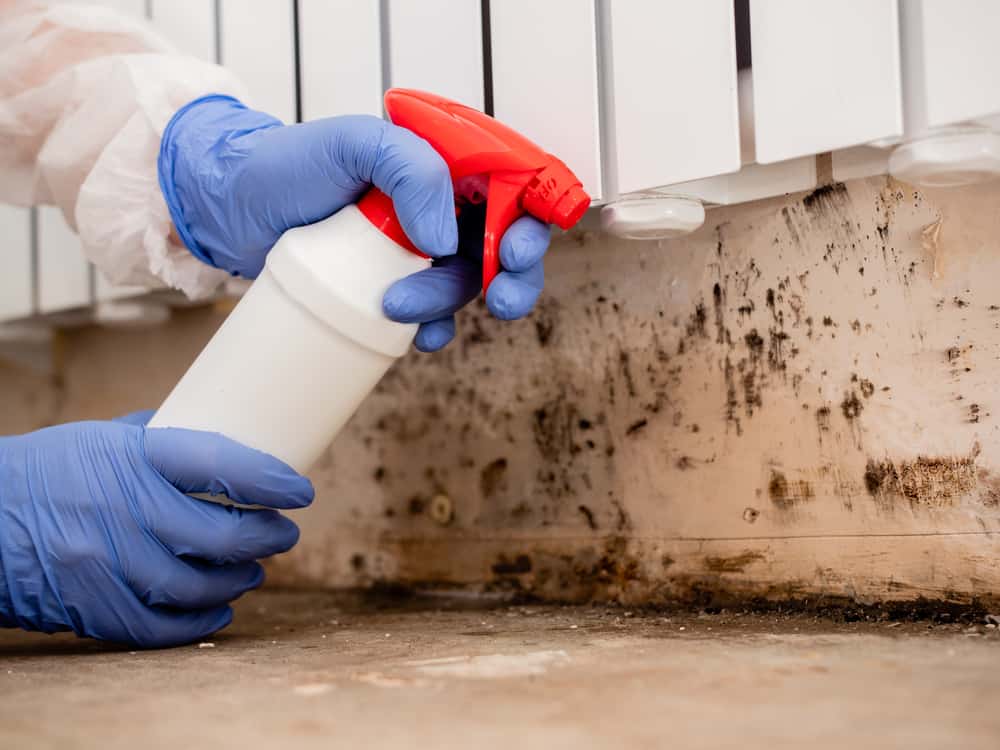
It starts with a 13-point inspection — not a walkthrough with a flashlight. We use infrared imaging to find mold hiding behind walls, air testing and swab sampling to identify what’s present, moisture level readings throughout the affected areas, and a comparison of internal versus external mold particle counts to understand the full scope. Lab results come back in writing within 2 to 3 business days, so you have documentation you can actually use — whether that’s for an insurance claim, a home sale, or just your own peace of mind.
From there, we contain the affected area, remove the mold using professional-grade remediation equipment, and treat the underlying surfaces. Every truck arrives fully stocked — air movers, dehumidifiers, moisture monitors — so the work begins when we do, not after a second trip.
One thing worth knowing: New York State law prohibits the same company from performing both the mold assessment and the remediation on the same property. We follow that law and we’ll explain exactly how the process works before anything starts. In a community like Merrick, where homes are valuable and homeowners do their research, that transparency isn’t just good ethics — it’s how we’ve stayed in business for nearly 30 years. If reconstruction is needed after remediation, we handle that too, so there’s one accountable company from start to finish.
Ready to get started?
The homes most likely to call us in Merrick were built around 1955. That means unventilated crawl spaces with bare ground contact, attics that trap summer humidity coming off the bay, and basements that have been fighting groundwater intrusion for decades. Our mold remediation process here has to account for all of that — not just what’s visible on the surface.
Crawl space mold remediation in Merrick typically involves more than cleaning the joists. We assess whether the space has adequate vapor barrier protection, whether there’s active moisture intrusion from the water table, and whether the ventilation is sufficient to prevent recurrence. Attic mold remediation follows a similar logic — coastal humidity gets in, and if there’s no ridge ventilation pushing it out, it sits. These aren’t hypothetical scenarios. They’re the standard conditions in a mid-century South Shore home.
For basements, especially in canal-adjacent or low-lying neighborhoods, black mold remediation often follows a water damage event — whether that’s a storm surge, a sump failure, or slow seepage that went unnoticed. We handle the mold cleanup and remediation, coordinate with your insurance carrier where applicable, and rebuild what needs to be rebuilt. If you’re approaching a home sale and need clearance documentation, we provide written lab results that satisfy disclosure requirements. One call, one company, full scope.
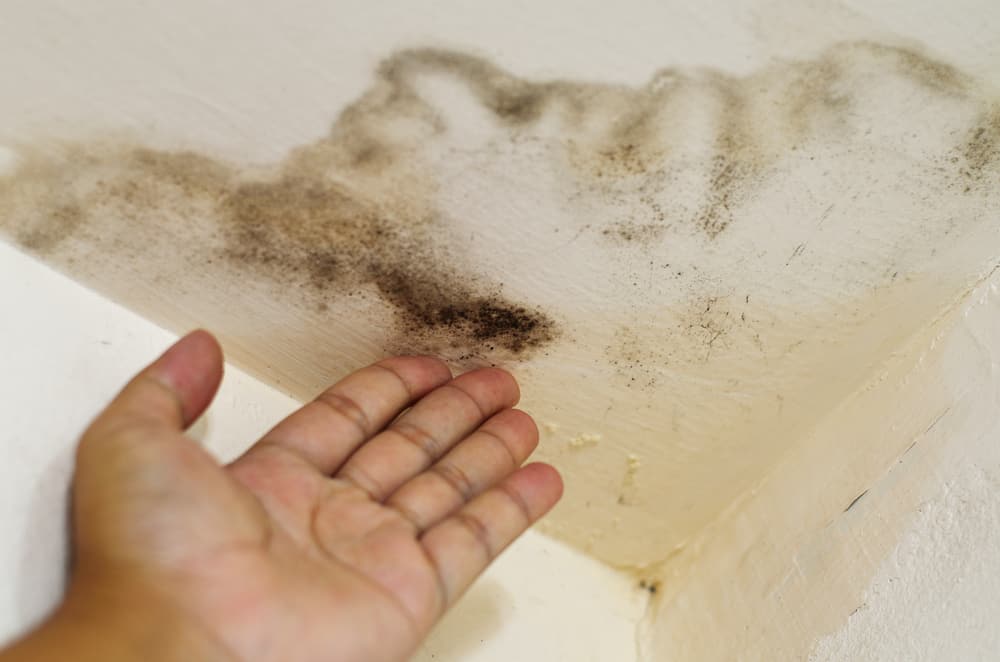
This is the most common frustration we hear from Merrick homeowners, and the answer is almost always the same: the moisture source wasn’t addressed, only the mold itself. In a community like Merrick — with a high water table, tidal canals running through residential streets, and documented severe flood risk on nearly two-thirds of local properties — basement moisture isn’t a one-time event. It’s a recurring condition that requires a real solution, not just surface treatment.
Bleach and store-bought mold sprays kill what’s on the surface, but mold grows into porous materials like drywall, wood framing, and insulation. If those materials aren’t properly removed and the moisture pathway isn’t identified and corrected, the mold returns. Professional mold remediation starts with finding out where the water is coming from — whether that’s groundwater seepage through the foundation, a failed sump pump, or humidity migrating in from an unventilated crawl space — and addressing that before anything else. That’s the only way to get a result that actually holds in a South Shore home.
The honest answer is that it depends on the size of the affected area, where the mold is located, and how far it’s spread into structural materials. A small bathroom mold issue and a basement that flooded after a coastal storm are very different scopes of work. Nationally, mold remediation averages around $2,300, but in Merrick — where homes tend to be larger, older, and more likely to have complex moisture conditions — the actual cost often runs higher, particularly when crawl spaces, attics, or post-flood scenarios are involved.
What you should watch out for is a company quoting a very low number before they’ve done a real inspection. That usually means the scope is incomplete, and you’ll end up paying more when the full picture emerges. A thorough inspection with written lab results gives you an accurate scope upfront, which makes the estimate meaningful. We’ll also help you understand what your homeowners insurance or flood insurance may cover, since many Merrick homeowners have both and the coordination matters when the claim involves water damage.
In most cases, yes — but it depends on where the mold is and how extensive the remediation is. If mold is contained to a crawl space, attic, or a single room, we set up containment barriers that isolate the work area from the rest of your home. Negative air pressure equipment keeps mold spores from migrating into living spaces during the process. For most Merrick homeowners dealing with a localized issue, staying in the house is a reasonable option.
If the mold is widespread — say, a basement that flooded and wasn’t dried out quickly enough, or an attic where mold has spread across most of the roof sheathing — temporary relocation may be the safer call, especially if anyone in the household has respiratory sensitivities. We’ll give you a straight answer on this after the inspection, not a blanket policy. The goal is to keep your family safe without disrupting your life more than necessary, and we’ll tell you honestly what the situation warrants.
It depends on the cause. Most standard homeowners insurance policies in Nassau County will cover mold remediation if it resulted from a covered peril — a burst pipe, an appliance leak, or storm damage that caused sudden water intrusion. What they typically won’t cover is mold that developed from long-term moisture issues, like a crawl space that’s been damp for years or a basement with chronic groundwater seepage. That distinction matters a lot in Merrick, where many homes have ongoing moisture conditions that developed gradually over decades.
If your mold issue followed a storm event and you also carry flood insurance through FEMA’s National Flood Insurance Program, that policy may cover remediation and structural repairs tied to the flood. Navigating both policies at once can be complicated, and insurers don’t always make it easy to understand what’s covered. We work with homeowners through the claims process and can help document the damage in a way that supports your claim — written inspection reports, lab results, and photo documentation that gives your adjuster what they need.
Mold removal refers to physically cleaning or eliminating visible mold — wiping it off a surface, spraying it with a treatment product, or cutting out the affected material. It addresses what you can see. Mold remediation is a broader process that includes identifying the moisture source, containing the affected area to prevent cross-contamination, removing mold-affected materials where necessary, treating the underlying structure, and verifying through post-remediation testing that the mold count has returned to normal levels. It addresses the problem, not just the symptom.
In a home environment like Merrick’s — older construction, high ambient humidity from the bay, frequent moisture events from storms and groundwater — removal alone almost never produces a lasting result. The mold comes back because the conditions that allowed it to grow in the first place haven’t changed. Remediation is the standard that actually holds up over time, and it’s the only approach that produces the kind of written clearance documentation you’d need for a home sale or an insurance claim. If someone is offering you mold removal at a price that sounds too good, ask what’s included — and what isn’t.
The most reliable signs are smell and symptoms. A persistent musty odor in a basement, crawl space, or attic — even when you can’t see anything — usually means mold is growing inside a wall cavity, under flooring, or within the structural framing. If people in your household are experiencing recurring allergy-like symptoms, headaches, or respiratory irritation that improves when they leave the house, that’s worth taking seriously. Merrick’s mid-century housing stock is particularly prone to hidden mold because the original construction didn’t include the vapor barriers and ventilation systems that modern building codes require.
The only way to know for certain is a proper inspection that goes beyond the visual. Infrared imaging can detect temperature differentials behind walls that indicate moisture accumulation — a reliable indicator of hidden mold growth. Air testing captures mold spore counts in the indoor air and compares them against outdoor baseline levels, which tells you whether there’s an active mold source even when nothing is visible. If your home is near one of Merrick’s tidal canals, has a basement that’s flooded before, or was built before 1970, a professional inspection is a reasonable precaution — not an overreaction.
Useful Links
Other Services we provide in Merrick