
Hear from Our Customers
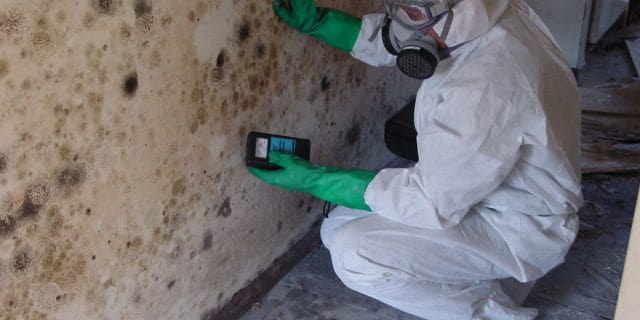
Most mold remediation fails for one reason: the company removed what was visible and left behind what was causing it. If your Nissequogue home sits near the river corridor, backs up to tidal wetlands, or faces the Long Island Sound, the moisture feeding that mold isn’t coming from a single rain event — it’s coming from the ground, the air, and the water table pressing against your foundation year-round. Removing mold without addressing that is like mopping a floor while the faucet’s still running.
When the source is corrected and the remediation is done properly, the difference is real. Your basement stops smelling like something is wrong. Your crawl space stops being a liability. Your attic — especially in a larger, older North Shore home where ice dams and poor ventilation create the perfect mold environment every winter — stops being the thing you dread finding during a renovation.
For a home worth what Nissequogue properties are worth, this isn’t a minor maintenance item. A mold problem that isn’t fully resolved can reduce your resale value by 20 to 37 percent. In this market, that’s a number that gets your attention. Getting it done right the first time protects your investment, your air quality, and your family — in that order, or whatever order matters most to you.
We’ve been working on Long Island for 31 years. That means owner Richard Peterson has seen what moisture does to North Shore homes — the historic estates near the Nissequogue River, the bluff properties above the Sound, the crawl spaces in older homes that were never built with modern vapor barriers in mind. He knows Nissequogue’s housing stock because he’s worked in it for three decades.
What sets us apart from most in the market is straightforward: Richard holds personal New York State licenses in both mold assessment and mold remediation. Not a company-level credential — his name, his license. Every technician on our team is IICRC-certified, meaning the people who actually show up at your Nissequogue home have been formally trained and tested against the industry’s benchmark standard.
We’re an owner-operated company. There’s no franchise layer, no call center routing your job to whoever’s available. You get accountable, credentialed professionals who understand what they’re doing and why it matters in a community like Nissequogue.
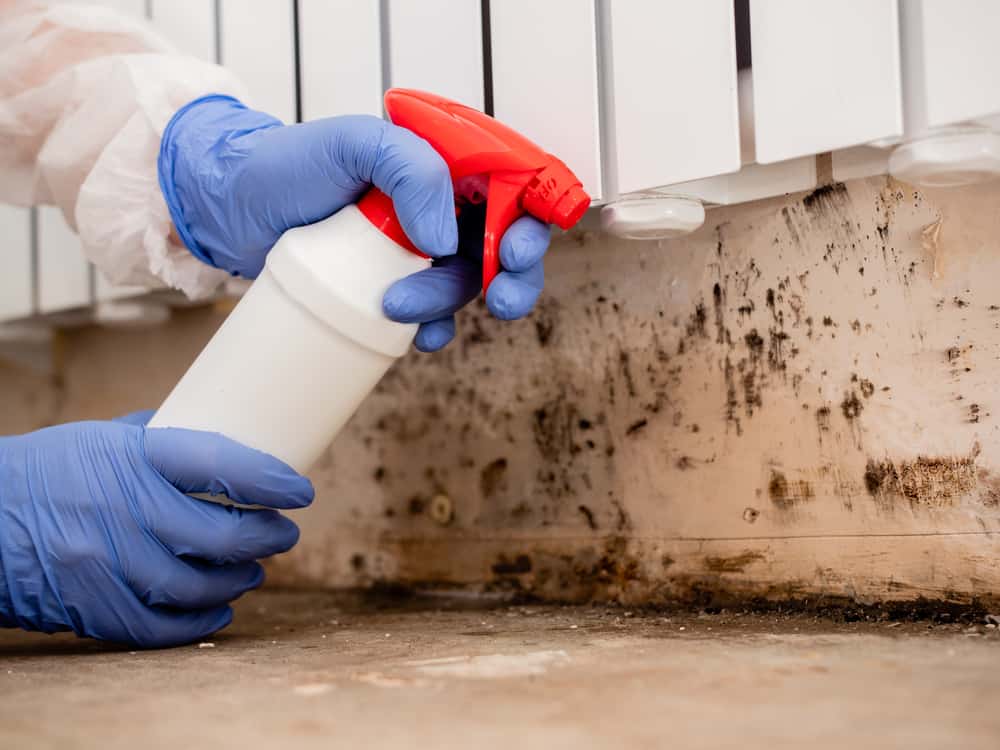
It starts with a thorough assessment. Before anything is removed or treated, we map moisture levels throughout the affected areas using professional-grade equipment. In Nissequogue, this step matters more than most places — because with the Nissequogue River maintaining persistent groundwater pressure year-round and tidal wetlands embedded throughout the village, the moisture source isn’t always where the mold is. The assessment identifies both.
Once the source is understood, we establish containment. Negative air pressure is established to prevent spores from spreading to unaffected areas of the home. Contaminated materials — drywall, insulation, structural wood, whatever the scope requires — are removed following New York State Article 32 protocols, which mandate licensed contractors for every phase of this work. This isn’t optional compliance; it’s the legal standard, and it protects your insurance coverage and your legal standing if the remediation ever needs to be documented.
After removal, affected surfaces are HEPA-vacuumed and treated with EPA-registered antimicrobial products. Then comes post-remediation verification — independent air quality testing that produces a clearance report confirming spore counts have returned to normal. That report is what you bring to a real estate transaction, an insurance claim, or simply keep for your own records. Finally, our integrated cleaning division handles the full post-remediation cleanup, so you’re not left coordinating a second crew to finish what we started.
Ready to get started?
Nissequogue’s zoning requires 100-foot setbacks from wetland boundaries and 150-foot setbacks from mean high water on the Nissequogue River — which tells you everything about how close most properties in this village are to active water systems. Basement mold in these conditions isn’t a surface problem. It’s a groundwater problem, a vapor problem, and sometimes a structural problem, depending on how long it’s been left alone. The same goes for crawl spaces in homes near the wetland corridors along the river and Stony Brook Harbor.
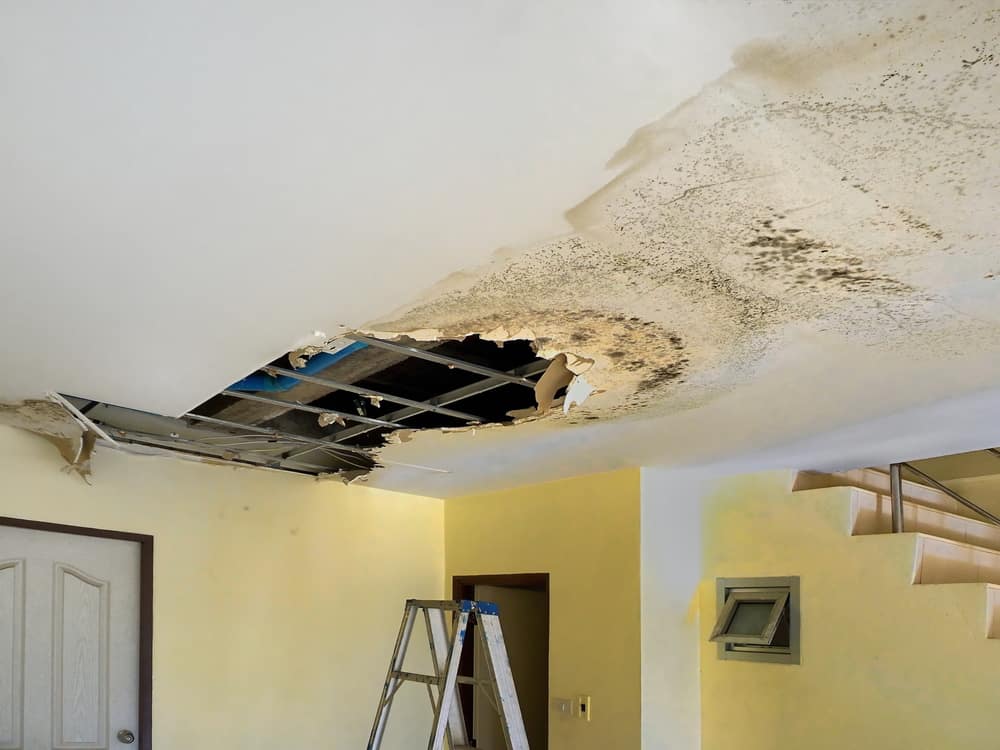
Attic mold is its own category on the North Shore. Older, larger homes in Nissequogue — some dating back generations — often have attic square footage and roofline complexity that creates ice dam conditions every winter. When ice forces water under roofing materials, it doesn’t announce itself. It sits in the attic insulation and framing until spring, and by then, the mold has had months to establish. We handle attic mold remediation in homes exactly like these, with a process that accounts for historic building materials and the ventilation corrections that prevent it from coming back.
For emergency situations — a flooding event along the Nissequogue River watershed, a burst pipe, or storm surge from the Sound — our 24/7 availability isn’t a marketing line. Mold begins growing within 24 to 48 hours of water intrusion. The speed of the response is part of the remediation.
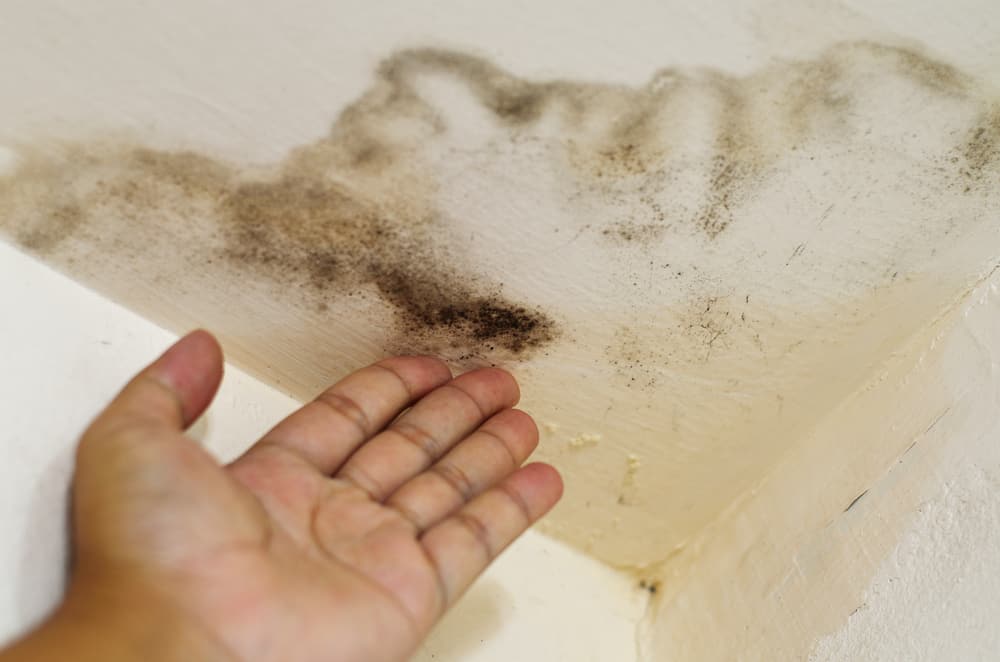
For most residential mold remediation projects, costs range from roughly $1,223 to $3,754, with a national average around $2,347. Nissequogue homes aren’t average — many are large, older estate properties with significant basement, crawl space, and attic square footage, and the moisture conditions near the Nissequogue River and Long Island Sound can mean the affected area is larger than it first appears.
Attic remediation in a larger North Shore home typically runs $1,500 to $9,000 depending on the extent of contamination and whether ventilation corrections are needed. Crawl space remediation in a wetland-adjacent Nissequogue property generally falls between $500 and $4,000, though full encapsulation can push that higher. Basement mold ranges from $500 for surface treatment up to $10,000 or more if structural materials are involved. Every job gets a written estimate with a clear scope before any work starts — no surprises, no inflated scope pressure.
Yes, and this is one of the most important things to understand before hiring anyone. Under New York State Article 32 of the Labor Law — which took effect January 1, 2016 — it is illegal for any person to perform, advertise, or hold themselves out as a mold assessor, remediation contractor, or abatement worker without a valid license issued by the Commissioner of Labor. This applies everywhere in New York State, including Nissequogue.
The practical consequence of hiring an unlicensed contractor goes beyond the legal violation. If your remediation was performed by an unlicensed operator, your insurance company can deny the claim. If you’re selling a Nissequogue property — where a home can easily be worth $1 million or more — and the buyer’s attorney discovers the remediation wasn’t done by a licensed contractor, it can kill the transaction or expose you to liability. Richard Peterson holds personal NYS licenses in both mold assessment and mold remediation. That’s verifiable, and it’s the standard you should require from anyone you hire.
The Nissequogue River is entirely groundwater-fed, which means it maintains consistent flow and groundwater pressure year-round regardless of rainfall. Unlike surface-fed rivers that fluctuate with the weather, the Nissequogue keeps the water table in the surrounding area persistently elevated. For homes near the river corridor, this translates to steady below-grade moisture pressure on foundations, crawl spaces, and basement walls — the kind of moisture that doesn’t go away between storms.
Add to that the ambient humidity generated by three sides of water exposure — the river to the west, Long Island Sound to the north, and Stony Brook Harbor to the east — and you have a community where moisture management isn’t seasonal, it’s constant. From May through September, humidity levels in Nissequogue are high enough to support active mold growth in any space with inadequate ventilation. Crawl spaces without proper vapor barriers, basements without dehumidification, and attics without adequate airflow are all vulnerable. The fix isn’t just removing the mold — it’s correcting the conditions that made it possible.
It depends on what caused the mold, and the distinction matters. Mold that results from a sudden, accidental event — a burst pipe, a roof failure during a nor’easter, or storm-related flooding — is typically covered under a standard homeowner’s policy. Mold that developed gradually due to long-term moisture intrusion or deferred maintenance is usually not covered, because insurance policies generally exclude damage resulting from neglect.
For Nissequogue homeowners, this distinction became relevant during the August 2024 flash flooding that closed Route 25A in the Smithtown area and affected properties throughout the Nissequogue River watershed. If your home took on water during an event like that and mold developed as a result, you likely have a legitimate claim — but it needs to be documented correctly. We help customers understand what their policy covers, document the damage in the format insurers require, and navigate the claims process without leaving money on the table. Getting the documentation right from the start makes a significant difference in how the claim resolves.
Older homes — and Nissequogue has many, given the village’s history as the original settlement of the Town of Smithtown dating to 1665 — often have attic configurations that create specific mold risks. Rooflines with complex geometry, inadequate soffit and ridge ventilation, and older insulation materials that retain moisture rather than repelling it all contribute to conditions where mold can establish itself quietly over a winter season and go undetected until spring or until a renovation uncovers it.
Ice dams are a significant factor on the North Shore. When heat escapes through the roof, snow melts and refreezes at the eaves, forcing water under shingles and into the attic structure. In a large estate home, the attic square footage affected can be substantial. Remediation in these spaces requires HEPA vacuuming, antimicrobial treatment of affected framing, and — critically — identifying and correcting the ventilation deficiency that allowed the moisture to accumulate in the first place. Without that correction, the mold returns. We address both the remediation and the underlying condition, which is the only approach that produces a lasting result.
You know because of post-remediation verification — independent air quality testing conducted after the remediation work is finished. This testing measures airborne mold spore counts and compares them to baseline outdoor levels. When the numbers come back within normal range, you receive a clearance report documenting that the remediation was successful. That report is the evidence. Not the company’s word for it — actual data.
For Nissequogue homeowners, this documentation matters for several reasons. If you’re selling a property, the buyer’s inspector or attorney will want to see it. If the remediation was tied to an insurance claim, the insurer may require it. And if you’ve dealt with recurring mold — which happens when the moisture source was never corrected — the clearance report gives you a documented baseline to compare against if a problem ever resurfaces. We include post-remediation verification as a standard step in the process, not an add-on. In a community where homes carry the values they do in Nissequogue, having that documentation isn’t optional — it’s the responsible conclusion to the job.
Useful Links
Other Services we provide in Nissequogue