
Hear from Our Customers
There’s a version of this where someone comes in, wipes down what’s visible, and calls it done. That’s not remediation — that’s a temporary fix that buys you maybe six months before it’s back. Real mold remediation means identifying the moisture source, removing the contaminated material properly, treating the affected area, and verifying through lab testing that the air quality is clean. That’s the difference between a house that smells fine for a few weeks and a home that’s actually safe.
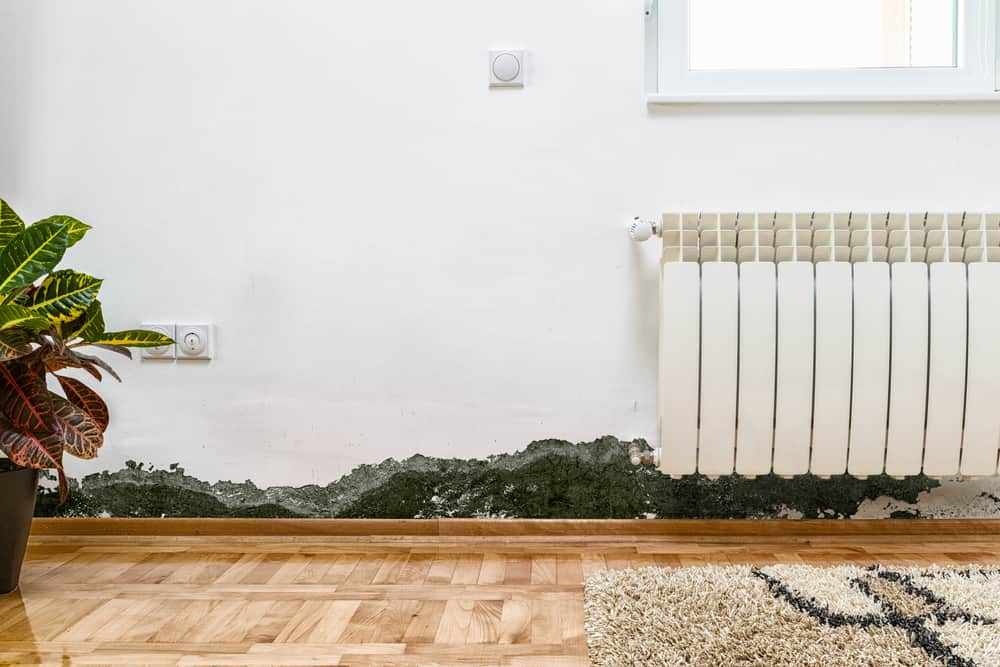
For Old Bethpage specifically, this matters more than most people realize. A significant portion of the housing stock here was built in the 1950s and 1960s — homes that are now 60 to 70 years old with crawl spaces, attic ventilation systems, and basement waterproofing that were never designed to last this long. Add in the wooded lots that border Bethpage State Park and the Old Bethpage Village Restoration, and you’ve got elevated ambient moisture levels that push mold risk higher than in more developed parts of Nassau County.
When we do the job right, you get your home back — not just visually, but verifiably. Written lab results. Documented clearance. The kind of paper trail that holds up when you’re talking to an insurance adjuster, a real estate attorney, or a home buyer who wants proof. In a community where homes are valued close to $900,000, that documentation isn’t a bonus — it’s the whole point.
We’ve been serving Nassau and Suffolk County homeowners since the late 1990s. That’s not a marketing number — it means the technicians who show up at your door have worked in the specific type of homes that define Old Bethpage: mid-century ranches, cape cods, and split-levels with the moisture vulnerabilities that come with their age. We know where mold hides in these houses before you’ve finished describing the problem.
What sets us apart from the national franchises and out-of-area operators that market to Old Bethpage is straightforward: every individual technician is IICRC-certified. Not just our company at the organizational level — every person on the crew. That distinction matters when someone is walking through your basement or pulling back insulation in your attic crawl space. You want to know that whoever is doing the work has actually been trained to do it.
We also comply fully with New York State’s 2016 mold law, which prohibits the same contractor from performing both the assessment and the remediation on the same property. That law exists to protect you, and any company that doesn’t follow it is one you should walk away from.
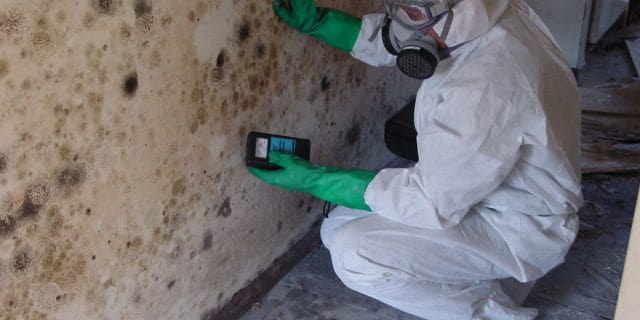
It starts with a 13-point inspection — not a visual walkthrough, but a documented process that includes air testing, swab sampling, infrared thermal imaging to detect moisture hiding behind walls and ceilings, and moisture level measurements throughout the affected areas. Internal and external mold particle counts are compared, and within two to three business days, you receive a written report with lab results. That report tells you what you’re dealing with, where it is, and how serious it is. No verbal estimates, no vague assessments.
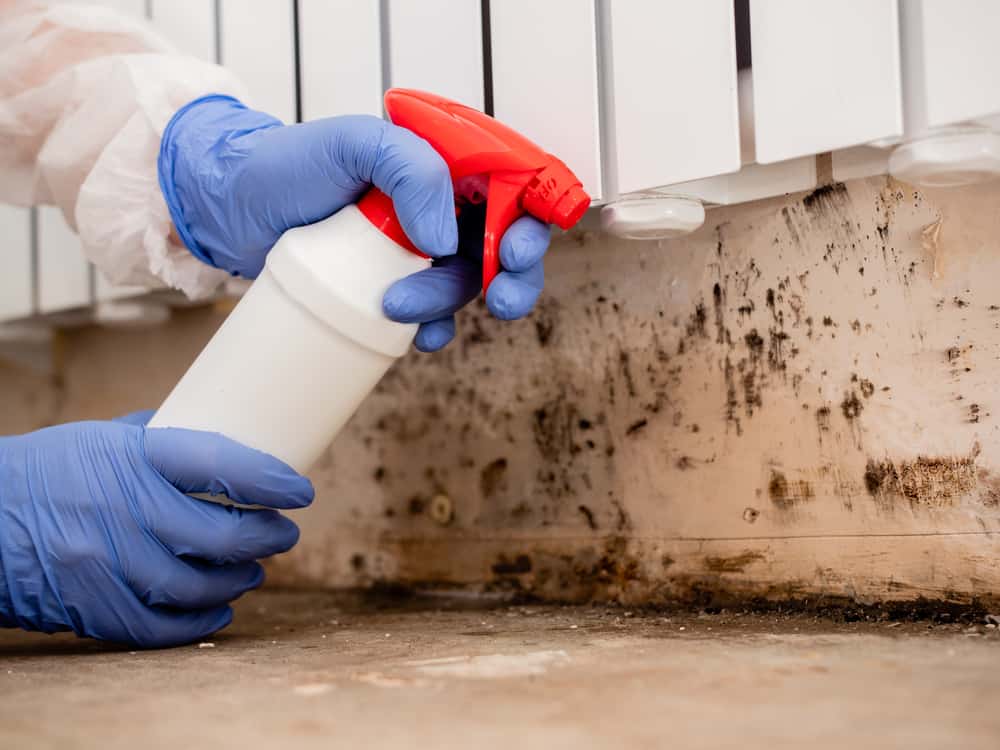
Once the scope is confirmed, remediation begins with containment. The affected area is isolated to prevent spores from spreading to clean parts of your home during removal. Contaminated materials are removed, the area is treated, and air scrubbers run throughout the process. For Old Bethpage homes — particularly those with unencapsulated crawl spaces or older attic ventilation — we address the moisture source as part of the remediation, not as an afterthought. Treating mold without fixing what caused it is the reason people call a second company six months later.
After remediation, post-clearance testing confirms the air quality meets safe standards before the job is closed out. If reconstruction is needed — replacing drywall, subfloor, or insulation — we handle that too, so you’re not left coordinating a second contractor to finish what the first one started. From first call to final clearance, one company manages the whole project.
Ready to get started?
Mold remediation in Old Bethpage covers more ground than most homeowners expect going in. Basement mold remediation is one of our most common requests in this area — older homes with original or partially updated waterproofing are especially vulnerable after heavy rain seasons and the kind of nor’easters that Nassau County gets every few years. Crawl space mold remediation is another consistent issue here, and it’s one that we specifically focus on because the demand is real and documented. Attic mold from inadequate ventilation in mid-century construction rounds out the three most common scenarios we handle in Old Bethpage.
Every remediation we perform includes containment setup, proper removal of contaminated materials, antimicrobial treatment of affected surfaces, HEPA air filtration throughout the process, and post-remediation clearance testing with written documentation. For homeowners in the Plainview-Old Bethpage school district area navigating a home sale, that clearance documentation is often what the transaction depends on. We also handle insurance navigation — helping you document the damage in the format insurers and adjusters actually require, not just what looks good in a photo.
Emergency mold remediation is available 24/7. If a pipe bursts on a Friday night near Round Swamp Road or a roof leak opens up after a storm, the 48-hour window before mold begins growing is not flexible — and neither is our availability.
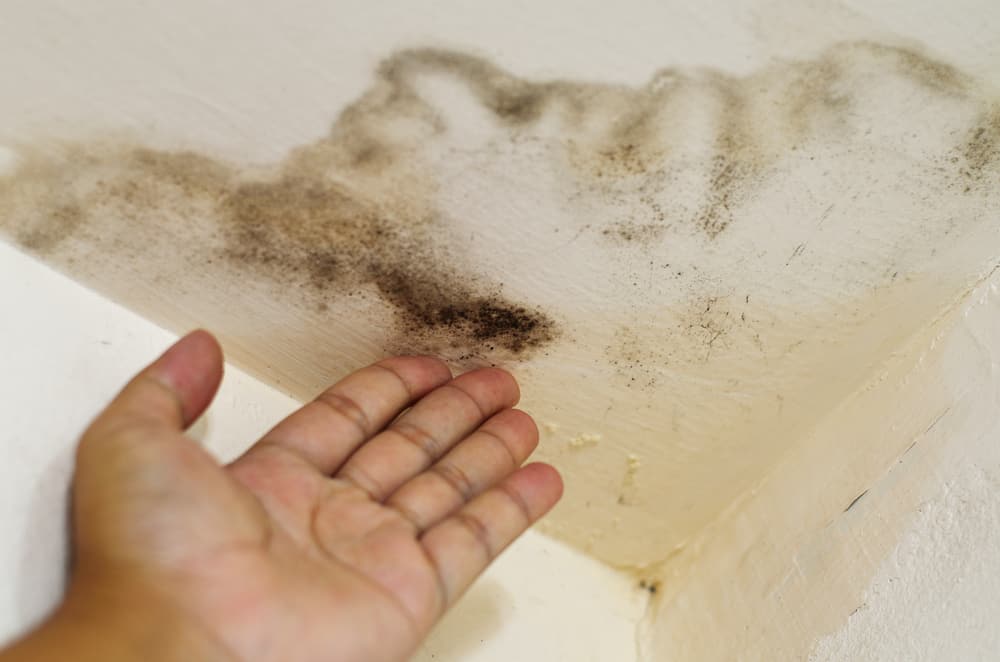
Mold can begin colonizing wet building materials within 24 to 48 hours of a water intrusion event. That window is not an approximation — it’s why emergency response time matters as much as the remediation itself. In Old Bethpage’s older housing stock, where basements and crawl spaces often lack modern vapor barriers and drainage systems, water that enters the structure after a storm or a plumbing failure has immediate access to the kind of organic materials — wood framing, drywall, insulation — that mold needs to establish itself.
The practical implication is that waiting to see if it dries out on its own is rarely a safe bet in these homes. If you’ve had any standing water in a basement, a visible roof leak, or a burst pipe, getting a moisture assessment done quickly — before visible mold appears — is the move that saves you from a much larger remediation project down the road.
Cost depends on the size of the affected area, where the mold is located, and how much material needs to be removed. A contained basement or crawl space issue in a mid-range scenario typically runs in the $1,500 to $4,000 range. More extensive contamination — attic mold requiring full insulation removal, or mold that has spread behind multiple wall sections — can reach $10,000 or more once material removal and reconstruction are factored in.
For Old Bethpage homeowners, the relevant frame of reference is what’s at stake. With median home values approaching $900,000 in this community, a $3,000 remediation is a small fraction of the asset being protected. A mold problem that surfaces during a home inspection can reduce an offer by tens of thousands of dollars or derail a sale entirely. The cost of doing it right — with lab-verified clearance documentation — is almost always less than the cost of what happens when it’s done wrong or skipped.
Crawl space mold is one of the more deceptive problems in residential mold remediation because it’s out of sight and easy to dismiss until symptoms appear — musty odors that migrate into living spaces, unexplained respiratory issues, or wood rot that starts compromising structural elements. The EPA recommends professional remediation for any mold-contaminated area exceeding 10 square feet, and crawl space mold in Old Bethpage homes routinely exceeds that threshold by the time it’s discovered.
The reason crawl space mold is particularly common in this area comes down to construction era and geography. Homes built in the 1950s and 1960s typically have crawl spaces that were never properly sealed or encapsulated. Combine that with Old Bethpage’s wooded lots and natural drainage patterns near the park system, and you have conditions where ground moisture continuously migrates into the crawl space. Professional remediation addresses both the visible mold and the moisture source — without fixing the latter, the former comes back.
New York State passed a mold remediation law in 2016 that prohibits the same licensed contractor from performing both the mold assessment and the mold remediation on the same property. The law was designed specifically to prevent a common industry practice where companies would conduct a “free inspection,” overstate the scope of the problem, and then charge for remediation that may not have been necessary. It’s a consumer protection measure, and it applies to every home in Old Bethpage and across Nassau County.
What this means practically: if a company offers you a free inspection bundled with a remediation quote in the same visit, they are either operating in violation of New York State law or they are not performing a legitimate assessment. We structure our inspection and remediation services in full compliance with this law. The assessment is conducted independently, the results are documented in writing, and you make an informed decision before any remediation work begins. That’s how it’s supposed to work.
The answer to this question is post-remediation clearance testing — and it should always be in writing. After remediation is complete, air sampling is conducted in the treated area and compared against baseline outdoor air particle counts. If the indoor mold spore levels are within acceptable ranges relative to the outdoor baseline, the area clears. If they’re not, additional work is done before the job is considered finished. A verbal “it looks good” from a technician is not clearance — it’s an opinion.
For Old Bethpage homeowners dealing with a real estate transaction, this documentation is often what the deal hinges on. Buyers, their attorneys, and their inspectors want a written clearance report from a certified professional — not a contractor’s assurance. We provide that documentation as a standard part of every remediation, and it’s formatted in a way that holds up in the context of a home sale, an insurance claim, or a legal proceeding.
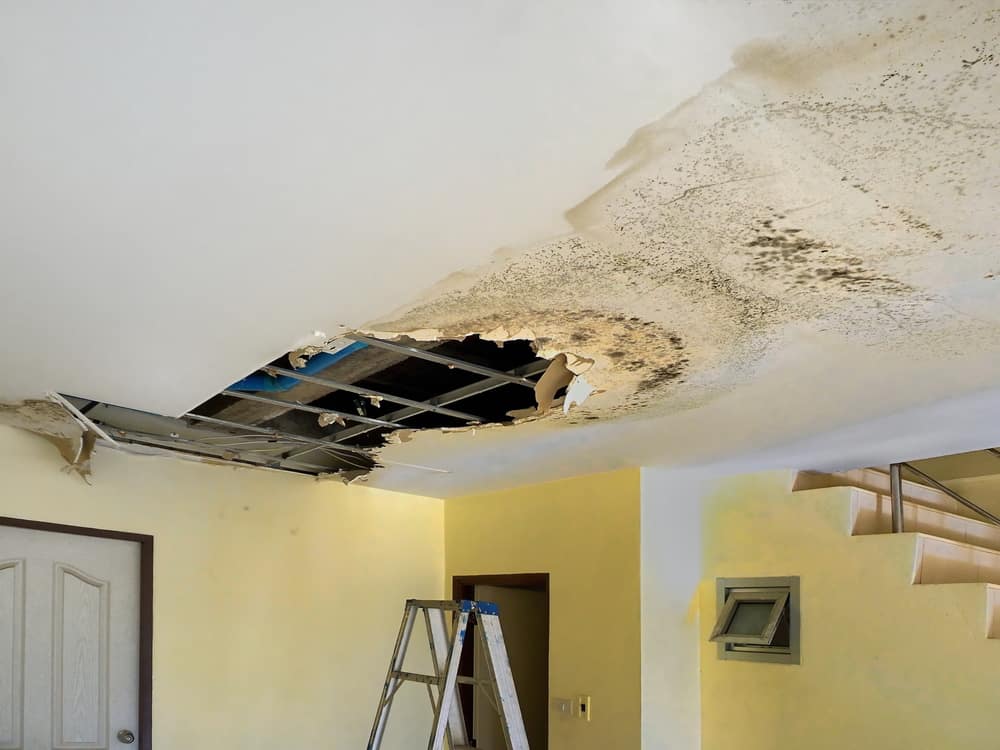
Attic mold in Old Bethpage is overwhelmingly a ventilation problem rooted in the age of the housing stock. Homes built in the 1950s and 1960s — which make up a large portion of the residential inventory here — were constructed with attic ventilation standards that don’t meet current requirements and were never retrofitted. When warm, humid air from the living space rises into an underventilated attic and meets the cold roof deck in winter, condensation forms on the wood sheathing. Over time, that repeated moisture cycle creates exactly the conditions mold needs to establish itself on the roof decking and rafters.
Ice dams are another contributing factor that’s specific to Long Island winters. When heat escapes through the roof, it melts snow at the ridge line and refreezes at the eaves, forcing water back under the shingles and into the attic structure. Old Bethpage’s wooded lots also mean that leaf and debris accumulation in gutters is a consistent issue, which worsens drainage at the roofline and compounds moisture intrusion risk. Attic mold remediation in these homes requires addressing the ventilation deficiency — not just treating the visible mold — or the cycle repeats within a season or two.
Useful Links
Other Services we provide in Old Bethpage